
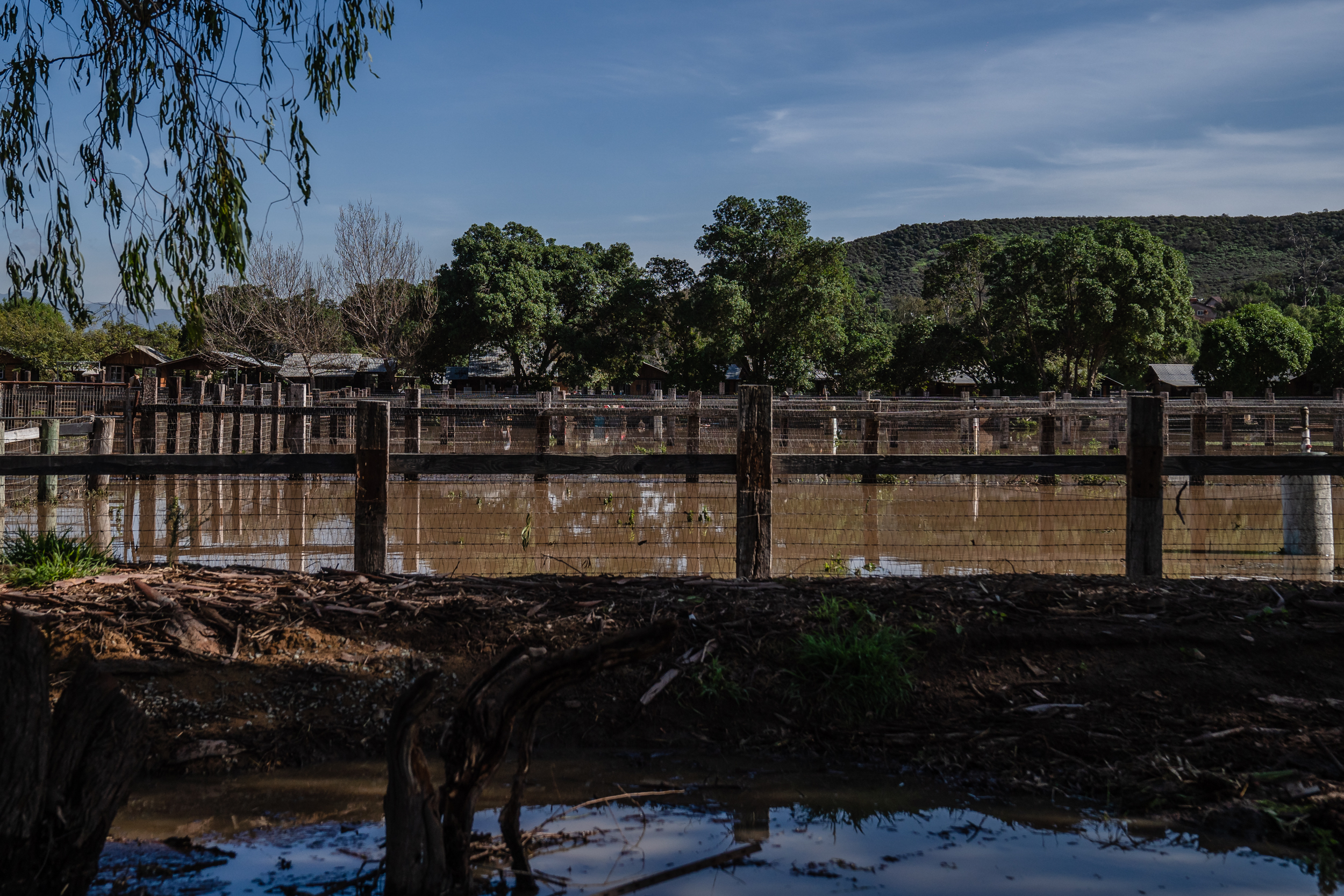
The Tijuana River Valley is notoriously stinky the closer one gets to the river itself, which more often than not is carrying raw sewage and other trash across the U.S.-Mexico border and into San Diego.
But the intensity of the stank apparently reached fever pitch last month because San Diego County issued an air pollution violation against the U.S. International Boundary and Water Commission or IBWC, a federal agency that manages cross-border water issues. It’s the first time the county’s issued such a violation against the federal body.
A press release Wednesday from the Air Pollution Control District says the county’s received about 150 odor complaints since July 21.
“(San Diego Air Pollution Control District) recognizes this is a complex and longstanding issue, but we will enforce our rules to ensure that South San Diego County residents are not burdened by odors from improper maintenance of the plant,” wrote Paula Forbis, an air pollution control officer, in a press release.
The county blamed the most recent stink source on a pump station at Hollister Street.
That pump is responsible for capturing any wastewater that flows from canyons in Tijuana into the United States.
The pump has a history of failing, like in August of 2023 when tropical cyclone Hillary sent so much sediment and water gushing through the canyons, it destroyed all four of the station’s pumps and caused a spill off Hollister Street. Sediment flowing from Mexico again derailed the pumps back on June 17, causing over 300,000 gallons of polluted water to spill outside where it’s normally supposed to go. Morgan Rogers, who manages IBWC’s San Diego operations, told Voice of San Diego the source of all that sediment (and possibly extra flows) is likely due to the state of Baja building a double-decker highway on the other side of the border.
The IBWC shut down its waste-collecting infrastructure in the border canyons to clean out the system, which they finished on June 28. Part of the problem is that pieces of that pumping system are more than 25 years old and may need to be replaced, according to Rogers. But while that infrastructure was being fixed, millions of gallons of water containing untreated waste and sand kept flowing through those different canyon portals and into the U.S.
That pump station was reportedly supposed to be restored by the end of July and, by July 19, the source of the spill in Mexico had significantly reduced, Rogers reported in an update on the situation.
The IBWC spokesperson Frank Fisher said the IBWC is reviewing the Air Pollution Control District’s violation.
“The USIBWC is committed to making sure the South Bay International Wastewater Treatment Plant complies with all federal, state, and local laws while we repair, rehabilitate, and expand the facility to address issues related to transboundary flows originating in Tijuana,” Fisher said.