
Why, you may have wondered, do California politicians have so many freaking campaign finance committees?
The answer is complicated, but the bottom line is this: The committees give politicians the opportunity to expand their influence and political futures.
Take Assemblymember Brian Maienschein. Even though he is currently running for San Diego City Attorney, he also has a campaign finance committee to support himself for a run for Attorney General in 2030.
Whether Maienschein runs for Attorney General or not, the committee can benefit him in a number of ways.
A person with an extra committee can donate the money to other political causes and campaigns — essentially purchasing juice for themselves.
Should they decide to run for a different office, they might also be able to transfer some or all of the money to the new campaign, depending on the campaign finance rules for the new office.
Transit Is a Thorny Issue for Tijuana
Unlike San Diego, Tijuana’s public transportation is controlled by private companies. And through the years, politically powerful transportation unions have repeatedly defied government efforts to reform the system.
As Voice contributor Sandra Dibble previously reported, other cities in Mexico – Puebla, Guadalajara, Monterrey, Mexico City – have been successfully making the switch to Bus Rapid Transit, with newer buses, centralized controls, and dedicated lanes.
That hasn’t been the case in Tijuana. Not all transportistas – private operators who work under concessions from the city – have been willing to make the switch.
“Despite federal financing for bridges, stations, special lanes and other BRT infrastructure, the municipal transportation agency, SITT, has yet to get the system up and running,” Dibble wrote.
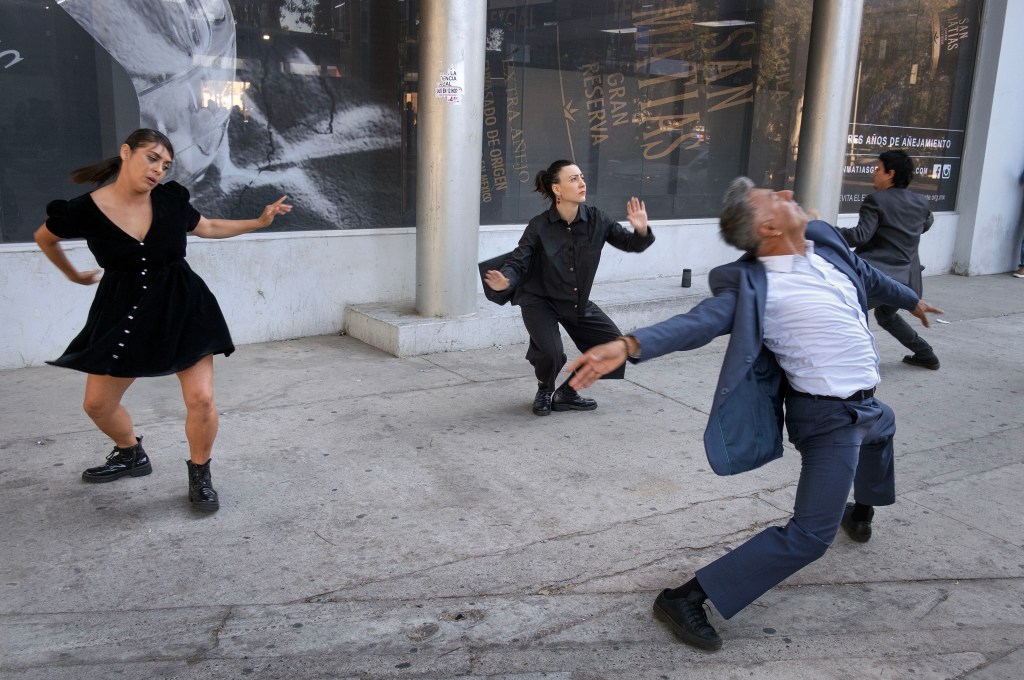
Activists and artists recently held a protest to call attention to the city’s need for a modern transit system. They took over stations across the city with special performances.
Tensions Persist on South Bay Stench
Last week, Environment reporter MacKenzie Elmer and Social Media Producer Bella Ross hit the road to get a better look at the situation unfolding around the Tijuana River. You can see what they found in a new video on Reels and TikTok.
The cross-border sewage and its unrelenting stench dominated headlines in September when new data provided a deeper look into the potential health impacts of air pollution on nearby residents. Policymakers and researchers still can’t agree on how urgent these findings are, and a long-term solution to the underlying sewage crisis remains aspirational.
Elmer also spoke with local and federal leaders about this issue during a panel at Politifest on Saturday, and things got a little spicy. You can watch that recording here
In Other News
- Despite new laws and media coverage, San Diego County’s jails continue to have an alarming rate of in-custody deaths. (Union-Tribune)
- Three members of the San Diego Fire-Rescue Department were involved in a serious car accident near the border of Texas and Louisiana. The firefighters were on their way to help with Hurricane Helene relief efforts. Fire department officials said their conditions range from moderate to critical. (Fox 5)
- County Supervisor Terra Lawson-Remer is asking North County cities to chip in to purchase air filters for Imperial Beach residents. She told KPBS that her office will match funds raised for the filters with a county grant. (KPBS)
- The city announced Monday it has repaired more than 1,600 miles of city roads – about a quarter of the city’s inventory – since late 2020. (NBC 7)
- Lawsuits claim that more than 100 children were sexually assaulted by staff at the county’s emergency shelter for children over a 26-year period. (City News Service)
- The Union-Tribune tallies campaign fundraising in the most contentious and expensive race in the county right now: County Supervisor Terra Lawson-Remer and former mayor Kevin Faulconer’s battle to represent many of the county’s coastal communities. Our Lisa Halverstadt has been fact checking some of the big attack lines and claims in the race.
The Morning Report was written by Will Huntsberry, Andrea Lopez-Villafaña, Bella Ross and Lisa Halverstadt. It was edited by Andrea Lopez-Villafaña.