
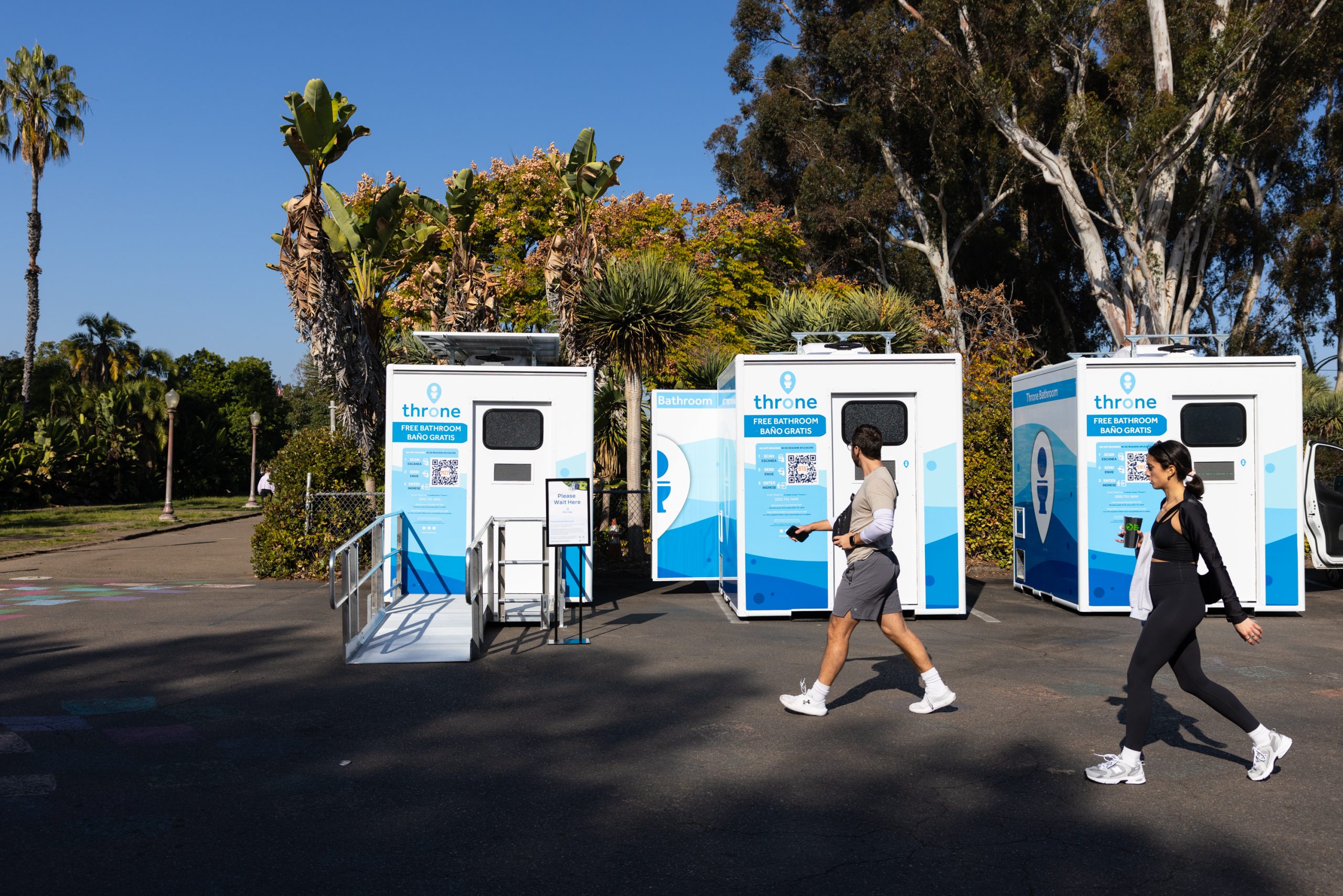
It’s 12:30 p.m. and I’ve got to take a leak in Balboa Park.
I used my phone to scan a QR code on one of three, bright blue “smart bathrooms” by Throne Labs based in Washington, D.C. I receive a text and soon I hear, “Welcome to Throne. We’ll get the door for you” from a friendly, female voice. The windowless door slid open and tinkling piano music spilled out, coaxing me toward a bright porcelain bowl tucked among a mass of faux jungle foliage.
The city of San Diego is in talks with Throne Labs about leasing some of these space-age potties. That’s why they’re available for a trial run during Balboa Park’s December Nights celebration beginning Friday. The Los Angeles Metro contracts with the company for 10 restrooms at transit stops and is expected to purchase more, said Jessica Heinzelman, a co-founder of Throne Labs.
San Diegans struggle to find a place to pee legally. Public restrooms are often closed, broken or defaced. Private businesses are starting to deny even paying customers use of their restrooms. The city has already suffered two public health crises linked to the lack of a decent place to defecate.

The company offers monthly subscriptions for a minimum of 10 bathrooms which includes on-site cleaners and remote monitoring. The price per pot ranges from $4,250 to $9,000 increases based in part on how many times the bathroom needs servicing. So, on the high end if the city goes with the company San Diego could pay around $1.08 million per year for 10 bathrooms. Seems like a steal compared to the cost of building one brick-and-mortar restroom with water and sewer hookups, which has been as high as $2 million.
The city told me it spends $1.7 million per year servicing and providing security for 16 traditional portable potties and handwashing stations around the city. On the more expensive end, Throne Labs toilets would cost less: $1.08 million per year for 10 toilets, a few thousand dollars more per toilet all told.
I’d choose a flushing Throne over a biocide-filled porta potty any day. But its features would take some getting used to. And the city still has to weigh whether its many luxuries are worth the cost, especially as it stares down a $258 million budget deficit.
The Throne is spacious, large enough my five-foot-five frame could lie down and take a nap plus extra leg room. But if I did for more than 10 minutes, the disembodied voice returns and the bathroom lights flash, warning me the door will reopen against my will until I leave.
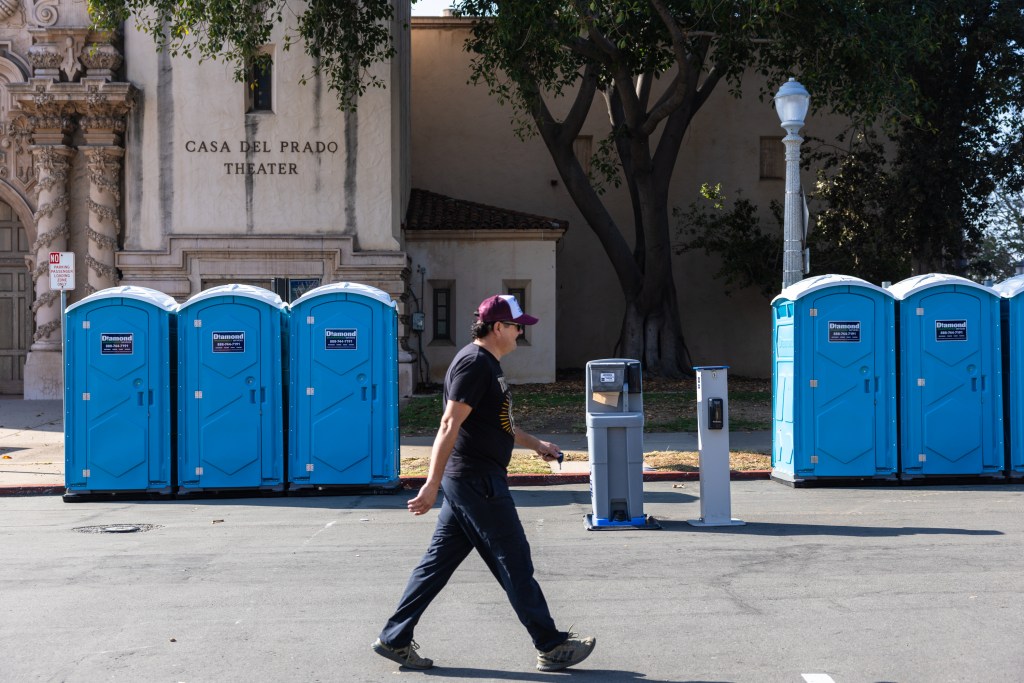
Such anti-loitering protocol is one of the many features Throne Labs added to entice American cities desperate for a solution to dwindling public and private restrooms that can attract illicit activity. Outfit with 21 sensors, and no cameras, promised Heinzelman, the co-founder, the Throne is the porta potty of the future. Everything inside is touchless. A wave of the hand triggers the flush, the water and soap dispenser, even exiting the door.
My first time inside was a little triggering. I worried how I’d escape this remotely-controlled robot should its sensors fail or become self-aware like Hal in “2001: A Space Odyssey.” There’s no arguing with Mrs. Throne Lab’s voice, I tried: “Open the pod bay doors, Mrs. Throne Labs.” Luckily, there’s an actual door handle, too.
Invisible anti-graffiti coating covers the faux jungle foliage wallpaper which is difficult to tag. The layered leaf texture was an intentional choice by the company, Heinzelman said, because if it gets keyed, the company need only replace it with another panel. Solar plus battery storage powers each bathroom which cities can opt to operate on whatever schedule they choose.
Heinzelman said LA Metro saw a 50 percent drop in its rate of public defecation after installing Thrones at some stations. There’s a smoke detector and sensors that would trigger the door should someone lose consciousness, like from a drug overdose.
Heinzelman said the QR code mechanism assigns a unique user ID number to each phone number it collects. That’s one of the ways Throne Labs tracks and restricts users who treat the bathroom poorly. Those without a smartphone can text a separate telephone number to enter. Or the company makes tap cards available, useful for unhoused individuals.
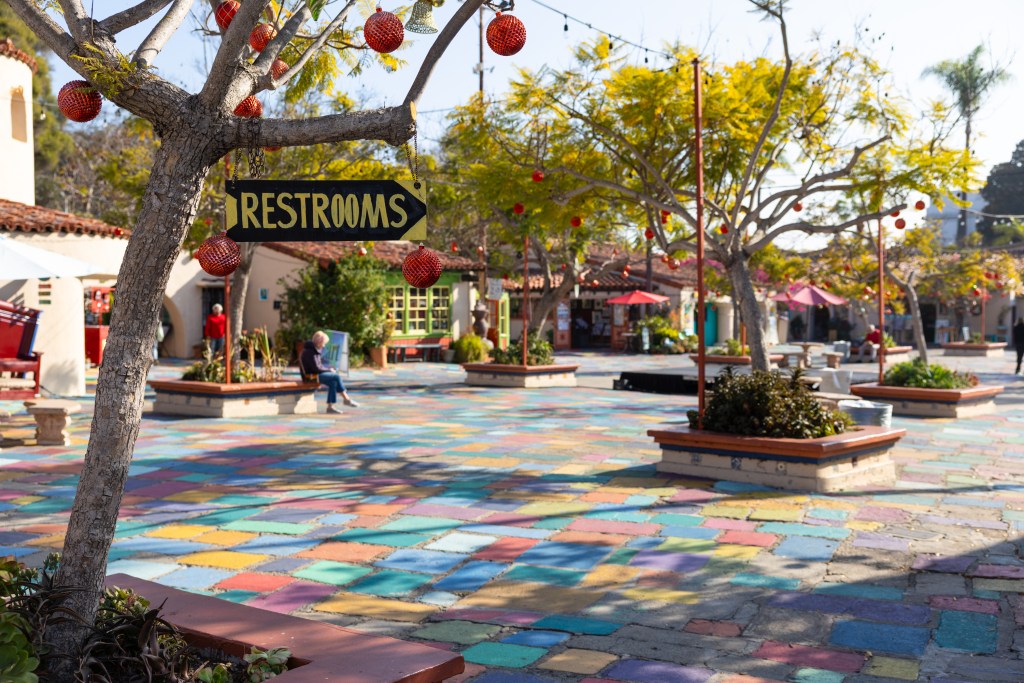
The whole experience was a bit like taking a whiz inside a Pottery Barn bathroom on Mars. But for once I felt cleaner leaving a public restroom than I did upon entering. I can’t say the same for the public restrooms next door at the Spanish Village Art Center which looked like something out of a prison movie.