

San Diego Unified opened its first free infant care center at its Logan Memorial campus.
It’s part of the district’s promise to spend more in historically underinvested parts of town. Logan Memorial is the district’s most expensive construction project in history and includes El Nido or “the nest,” the first-of-its-kind at San Diego Unified Montessori-inspired childcare center.
The district hopes “getting into the baby game,” not a traditional role for the public school system, could help ease the childcare crisis in San Diego. Childcare, especially for infants and toddlers, is very expensive for families and doesn’t pay workers in that industry living wages, said San Diego Unified Board Trustee Richard Barrera.
He hopes publicly-funded childcare could replace private childcare one day in the future. California’s taken a step toward that recently with the arrival of universal, state-funded kindergarten for 4-year-olds.
Read the full progress report.
ADU About-Face Signals City’s Pro-Housing Stance May Be Shifting
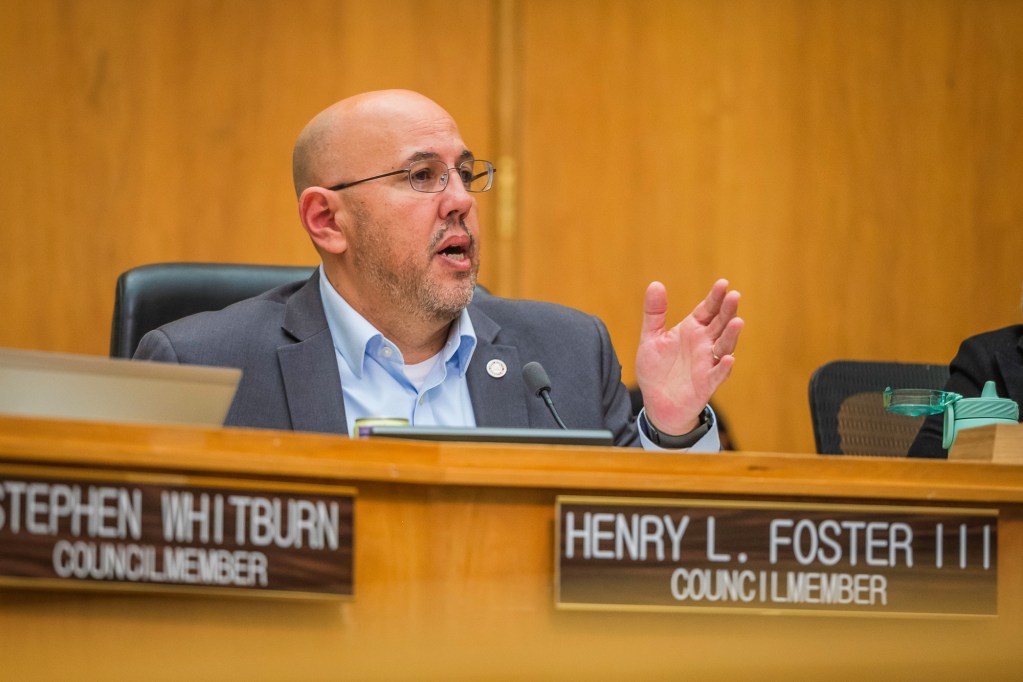
San Diego’s status as a Yes In My Backyard city is in question following a surprise Tuesday City Council vote urging the repeal of an accessory dwelling unit program that’s drawn national praise.
As California YIMBY cheered in 2023, a UC Berkeley study found San Diego “kicked off an affordable ADU building boom” after a 2020 City Council vote went a step further than state law by allowing additional ADUs if some were set aside for low-or-middle-income tenants. The program – and community backlash against its impact on single-family neighborhoods – drew coverage from the New York Times in 2021.
Fast forward to 2025: A City Council review of a controversial footnote in city code that slashed minimum lot sizes and effectively allowed more dense housing development (and thus ADUs) in southeastern San Diego set off a broader discussion about the ADU Density Bonus program.
Councilmember Henry Foster III, who represents southeastern San Diego, argued that the City Council should nix both the footnote and the ADU program. A City Council majority ultimately voted to delete the footnote and direct city staff to return within 60 days to dial back the ADU program so it’s “consistent with state-mandated ADU regulations for single-family zoned parcels.”
What will happen next? TBD. The ADU program wasn’t on the City Council agenda and Mayor Todd Gloria’s teams says it’s unclear city officials can act on the Council direction. Then there’s the fact that, as KPBS reported, that a repeal could violate state laws mandating the city to quash homebuilding red tape.
What the mayor thinks: Gloria is a proud YIMBY and under the city’s strong mayor form of government, he directs city staff.
Spokesperson Dave Rolland’s statement following the vote reflects Gloria’s frustration – and that he’s clearly mulling his next move.
“Given that this city has been recognized as a model for how to produce more homes that everyday residents can afford, the mayor is disappointed in the council’s action,” Rolland wrote. “We are exploring options for how to respond.”
LA Water Boss Fired. What That Means for SD.

The board governing California’s biggest water district dropped its leading man Wednesday following a seven-month investigation into claims he discriminated against employees.
San Diego was a major reason Adel Hagekhalil got the general manager job at the Metropolitan Water District of California in the first place. Now San Diego will have to learn to work with another new boss and tensions between the two agencies tend to rise during drier times, which California seems to be headed toward once again. The Colorado River basin has just a year to make major deals to use less water, and Metropolitan is key if San Diego wants to play a role in that. And the two agencies are reportedly very close to settling a major legal dispute that’s soured the relationship for years.
Hagekhalil left much in the same way he came in – through heated board debate over his leadership. San Diego’s representation on the board helped secure him the job in June of 2021. But all of San Diego’s representatives present Wednesday ultimately voted to let him go after he rejected settlement terms the board offered him. Hagekhalil’s lawyer said he would “pursue all legal options to protect his rights and reputation,” according to the Los Angeles Times.
During his hiring, skeptics were concerned about several lawsuits they discovered after interviewing him, charging harassment and discrimination against the Los Angeles departments he led in the past though no one had accused him personally, according to reporting by the Orange County Register. Others worried about his lack of experience in the drinking water world as California prepared for huge negotiations over the dwindling Colorado River.
Ultimately Hagekhalil promised to reform and bring the agency and its 26 customer water districts together, including San Diego which has a long history of fighting with Metropolitan publicly and in the courts. He wore his slogan, “We Are One,” on a lapel pin. And on Voice of San Diego’s Politifest stage in 2023, Hagekhalil offered a fist bump to the San Diego County Water Authority’s new general manager, Dan Denham – a sign of warming relations.
Hagekhalil repeatedly promised the years-long legal battle with San Diego over the cost of transporting Colorado River water through Los Angeles would soon be over (we’re still waiting). And under his tenure, Met twice struck a Colorado River water trade with San Diego and Imperial Valley, which saved San Diego money and helped cut California’s draw on the river.
The board gave Hagekhalil’s job to Deven Upadhyay, who served as interim general manager during the investigation. Upahyay’s worked at Metropolitan since 1995 and last served as the assistant general manager and chief operating officer.
In Other News
- There’s not enough life science businesses to fill all the office space built to house it in San Diego County. The vacancy rate on life science office and lab space hit just beyond 23 percent in 2024. Venture capital funding isn’t flowing to the bioscience tech industry like it used to and many companies cut back on their workforces and office footprints. (Union-Tribune)
- A San Diego yoga instructor filed a lawsuit against the city which he says cited him for streaming a class from his backyard that could be viewed in a city park. The city cracked down on in-person yoga classes taking place in public parks and on beaches recently. But as the city is now going to “extreme lengths” in its crackdown, according to the instructor’s lawyer. (CBS 8)
- News flash: The city has increased most parking meter rates effective today. Be ready to pay $2.50 an hour. (Inside San Diego)
- CalFire lifted all evacuation orders near the border fire in the Otay Mountains as fire crews reported the flames were completely contained by Thursday morning. (NBC 7)
- Hundreds of volunteers tallied unsheltered residents countywide on Thursday as part of San Diego County’s annual point-in-time census. Look out for the latest homeless count numbers in late spring or early summer. (City News Service)
- An executive order by President Donald Trump has halted talks between regional and federal officials about the long-running border sewage crisis – and fueled uncertainty about what might come next. (Union-Tribune)
The Morning Report was written by MacKenzie Elmer and Lisa Halverstadt. It was edited by Andrea Lopez-Villafaña.