
In Afghanistan, Azizi worked training security guards who protected Americans.
In December 2024, he, along with his wife and five children, finally escaped his home country after several failed attempts due to Taliban interference at the airport, he said. In early January, they arrived in San Diego, eager to start their new lives after waiting for three years to be approved for resettlement, he said.
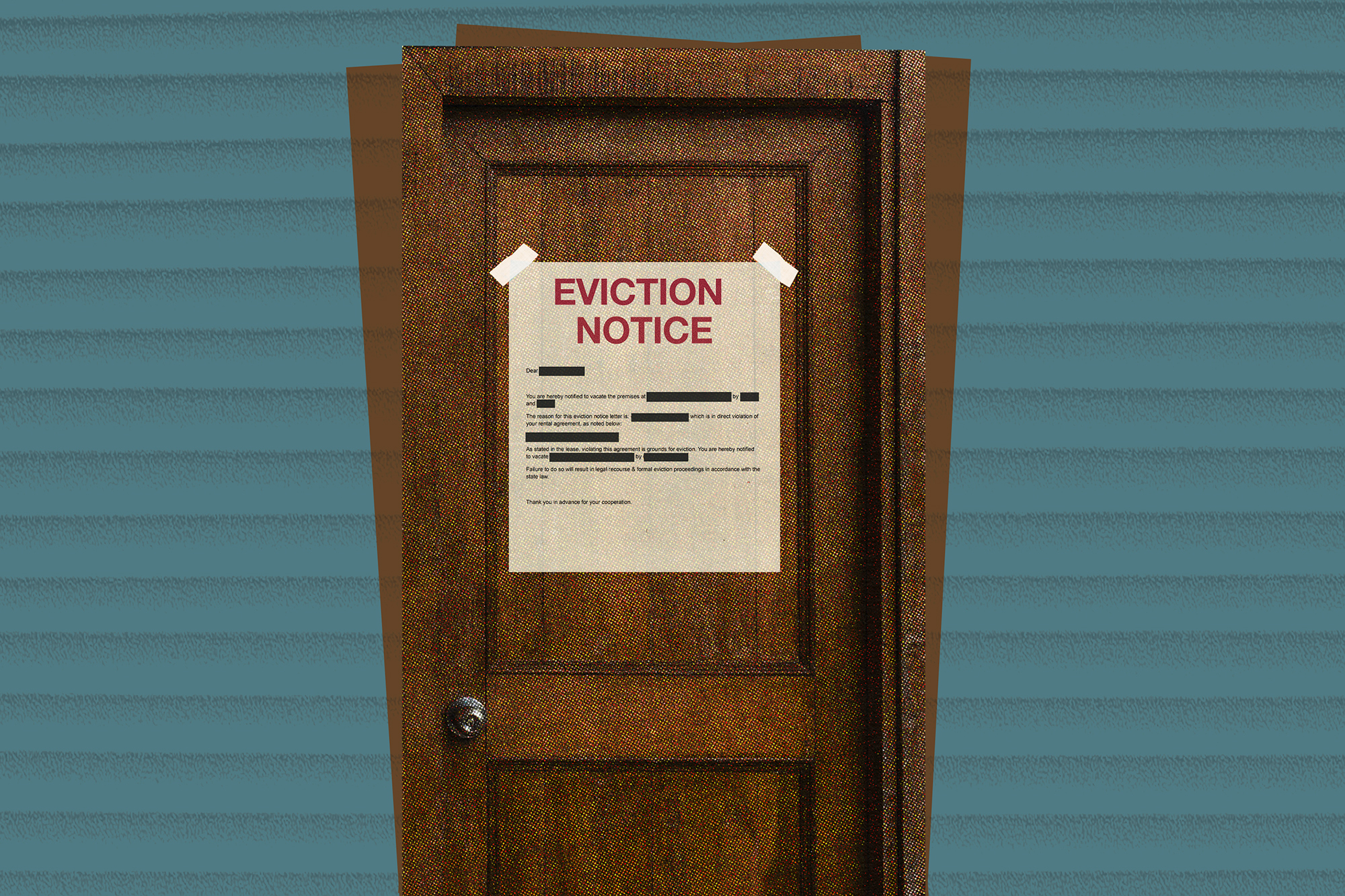
Then, President Donald Trump took office and froze the federal funding that allowed resettlement agencies to support newly arrived refugees for the first three months that they’re in the United States. Now Azizi and hundreds of others like him who recently came to San Diego don’t know how they’re going to pay rent. Some have already received eviction notices.
“They brought us here, but now they don’t care about us,” Azizi said in Pashto through an interpreter. “This is so sad for us.”
Azizi and the other refugees in this article are not being fully identified due to concerns about the safety of family members in their home countries as well as potential retribution in the United States.
A spokesperson with the State Department said the department has paused all U.S. foreign assistance while it reviews which programs to keep, and it includes domestic spending on refugee resettlement in that category.
The Health and Human Services Department, which oversees the Office of Refugee Resettlement, did not respond to requests for comment in time for publication.
Walter Lam, the head of Alliance for African Assistance, the resettlement agency that received Azizi and his family, said his organization was blindsided by a stop work order that it received on Jan. 24. He said the organization expected to see a decrease or even a temporary pause in new arrivals as happened under the first Trump administration, but it didn’t expect funding to disappear for refugees who were already here.
San Diego, which historically was the largest resettler of refugees of any county in California, has four resettlement agencies — Alliance for African Assistance, Jewish Family Service of San Diego, International Rescue Committee and Catholic Charities.
Several resettlement agencies nationally have filed a lawsuit against the funding freeze. Though a judge in another case that seeks to block an overall funding freeze has ordered government agencies to go back to paying out money, the U.S. government so far doesn’t seem to be applying that to refugee funding.
Normally, resettlement agencies receive money on behalf of newly arrived refugees and people with Special Immigrant Visas, which are typically for people who helped the U.S. military in places like Afghanistan. That money, which depends on the size of the household, is meant to support the newcomers for their first 90 days while they begin to get acclimated to their new home and search for work.
The agency uses the money to help the new arrivals cover rent and food, Lam said, as well as pay for case managers to help them get children enrolled in school and navigate other tasks to restart their lives in a new culture that they might not be familiar with.
Lam said he’s had to lay off half of his staff due to the funding freeze.
His organization has launched what he called a refugee crisis response fund, with the goal of raising $425,000 or $1,000 per refugee that the agency has received in San Diego in the past three months. That includes families from Afghanistan, the Democratic Republic of Congo, Syria, Venezuela, Burma, Iraq and Guatemala, he said.
Michael Hopkins, CEO of Jewish Family Service of San Diego, said that his organization also received a stop work order and is fundraising to support the 22 recently arrived families in its care.
That includes a family of six from Afghanistan who arrived the day before the stop work order, Hopkins said. The father of the family had worked with the U.S. military, he said.
Ross Fackrell, director of refugee resettlement at JFS, said that his staff members are doing their best to keep the newcomers’ spirits up.
“The important thing is to not lose momentum,” Fackrell said. “If things are paused too long for these families and individuals, it becomes very tough to pick the process back up.”
Both Hopkins and Lam emphasized that refugees go through extensive screenings that often take years before they’re allowed to resettle in the United States.
Refugees have protections under international and U.S. law. They fled their home countries due to persecution based on religion, nationality, race, political opinion or membership in a social group such as the LGBTQ+ community. After fleeing, they requested to be identified as refugees and went through a screening process in the country they fled to.
The United States later selects some of these refugees for resettlement and puts them through additional screenings.
Lam said the financial stress of the current situation is triggering PTSD symptoms in some refugees after everything they lived through to make it to a place where they thought they would be safe.
He said one recently arrived Afghan man who fought alongside the U.S. military asked him, “Why bring me all the way to America to show me that I am hated?”
Four fathers who spoke with Voice of San Diego at the Alliance for African Assistance office on Friday, including Azizi, said they don’t have anyone they can turn to for help in their new country. Several of the new arrivals said their work permits had been delayed, further complicating their situations.
Ahmad, who came from Afghanistan with his wife and four daughters in early January after working at the Kabul airport as a firefighter supporting NATO forces, said that if he and his family end up on the streets, he won’t be able to go to work because he will feel unsafe leaving them on their own.
He said all he wants is to be received with the same support as the refugees who came before him.
“We need urgent help,” said Anwari, who came with his wife and daughter on Special Immigrant Visas because his wife worked with the U.S. military.
Nedel, a father of five from Syria who worked as a tailor, received an eviction notice giving him three days to pay or move out after he couldn’t pay rent on Feb. 1.
“My dream is to live a normal life here like any human,” Nedel said through an Arabic interpreter. “If I knew it was going to be like this, I would have rejected the offer and stayed over there. Over there, there’s war. Maybe I’m going to die one day, but at least I have a house to live in. We heard about the American dream, but when we are here, there is nothing.”
Over 50 million American voters still support Trump. Tell that to the downtrodden. Welcome to America!
These people that were resettled here after helping our military should be treated as the American military supporters they are. Risking life and family for our troops deserve better.
Trump has it correct. Americans who pay taxes are struggling, why are our taxes paying for foreigners to live comfortably if we cannot live comfortably ourselves?
Is there any way us San Diegans can help these organizations and refugees? Its tragic that the people who have the least suffer the most, whilst billionaires get even richer