
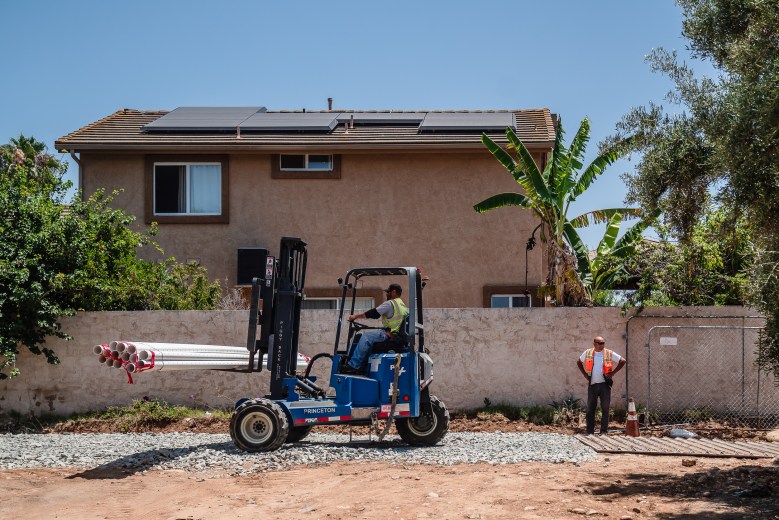
Poway’s historically low in-lieu fee could soon see its first significant increase in decades.
The fee developers can pay to the city instead of including affordable units in their projects, also known as an in-lieu fee, is $500 per unit. It’s the lowest fee in San Diego County.
Poway city leaders will hire an outside consultant to study whether the fee should be updated. Once the study is complete, the City Council will decide whether to raise the fee.
The city of San Diego’s in-lieu fee is $25 per square foot, Oceanside’s is $20 per square foot, Del Mar’s is $27,000 per project, and Coronado recently raised its fee from $7,000 per project to $59 per square foot, now the highest in the county. There are a few cities that don’t require developers to pay a fee.
The city’s move to study the fee comes amid renewed scrutiny of Poway’s inclusionary housing policies as some residents question whether the low fee fails to incentivize developers to include affordable housing units in their projects.
Affordable Housing Production in Poway
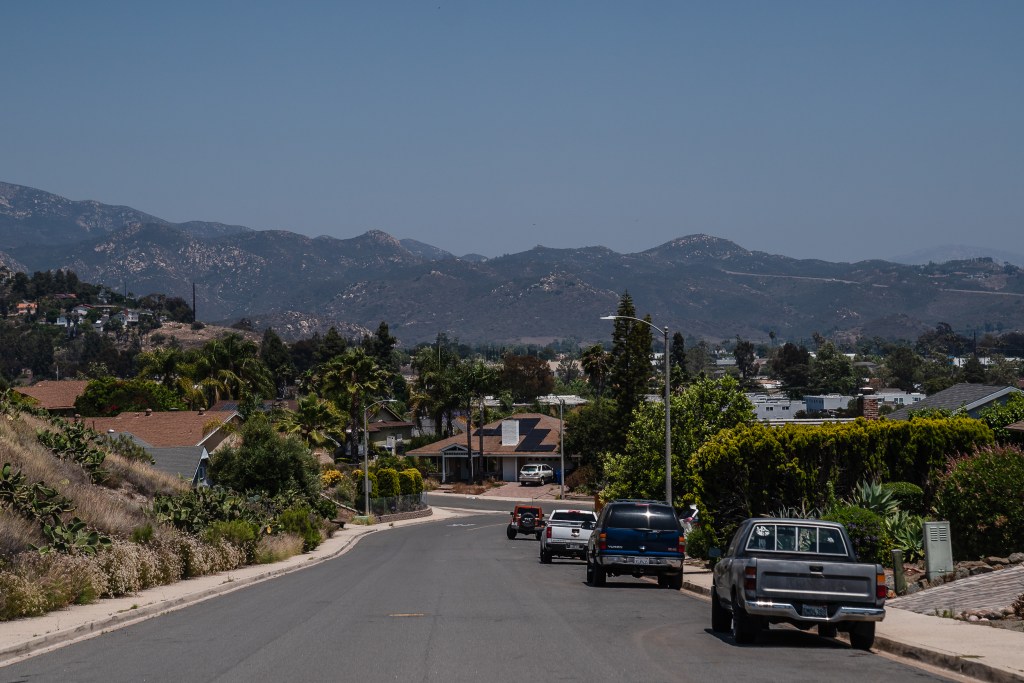
From 2020 to the present day, only two developers have opted to build at least some affordable housing units instead of paying the in-lieu fee, resulting in 10 total affordable housing units built by developers in Poway in the last five years, according to data obtained from the city of Poway.
In that same time period, four developers opted to pay the fee and produce no affordable housing units, collectively paying the city upwards of $225,000 in in-lieu fees.
Meanwhile, there were roughly 48 single-family homes and 117 accessory dwelling units, or ADUs, built since 2020. Developers of single-family homes and ADUs are also required to pay in-lieu fees. Those fees come out to about $54,000 from 2020 to the present day.
“The lion’s share of our activity is individuals building ADUs on their own property, or individuals building single family homes on a lot,” said Julie Procopio, Poway’s development services director. “In these cases, they are most likely contributing in-lieu fees because they’re not going to build affordable housing as part of these projects.”
With only 10 affordable housing units built by developers in the last five years, the city of Poway has had to take the lead on creating the bulk of affordable housing units that currently exist in the city.
Using money from in-lieu fees and income from existing housing projects, the city has spearheaded the creation of about 97 affordable housing units since 2020, with 68 more affordable units in the pipeline, according to data provided by city staff.
When it comes to Poway’s overall progress on building affordable housing units as required by the state-mandate housing plan called a Housing Element, Poway, like many other cities in the county, has a long way to go. The city still needs to make way for more than 600 very low- and low-income units for its 2020-29 Housing Element.
But Procopio pointed out that Poway has unique challenges when it comes to development in general.
“We have a relatively low number of development projects compared to other cities, and that’s because 50 percent of our city is preserved open space,” Procopio said. “Our capacity to create affordable housing isn’t the same as other cities. In light of that, what we’re doing is, in my perspective, impressive.”
As for the upcoming study of the city’s in-lieu fee, Procopio told Voice of San Diego that it was being considered long before the renewed interest from residents.
“These things are typically talked about years in advance in order to plan for future balanced budgets,” she said.
The next steps are to find and hire a consultant who can conduct the study. She expects the process to take 6 months to a year to complete.
“It remains to be seen what the appropriate fee amount will be.” Procopio said.
The Fee’s History
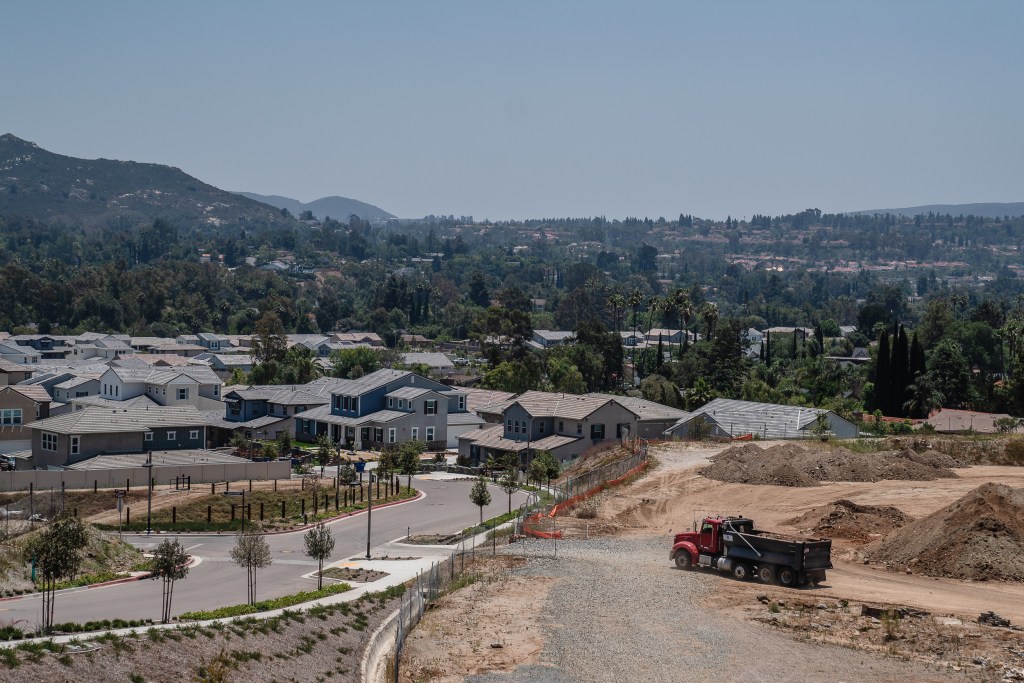
Poway leaders first adopted the city’s inclusionary housing policy in 1993. It required developers to set aside 15 percent of units for low-income households, otherwise, developers had to pay an in-lieu fee of $500 to $4,500 per market-rate unit depending on the size and location of the project.
In 2008, the city conducted a study of its in-lieu fee, similar to the study planned in the next several months. That 2008 study recommended that Poway raise its fee to a maximum of $9,000 per unit.
Instead, Poway reduced the fee to a maximum of $2,250. That decision was due to the widespread economic downturn in 2008, city staff said at a 2018 City Council meeting. Many cities, including Poway, ended up reducing in-lieu fees during that time.
“At the time, developers were approaching city councils everywhere and saying, ‘hey, it’s too expensive to build,’” Procopio said. “The Council felt that if they reduced the cost, it could reduce barriers and obstacles and produce more residential housing.”
In 2010, Poway leaders reduced the city’s fee again, to a range of $100 to $500 per unit depending on the size and location of the project. And in 2018, when city staff recommended that the City Council increase the fee back up to maximum of $2,250 per unit, councilmembers opted to keep it at $500 per unit for multi-family and single-family developments regardless of location or size.
That decision coincided with city leaders’ previous adoption of the Poway Road Specific Plan, a plan to significantly redevelop an aging main corridor in Poway.
Councilmembers raised concerns at the 2018 council meeting that higher in-lieu fees could discourage development and increase prices of neighboring market-rate units.
14,000 USD online People’s lives are changing rapidly. Every year more and more people are participating in online trading. 73.3 million Americans donated last year, and that number is expected to grow significantly.
For INFO click my user Name<<<<<<<