
Sandoval is a senior at Eastlake High School.
As a young person growing up in San Diego, I’ve heard this more times than I can count: “I love San Diego, but there’s no way I’ll ever afford a home here.”
I’ve heard this from teachers at my school and recently from my friend, who is moving to Georgia.
To put it simply, San Diego must do more to make housing affordable. One option is to build higher-density housing near public transit. The longer we skirt around this problem, the greater the issue of affordability becomes for the next generation of homeowners.
Don’t get me wrong, San Diego will always be my home, which makes it all the more painful to see the ways we are constantly falling short when it comes to issues like housing and climate, putting the future of the younger generations in peril. Kids like me are dealing with the trivialities of growing up, trying to arrange future career prospects, all while being uncertain about the safety of our future, or where we will take root when we’re older.
Every generation faces unique challenges that it must deal with, so what? What makes us special?
Despite young people having contributed the least to climate change, our generation is expected to face the brunt of its impacts by living in the warmest environment in recorded human history – a climate we artificially created by emitting billions of tonnes of greenhouse gases into our atmosphere. Impacts range from more extreme and costly weather events to the increasing fragility of our food and water supplies.
I can’t help but feel the need to ask: “Is San Diego really doing enough to combat climate change and create a livable future for its youth?”
With more than half of our city’s greenhouse gas emissions coming from transportation, it’s a no-brainer that this is where decarbonization efforts should be focused, yet this isn’t happening in a major way.
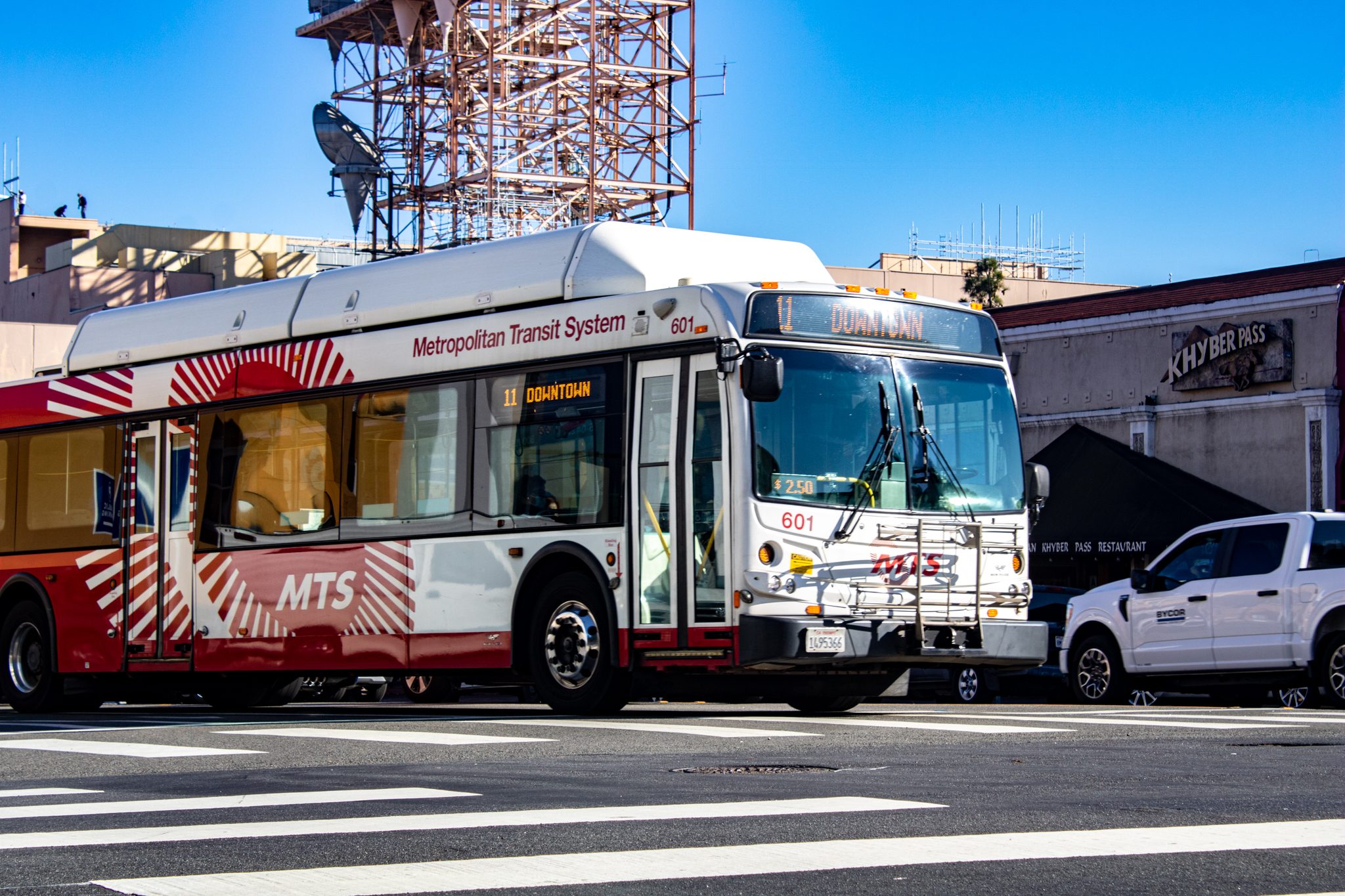
Our public transit agency, the Metropolitan Transit System, is facing a disastrous fiscal cliff, putting crucial operations on the line. This includes the Youth Opportunity Pass, an invaluable program that provides free fares to riders 18 and under.
It didn’t have to be this way. Last November, San Diegans narrowly struck down Measure G, a half-cent sales tax that would have raised hundreds of millions for transportation infrastructure, including public transit. Now, San Diego is seeing the self-cannibalizing impacts this will have on our public transit system, with MTS threatening service cuts or fare increases if the budget deficit isn’t taken care of.
Looking forward, the answer to these concurrent battles is obvious. If San Diego is to truly lower its greenhouse gas emissions, we will have to accept that public transportation must become more widespread and accessible.
When considering that many San Diegans are imprisoned in seas of suburban housing, disconnected from our public transit system, this ask begins to look more unrealistic, and the problem more complex. It’s not that San Diegans despise public transit; the issue is that too many San Diegans cannot access the benefits of having efficient, reliable public transit nearby.
Progressive democrats are working to change this. The recent passing of Senate Bill 79 by Senator Scott Wiener is a glimmer of hope for youth in San Diego and California at large. The new law overrides local zoning rules to encourage greater density and taller buildings near major public transit stops, and requires a percentage of that new housing to be affordable. San Diegans can embrace this bill by invigorating dense housing development along transit routes, or stand in the way of affordable housing by advocating against these developments.
Youth are waking up to their ability to advocate for their futures, as seen by the recent Make Polluters Pay walkouts held across 19 schools in San Diego, with more than 1,300 students participating to support climate legislation that would hold the largest polluters accountable for the damage they have caused.

This is our future, and we have the right to fight for the resources we need.
San Diego is the third most childless city in the United States, which experts say is largely attributable to our affordability crisis. We have the opportunity to reverse this statistic by improving affordability, making the dream of home-ownership a reality for more San Diegans, and giving young couples the confidence and stability to start families. This would simultaneously lower greenhouse gas emissions by promoting a society that sees the value of public transit through building more homes along transit routes, a society that recognizes the importance of investing in public transit to improve its frequency and expand access.
As a 17 year old proud of where he lives, my ask is for San Diego to invest in the future of its youth and the health of our climate across the globe.
This is definitely something that’s always on my mind for the future of my kids. I agree there should be more dense housing, there are too many NIMBYs here that are greedy.