
In video footage from Minneapolis widely shared online, immigration officials swarm a man on a sidewalk on Saturday morning. They take him to the ground, shoot and kill him in a matter of seconds.
The video reminded me of another one I had seen closer to home. In that footage, immigration officials surrounded Anastasio Hernández Rojas at the San Ysidro Port of Entry, forced him to the ground, beat him, shot him repeatedly with a Taser and killed him.
I’ve covered that case since at least 2017, when attorneys took it to the Inter-American Commission on Human Rights, an human rights tribunal within the Organization of American States.
The tribunal concluded last year that U.S. immigration officials — a combination of Customs and Border Protection officers, Border Patrol agents and Immigration and Customs Enforcement officers — violated Hernández Rojas’ human rights, tortured him, killed him and then covered up what happened.
HBO recently put out a documentary about the killing of Hernández Rojas called “Critical Incident.”
Spoiler alert: It details the investigation that led to the commission’s findings and reveals new testimony from an anonymous Border Patrol agent who admits that agents with a special investigative team sometimes tampered with evidence in use-of-force cases to keep the agency from looking bad.
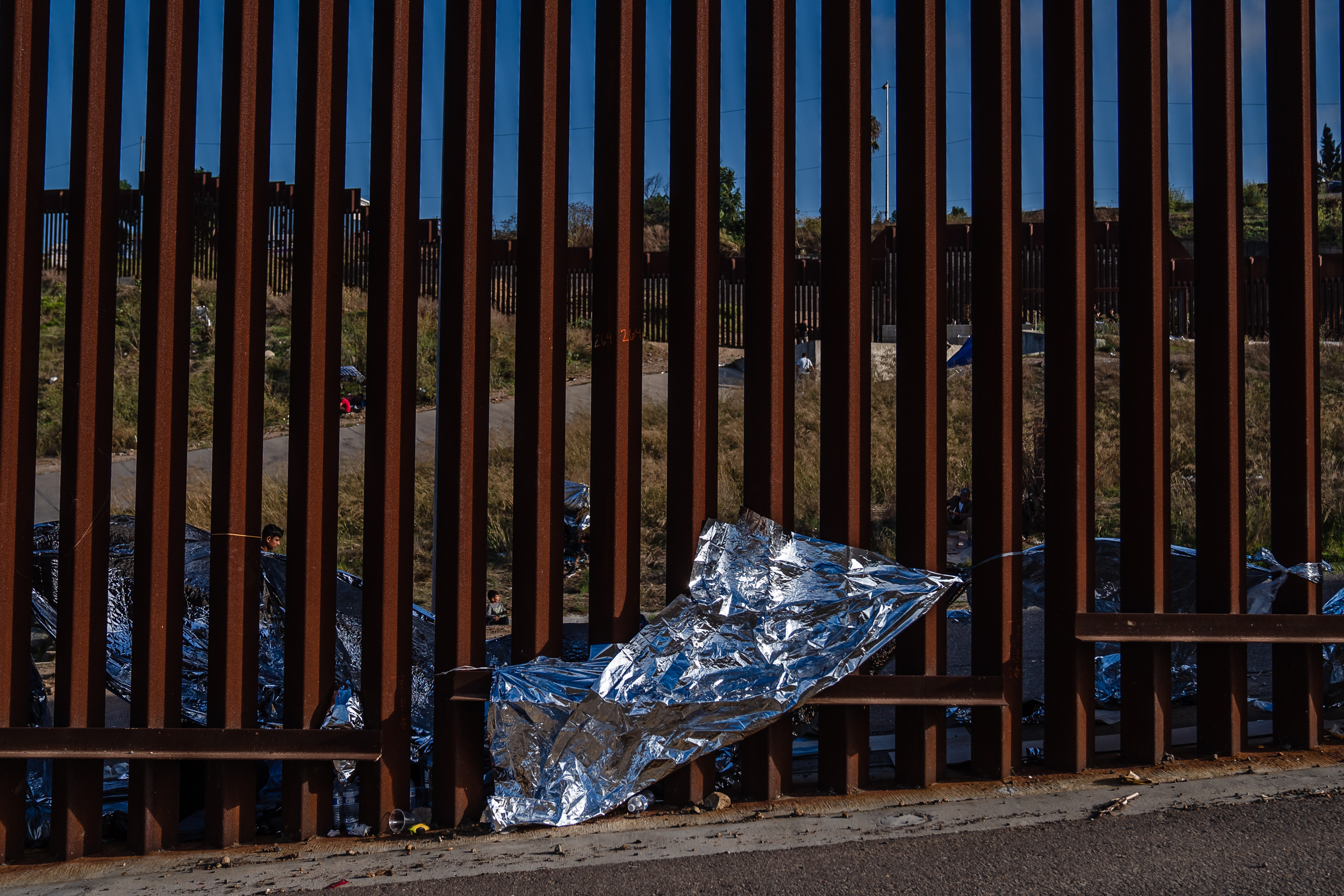
Full of footage of our border walls and the car lanes of the San Ysidro Port of Entry, the documentary assembles many of the voices from the human rights investigation, featuring journalist John Carlos Frey and former Border Patrol agent turned activist Jenn Budd.
In an interview with Ron Newquist, a former San Diego Police Department detective who worked on the case, the documentary team learned that police were never able to get video from cameras that monitor the part of the port of entry where officials were walking with Hernández Rojas to deport him. He said the crime scene was cleaned up by the time police found out the next day.
“It was frustrating,” Newquist tells the documentary team.
It features recordings from depositions with several of the officers and agents for the civil lawsuit brought by the family with the help of attorney Gene Iredale. One of the officers compares Hernández Rojas to an alligator.
Iredale worried that the family didn’t have a strong case until a young woman gave Frey video footage of the killing two years after it happened. She was scared, according to Frey, about the possibility of retaliation but eventually decided to come forward.
The documentary shows Frey and Budd learning about Border Patrol’s investigative teams, which go by different names, including Critical Incident Team. The pair realized that these teams operate all along the border and have been involved in the aftermath of killings by agents for decades.
Frey starts calling agents, messaging them, visiting their homes. Most hang up on him and close their doors.
A voicemail greeting from one of the agents says, “Congratulations and do not be alarmed. But you’ve reached the greatest man you’ve ever met. Leave your name and number and I will call you back soon.”
Eventually, Frey finds one willing to speak — with voice altered and face hidden — about what happened.
“There’s a lot of information that I have that should be known, that should be out there,” the man says. “It’s very hard to come forward and expose the truth.”
But some former officials did come forward during the investigation.
An official from CBP’s internal affairs at the time of Hernandez’ Rojas’ killing, James Wong, tells the documentary team that he thinks Border Patrol has more of a military mindset than a law enforcement mindset, meaning that their intention is to dominate and kill their enemies.
“I could not get them to change their mindset,” Wong says.
The documentary team interviewed Rodney Scott, the current head of Customs and Border Protection who was in charge of the San Diego Sector of Border Patrol at the time of Hernández Rojas’ death. In the nine years I’ve covered this story, Scott never responded to my requests for comment.
In the interview, he denies allegations about deleted video footage and says there was no cover up. He also says that he “stayed off to the side” of the investigation.
But James Tomsheck, who was with CBP’s internal affairs at the time of Hernández Rojas’ killing, said that information from the Border Patrol investigative team would’ve passed through Scott up to agency leaders in Washington, D.C. Tomsheck said he was given an order to fabricate reports about what happened to Hernández Rojas.
Frey, the journalist featured in the documentary, has since told the Los Angeles Times that he believed the channel was trying to bury the film by not advertising it and by delaying its release by more than a year until people were distracted by the holidays.
You can watch the film on HBO Max.
Thank you for reading. I’m open for tips, suggestions and feedback on Instagram @katemorrisseyjournalist and on X/Twitter and Bluesky @bgirledukate.
In Other News
Contracting with ICE: Aisha Wallace-Palomares reported for L.A. Taco that ICE is paying Escondido police for use of the department’s firing range for officer training.
Defying county rules: The San Diego Sheriff’s Department is defying a county ordinance that requires judicial warrants before it can hand over people in its custody to ICE, Jake Kincaid reported for inewsource.
Fast lane: The city of Tijuana is registering people who want to pay $600 a month to use a fast lane at local ports of entry, Salvador Rivera reported for Fox 5 News.
Detention inspection: County Supervisor Terra Lawson-Remer is calling for an inspection of Otay Mesa Detention Center, Gustavo Solis reported for KPBS, after at least six people died nationwide in ICE custody in the first two weeks of 2026.