

Almost three years after county supervisors committed to opening homeless shelters for residents in unincorporated communities, they don’t have much to show for it.
The county is at least two years from opening a shelter in Lemon Grove after supervisors backed off an initial proposal — a decision that cost them millions in state funding. And now, supervisors voted to postpone the opening of a safe parking lot for RVs in Lakeside.
San Diego county leaders over the past three years have said they need to ramp up shelter offerings across the region. But when push comes to shove, shelter projects have been derailed by political and community pressure and they still haven’t been able to deliver a shelter of their own.
In April 2021, the Board of Supervisors approved a motion by then-supervisor Nathan Fletcher to create an updated plan and a new department for addressing homelessness in the county. Later that year, the board backed East County Supervisor Joel Anderson’s proposal to ramp up efforts to identify possible sites for shelter and safe parking.
Anderson pitched an initial focus on East County, the area with the second-largest homeless population in the region behind the city of San Diego. Supervisor Terra Lawson-Remer and Chair Nora Vargas broadened the plan to include their coastal and South Bay districts.
Supervisors later approved a plan to increase shelter for homeless residents in unincorporated communities in February 2022.
Since then, the county has expanded a hotel voucher program that has provided shelter to over 1,800 people at participating hotels since 2020. It has also opened two safe parking lots with a total of 44 spaces and access to services for people residing in vehicles in unincorporated El Cajon and Spring Valley. Although the county considers these lots shelter options, most experts do not. The RV lot in Lakeside is slated to open next year, but Anderson proposed to halt the project until after supervisors receive a homeless services progress report at the end of September.
Still, supervisors committed to opening more shelter sites, and they have yet to open a county shelter for people who live on the street in unincorporated areas.
Instead, the county has relied on the hotel program, which can shelter up to 250 households a night, a program Anderson once described as insufficient. A county spokesperson would not say how many participating hotels are in East County. Tim McClain said, “East and North counties currently make up 73 percent of the available rooms” and that number fluctuates.
After years of outreach and planning, supervisors recently landed on yet another shelter site but that won’t open until 2026. Previous plans crumbled after community opposition and wavering by supervisors, two common denominators in the county’s years-long quest to deliver shelter.
These reactions reflect a certainty for virtually all local homeless-serving projects: When neighbors first hear of them, they aren’t eager to accept them – and if they can, they’ll try to stop them. County supervisors have repeatedly backed down in response.
Anderson, once adamant about the need for brick-and-mortar shelter options, has shifted his focus on existing resources because he says residents he represents pushed back. He now says shelters don’t make sense in communities with small homeless populations.
Supervisors pulled a tiny home project in Spring Valley in June after residents protested for three months. Supervisor Monica Montgomery Steppe proposed an alternate location in Lemon Grove. That’s now facing a hail of backlash.
Why Is It Taking So Long?
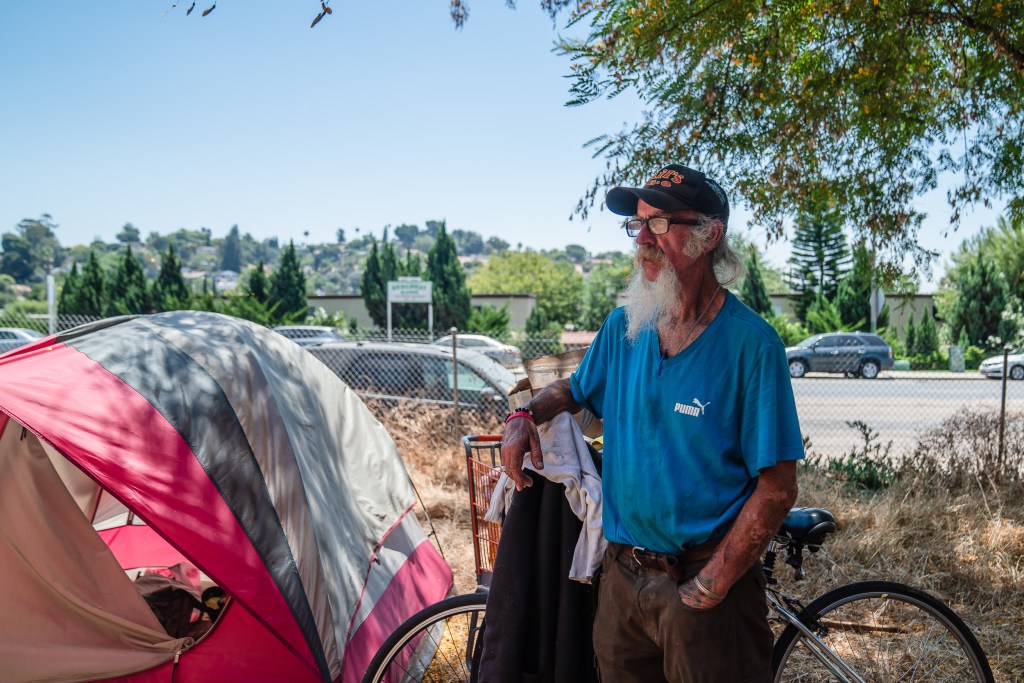
Anderson, who faced community opposition when he explored putting a shelter in Santee in 2023, wrote in a statement that the No. 1 challenge holding up the county shelter project is the lack of locations that work.
According to the county several factors are reviewed to determine whether a location is viable. These include unsheltered residents’ ability to stay connected to their communities, access health care, social services, and transportation, the time and cost to prepare the site, and the impact on the local community and environment.
Anderson wrote in an email to Voice of San Diego that he did extensive outreach, but that delivering a shelter is “difficult, lengthy and expensive,” and not every community has a large enough homeless population to justify one. Anderson wrote that he is not going to force communities to do things they don’t want to do.
“My goal is to be transparent and address the community’s concerns while making progress on the homelessness issue,” Anderson said.
County staff identified 1,300 possible sites in 2021 and after holding dozens of community engagement sessions whittled them down to 28 located in East County by 2022. They spent the next year planning and further assessing these sites.
In March, supervisors unanimously approved a plan to build a 150-tiny home shelter in Spring Valley and accept $10 million from the state to fund the project. The county hoped to complete it by November 2025 but instead killed the project three months later.
Although staff chose the Spring Valley site after scouting dozens of locations and holding multiple community engagement sessions throughout the region for over a year, many residents were still not on board.
The pushback became too much for Vargas. In June, she successfully urged a county board majority to rescind the project.
“The cabins project slated for Jamacha Road failed to meet the community’s standard and was strongly opposed by the local residents,” Vargas later wrote in an email to Voice. “I understand concerns expressed by residents about putting these cabins near schools and parks where children play, and believe that we can find better, more thoughtful solutions by working with affected communities.”
Lawson-Remer was the only board member who voted in opposition.
“Clearing homeless encampments and moving people into tiny cabins is a better option than having people continue to sleep on the street,” Lawson-Remer wrote in a press release.
Hoping to keep the $10 million grant, Montgomery Steppe asked the board during the same meeting if it would consider a smaller location in Lemon Grove previously vetted by county staff.

On July 16, the board approved Montgomery Steppe’s proposal to proceed with a 70-tiny home shelter in Lemon Grove. But the state terminated the $10 million grant one day before the vote, likely forcing the county to move forward with other funding.
As in Spring Valley and Santee, Lemon Grove residents were quick to let the county know they didn’t support the proposal.
On July 18, hundreds of residents filled the Lemon Grove Recreation Center to hear from Montgomery Steppe about the tiny home shelter plan.
For about two hours, people lined up to share their opinions from a podium microphone in the center of the gym. Most spoke in opposition, saying they felt blindsided by the county vote on the new location just two days earlier.
In an effort to get the community on board, Montgomery Steppe and her team are now developing an updated community outreach strategy that will include more opportunities for residents to learn about the project and give feedback in smaller group settings.
“It’s a continual and evolving situation that we’re dealing with, but we’re going to communicate with folks every step of the way,” Montgomery Steppe said.
She told Voice she’s pressing forward because the homelessness crisis in the county is getting worse and many in opposition to the project are the same people who contact her office complaining about homelessness.
“I’ve been doing this a long time,” said Montgomery Steppe, a former San Diego city councilmember. “I know we are going to come up against opposition but we have a population that does not have a place to lay their heads at night.”
Lucky Duck Foundation CEO Drew Moser, whose nonprofit has urged local governments to open more shelters and helped fund some of them, said shelters always draw community pushback, but that residents who are opposed often end up being grateful after they open because they see how much the project helped the community.
“So much of it comes down to political will,” Moser said.
For now, Montgomery Steppe says she’s got the will to see the project through.
Although the county will run the tiny home shelter, Lemon Grove Mayor Racquel Vasquez said she will work closely with it to ensure the project benefits the city and its surrounding areas.
Living Unsheltered Is Wearing Them Down
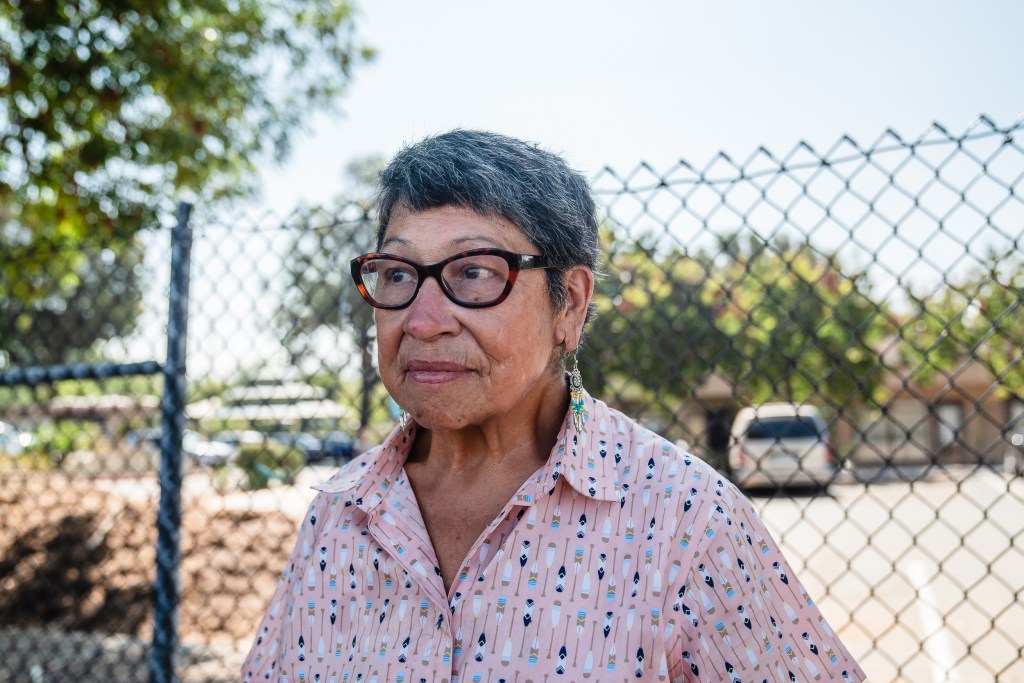
Lifelong Lemon Grove resident Teresa Rosiak, who knows many of the region’s homeless residents, supports the shelter.
“I am still backing the concept as long as it is run properly and that my Lemon Grove homeless will get some of these homes,” Rosiak said.
For six years, Rosiak has run a weekly outreach group in the area that provides people living on the street with food, water, toiletries and clothing.
During a recent visit to Lemon Grove and Spring Valley with Rosiak and homeless outreach workers with the nonprofit PATH, I spoke with people living on the street.
Most were from East County and wanted to stay there because it is familiar and they have community connections. All had health issues and wanted shelter.
Dorian Campbell, 37, told me he has post-traumatic stress disorder, a traumatic brain injury and dental pain that prevents him from eating anything but soft foods. He said an unspecified hotel program he used lost funding and the shelters he stayed at in downtown San Diego were overwhelming and scary. Now he stays on a sidewalk adjacent to a Spring Valley strip mall just down the street from his mom’s house and close to his sister.
Campbell wants housing and to go back to school but says his life has been a battle for the last eight years.
Marla Valadez, 68, was living in Spring Valley when she lost her job and home 11 years ago. She stayed because she knew the area well, eventually living in canyons, tunnels and most recently a tent near a park with her dog Limi, an Alaskan Malamute mix.
Two of Valadez’s closest friends died this year on the street and she recently witnessed a woman die in her tent. Living unsheltered, she said, is wearing her down.
A few miles away in Lemon Grove, Rebecca Pineda stays in a small encampment on a dry strip of land sandwiched between North Avenue and Highway 94.
Pineda, 51, is from East County and has been homeless for 10 years. She has a rare neurological disease called Guillain-Barré syndrome that often limits her mobility to the point she cannot move and chronic post-traumatic stress disorder.
She recently witnessed a friend die from a hit and run on the street where she stays but feels safer there than in the downtown San Diego shelter that triggered her PTSD. She said she’s struggled to get hotel vouchers, though she didn’t say whether they were tied to the county program. Pineda is interested in a tiny home. Her daughter lives close by and checks in periodically but Pineda is deeply ashamed when she visits.
“I want to be a mother and a grandmother and to be myself,” Pineda said. “I can’t imagine my grandbabies seeing me like this but if I were in a tiny home I would let them.”
For now, the county is moving forward with the shelter in Lemon Grove and Pineda’s dream of welcoming her grandchildren to her tiny home could become a reality — if she can wait two years, get one of the limited spaces and the project comes to fruition.
Ummmm- El Cajon Parking is closed and that’s what’s in Spring Valley- El Cajon cars. No families, nice cars and uneducated people advising those staying there on tax dollars. The County is over spending and not achieving anything but shuffling those suffering around. When they do get house and if who is paying for that- oh hotel vouchers or section 8. California and especially San Diego County have lost their minds and the poor veterans who are not even addressed! The so called Tiny Homes do not work! Chula Vista’s is the closest but also at about 1/10 of the costs, vacancy, non-residential area, no schools and best part there’s no one waiting to get in! Also they throw out the folks who don’t adhere to rules right back out on the streets.
There is no place you can put a homeless shelter that people will not oppose it. Your choice then is to continue to do nothing and have the street homeless population grow, or find a location that has the least problems and put it in over community opposition.
If I could make another suggestion, that would be to get serious about preventing homelessness in the first place. That would be a lot less controversial than homeless shelters, it would be cheaper as well.
Lastly the solution to homelessness is homeless housing with services so the homeless stay in the housing.
I have been to the fair grounds when thousands of prople are there. Many bathrooms and electricity. Hundreds of parking spaces. Could that be leased to the city? IHSS workers could help provide servixes. Possibly most homeless would be eligible. I do not like to see the elderly and families with children especially out in the cold and wet.
Get the mentally ill off the street first. Make more “beds” available at mental hospitals. Make treatment mandatory.
No homeless is the reason everybody wants to move to north SD county. writer is incredibly out of touch.
I am grateful to see Lemon Grove and Spring Valley get support. Are Julian and its mountain residents not included in any program or funding to address homelessness? We have a bad situation that is getting worse. No one represents us. No one addresses our needs. No one responds to emergencies unless it is a fire that could impact others. We are on our own and struggling. There isn’t even suggested resources or plans for our people in crisis. I don’t understand why we are so excluded.