
Alex Jackson is the executive director of American Clean Power-CA. Scott Murtishaw is the executive director of California Energy Storage Alliance.
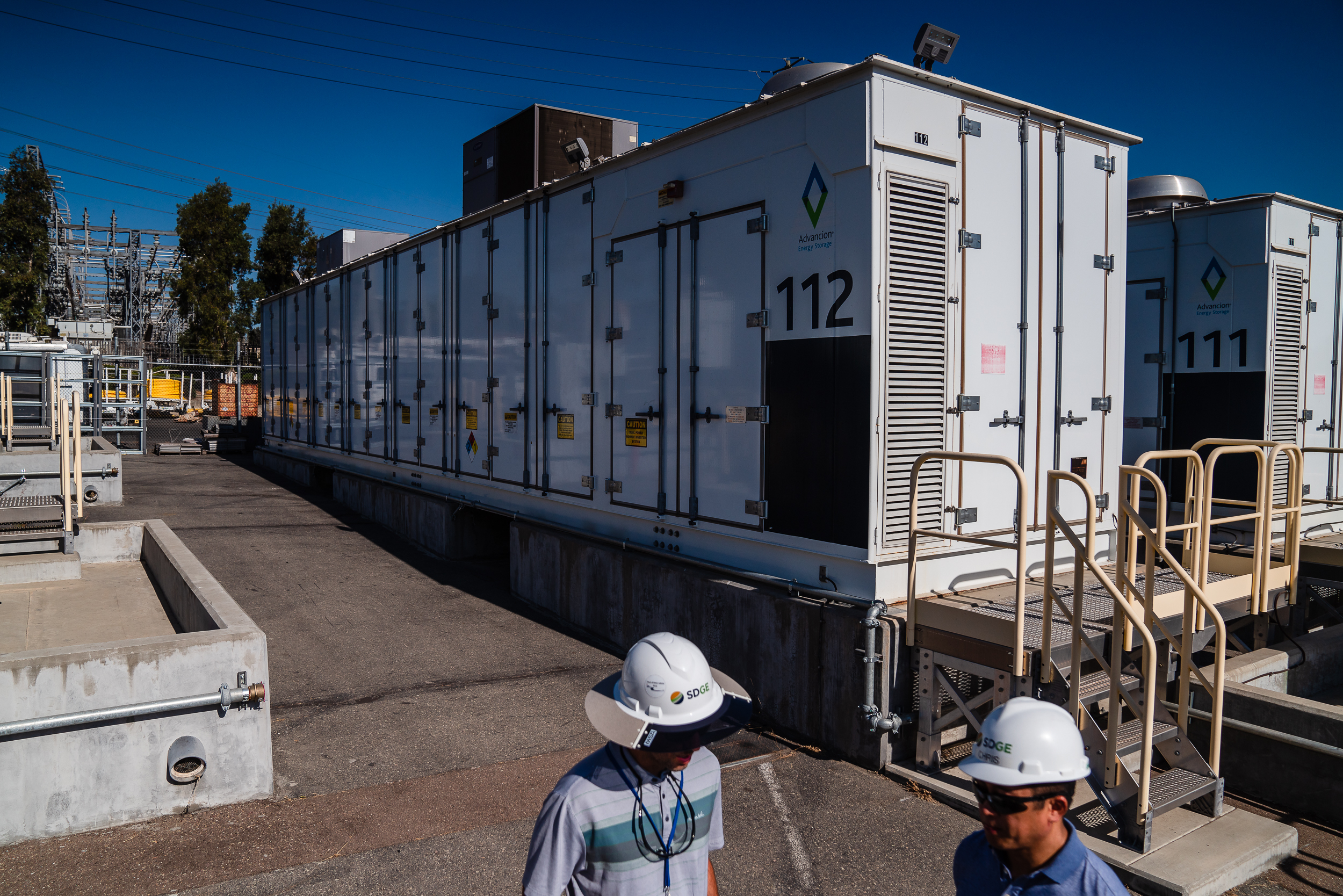
A fire extinguished last Friday at a San Diego Gas & Electric battery energy storage facility in Escondido has drawn renewed attention to this new technology — and the critical role it will play in the region’s transition to clean energy. The SDG&E fire could also have an outsized impact on a San Diego County Board of Supervisors meeting this week, where local leaders will discuss how to manage the growing number of battery storage facilities in San Diego — and whether to consider a moratorium on their development.
A moratorium on battery energy storage facilities risks the ability to make our power grid more reliable — while hampering progress on the region’s clean energy goals. We hope local leaders will take a moment to consider several alternatives.
First, it’s important to remember exactly what happened in Escondido: A small fire in one of the 24 battery storage containers at an SDG&E facility was put out within 12 hours. There was no spread between enclosures, and the fire resulted in no injuries, nor did it have any unsafe impacts on water or air quality in the area. No injuries have occurred at any other energy storage incident in California. Evacuations are always unsettling, but as Escondido’s fire division chief acknowledged orders to leave the area were “really precautionary” and “there were no reading of toxic fumes… even as close as five feet.”
Battery storage may be new, but the fact remains this innovative technology for capturing energy and holding onto it until it’s needed after the sun goes down is both safe and highly regulated. Energy storage has dramatically improved the reliability of California’s electric system and helped avoid the blackouts that rolled across the state as recently as 2020. The state’s energy agencies estimate that thousands of additional megawatts of energy storage capacity will be needed in the next few years to meet growing electricity demand from electric vehicles while also retiring our last nuclear power plant and several ancient coastal gas-fired plants that harm marine life.
Energy storage systems are only getting safer with each passing year as battery technology advances and facilities adopt the most up-to-date safety standards. This is true of the proposed Seguro Energy Storage project near Escondido, which has the potential to provide 100 percent clean energy to 240,000 homes — while reducing the region’s reliance on fossil fuel-powered facilities that are polluting our air and accelerating climate change.
Energy storage systems have a track record of contributing to a clean and efficient electric grid, and installation is accelerating rapidly, helping communities across California avoid blackouts, while generating tens of thousands of jobs and powering a new wave of investment in American manufacturing.
Like all energy technology, operating storage facilities do require sophisticated safety systems, and the clean energy industry is investing billions in their development. As a result, battery storage, already one of the safest and cleanest energy options available, is getting safer with each passing year: Energy storage deployment nationwide increased by 18 times between 2017 and 2022 —growing from 645 MWH to 12,191 MWh — making the air cleaner and our communities safer, as clean power replaced dirty fossil fuel facilities. In the meantime, only a total of 12 safety events were reported worldwide during that period. As was the case in Escondido, even when they occur, these incidents have been contained within the facility where they start, and air quality monitoring by state and local officials has confirmed that air quality in neighboring areas has remained at safe levels during these events.
Developers are working proactively with state and local leaders to ensure this technology is safe and meets community needs — including by collaborating with fire officials to craft a model ordinance to site these facilities and ensure they are developed and operated safely.
The appropriate response to an incident like the one last week in Escondido is not a widespread moratorium on battery storage in San Diego County — an approach that would chill economic development and put jobs at risk, while impeding our region’s ability to meet its climate goals.
Instead, San Diego should continue to advance its climate plans, working thoughtfully and collaboratively with clean energy developers to make sure new storage systems comply with the latest safety standards and provide lasting benefits to the communities they serve.
San Diego does not have to make a choice between clean energy and safe neighborhoods. San Diegans deserve both, and energy storage is the best way to give it to them.
Fires in these battery storage systems cannot be extinguished as we have seen in this incident. The best firefighters can do is try and cool adjacent modules and hope they do not start burning as well. In a fire, the toxic chemicals used are vaporized and carried into the atmosphere by the heat and smoke. This is the 3rd fire I am aware of in the past year; 2 have been in the Valley Center storage facility and now this one. Batteries pose severe environmental challenges from manufacture, use and through disposal. There are safer alternatives
to battery storage. https://www.energy.gov/eere/water/pumped-storage-hydropower
Author is a moron.
it’s worth breathing chemicals if my family can say we stand with Taylor.
Besides the danger to the community from battery fires, they are NOT clean in the sense that the mining of the materials and the processes for making them are toxic and destructive to the environment. As the demand for more battery storage facilitie increases, so does the damage to the planet.
From the Columbia Climate School in New York City: the “…use of large quantities of water and related pollution; potential increase in carbon dioxide emissions; production of large quantities of mineral waste; increased respiratory problems; alteration of the hydrological cycle.”
These two writers have a vested interest in battery technology. They are paid shills.
So, as usual, it is follow the money….
Neither of the authors live within 500 miles of San Diego. Easy to say it’s OK to burn a few of these when you know it will never affect you or your family.
The fumes from these toxic hazmat containers are a hazard to the environment, if they are so great and “green” then why do nearby homes, businesses and schools have to evacuate? Does this author work for the energy companies? The employees and patients at the local hospital nearby were complaining of the chemical fumes that they could smell inside the hospital. Why don’t you place these storage facilities in your own neighborhood and make sure to take a big whiff when, not if, they catch on fire then you can tell us that they are safe.