
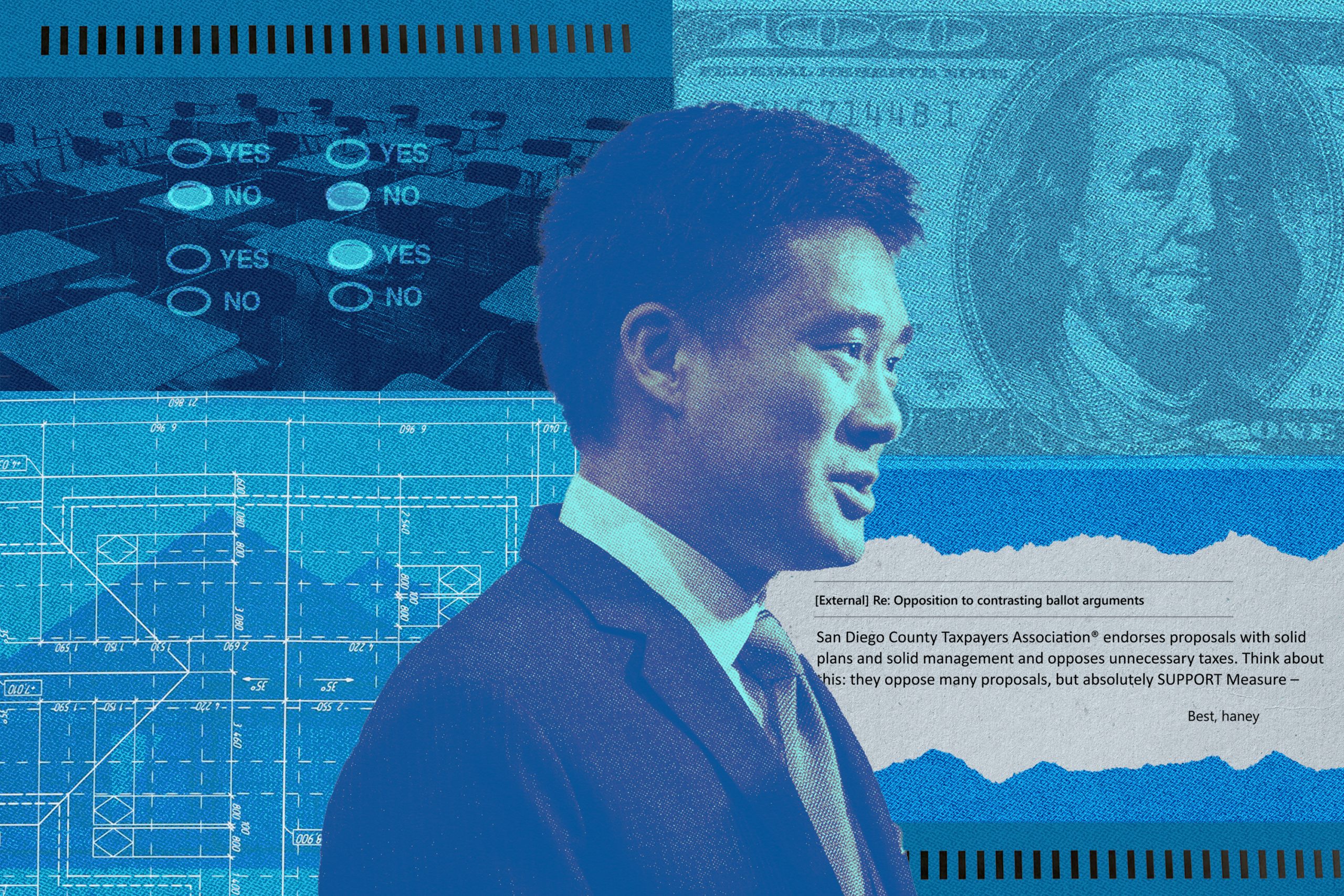
Bradley Johnson, the superintendent of the Dehesa Elementary School District, was shocked last year when he heard the San Diego County Taxpayers Association would not endorse the district’s bond measure on the November 2024 ballot.
The Taxpayers Association’s endorsement had become an important one to school districts, and it had endorsed Dehesa’s $3.1 million bond on the 2020 ballot. Haney Hong, who on Monday abruptly resigned as CEO of the Taxpayers Association, said it was because the 2024 bond for $3.3 million had not accounted for inflation and the changing cost of construction. But Johnson and his colleagues had accounted for those factors.
Johnson and his staff had not, however, paid for and attended the Taxpayers’ Association $1,200 per attendee course on school bonds.
“I do think it is a little bit of a conflict,” Johnson said. “Given, you know, the Taxpayers Association is the one evaluating whether or not they’re going to support a bond measure.”
In the year leading up to his resignation, Hong’s relationship with local school leaders had begun to sour. According to several San Diego County superintendents, Hong and the Taxpayers Association used unreasonable and unethical methods in their process for endorsing school bonds.
In emails exchanged between the Taxpayers Association and school district leaders, Hong refused to sign the endorsement on the ballot for one school district’s bond after its leadership declined to join him in opposing a city sales tax. Hong also persistently solicited local education officials to pay for tickets to the Taxpayers Association’s course on preparing bond measures. The $1,200 price tag for the class raised concerns of a conflict of interest.
Monday, the Taxpayers Association announced that Hong had resigned. Last year, the Association had publicized that Hong had agreed to a new contract that would keep him in charge until 2027. In a statement, Hong said “The Association needs a leader with different gifts than what God has granted me.”
The Association touted its work on school bonds as part of Hong’s “amazing” work over the last year.
Johnson said there are major flaws in how the Taxpayers Association assesses school bond measures for endorsement. But because of the perceived power of the Association, district administrators felt obligated to curry favor with Hong.
“Some of my colleagues at other districts don’t want to speak out because they’re worried about future relations with the Taxpayers Association,” Johnson said.
Hong said districts and other government agencies are free to not seek the Taxpayer Association’s endorsement.
“If a school district doesn’t value the process that we go through, that’s their choice,” Hong said. “I don’t have an issue with that.”
Pitting the School House Against the Fire House
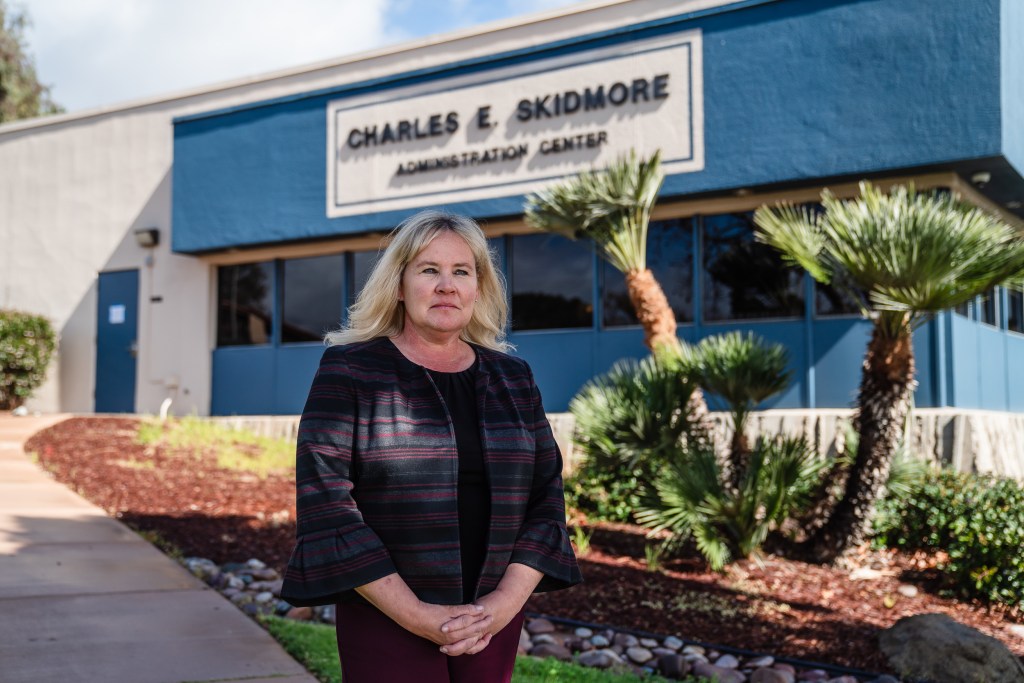
In early 2024, the Santee School District began preparing a bond proposal for the 2024 election. The district, which operates elementary and middle schools in Santee, needed to raise money for leaky pipes, heating and air conditioning and school security systems.
In California, school districts can ask voters to let them borrow money to fund repairs, new construction and new classroom technology. If the bond receives at least 55 percent of the votes, the district can increase property taxes to pay them off. Santee’s bond measure, Measure NN, would not have raised local property taxes but continued a pre-existing tax of up to $12 for every $100,000 of a property’s assessed value.
Passing bond measures is easier for school districts in liberal-leaning communities.
In a district like Santee, however, the endorsement from a perceived fiscally conservative organization like the San Diego County Taxpayers Association felt precious for education officials. To improve their chances of getting the bond passed, Santee School District Superintendent Kristin Baranski and her team submitted dozens of pages of financial reports and data for review. For months, the San Diego County Taxpayers Association analyzed the district’s budgeting as well as its infrastructure needs.
In May, Baranski and her staff presented the bond proposal to the board of the Taxpayers Association. Shortly after, the board voted to endorse Measure NN.
With the endorsement secured, district officials and their consultants had to carefully craft the argument in favor of Measure NN that would appear on the official ballot. Hong would then formally sign the ballot argument supporting the bond, signalling the Taxpayers Association’s endorsement.
In August, a day before Baranski would send the finalized argument to Hong for his signature, the Taxpayers Association’s Public Affairs Manager Izzy Hall contacted the Santee School District: “We’re interested in incorporating our opposition against the sales tax in the city to strengthen credibility,” Hall wrote. The voters of Santee were also considering a sales tax supporters said would fund fire and emergency services – an increase Hong and the Taxpayers Association opposed.
Hong wanted the ballot argument for Measure NN to express opposition to the city’s sales tax.
The district declined the offer.
Hong replied, “Understood. Pls remove all references of the San Diego County Taxpayers Association® in the argument then. I won’t be signing Santee’s.”
A Santee school board member called Hong upon seeing this message and convinced him to sign the argument. The exchange over email, however, seemed inappropriate to Baranski.
“It definitely was out of line, in my opinion, to ask one agency to make any opinion about a local measure that’s not in our jurisdiction,” she said.
In an interview three days before he announced his resignation, Hong said he was trying to strengthen the Santee School District’s argument on the ballot by drawing the contrast between the school district and the city’s proposed tax increases. He said superintendents are “great educators, but they don’t have the kind of experience that God’s afforded me in how to message and communicate with ballot arguments.”
Hong said he possessed the discretion to strategically sign or oppose any ballot argument, even if it meant trying to form political coalitions for or against unrelated ballot measures. In this particular case, he said he found the city of Santee’s proposed sales tax increase to be particularly egregious and added that voters would still have seen the endorsement for the Santee School District’s bond if they visited the Taxpayers Association’s website.
“The position of the San Diego County Taxpayers Association was to support the Santee bond,” Hong said. “But when it comes to communications with voters, as the chief executive, I get the discretion.”
A Course for Bonds
Baranski said the Taxpayers Association’s effort to market its course on school bonds contained a more alarming conflict of interest.
The course, taught by Hong and featuring guest speakers from across the school construction industry, costs districts $1,200 for each attendee. Lani Lutar, who served as the president and CEO of the Taxpayers Association from 2006 to 2013, said this course used to cost less than $200 per person during her tenure.
Mark Nelson, a former board member of the San Diego County Taxpayers Association, said he had concerns that Hong and his staff were unfairly judging administrators who did not take the class.
“That was a growing concern for me,” Nelson said. “I think as it went on, there was increasing discussion about who didn’t show, as if that was somewhat of an indictment of their ability to carry out their duties.”
Hong said there was no connection between paying for the course and getting his endorsement.
“Most of these folks went into education because they’re great educators,” Hong said. “But finance and construction is not in their wheelhouse, so we offer this class to help them design a good bond program.”
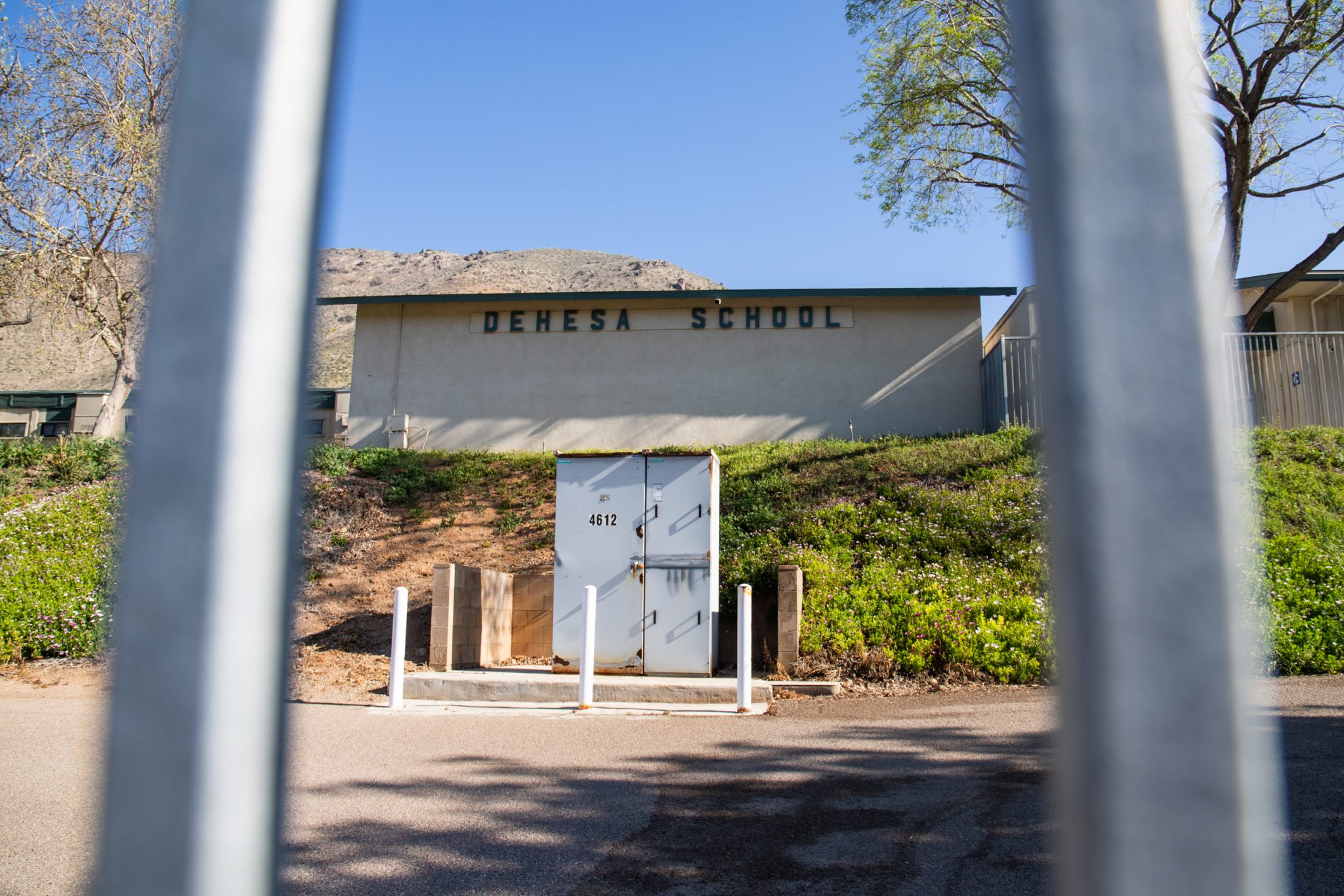
Johnson, from Dehesa, has other frustrations with the Taxpayers Association’s process for assessing bond measures. In 2020, the district failed to pass a $3.1 million bond despite getting the Taxpayers Association’s endorsement. The money would have gone to urgently needed classroom repairs and renovations. The district tried again in 2024 with a $3.3 million bond, but the Taxpayers Association opposed the measure.
Johnson said he was shocked when he learned of the opposition, considering that the dollar amounts were nearly identical to the last bond that received the Taxpayers Association’s endorsement. Hong said the Taxpayers Association opposed the 2024 measure because the numbers were too similar to those in the 2020 bond, raising concerns that the district had not adjusted for inflation and for changes in the cost of construction.
The school district, however, included adjustments for inflation. In its rationale for opposition, the Taxpayers Association’s report on the bond measure doesn’t mention anything about inflation and cites only “questionable enrollment trends” and the lack of “substantive materials” submitted for review. According to Johnson, his team submitted all the records that were requested by the Taxpayers Association. Email records between Dehesa Elementary School District and the San Diego County Taxpayers Association substantiated Johnson’s claim. Public school data shows that the district is growing in enrollment, supporting Dehesa’s need for improved facilities.
“We’re actually growing at a faster rate than what we originally thought,” Johnson said. “One of our struggles now is we don’t have the funding to help build out our facilities.”
Waning Influence

Of the 22 school bond measures on the 2024 ballot, the San Diego County Taxpayers Association endorsed 12. Among those 12, seven did not pass. Among the 10 that were either opposed or not commented on by the Taxpayers Association, nine passed. With these results, school district administrators are weighing whether seeking the Taxpayers Association is a worthwhile endeavor, considering the personnel and time required to submit all the necessary records for analysis.
Districts in South County in particular successfully passed bond measures without the endorsement. At the South Bay Union School District, Chief Business Officer Rigo Lara found the Taxpayers Association’s process frustrating and its work an inaccurate assessment of the district’s bond proposal. He said the district will likely seek the Taxpayers Association’s endorsement in the future, but he won’t lose sleep if it opposes any future bond measures because of the strong Democratic voter base in the community.
But districts in conservative strongholds don’t enjoy the same support for property tax increases. Education officials in cities like Santee admit they will likely seek endorsement from the Taxpayers Association in the future.
“We’ve always asked for an endorsement from SDCTA as a means of support for the financial need for a facilities bond program,” Baranski said. “We have not considered the alternative.”
The Taxpayers Association’s spotty record did not discourage Hong.
“As long as public policy is being proposed, it is valuable for us as an independent watchdog to offer our thoughts,” Hong said. “If somebody doesn’t listen to it, well, there’s not much I can do about that.”