

In February, Darshan Patel, the CEO of the Hotel Investment Group, asked the San Diego City Council’s Select Committee on Cost of Living to exempt small hotels from plans to raise the minimum wage for hospitality workers. He said he spoke for the many Indian-Americans who owned small hotels like the Super 8’s and Motel 6’s with little margin to pay workers more.
He pointed to the workers in the room advocating for higher wages.
“All the workers here are just like us. They have revenue that comes in from wages and they have expenses to pay. If one of those expenses increases by 40 percent in January, just like that, they won’t be able to survive just like our smaller motel owners,” he said.
Patel got what he wanted. The Committee Wednesday will consider the newly drafted ordinance which would raise the minimum wage to $25 for workers at hotels, amusement parks, zoos and event centers within the city of San Diego’s boundaries.
But the ordinance will not cover hotels with fewer than 150 rooms, at least as they have drafted it now. It’s one of the many mutations of the proposal as it has gone from concept to reality over the last five months.
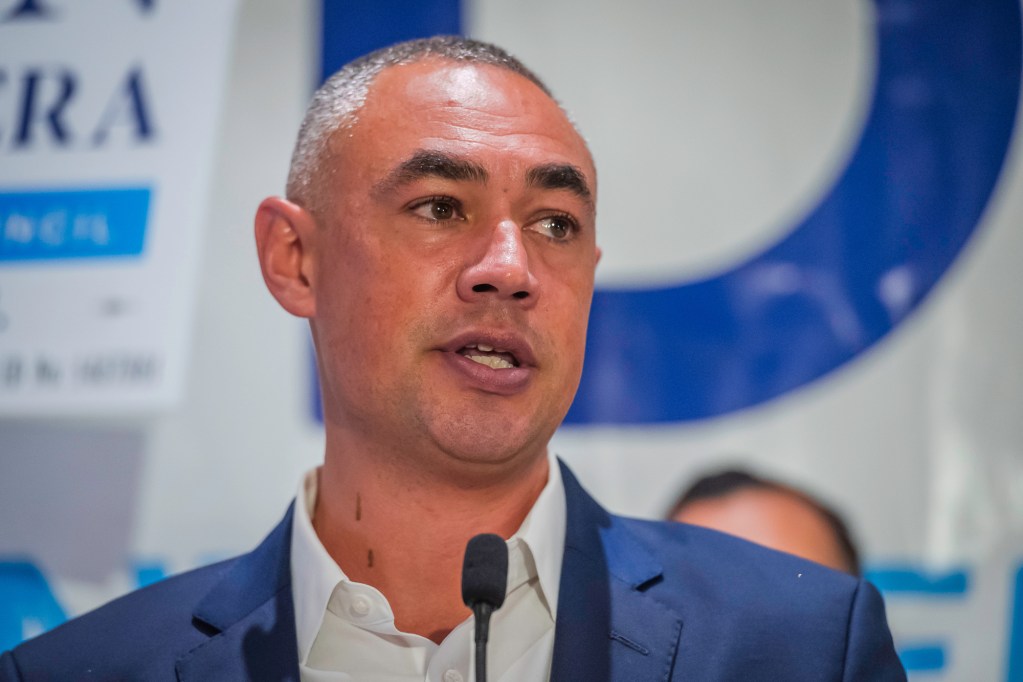
Councilmember Sean Elo-Rivera, the chair of the Committee and the leader of the proposal, said that it was a good example of how they are willing to listen and work with impacted industries.
“They showed us their business model. They don’t have spas, parking or other amenities for visitors that they can squeeze additional revenue from. They offer a room and that’s it. A motel can only charge so much before it’s not a motel any longer,” he said.
The Committee will review the newly drafted ordinance and listen to testimony again. Meanwhile, a coalition is forming to oppose the new law and potentially try to force it to a referendum.
“There’s definitely momentum and interest to spend money to fight this,” said Chris Cate, the president and CEO of the San Diego Regional Chamber of Commerce, who is helping pull the coalition together. They’ve circulated polling. (Cate is a member of the Voice of San Diego Board of Directors.)
The ordinance as it stands: Here’s the draft. It now lists specific event venues that would be subject to the new minimum wage and it includes the San Diego Zoo and “amusement parks” – presumably SeaWorld as it is more than 75 acres but maybe not Belmont Park, which is smaller.
It would establish a $25 minimum wage for workers at these places only that would go into effect January 2026 and then increase each year with the cost-of-living. If an entity has a collective bargaining agreement with a union, it is exempt if both employees and the employer agree.
Elo-Rivera’s staff cited Bureau of Labor Statistics that show the median hourly wage of housekeepers to be $18.67 – far below what a living wage would be in San Diego with its high cost of living. They cited earnings reported by hotel owners like Sunstone Hotel Investors, which assured investors that it expects to pay profit dividends throughout 2025.
“Hospitality workers earning the minimum wage should not be struggling to survive in San Diego, as these workers are the face of our city, greeting and serving visitors,” the staffers wrote.
Robert Gleason, the CEO of Evans Hotels, which owns the Bahia and Catamaran at Mission Bay, said he doesn’t pay anyone the minimum wage except tipped employees who make, effectively, a lot more than that.
“It’s the wrong policy response at the wrong time,” he said. He pointed out that the city of San Diego has hundreds of jobs that pay minimum wage or less than the $25 an hour the city wants the hospitality industry to pay.
“If the argument is that hotel workers need to make significantly more to survive in San Diego, it is inconsistent to believe hotel workers are the only ones who should be able to afford to live here and that the city’s own workers shouldn’t be afforded the same wage,” he said.
Elo-Rivera does not like that argument.
“We are not a multibillion-dollar corporation. The city of San Diego worker representatives support this. The city’s workers aren’t selling each other out here — that’s not going to work,” he said.
It’s causing a storm in Los Angeles: A similar law in Los Angeles has caused a political battle to break out. It established a new minimum wage that will climb to $30 per hour by 2028, in time for the Olympics. But it only includes hotels and the airline industry, not event venues. Hotels are trying to overturn it and collected signatures at recent protests.
LA-area unions have responded with their own initiatives that would raise the overall minimum wage to that level or would include event venues.
Hotel owners in Los Angeles have complained that the industry still hasn’t recovered from Covid and many of them want out of the business.
Event venues: The Padres spoke out against the measure in February and plan to keep going. Since the team operates out of a city-owned facility, it must pay the city’s minimum living wage, which next month goes to more than $21 per hour.
The Padres pay the highest minimum wage of any team in Major League Baseball. Padres staff surveyed other teams and found the $21.06 living wage they will pay is higher than every other team, including the three other California teams, Seattle and New York. The new minimum wage in Los Angeles did not include the Dodgers.
Padres CEO Erik Greupner had sent the City Council a blistering letter about how disappointed and disrespected the team felt when the proposal highlighted Petco Park and indicated it may have to pay a higher minimum wage than other facilities it competes with like Snapdragon Stadium or the Sports Arena. But the new draft includes those venues.
Still it doesn’t define other venues like the Waterfront Park or festivals that may host massive concerts.
“When you’re picking and choosing venues, it starts to feel like targeting,” said Diana Puetz, the Padres vice president of public affairs.
She pointed out that most of the Padres fans are San Diegans, not visitors, and it would only raise their already high ticket prices and concessions costs.
That’s an argument San Diego State University is now taking on as well. The ordinance would include all of the events at SDSU’s Snapdragon Stadium that aren’t SDSU related. And even those would probably feel compelled to pay the same wage or better.
John David Wicker, SDSU’s athletic director, sent over a written statement.
“We will continue to monitor the policy proposal as it moves through the process. As the proposal stands today, it will increase operating expenses at our impacted venues, which will have to be passed along at some level to our partners and event attendees.”

The International Alliance of Theatrical Stage Employees, or IATSE Local 122, has been trying to organize the workers at Petco Park and Snapdragon concerts for years.
Greg Sowizdrzal, the president of IATSE 122, said he has already seen impacts from the minimum wage push. Employers are raising wages. “They wouldn’t have done it if this wasn’t happening,” he said.
“I’m sure that a lot of people are thinking why are we doing it only for hospitality workers. Why not everybody? Well, I would love to do it for everyone. But the fact is hospitality workers make up one of the bigger industries here and they get shit on the hardest,” he said.
Elo-Rivera said there is still time for negotiations and he understands the concerns from the Padres and others. But also it’s not his problem, he said, to help them figure out how to handle the increased costs or protect San Diegans from the price increases.
“The overwhelming majority of the wages covered by this proposal are paid by the tourism economy. The problem isn’t that workers are asking to earn enough to live in the city where they work—it’s that wealthy corporations and owners are trying to squeeze every last cent of profit out of workers and the public,” he said.
Puetz said the disregard for increased costs for Padres fans and concert goers is jarring.
“The whole point of the committee is to lower the cost of living but this is only going to increase it,” she said.
What a joke. We going to raise not only parking but the minimum wage and it’s not his problem to help businesses figure out how to handle the increased costs? Ego- Rivera just thinks anyone is just a pot to siphon money off of to champion low end workers in commodity jobs as though everyone isn’t affected by affordability.
14,000 USD online People’s lives are changing rapidly. Every year more and more people are participating in online trading. 73.3 million Americans donated last year, and that number is expected to grow significantly.
For INFO click my user Name<<<<<<<
I remember when San Diego was described as a “ quiet Navy town”. There were 3-4 shipyards and the defense industry and the military were our largest employers.
The Padres can seriously go f themselves. We still haven’t gotten closure on the “charity” concessions. “She pointed out that most of the Padres fans are San Diegans, not visitors, and it would only raise their already high ticket prices and concessions costs.” Um, sorry Diana. Us regular San Diegans were all priced out of your stadium a long time ago. Baseball games are not part of our cost-of-living, but thanks for playing.
https://www.baseball-reference.com/teams/SDP/san-diego-padres-salaries-and-contracts.shtml
Local leaders should learn how to manage their own budget before telling successful businesses how to run theirs.
Want to play a fun game, ask yourself what the Padres franchise would look like today if city leaders were making all of the decisions for them. It’s a joke right? But yet, here they are telling the Padres, the Zoo, Sea World and the entire tourism industry how to run their businesses??
Exactly what are the qualifications of these local politicians to make such drastic economic decisions impacting the businesses that represent the foundation of our entire city? And if their policies destroy these landmarks and industries…will they be held liable? Of course not.
These are the same fools who just unanimously approved a homeless project costing more than $1 million per unit…I have zero faith in their ability to make important decisions for our local businesses.