


Alan Berube is senior vice president at the Policy & Innovation Center (PIC), a think tank and social impact incubator headquartered in San Diego. In this new monthly column, DC Explained, Berube will provide insights to help residents understand the fast-moving national economic and policy dynamics affecting San Diego County.
Last week, the U.S. Congress wrapped up a process it started way back in January to pass H.R. 1, a massive tax and spending bill, sending it to President Donald Trump’s desk for his signature on July 4.
The 870-page law, known to supporters as “The One, Big, Beautiful Bill Act” and detractors as “The Big Ugly Bill,” will have far-reaching impacts across San Diego’s economy, institutions, and communities.
The region will feel those impacts largely over the objections of its local Congressional delegation. The bill passed both chambers of Congress with no Democrats voting in favor, including California’s two senators and four of San Diego County’s five representatives (Republican Rep. Darrell Issa supported the bill). That sort of stark partisan divide would doom most legislation in the Senate, where 60 votes are required to overcome a filibuster, but this “budget reconciliation” bill proceeded under special rules that required only a 51-vote majority.
As the ink dries on this new law, it’s worth considering what particular groups of San Diegans might feel its effects most.
Winners

There are at least a couple of constituencies in San Diego that could end up better off financially once the bill’s provisions are fully implemented:
The military: San Diego is home to the largest collection of U.S. military assets in the world, particularly naval assets. In addition to expanding support for service members’ housing and healthcare needs, the new law invests tens of billions in shipbuilding and unmanned naval systems, which could benefit Naval Base San Diego and local defense contractors such as Lockheed Martin and General Atomics.
Higher-income taxpayers: Most of the bill’s cost comes from permanently extending a set of tax cuts adopted in 2017, and adding a few new sweeteners. These changes lock in lower income tax rates, increase deductions and credits, and temporarily exempt portions of tips and overtime earnings from taxation. The Yale Budget Lab estimates that the richest 5 percent of taxpayers nationwide will get the largest income boost from the bill. Those taxpayers are over-represented In San Diego County, where they make up roughly 10 percent of all filers.
Losers
Unfortunately, there are more categories of local losers from the new bill than winners. A small sample include:
Low-income San Diegans: The bill cuts federal support for Medicaid (Medi-Cal in California) by an estimated 18 percent, and SNAP (CalFresh in California) by an estimated 20 percent. These programs largely support individuals and families with incomes under $30,000 annually. In San Diego County, 880,000 residents are enrolled in Medi-Cal, and more than 400,000 receive CalFresh assistance. According to a Washington Post analysis, the legislation makes the largest cuts to the federal safety net in more than 30 years, achieving them through a mixture of new work and documentation requirements for recipients, and reduced cost-sharing with states. On June 24, the County Board of Supervisors directed county staff to analyze the potential impacts of these changes on local agencies and residents, and to develop strategies for filling service gaps.
Nonprofit hospitals and clinics: As a health insurance program, Medi-Cal pays providers for the care they give to low-income kids, adults, and seniors. Many of those providers are local nonprofit hospitals and clinics whose bottom lines thus depend on Medi-Cal reimbursement. In 2023, for instance, Medi-Cal accounted for more than half of revenues at Rady Children’s Hospital, and roughly two-thirds of patients at Family Health Centers of San Diego were Medi-Cal enrollees. These cuts will force providers to cut staff and services, and at the same time increase ER visits and uncompensated care for newly uninsured individuals.
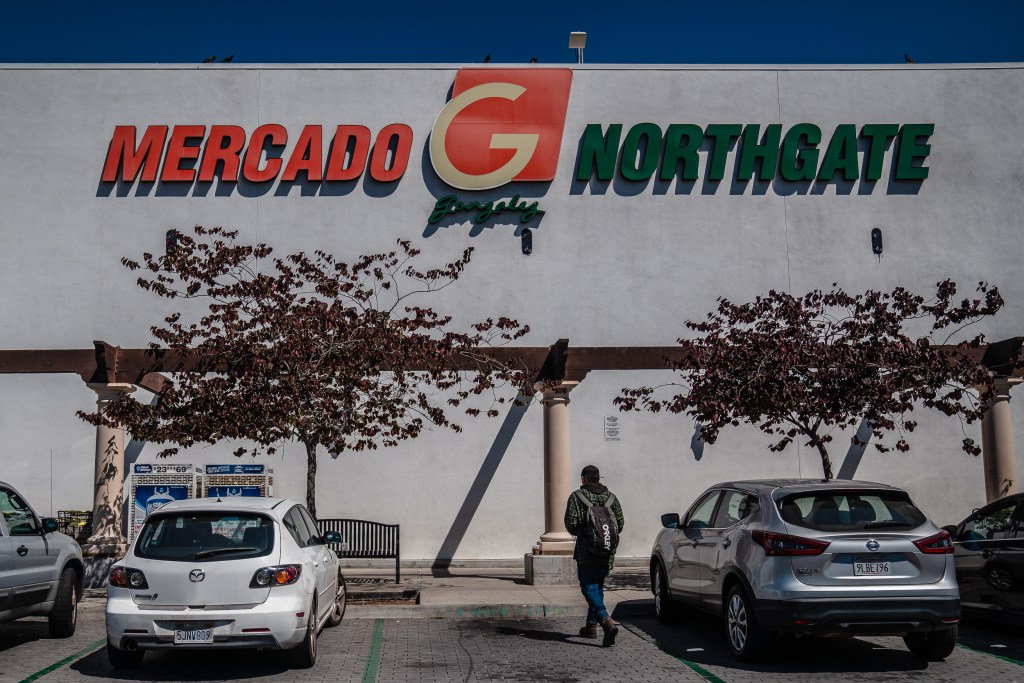
Grocery stores: Cuts to CalFresh will ultimately impact the retail stores where recipients spend their benefits. San Diego County residents received $890 million in CalFresh benefits in 2024, which they redeemed at 2,300 participating grocery stores county-wide. The food retailers suffering the largest hits to their bottom lines will likely be those located in lower-income communities, locations where residents are already underserved by mainstream supermarkets.
Clean energy and energy efficiency providers: The bill largely rolls back federal subsidies in the 2022 Inflation Reduction Act (IRA) that aimed to boost the provision of clean energy and reduce greenhouse gas emissions. San Diego is home to hundreds of cleantech companies—utilities like SDG&E, manufacturers like Solar Turbines, and R&D organizations like Scripps Institution of Oceanography—that had benefited from the IRA’s push to accelerate clean energy production. Local real estate developers and contractors will no longer benefit from tax credits for energy-efficiency home improvements or installation of electric vehicle chargers. And the bill puts the final nail in the coffin for EPA programs that supported local nonprofits working to improve environmental quality in lower-income communities.
Immigrants: The bill funds a several-fold increase in the budget for Immigrations and Customs Enforcement (ICE), including money for more ICE agents and expanded immigrant detention and removal capacity. According to the Brennan Center, the legislation makes ICE the largest federal law enforcement agency. It represents an implicit acknowledgment that President Trump is seeking to deport not only undocumented immigrants with criminal records, as his campaign had advertised, but also millions of otherwise law-abiding individuals, many of whom have been living, working, and raising families in the United States for decades. More than half of immigrants arrested by ICE in San Diego and Imperial counties in 2025 had no criminal charges or convictions, and that share has been increasing in recent months. Beyond immigrant families themselves, businesses, schools, and organizations in immigrant neighborhoods will inevitably feel the impacts from a massive new enforcement push, as will local industries such as tourism and agriculture that rely on immigrant workers.
Within hours of the bill’s final passage, political analysts turned their attention to how President Trump would sell the bill to a skeptical public, and how Democrats would use it in their efforts to take back control of Congress in 2026. In the meantime, state and local governments, businesses, and residents here in San Diego will be left grappling with the many ways in which the legislation accelerates a new, more antagonistic relationship with Washington, D.C.
Introducing DC Explained

I’m Alan Berube, senior vice president at the Policy & Innovation Center (PIC), a think tank and social impact incubator headquartered in San Diego. In this new monthly column, DC Explained, I’ll provide insights to help engaged San Diegans understand the fast-moving national economic and policy dynamics affecting the County and its residents.
Previously, I led Brookings Metro, the Washington D.C.-based Brookings Institution’s program on cities and regions, and still remain involved as a nonresident senior fellow. That background—and the fact that I still spend most of my time in D.C.—helps me connect national trends to Greater San Diego realities. As part of PIC, I help bring the organization’s cutting-edge research and policy analysis to elected officials, community leaders, and philanthropic organizations locally and across the nation.
DC Explained aims to be data-driven, practical, and focused on issues and actions critical to San Diego’s future. You can contact me at aberube@thinkpic.org.
Two other big losers will be the poor and homeless. As rental subsidies, addiction treatment funding, mental health treatment funding, funding for shelters and motel vouchers all disappear, many of those people are going to wind up homeless on the streets, they have no where else to go.
The other loser will be the City of San Diego, progress has been made on clearing the streets of the homeless, although at a high human cost. I am afraid much of that progress will be undone as the Republican budget cuts put more people on the street.
Cal Matters in a May article on the effects of the budget cuts on California forecast 1 million new homeless in California due to programs being shutdown.
Last year’s Point In Time count found 187,000 homeless in California.