
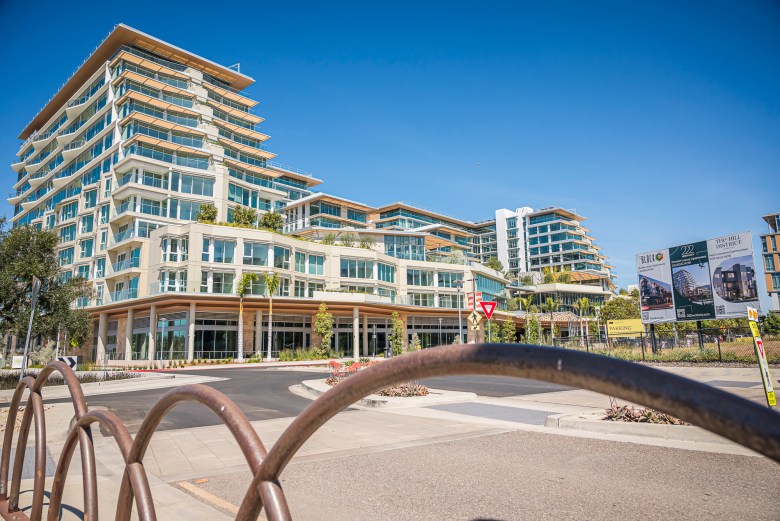
In 2004, a developer had an idea to create a downtown where one had never existed before — in the suburbs of San Marcos.
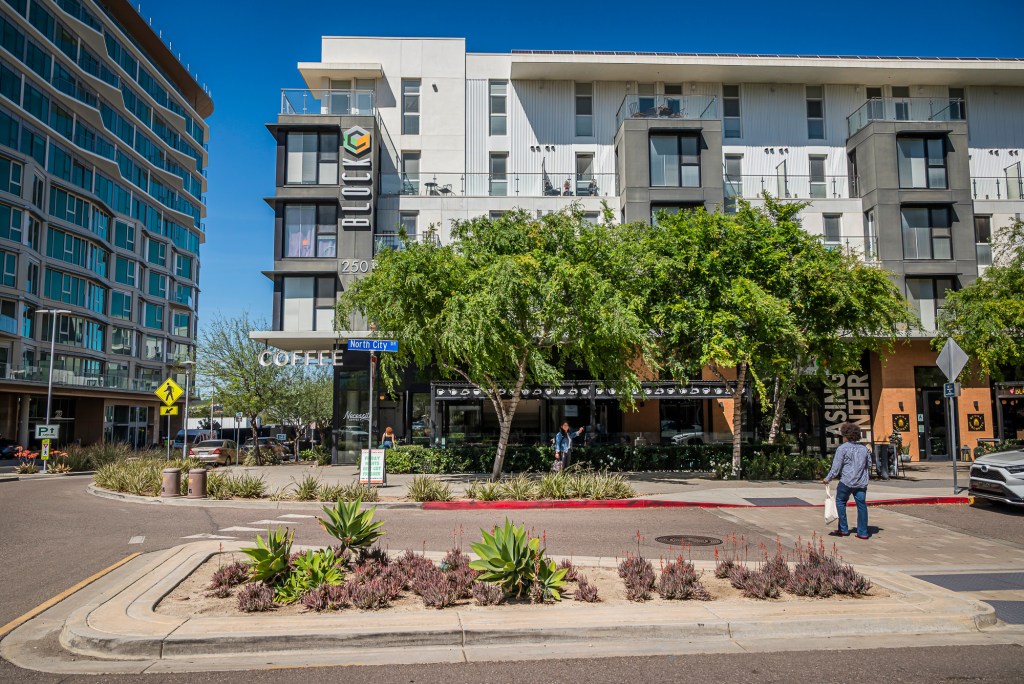
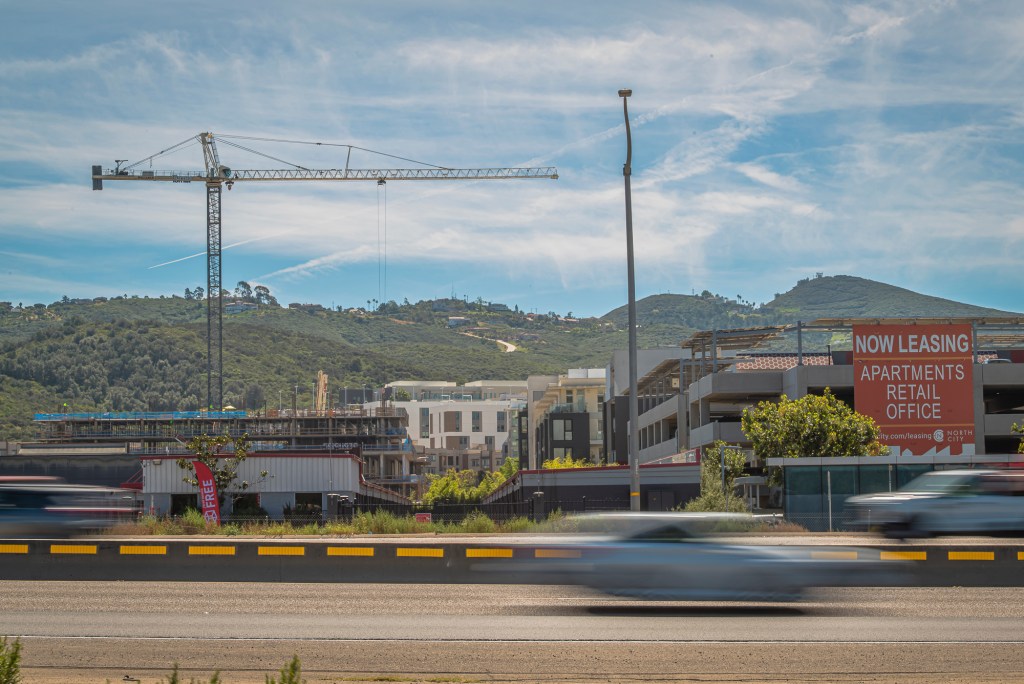
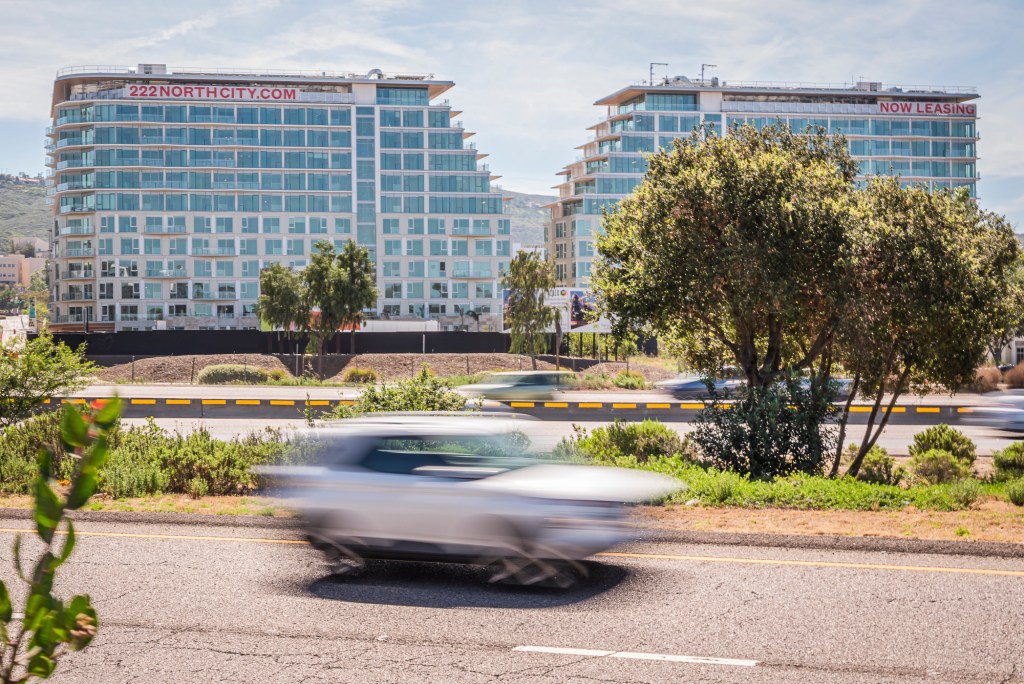
The area, adjacent to California State University San Marcos, now spans 200 acres of urban density with a walkable village charm. Thousands of homes, dozens of acres of parks and open spaces, restaurants, shops and offices have been springing up in the new downtown for the past several years.
On any given afternoon, students spill out of The Quad, professionals work from open-air co-working spaces and locals gather for the weekly farmers market.
It’s called North City, and though construction is still ongoing, the developer and San Marcos officials hope it won’t just serve as a downtown for San Marcos, but all of North County.
Beyond providing a vibrant central hub, North City has served another critical purpose: helping the city make significant strides toward its housing targets.
San Marcos is like no other city in San Diego County. It’s on track to meet its state-mandated housing targets in three out of four categories.
State housing laws require cities to make way for a certain amount of housing for people in four different income categories: very low, low, moderate and above moderate. Cities in San Diego County have until 2029 to permit enough homes to meet their goals. San Marcos is on track in every single category but “very low.”
In the moderate category, San Marcos has already exceeded its goal, in part because of all the development in North City. It has permitted 871 moderately-priced homes that are non-deed-restricted – meaning they aren’t subsidized. Their “moderate” price was set by the San Marcos housing market.
How They Did It
San Marcos Mayor Rebecca Jones has a two-pronged strategy: good planning and negotiating with developers toward projects that fit the city’s needs.
Jones has been the mayor of San Marcos since 2018 and was on the City Council for several years before that. She attributed the city’s overall housing successes to good city planning.
She used North City as an example. San Marcos didn’t have a downtown area until city leaders created a plan for one. They envisioned a central place for different types of homes, retail spaces, offices, restaurants, recreational areas and more.
When completed, the $2 billion development will create a total of 3,400 new homes. About 15 percent of those homes, roughly 400 units, will be deed restricted as affordable housing.
City leaders purposefully planned for denser housing in more densely populated and central areas, Jones said.
“In the more downtown urban areas, it makes sense to have a little more density,” Jones said.
Jones – who is a Republican and currently running for the County Board of Supervisors – said she prefers to keep high-density projects out of smaller single-family neighborhoods as much as possible.
But because state housing mandates require cities to approve all proposed affordable housing projects that fit a city’s general plan, city leaders can’t ensure that all high-density projects will be concentrated in North City.
It’s the “shoehorning,” as Jones called it, of large projects in single-family-home neighborhoods that causes dissatisfaction and backlash from residents across North County. But Jones seems to have found a way to curb that dissatisfaction in San Marcos as much as possible.
She often bargains with developers on the details of a project to ensure it is mutually beneficial to both the developer and the city’s residents.
“My job is to figure out how to get the best development possible. I’ve had instances where they’ve worked with me and sat down and we’ve tried to figure out how they could build something that can fit within the parameters of what’s already approved today,” Jones said. “I also don’t want my whole entire Housing Element to be opened up because I try to say no to a project and get sued over it; that isn’t beneficial to my community either.”
Jones thinks more elected officials should take this hands-on approach.
“I think most people are reasonable,” she added. “If you break it down and you talk to them and you take that time, you’d be surprised. Most elected officials may not want to take the time because it’s a big job… We need to do more of that.”
Entering ‘Phase Two’
Erik Bruvold, CEO of the San Diego North Economic Development Council, said that Jones’ strategy of working with developers instead of trying to circumvent state housing mandates or being hyper critical of them is something elected officials are doing more often.
He called this era “phase two.”
“In phase one, I think you saw a lot of leaders be very critical about state mandates and be very frustrated with them, and so they approved any project that came across the desk kind of holding their nose,” Bruvold said. “I think now, we’re in an interesting second phase where you see throughout North County, elected leaders who may not be all that happy with the state policies, but are now proactively working with folks within the confines of the state law to try and get projects that they feel meet community needs.”
He used Oceanside city leaders as another example. The City Council recently greenlit a 326-unit mixed-use project to replace the Regal movie theater downtown. The developer originally proposed a higher density of housing with less public space, but the approved revised plan will have fewer residential units in exchange for more shops and restaurants and a significantly larger public plaza.
Besides San Marcos’ commitment to outreach, Bruvold believes the city had the advantage of having much more open space than most other cities.
“I think it reflects the fact that it is just easier, particularly in California, to develop where there hasn’t previously been any development,” he said.
Chula Vista also has more open space than most other cities and has experienced a building boom in recent years.
Now, in North County, the opportunities cities have to meet their state housing goals are primarily going to be with infill projects, meaning in areas that already have high development, Bruvold said.
Bringing Back Redevelopment Agencies
But as infill developments increase, supporting infrastructure must increase, as well, Bruvold said. That’s why he’s an advocate of bringing back redevelopment agencies, a tool he says is critical to funding infrastructure.
Redevelopment agencies were local government programs created by the state to help fix rundown neighborhoods. Over time, they became a key tool in California’s affordable housing efforts. Cities could use money from property taxes to subsidize affordable housing and build infrastructure to sustain that housing, like roads, sewage systems, parks and other public amenities.
In 2012, then-Gov. Jerry Brown shut down redevelopment agencies statewide mainly to redirect their funds toward closing the state’s massive budget deficit. But some cities and agencies also misused funds and took advantage of the system.
Before its dissolution, redevelopment agencies, like the one in San Marcos, helped cities create significant affordable housing stock with infrastructure that could support that housing.
“While the particulars of what is missing do vary city to city, in so many cases, what we have is infrastructure that was built to accommodate development in the fifties and sixties,” Bruvold said. “And to be able to do infill mixed-use or infill residential development, we just need bigger infrastructure, and redevelopment would’ve been a critical tool to do that.”
Both Jones and Bruvold hope that one day redevelopment agencies can come back in some form. Voice of San Diego previously reported that some lawmakers at the state level believe redevelopment agencies are a key component in creating more affordable housing, building infrastructure and helping underserved areas. And some of those lawmakers are still actively trying to bring them back in some way.
Finally, Bruvold believes the state’s housing mandates aimed at encouraging housing production have been essential to creating more housing in San Marcos and throughout North County.
That’s where Jones disagrees.
“These mandates coming from Sacramento, they don’t know the specific needs of our community and what our community wants,” Jones said.
Instead, Jones said, housing decisions should be left up to city and county leaders.
“I think local control, and yes, there are definitely going to be some examples where cities are not doing the right thing, but for the most part, cities do want to do the right thing,” Jones said. “Elected officials do want to try to provide well-rounded housing for their residents who want to stay here and have jobs here.”
Todd Gloria could use some lessons
ᴇᴠᴇʀʏ ɴɪɢʜᴛ, ɪ ᴡᴏʀᴋᴇᴅ ᴏɴ ᴍʏ ʟᴀᴘᴛᴏᴘ ꜰᴏʀ ᴛᴡᴏ ʜᴏᴜʀꜱ, ᴇᴀʀɴɪɴɢ $̾ 18,500. ᴛʜɪꜱ ᴛʜᴏʀᴏᴜɢʜ ᴀᴘᴘʀᴏᴀᴄʜ ɪꜱ
ᴘʀᴏꜰɪᴛᴀʙʟᴇ ᴀɴᴅ ᴇꜰꜰᴇᴄᴛɪᴠᴇ—— Go On P0rofil
Sorry, I do not agree that San Marcos has good planning. When all those units are filled and the tens of thousands of new residents hit the streets…..
Three things:
1) Rebecca Jones has it right: “It’s the “shoehorning,” as Jones called it, of large projects in single-family-home neighborhoods that causes dissatisfaction and backlash from residents across North County.”
This should be obvious to San Diego City authorities, it is the heart of NIMBY/YIMBY conflict. People who have worked to live in a single family home neighborhod do not want that neighborhood destroyed with high density living. It is notable that YIMBYs never actually build in their own neighborhoods, instead stuffing the overdevelopment into Someone Else’s Back Yard.
2) Eric Bruvold also recognizes this: “I think it reflects the fact that it is just easier, particularly in California, to develop where there hasn’t previously been any development,” he said.
Again, this should be obvious, yet San Diego City officials turn a bland eye and a deaf ear to this. You are not ruining any existing neighborhood when you do this.
3) There is no mention of traffic in this article. The entire corridor of Route 78 is plagued with some of the worst traffic congestion in San Diego. And the areas where it intersects I-15 and I-5 are contenders for the worst rush hour in San Diego. Not much hope of fixing that as there is nowhere to build more freeway.
So once again we arrive at the basic problem for San Diego – there is no room for new development that does not have serious negative consequences for existing homes. And the State mandates completely ignore this easily demonstrable fact.
You know who you have to thank for the State forcefully overriding the needs of local governments don’t you ? The San Francisco political machine featuring Gavin Newsom and Scott Wiener
That’s great, but where’s the infrastructure to support the rising population that this development brings? Roads in SM are already beyond congested, but we keep adding more housing but no relief on the transportation side. And where are the developer fees going? It’s going to take 30 minutes to go on the 78 from Las posas to the 15 in the near future.
Didn’t read the whole article. How are they addressing the added traffic on an already congested 78 hwy?
I DO credit Mayor Rebecca Jones for this. I can remember being in a SANDAG conference room in 2019 as she and other elected officials discussed RHNA numbers…..housing quotas, if you will. She had a “bring it on” attitude, “San Marcos is ready.”. I would love to see more of that.
re: “These mandates coming from Sacramento, they don’t know the specific needs of our community and what our community wants,” Jones said.”
Jones is an idiot, she is blaming Sacramento for finally forcing cities to allow for more housing which is exactly what San Marcos did.
She is putting “qualified income” housing in the middle of an industrial park, ruining local businesses by letting RV camping get out of control. The entire premise of this is misleading because the majority of development is centered around Cal State and it’s ability to grow…not because she is buddy buddy with developers. …she got lucky because CSUSM had open space around it to develop and she happened to be mayor at the time when the development was happening…she didn’t usher in anything that was already going to happen. She has let RV camping run wild over the past few years, she’s ignored local businesses for years and their outcry for help in this matter.
If you like sprawl that leads to painful traffic congestion, this story is for you.