
Across the nation and much of San Diego County, voters this week delivered a sharp rebuke to Republicans and yanked America leftward.
Everywhere, that is, except in San Diego’s South Bay.
Even as Republicans and conservative-leaning independents lost federal, state and local races around the county, South County moderates and conservatives notched notable wins and held onto seats despite expensive campaigns to oust them.
As the dust settles, the region’s largest city, Chula Vista, still has a Republican mayor. In Imperial Beach, where a powerful labor union spent tens of thousands of dollars to unseat conservative-leaning independent Mayor Mitch McKay, McKay kept his seat.
And in the Chula Vista Elementary School District, a scorched-earth, union-backed effort to boot Republican Delia Cervantes from the school board appears to have failed. Cervantes, a thorn in the side of the district’s pro-union majority, holds a wide lead over five other candidates vying for her seat.
Only in National City and San Diego City Council District 8 did progressive Democrats clinch high-profile races. However, in both of those cases, the contests were Democrat-on-Democrat and revealed more about infighting within the party than any fundamental shift in voter attitudes.
Above all other factors, it was that infighting, which this year grew especially divisive and bitter, which doomed Democrats’ grand hopes of gaining regionwide power.
That, and the unpredictable, often moderate inclinations of South County’s Latino voting majority.
Interviews on Election Day showed South County voters distinguishing between national races – in which they loudly expressed their disgust with President Donald Trump and his MAGA allies – and local issues.
I’ll be reporting in greater detail on the National City results soon. For now, here’s a breakdown of results in Chula Vista and Imperial Beach and what they mean for both cities and the region.
Chula Vista
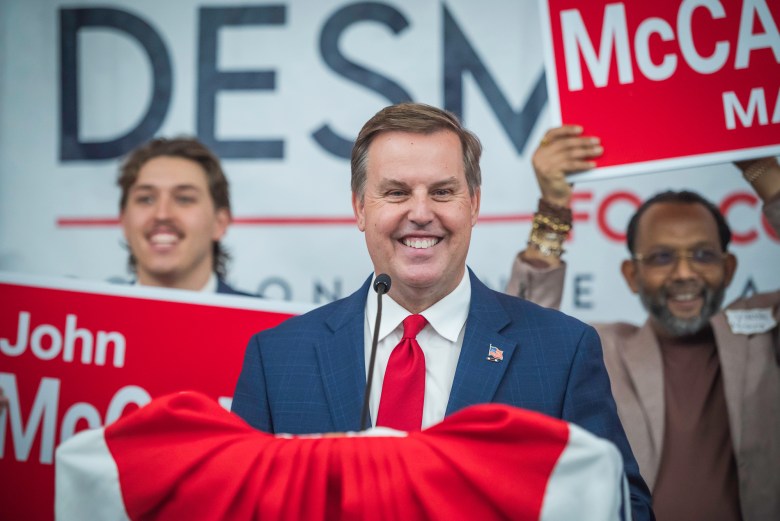
Political observers for years have marveled at the seeming invincibility of Republican John McCann in city politics. Though Democratic voters dominate in Chula Vista, McCann has won decades’ worth of races for City Council, school board and mayor.
His Teflon coating took a ding last year when he lost a hard-fought race for an open seat on the San Diego County Board of Supervisors.
He bounced back on Tuesday, cruising to re-election as mayor. His Democratic rival in the race, Chula Vista Elementary School District Trustee Francisco Tamayo, conceded late Tuesday evening.
McCann struck a magnanimous tone after the race, pledging to serve all city residents and emphasizing his focus on nuts-and-bolts governing.
“I’m here to represent everyone from Democrats to Republicans to independents,” he said. “[I’ll] make sure that we are there to fill the potholes, make sure we have the best police and fire [department], and I’m focused solely on doing the mission of the city and increasing the quality of life for citizens.”
His victory stems in part from a moderate, pragmatic public persona, along with a near-ubiquitous presence at city events that many residents say gives them the impression of knowing him personally.
Also a factor was deep, behind-the-scenes division among Democrats who otherwise might have united behind Tamayo.
Tamayo essentially conceded the race earlier this year. He stopped fundraising and pulled back from all-out campaigning. He admitted McCann is hard to beat.
Tamayo could have given McCann a run for his money. In a Voice of San Diego Politifest debate between the two candidates, Tamayo hammered McCann with sharp criticism of his record on affordability and immigration, two top concerns for voters.
McCann fired right back with equally trenchant criticism of Tamayo’s school board performance. It could have been a hard-fought, close contest.
But many Democrats were not sold on Tamayo. Some were still raw from his sharp-elbowed tactics on the Chula Vista school board. Others resented what they said was his allies’ manipulation of the Democratic Party’s endorsement process.
A deep-pocketed labor union that powered Tamayo through a June primary then turned around and offended voters by trying to ram through an unpopular overhaul of city government.
For Democrats, the race became a symbol of wider problems plaguing the party in South County: Disagreements, tribal vendettas and a growing belief that powerful labor unions are manipulating politics to back pliant candidates who care more about union bosses than everyday voters.
It should be noted that voters’ unpredictable streak extended beyond the mayor’s race. Councilmember Jose Preciado, who for years has been a prominent figure in the city’s Democratic establishment, remains in an unexpectedly tight race with Republican challenger Angelica Martinez.
Preciado leads Martinez, but only barely. Just 402 votes separate the candidates out of nearly 12,000 cast as of Wednesday.
Imperial Beach
San Diego County’s coastal border town also showed the cost of Democratic divisions.
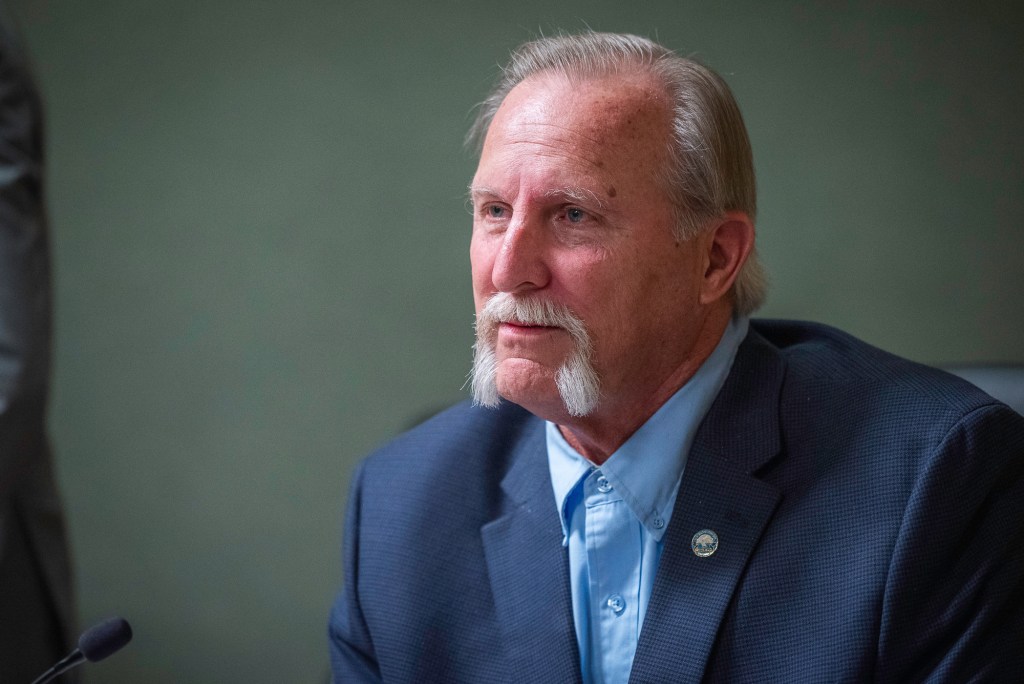
Mayor McKay, appointed to his seat last year, won a full four-year term despite earning fewer than 50 percent of votes.
The reason: He faced not one but two Democratic challengers after City Councilmember Matthew Leyba-Gonzalez made a last-minute entrance into the race.
For months, it appeared McKay would face a one-man Democratic challenge from retired school construction manager Karl Bradley. Leyba-Gonzalez’s entrance, backed by tens of thousands of dollars in labor union support, scrambled the field.
The longer the two Democrats campaigned, the deeper their divisions. The city’s local Democratic club fractured. Leyba-Gonzalez, a union construction worker who mostly gets along with his more conservative colleagues on the City Council, voiced warmer feelings toward McKay than his Democratic rival.
Together, the two Democrats won more votes than McKay. And Jose Lopez Eguino, a progressive community organizer, appeared on track to flip a formerly Republican-held City Council seat.
But infighting prevented Democrats from capturing the city’s top job. That cost them an opportunity to secure an outright City Council majority.
Despite the dynamics, McKay said he considered the election an endorsement of his low-key, pragmatic style.
Imperial Beach voters are diverse, he said, but not hardline ideological.
“It’s more about your character, your style and your willingness to invest in the community,” he said.
McKay said he planned to continue his current focus on resolving the Tijuana River Sewage crisis and improving the city’s business climate.
“I got a lot of votes from people who are on both sides of the aisle,” he said. “It’s a small town…We’re going to have to work together and figure out a way to move forward.”
In Other News
Imperial Beach Mayor Mitch McKay said he plans to meet next week with the new regional director of the United States Small Business Administration as part of an effort to secure federal relief for local businesses impacted by the Tijuana River sewage crisis. An earlier effort to secure relief fizzled when the previous S.B.A. regional director took early retirement amid Trump administration cuts to the federal workforce.
The Union-Tribune’s Walker Armstrong, inewsource’s Crystal Niebla and KPBS’ Kori Suzuki all provided solid coverage of Tuesday’s South County elections. You can read their reporting here, here and here.
ICYMI: I wrote about National City business leaders’ effort to sharply scale back a proposed hike in the city’s business license tax. The move sets up a likely clash between businesses and newly elected Mayor Jose Rodriguez, who supports a larger tax increase. The story is here.