

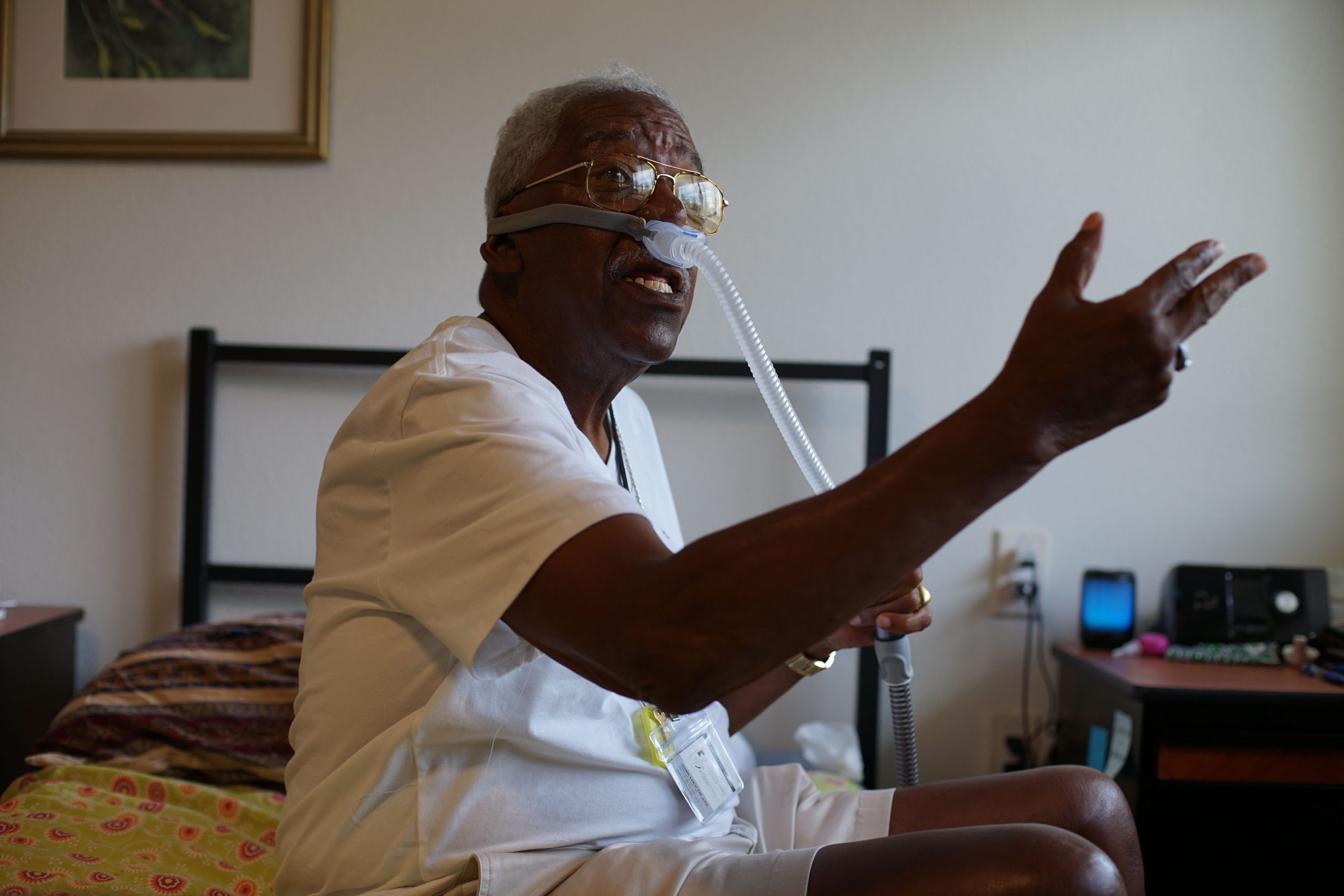
On Thursday, we revealed that a state reform meant to improve post-hospital care for homeless patients actually made it harder for them to access life-changing support.
Grab some extra strong caffecito this morning. Let’s jump into the wonk.
Background: When a homeless patient is released from a hospital, often their only option is to return to the street. When this happens, it’s typically only a matter of time before the person has to return to the hospital. Often it’s because of complications related to say not having a safe place to clean a wound, for example. It’s a cycle. Voice of San Diego’s Lisa Halverstadt and photojournalist Peggy Peattie spent months documenting that crisis for us.
You might wonder, well isn’t there somewhere homeless hospital patients could go to prevent sick people from getting more sick? Yes. Kinda.
The state enters the picture: Two years ago, California set out to make it easier for homeless patients with health challenges to recover. The state decided to allow Medi-Cal insurance pay for what’s known as recuperative care — or care facilities that provide a safe place to sleep, onsite nurses and transportation to doctor appointments (The services change depending on the facility, but that sums most up.)
Homeless advocates were stoked. This would help address that cycle. This would give people extra support. But as Halverstadt revealed in a new story, it has actually made it harder for homeless patients to get access to services they need. Hospital staff struggled to get patients in and days-long Medi-Cal approval process that vary by insurer aren’t meeting the urgency, she reports.
You can read the full story here, but here are a few things that stand out to me:
- We know how many people have gotten into recuperative care in San Diego, but not how many requests didn’t work out. That’s because the state doesn’t track that data. But we do know that thousands of homeless patients with Medi-Cal are cycling through our hospitals every year. It’s safe to assume some would have been eligible, and would have benefited from extra care to keep them out of the revolving door.
- We also know that only 64 people got into care facilities in 2022. There’s been an uptick since then (80), but experts say that’s still not great.
- San Diego County is going to jump into this recuperative care world, by opening a 100-bed facility. It’s going to need Medi-Cal reimbursements to keep the lights on, and if referrals stay at the current level, that could present an issue.
Politics Chisme: The Cops Made it Big

Months ago, we told you that cops were running. Now, it’s looking like they have made it to the General Election. Here’s what you need to know.
- San Diego Police officer Larry Turner will battle with San Diego Mayor Todd Gloria. It’s not going to be easy, or cheap, as our Scott Lewis notes in the latest Politics Report. But it is going to be interesting.
- Retired police officer Terry Hoskins will run against Council President Sean Elo-Rivera for the District 9 seat. That includes the neighborhoods of City Heights, College Area, Talmadge, Kensington, Mountain View and more.
Lewis reports that the San Diego Police Officers Association wants to get rid of Elo-Rivera. They spent big to make sure Hoskins made it to the runoff. And they are planning on going harder. Sidenote: POA wouldn’t comment on the mayor’s race.
“The sharks are in the water for Sean Elo-Rivera. That’s going to be a priority race for us,” Jared Wilson, the president of POA, told Lewis.
Read the Politics Report here for more chisme.
More Chisme to Start Your Week
- Our environment reporter MacKenzie Elmer has been following some big water moves. The San Diego County Water Authority wants to sell its expensive desal water. And at the same time, they want to make more. Water nerds will love this. Read it here.
- The two candidates running for San Diego city attorney are battling over who is more tough on guns. Deborah Brennan has more on that chisme in the Sacramento Report. Read it here.
- The city of Escondido is taking a new approach to homelessness. It’s gonna get tough on people who are breaking law and those who are using drugs, officials say. Our Tigist Layne explains why this might put some federal and state dollars in jeopardy. Read more here.