
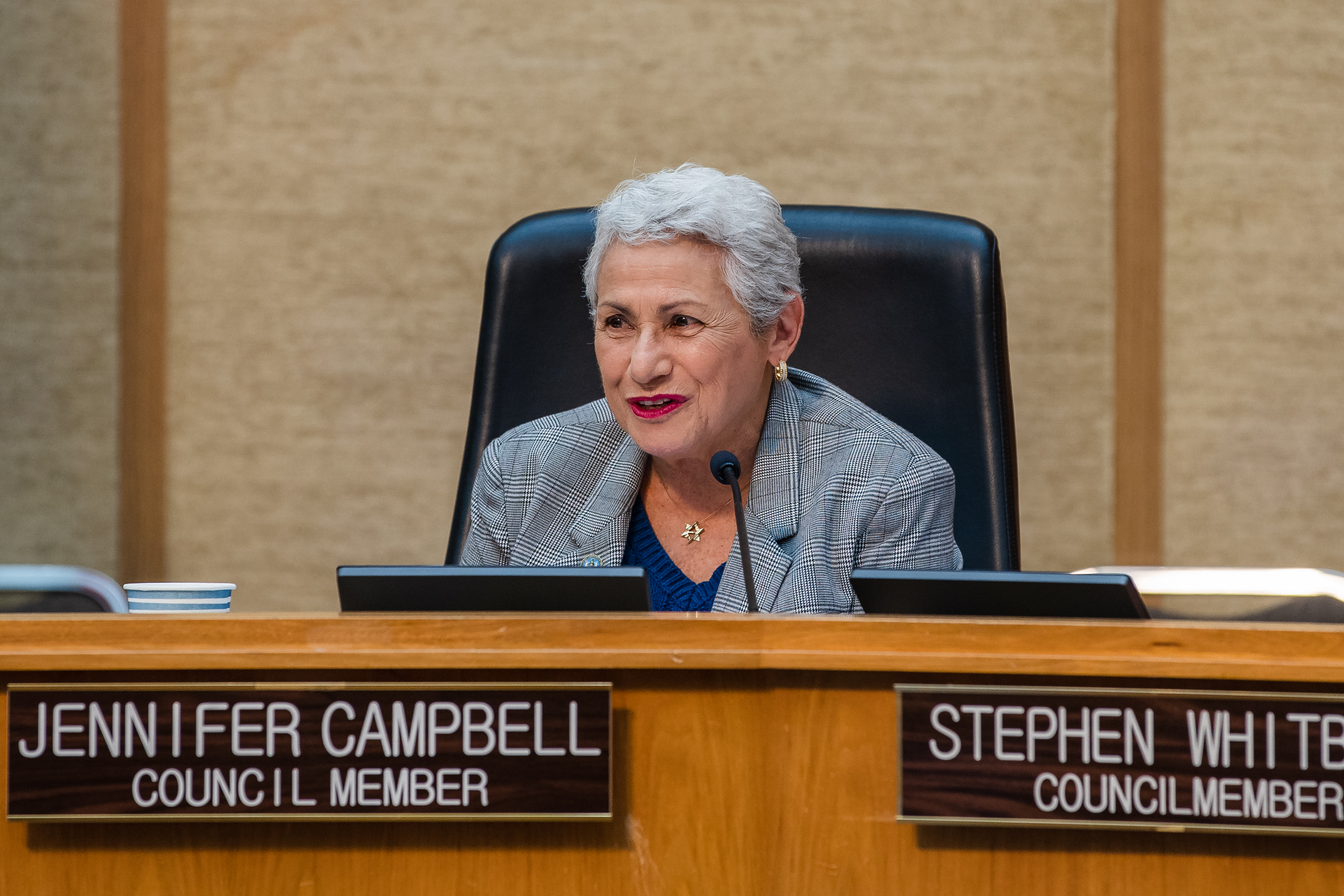
Councilmember Jen Campbell said she was surprised recently when she saw she was listed as the one of the most prominent public officials to have endorsed Assemblymember Brian Maienschein’s campaign for city attorney. A campaign email Maienschein’s team sent Wednesday had Campbell listed along with Mayor Todd Gloria and most of the other members of the City Council.
That was the same day Campbell actually announced her support for chief deputy city attorney, Heather Ferbert. And that switch is a decisive one in the debate about whether Ferbert has gathered momentum since performing better than Maienschein in the March primary election. Councilmember Kent Lee had been the only City Council member supporting Ferbert.
Ferbert announced this week that County Supervisor Monica Montgomery Steppe had endorsed her but Montgomery Steppe also endorsed Maienschein. So it was kind of a wash. Endorsements aren’t themselves going to sway many voters. But donors and their money can and they want to support a winner and endorsements do matter for that perception.
What happened: Campbell said she had rescinded her endorsement of Maienschein last year. She said he asked her for her endorsement too early and she didn’t think much of it and did not imagine there would be another candidate she may want to support.
“I didn’t realize he was still claiming I endorsed him. I would have preferred to stay out of the race. But I decided, if he’s going to be dishonest about that, I’m going to endorse the other one,” Campbell told me.
I contacted Maienschein’s campaign. Lance Witmondt, Maienschein’s longtime associate wrote back that they didn’t know. “The Councilmember never contacted us to say she was rescinding her endorsement,” he wrote.
“I didn’t call the campaign,” Campbell said. “I called him and told him I was rescinding the endorsement. He was upset. He’s got a problem if he didn’t tell his staff.”
Ferbert-mentum: Ferbert beat Maienschein in the March primary by more than 6 percentage points, or more than 14,000 votes out of more than 130,000 votes cast in the race. But it was a meaningless contest (probably shouldn’t have been on the ballot). City races can’t be decided in primaries and with only two candidates, the only thing at stake was vibes.
She got all the vibes.
Maienschein came into the race with all the advantages – name recognition, endorsements, including labor support and perhaps most importantly, tons of money. But Ferbert had something probably worth $1 million or more by itself: The title of chief deputy city attorney. There are others with that title but none of them are running. Ferber’s boss, City Attorney Mara Elliott proved it in 2016, when she too out performed better funded, better known candidates. But still Maienschein entered March the obvious favorite.
Now, Ferbert is gathering strength and she still has the support of the largest union of city employees, the Municipal Employees Association. The group did not spend anything on her behalf in the primary but it’s capable of matching some of the firepower Maienschein’s allies may bring to the runoff.
What’s Really Going on in the CAO Drama
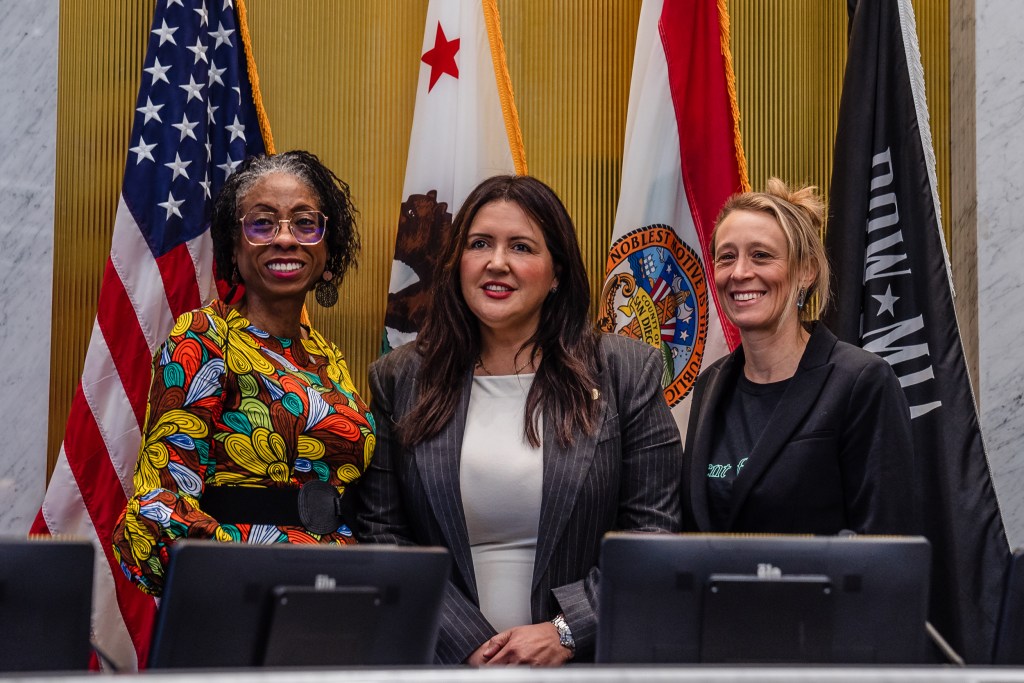
White, non-Latino people should probably stay away from using Spanish when publicly calling out Latino people, even if your accent is pretty good and the people you were addressing were into it.
That’s probably an easy lesson from this week. At the very least, it was a distraction that labor leader Brigette Browning, who leads the San Diego Imperial-Counties Labor Council, will have to deal with for a while. Yesterday, another call for her resignation emerged and caught a little momentum on X. It comes from Browning’s appearance at a rally outside the county where she called out the chairwoman of the Board of Supervisors as not a real “chingona” (loosely translated as badass) for her unwillingness to support Cindy Chavez’s application for that top job.
Browning’s sampling of Spanish slang and the way she spoke at the rally provoked outrage, first highlighted by La Prensa, that she was demeaning Vargas, a Latina.
“Brigette Browning’s attempt to mimic a Mexican accent while speaking English, coupled with her use of vulgar and disrespectful language in Spanish, is not only offensive but completely misrepresents how language is used and valued,” reads an official statement from the advocacy group MAAC.
What’s really going on: Vargas and her colleagues had voted to offer Chavez the job a year ago but rescinded the offer when Nathan Fletcher abruptly resigned. It seemed obvious Chavez would make it through a new process but somewhere along the way, she lost Vargas’ support. That has infuriated labor leaders led by the main union of county employees, SEIU 221 and the United Domestic Workers. They asked Browning to support them and she took up the cause with gusto.
The pressure Browning, SEIU leaders and others have been putting on Vargas has been intense and very public. The calls are loud, not via phone. Despite what they say, they don’t want someone like Chavez, they want Chavez, the former leader of the South Bay Labor Council in the Bay Area, to be their boss. To them, this is the climax of a nearly 15-year effort to reform county leadership and politics.
It started with imposing term limits on supervisors, which finally broke a nearly 30-year hold on control that five Republicans held. Then they got Nathan Fletcher elected and then a Board majority.
The final step was a progressive CAO who would help them execute progressive policy and eliminate managers who stood in the way of the change. And it was all on track until Fletcher’s career ended.
We don’t know why Vargas decided not to support Chavez again this year. She’s not talking about why Chavez is not being considered for the role as the supervisors head toward final interviews this month. But Browning’s Spanglish finally offered a chance for Vargas to hit back and send some pressure the opposite way. Vargas’ network lit up with denunciations of Browning’s use of “brown voice” and accused her of racism.
Browning’s network lit up in response. Several Latino elected leaders wrote a letter in support. Friday U.S. Rep. Juan Vargas published an op-ed in the Union-Tribune.
“Mrs. Browning and the unions she leads were absolutely right to speak out forcefully for working people who will be harmed if a Latina leader like Ms. Chavez is not even considered. That’s exactly what unions should be doing: fighting for workers to be heard, holding those in positions of power accountable,” Rep. Vargas wrote.
Side note: Lorena Gonzalez, the leader of the California Labor Federation, the state arm of the AFL-CIO, has also vehemently defended Browning and the language she used. Nora Vargas and Gonzalez used to be close allies but that seemed to end last year when Vargas joined calls on Nathan Fletcher to resign.
Gonzalez held no hits back. She said Browning was perfectly OK to say what she said: “This is a ridiculous smear campaign to deflect from the fact that the county has turned their back on working class San Diegans and instead embraced a status quo of previous generations,” she wrote.
This was a cold war that has now broken into hot skirmishes but the underlying dispute remains the same: There’s institutional inertia at the county in favor of picking a professional manager to oversee 18,000 employees well. And it is clashing with a labor movement that sees that job as more important than any single supervisor seat. A progressive in that role could reshape the county’s policy approach and working conditions for generations, they believe.
It’s largely Vargas’ call. And she’s hearing about it.
If you have any feedback or ideas for the Politics Report, send them to scott.lewis@voiceofsandiego.org.

Local representation would be great! But I don’t have the right to vote yet.