
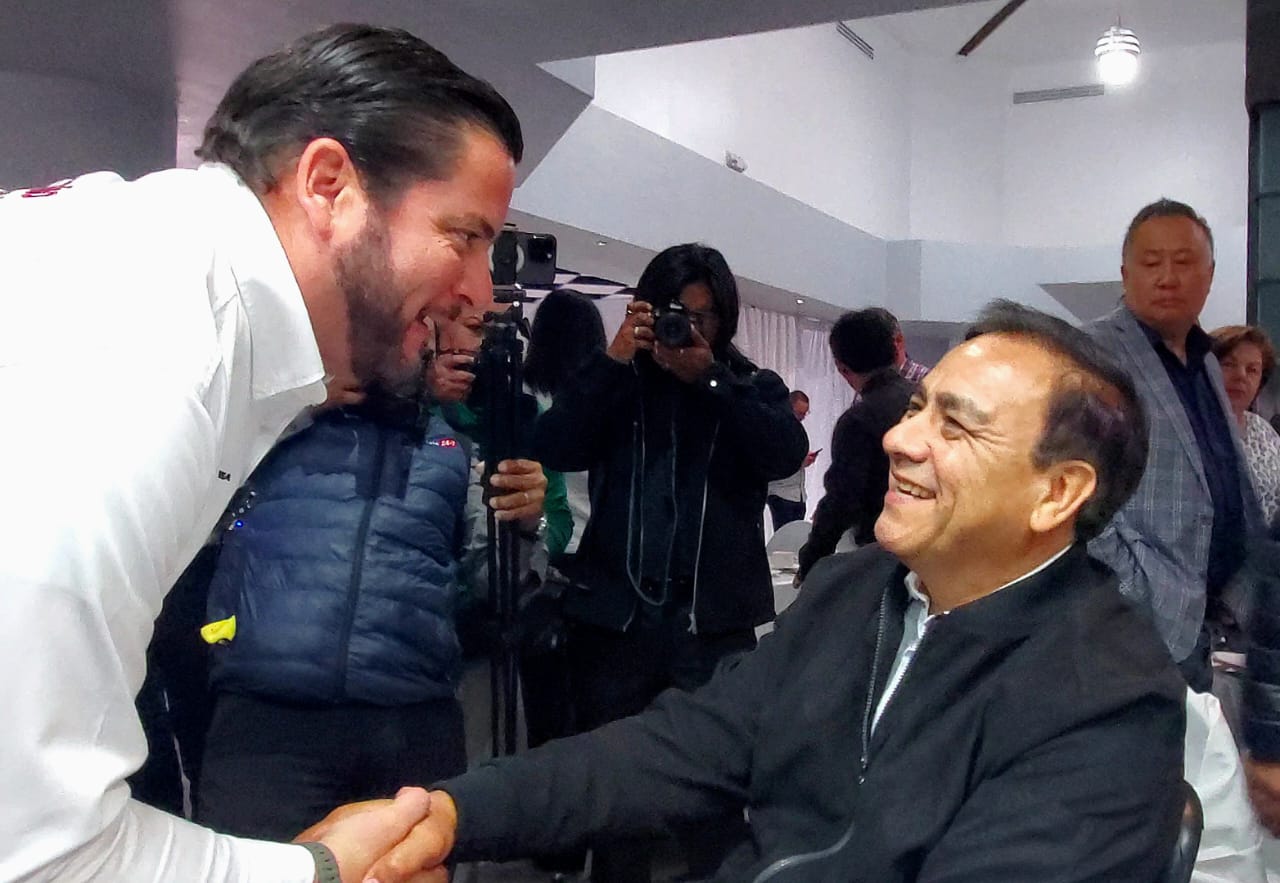
Of all the personalities that emerged from Mexico’s drug wars, none compares with Julián Leyzaola, the retired army lieutenant colonel who headed Tijuana’s police department from 2008 to 2010. He was Tijuana’s tough-talking police chief and then secretary of public safety. He endured repeated death threats as he called out criminals, rushed to crime scenes and purged hundreds of his own officers accused of ties to drug traffickers.
Yet while many call him a hero for his single-minded efforts to root out crime and corruption, dozens of suspects accused him of unlawful arrest, even torture. While Leyzaola has denied the accusations, human rights organizations have repeatedly denounced his tactics, first in Tijuana and later in Ciudad Juarez. He went into hiding four years ago, after Baja California prosecutors filed charges against him for torture and declared him a fugitive.
Leyzaola is now preparing his return to the helm of Tijuana’s municipal police force after nearly 14 years away. Tijuana’s mayor-elect, Ismael Burgueño, has tapped him as the city’s new public safety secretary when he takes office later this year.
“Through his experience, we’ll guarantee the security of everyone in Tijuana,” Burgueño said last while still a candidate last April when he announced that Leyzaola would be joining his team.
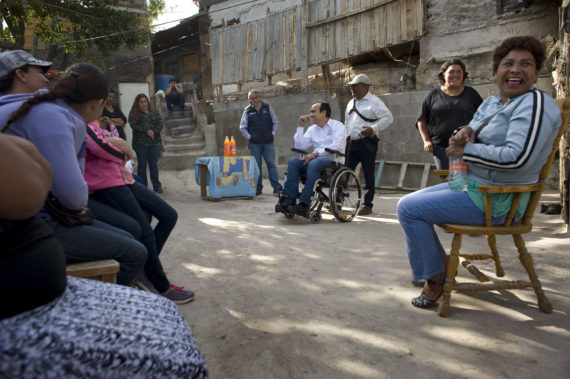
But can Leyzaola live up to such expectations? Tijuana is a different city. The bloody war between leaders of rival cartels–Sinaloa and Arellano Felix–for control of the Tijuana plaza during Leyzaola’s tenure has given way to smaller rivalries among neighborhood drug dealers for control of street corners. The battle against drug traffickers carried out with military support and coordinated with all levels of government has become much lower key.
“Leyzaola has experience, he’s not coming here to learn, and that gives us confidence,” Julian Palombo, president of the Tijuana Chamber of Commerce, told me. But other business and civic leaders I queried seemed less certain, and shied away from making public statements when I asked them last week.
Since leaving Tijuana in 2010, Leyzaola has had his share of setbacks. A 2015 attack in Ciudad Juarez left him paralyzed from the waist down. Returning to Tijuana, he ran for mayor in 2016 losing narrowly to a candidate from the then-ruling National Action Party, or PAN. He ran again two subsequent mayoral elections, in 2019 and 2021, Leyzaola lost to candidates from President Andres Manuel Lopez Obrador’s MORENA party.
In June 2020, under Baja California’s’ previous governor, Jaime Bonilla, state prosecutors filed charges of torture against Leyzaola. Leyzaola’s former deputy testified against him, saying he watched Leyzaola torture his own officers. Leyzaola became a fugitive, living in hiding as his lawyers fought the charges in court and called out Tijuana’s current mayoral administration.
Then, last September, Leyzaola made a taped appearance with Baja California’s current governor, Marina del Pilar Avila Olmeda. She called him “a brave man” and credited him with decreasing crime rates in Tijuana by more than 70 percent when he headed public safety efforts in the city.
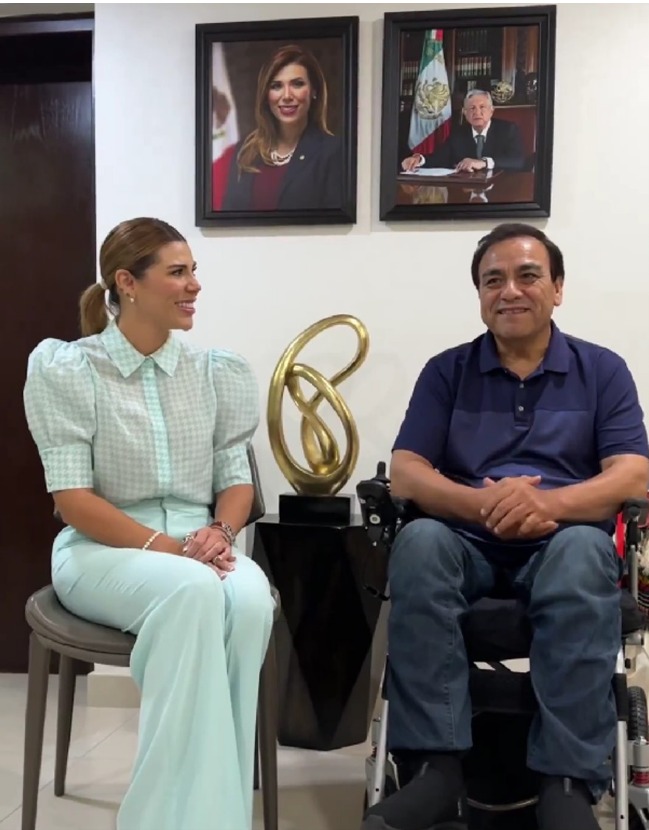
Zeta newsweekly reported that prosecutors opted to drop their case after Leyzaola won two federal injunctions.
Leyzaola still faces his own rigorous security clearance before he can step back into his job.
In an interview with Frontera earlier this year, Leyzaola said Tijuana’s recent administrations have lacked the political will to fight criminal groups–and the city has paid the price with increased violence. As police chief, he’d work to “recover the city” by sectors, rooting out corrupt officers, and increasing technical capacity.
20 Years of Impunity
The killing of Zeta journalist Francisco Ortiz Franco on June 22, 2004 was a horrific event: His murderer shot him while he was inside his car with his two young children, ages 8 and 10. Both are now adults, and on Saturday they joined journalists and other family members in a march to the Federal Attorney General’s to demand that his killers be brought to justice.
“Every year, our sense of powerlessness grows as we go without answers,” said his daughter Andrea, now a 28-year-old schoolteacher. The event was organized by members of the Tijuana collective #YoSiSoyPeriodista, and included statements from the journalism protection groups Articulo 19, Committee to Protect Journalists and Inter American Press Association.
Federal prosecutors have linked the crime to the Arellano Felix Organization. His killing came shortly after Zeta published a piece by Ortiz revealing that cartel members had colluded with state agents for fake government ID cards. An article in its Friday edition, Zeta stated that authorities have “openly abandoned, and in the worst of cases, decided to ignore every single line of investigation that has arisen following the treacherous, premeditated…homicide.”
In Other News
Changing of the guard: A new U.S. Consul General, Chris Teal, has been assigned to Tijuana and is expected to arrive in August. Teal has been a member of the U.S. Foreign Service since 1999. His previous posts include the Dominican Republic, Sri Lanka and Peru. From 2014 to 2017, he headed the U.S. Consulate in Nogales. Teal was born in Illinois, grew up in Arkansas, and earned a master’s in political science at George Washington University in Washington, D.C. and is finishing a two-year fellowship at the university. He is author of “Hero of Hispaniola, America’s First Black Diplomat, Ebenezer D. Bassett” and directed a subsequent documentary, “Diplomat of Consequence.”
Teal succeeds Tom Reott, the current consul general, who is scheduled to leave at the end July as he completes his three-year assignment.
Former mayor dies: Arturo Gonzalez Cruz, a federal legislator from Baja California and the first member of Mexico’s MORENA Party to lead Tijuana, died last week at the age of 69. Gonzalez Cruz was a real estate executive and longtime president of the Campestre, Tijuana’s country club, who served as mayor from 2019 to 2021, albeit with two leaves of absence. He also served as president of the Tijuana Chamber of Commerce and led the Confederation of National Chambers of Commerce, a national organization.
Street Opera Festival: After two decades near the San Ysidro border in Colonia Libertad, Tijuana’s annual Opera en la Calle Festival is moving downtown. On Saturday, July 13, the festival will be staged off of Avenida Revolucion on Calle 11. The event will feature more than 300 performers, including choruses, vocal ensembles and orchestras, as well as numerous food booths. The program’s highlights includes selections from the George Bizet opera, Carmen, scenes from the Spanish zarzuela Luisa Fernanda by Federico Moreno Torroba and a nighttime performance of Act 1 of the Giuseppe Verdi opera, La Traviata. For updates and schedules that will be posted next month, see Opera de Tijuana’s Facebook page.
I’m glad to be back after some time away. Border Report will continue to run every other Monday, but now I’ll be alternating with Kate Morrissey, who will focus on immigration issues while I look at other issues affecting our region. You can reach me at: sandradibblenews@gmail.com
Leave a comment