
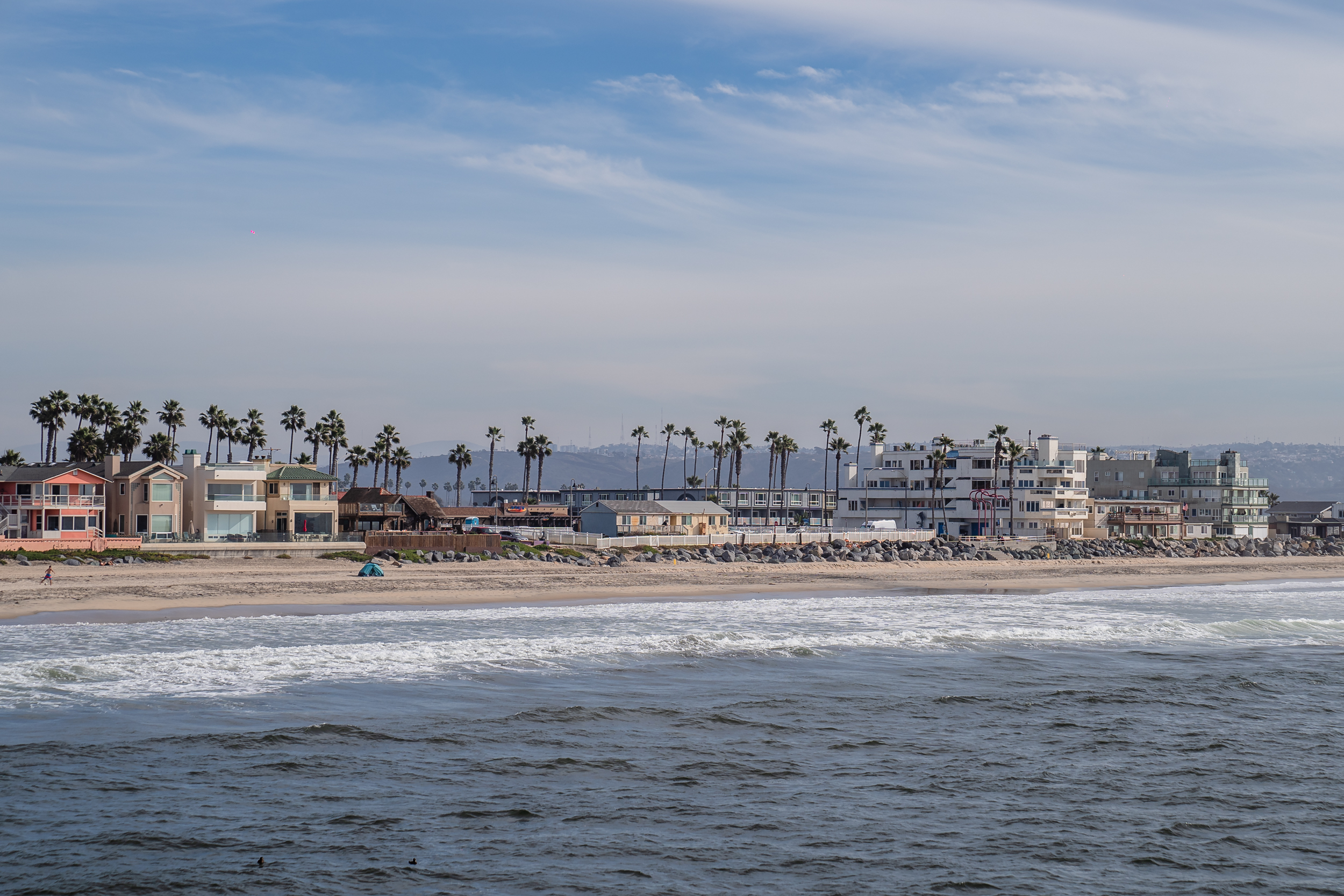
Imperial Beach celebrated that its coastline finally reopened last week after over a year of closure from Tijuana sewage spilling over the border. But more sewage is headed toward their shorelines this month.
Why? Tijuana is about to make a scheduled repair to its biggest sewer main that runs from the center of the city toward the border. But to do that, Mexico has to shut down a critical piece of its sewer system and that waste has nowhere else to go but into the United States. Mexican and U.S. officials assure that these changes are necessary and will actually help to prevent future illegal spills.
The sewer main – called the international collector — is old and passed its expiration date a few years ago. If and when it fails, which parts of it have on occasion, raw sewage spills back into the river or over the border untreated.
The work is supposed to take two weeks and begin in mid-October. But every day during that period, there will be nowhere for 20 million gallons of city sewage to go but the river, which empties into the Pacific Ocean below Imperial Beach. The city’s coastline will probably be too contaminated to safely stay open.
“We have repeatedly said, (to Mexico) you need to do a bypass (of sewage around the river),” said Sally Spener, foreign affairs officer at the International Boundary and Water Commission or IBWC at Voice of San Diego’s Politifest. “If (Mexico) say(s) they can’t do that, we’ll have our engineers figure out what could be done south of the border.”
Normally, the sewer main sends some of its contents to a wastewater treatment plant on the U.S. side of the border. But that plant also needs a lot of repairs, as Voice previously reported. The plant cleans 25 million gallons of sewage or more per day and runs 24/7. So, trying to fix it while it’s running is kind of like trying to operate on a patient that’s still conscious.
The IBWC could take on that sewage instead of letting it spill into the river. But it’s not going to do that. Instead, the agency plans to do a deep clean at the U.S. plant and a bunch of desperately needed maintenance. For instance, some of its vats that collect sewage solids and sediment are too full to do their job properly.
“It’s something that had to be done to get to the point where it will be resolved,”said Adriana Reséndez Maldonado, leader of Mexico’s version of the IBWC called CILA. “I hope that this discharges will not impact (too) much. Of course we will be in communication with our counterparts to notify from the beginning and up to when they will be done.”
OK, so that sucks. But there’s light at the end of the tunnel.
The temporary disconnection of all this infrastructure is supposed to be replaced by a brand new configuration that keeps more Mexican sewage on its side of the border. Tijuana is replacing its old main with a new one that sends sewage toward a Tijuana-based treatment plant being rebuilt on the coast. The U.S. treatment plant would then get whatever Mexico can’t take.
Another safeguard is coming this spring. Right now, the United States can’t control the faucet from which the sewage flows into their plant because a key valve has been stuck open for a number of years. Since IBWC can’t control the flow of sewage coming into the plant, it often can’t treat the wastewater to Clean Water Act standards before sending it to the ocean in an underground pipe.
The IBWC just awarded a $5.7 million contract to the plant’s private operator, Veolia, to fix the valve on Monday, announced during a press conference at the plant featuring a slew of elected officials. Another $42 million plant rehabilitation and doubling of the plant’s sewage treatment capacity should be done by 2031 – eliminating up to 90 percent of the sewage that makes its way to the coast.
Why the Beaches Reopened
A series of fortunate events, from a lucky change in wind direction to infrastructure fixes on both sides of the border, finally relieved Imperial Beach’s long-closed coast of sewage contamination last month.
On Sept. 20, the U.S. Environmental Protection Agency announced the main carrier of sewage to Imperial Beach, the cross-border Tijuana River, stopped at least during the daytime. It was huge news for the beach community where coastlines have been closed to water contact for more than a year.
Here’s how that happened: The Tijuana River is naturally seasonal, meaning it shouldn’t flow during the dry season in summertime. But it has been, for a few big reasons. In August of last year, a pair of Tijuana sewage mains that carry wastewater away from the border broke in half. So Mexican authorities had to stop sending the sewage that direction in and instead toward the river, partly because the IBWC refused to take more than its plant could handle to prevent further malfunctions.
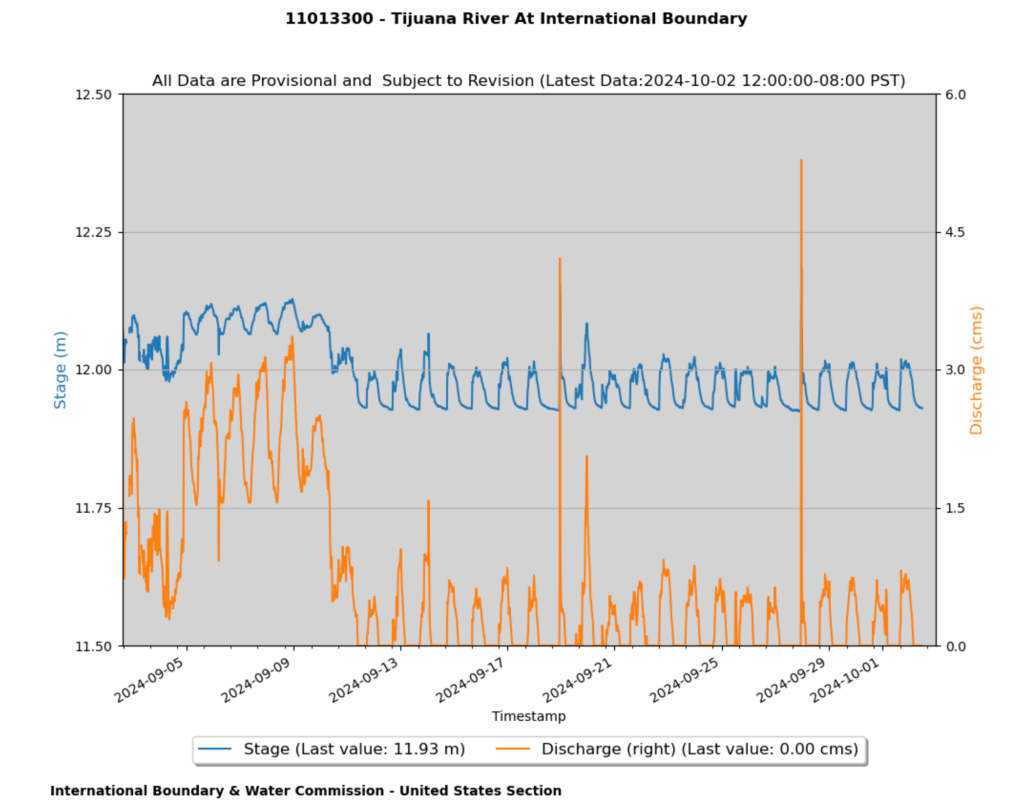
Mexico replaced those sewer mains and they went back online Sept. 10. After that date, the river level at the border dropped dramatically, according to the IBWC’s river flow gauge.
The direction of the ocean’s swell is also a big determiner of whether Imperial Beach gets washed with sewage flowing from a broken wastewater treatment plant in Tijuana. Swell direction data from the National Weather Service shows those swells changed around Sept. 17 pushing dirtier surface water along the Mexican coastline instead of toward Imperial Beach.
Of course they’re going to shut them both down at the same time. What did you expect?
Sleep tight tonight people, your government is watching over you!!
Mackenzie, did you fact check what the IBWC is telling you? “ Another $42 million plant rehabilitation and doubling of the plant’s sewage treatment capacity should be done by 2031 – eliminating up to 90 percent of the sewage that makes its way to the coast.” Did you copy paste what IBWC sent you and just wrote it into your article as your own, without fact checking? Will 90% of sewage coming out of the plant be eliminated by 2031? Sure. Will it eliminate the overall sewage going into the ocean from the river? NO. Do your job as an investigative journalist and ask the hard questions. At this point IBWC should be paying your salary you are doing their PR work for them as their spokesperson. You wouldn’t have even known about the additional spills planned for October by Mexico if Pooploma hadn’t brought it up during the politifest TJ river panel. You have a responsibility to the PEOPLE not government and certainly not corporations who make millions in profits. Did you even know Veolia, the company that IBWC hired to manage their plant was held liable for $650Million in damages caused by their coverup role in Flint, Michigan?? A simple google search would have revealed that. Oh wait, you don’t even bother to do that.
Ouch!
I was visiting Imperial Beach in 1988 and it closed because of sewage from Mexico. How can this still be happening?