

Sacramento is gearing up for action on the heels of the presidential election. Recent ballot measures take effect, and lawmakers are already introducing bills for the coming year.
Meanwhile California lawmakers are ready to spar with President-elect Donald Trump’s incoming administration. Here’s what I’m watching in the new year.
Proposition 36
What happened: The anti-crime measure passed with 68 percent of the vote, signaling Californians’ weariness with theft and drug crimes. It toughens laws against fentanyl and other hard drugs, allows judges to order drug offenders into treatment instead of prison, and cracks down on smash-and-grab robberies and shoplifting. Proponents say the new measure gives judges and prosecutors more options for sentencing. Opponents call it a return to the failed “war on drugs” and warn that prisons will quickly overflow with low level offenders.
What’s next: Some prosecutors think sentencing drug offenders to court-ordered treatment programs will make people get help that they wouldn’t seek on their own, enabling more addicts to become sober. Criminal justice reform advocates say forced drug treatment doesn’t work. And they argue that there aren’t enough treatment slots and beds for everyone who will need it. I’ll watch how that plays out in San Diego. Will arrest and incarceration rates soar with new penalties in place? Will drug courts – now at about half of their capacity – be filled as more people are required to get treatment? How many of those people will graduate from the programs, avoiding criminal penalties and getting clean?
Trump Transition
What happened: During his first term, state leaders made California the center of Trump resistance, filing more than 120 lawsuits against federal policies that conflicted with the state’s priorities. With his return, they’re preparing to “Trump-proof” California against his plans to launch immigration raids, rollback reproductive rights, dismantle renewable energy programs, and withhold federal disaster aid. Gov. Gavin Newsom set aside $25 million in anticipation of new legal challenges against the incoming administration.
What’s next: If Trump acts as a “dictator on day one,” as he has pledged to do, California’s legal and legislative machine will kick into motion. With a patchwork of abortion laws throughout the states, California has declared itself a haven for women seeking the procedure. I plan to watch how local clinics respond to increased demand for abortion and other reproductive health services, and keep an eye on federal laws or executive orders restricting medication used for medical abortions. And I’ll follow how California’s transition to solar and wind power moves forward, and whether withdrawal of federal funding slows it down. As a border region, San Diego will likely be a hotspot for immigration enforcement. So I’ll look at how state and local leaders respond to federal enforcement actions, and monitor conflicts over escalating raids and deportations. Hopefully California won’t see catastrophic wildfires or earthquakes anytime soon. But if that happens, state leaders will have to switch from feuding with Trump to haggling over aid packages. So I’ll watch how they pivot from playing defense to diplomacy.
Housing and Homelessness
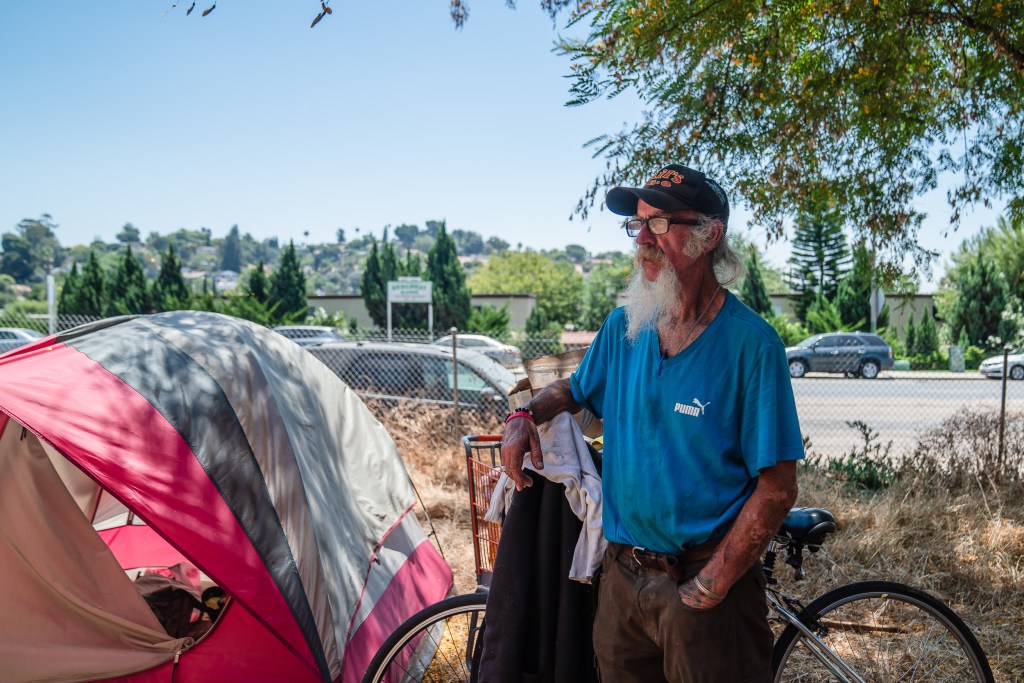
What happened: With California homes unaffordable and often unavailable, state and local leaders have been scrambling to close the state’s housing shortage. In March, voters approved Proposition 1, which allows the state to borrow $6.4 billion to build housing for homeless people and veterans. And in September, Gov. Newsom signed a package of bills intended to streamline housing production and force local governments to make it easier to build new homes. In July, Newsom ordered state agencies to clear encampments on state property and encouraged local governments to do the same. His order followed a public camping ban in San Diego, and other San Diego County cities are following suit.
What happens next: I’ll look at how the state divvies up money from Proposition 1 to see how much San Diego County receives and how the county and cities spend it. And I’ll follow legislation that makes it easier to build new homes, particularly in the Coastal Zone, where construction is restricted by environmental protections in the Coastal Act. I’ll examine the results of encampment bans as cities take a harder stand on camping in streets and parks.
Sen. Brian Jones Previews 2025 Plans at Open House
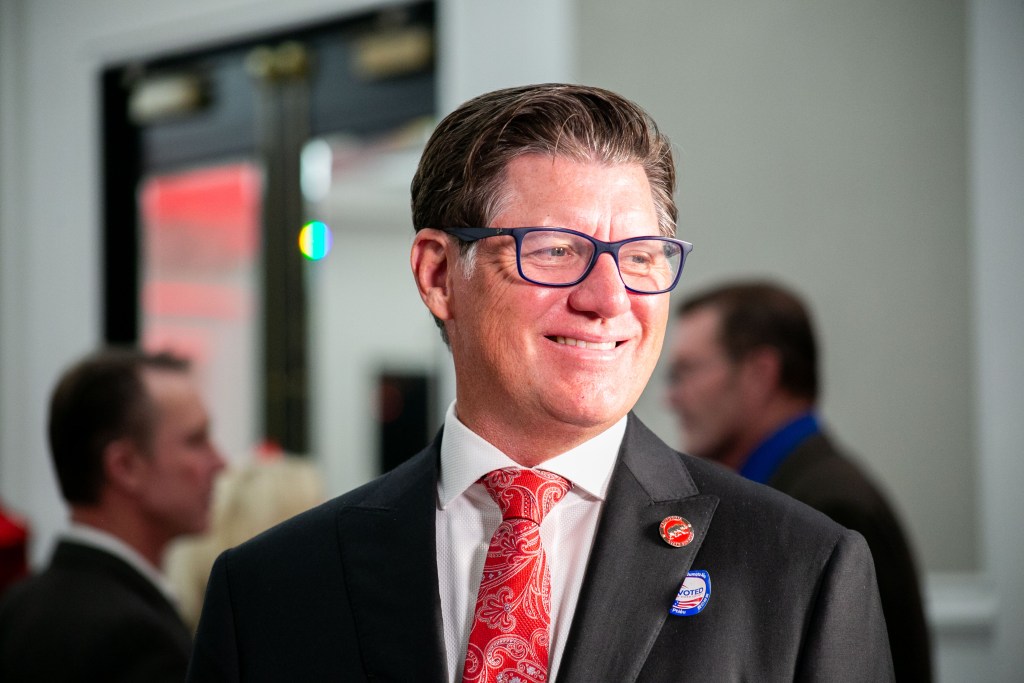
With the state legislature out of session and the election over, state lawmakers are home for the holidays. That means connecting with constituents and planning their upcoming bills.
Senate Minority Leader Brian Jones did both at an open house at his Scripps Ranch office Saturday. I was expecting a few dozen people in a meeting hall, but the event was a full-scale street fair with displays and food samples by more than 50 local community groups and restaurants. Poway High School Robotics Team showcased their mechanical creations while San Dieguito River Park displayed 3D printed skulls of animals found in the watershed, with corresponding plush toys of each species.
Jones outlined his plans for the new year, starting with his first bill, SB2. It calls for reversing changes to the state’s Low Carbon Fuel Standard that the California Air Resources Board approved last month. Regulators said they don’t know how much the new rules will cost consumers, but Jones estimates they will raise gas prices by 65 to 85 cents per gallon.
He’ll also make a fourth attempt to change the state’s release program for sexually violent predators. His most recent bill to tighten placement procedures for the former inmates failed this year. Next year he’ll push for a transitional program to house tsex offenders on state land after they are released from state custody.
Sewage Treatment Plant Fix at Risk
A quarter of a billion dollars slated for repairs to the federal wastewater treatment plant at the U.S.-Mexico border is in limbo, the Union-Tribune’s Tammy Murga writes.
On Tuesday San Diego’s congressional delegation announced it had secured $250 million needed to upgrade the plant, which has leaked sewage into California waters for decades. By Wednesday that deal had fallen through after Trump urged Republicans in Congress to scrap a stopgap spending bill.
The Sacramento Report runs every Friday and is part of a partnership with CalMatters. Do you have tips, ideas or questions? Send them to me at deborah@voiceofsandiego.org
Ms. Brennan,
I too am spending part of my time in Sacramento. I wonder why the greater metro area is made up of exurbs, and not even suburbs. Is it the rivers, the lack of freeways, or some other factors?
Thank you for your work,
Peter