
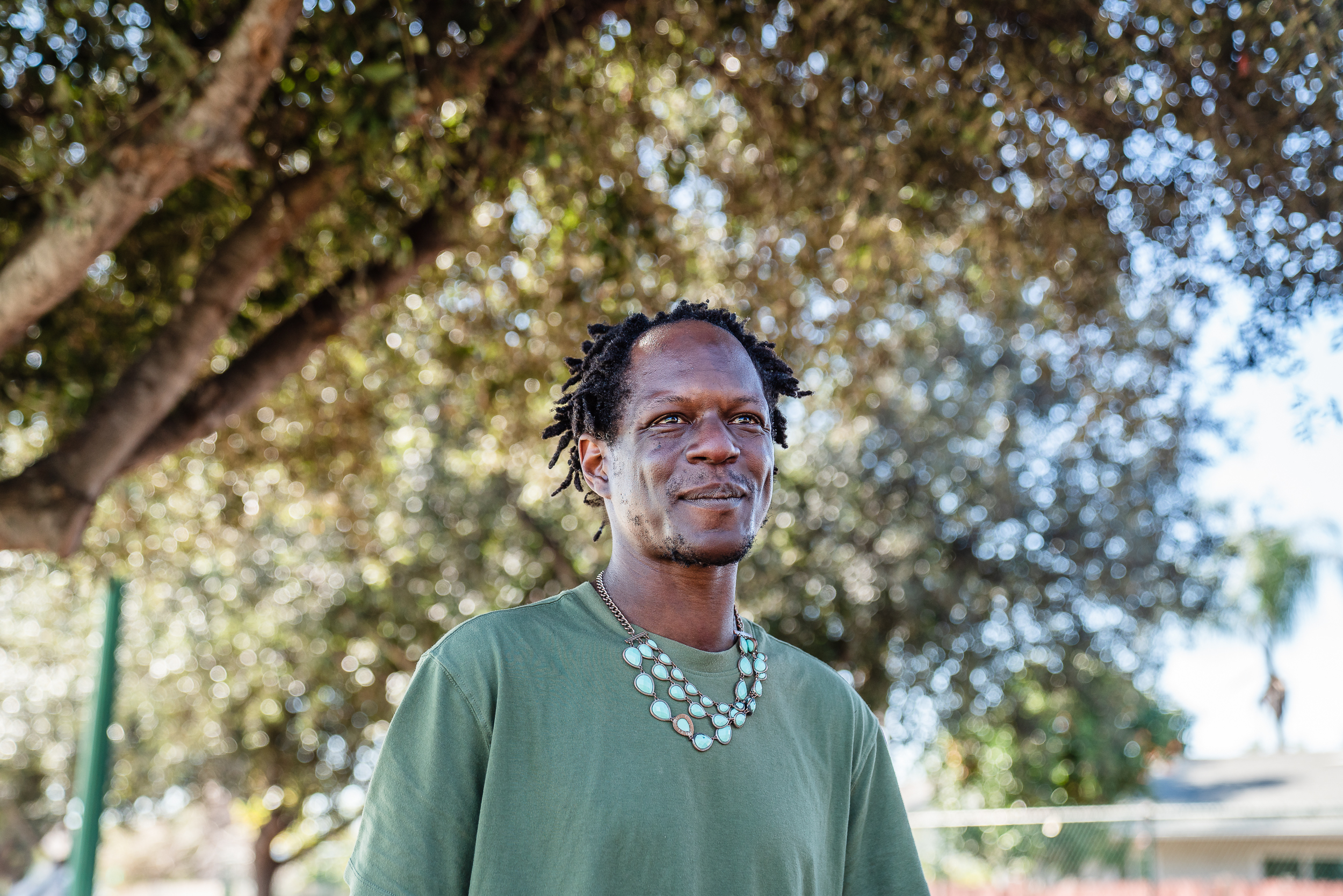
Families across California saw the state’s CARE Court program as a potential lifeline for their loved ones with serious untreated psychotic illnesses.
Anita Fisher of Spring Valley was a vocal advocate for the legislation, even appearing on “60 Minutes” in 2023 as San Diego County prepared to roll out its program.
Fisher’s own experience with CARE Court hasn’t been what she hoped. Her son Pharoh Degree has served two stints in jail since she filed a CARE petition in late 2023 and went missing for a few weeks last fall, the sort of scenarios that legislators hoped CARE Court would help participants avoid.
Yet Degree, now out of jail and focused on recovery, has seen CARE Court as a lifeline that’s given him multiple chances and is helping him access housing and support.
Degree is optimistic about what’s next. Fisher can’t help but worry.
Our Lisa Halverstadt documented Degree and Fisher’s experience with CARE Court.
ICYMI: Halverstadt revealed last week that San Diego’s CARE Court isn’t forcing people into treatment. The county’s program is voluntary, disappointing some families and others who hoped the program would obligate San Diegans who qualified to accept treatment.
Hong Abruptly Resigns as Taxpayers Association CEO
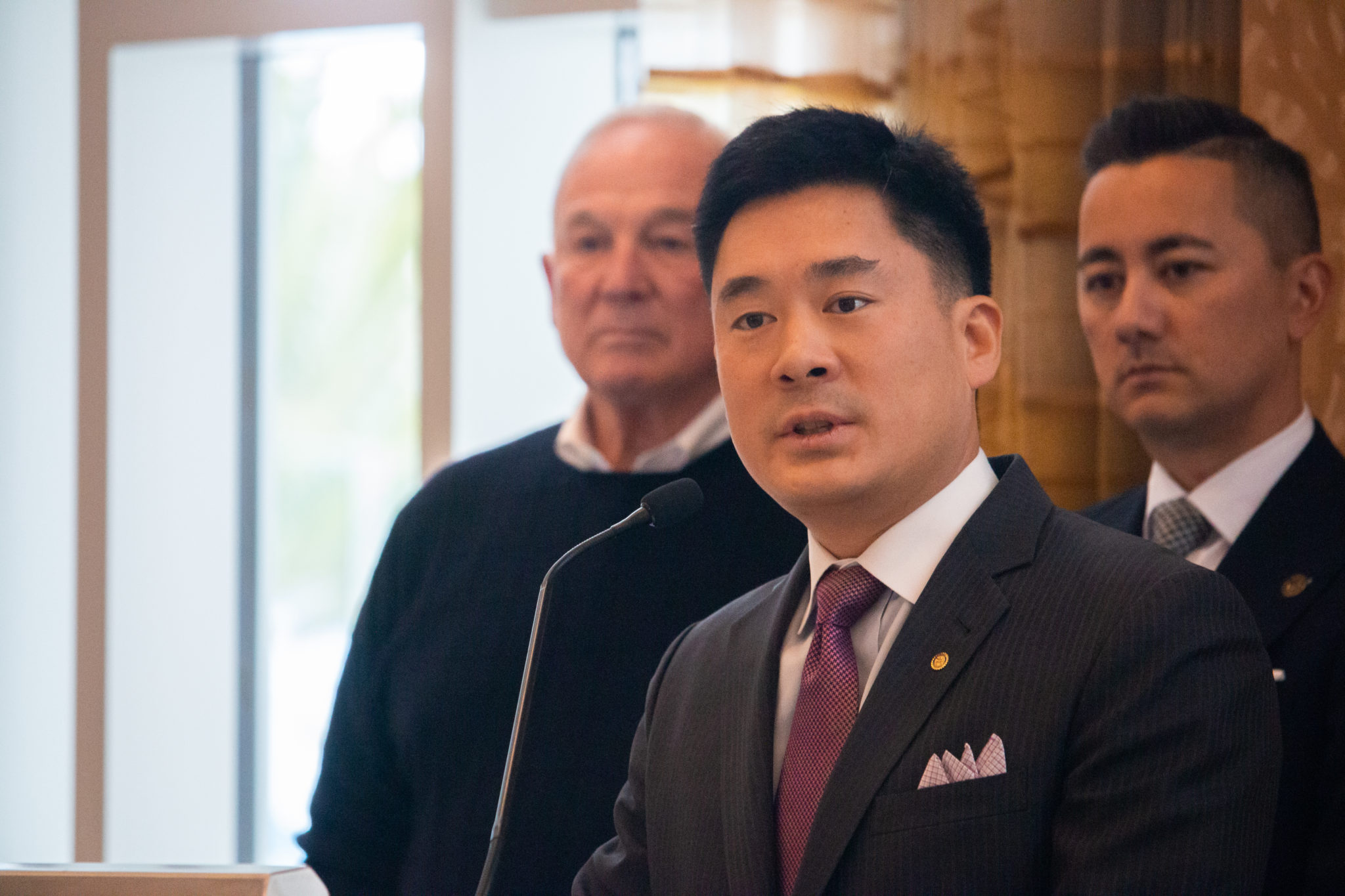
The San Diego County Taxpayers Association last year sent out a press release about the new three-year contract that its board signed with Haney Hong, the president and CEO of the organization. But Monday the group announced Hong had resigned effective Feb. 28 and Rick Gentry, the former CEO of the San Diego Housing Commission had taken Hong’s place.
Gentry will serve for the next 12 months until the board selects a new leader. Gentry resigned from the Housing Commission in 2022 amid mounting scrutiny of the agency.
The announcement of Hong’s departure did not say specifically why he was leaving.
“The Association needs a leader with different gifts than what God has granted me. I am the leader to drive transformational change; now since the transformation I promised nine years ago is substantively in place, the enterprise needs leaders who will cement in and build on a new foundation, shepherding and sustaining its new form by building the necessary infrastructure and scale,” he wrote.
SDSU Rolls Out Free AI Tool

San Diego State University leaders announced on Monday that students and faculty now had access to ChatGPT Edu, an AI platform “designed for higher education.”
The program could help “streamline workflows, enhance productivity, and make day-to-day tasks more efficient,” SDSU officials wrote in the email sent to the university’s staff.
How it could be used: Some of the activities the program included “creating initial drafts of reports or communications,” “brainstorming new ideas and solutions,” and “simplifying complex projects and aiding in documentation,” the email touted. Unlike the use of the standard ChatGPT, ChatGPT Edu’s user data would not be used to train the AI program’s public-facing model, according to the email.
SDSU is rolling out the program to faculty this week and will make it available to students on March 12.
The news comes just one month after Chancellor Mildred Garcia announced a splashy public-private initiative to transform California State University into the “nation’s first and largest AI-powered public university system.”
Despite cheers from AI boosters, the CSU system’s unprecedented plunge into AI tools has rattled faculty across institutions. The California Faculty Association, a union that represents nearly 30,000 faculty and staff across the CSU system, called Garcia’s February announcement, and its lack of detail, “disturbing.”
Border Report: Baja California Wants to Be a Center for Semiconductors

Baja California wants to attract semiconductor companies to the region, and they’re investing in university students to help make that happen.
Semiconductors are electronic chips, which are the small devices essential for everything from cell phones to fighter jets. Baja California leaders are working on positioning the state to be a center for semiconductor assembly, testing and packaging, and after the world experienced a semiconductor shortage during the pandemic, the need is greater than ever.
State leaders are now investing in university students to learn the necessary skills and enter the local workforce. Eventually, the goal is for Baja California to become an industry leader.
President Donald Trump’s administration has said it is considering tariffs on semiconductors, but industry leaders say they are moving forward, with or without support from the United States.
In Other News
- After an unoccupied fighter jet crashed into the San Diego bay last month, crews have now cleared the way, allowing civilian boaters to regain access to the bay. (Union-Tribune)
- Gov. Gavin Newsom has issued a state of emergency on wildfire prevention that includes a $2.5 billion investment to expand forest and land management statewide. (NBC 7)
- Gear up for more rain this week. Forecasters say showers, thunderstorms, and gusty winds should be expected. (KPBS)
The Morning Report was written by Lisa Halverstadt, Tigist Layne and Alina Ajaz. It was edited by Andrea Lopez-Villafaña.