
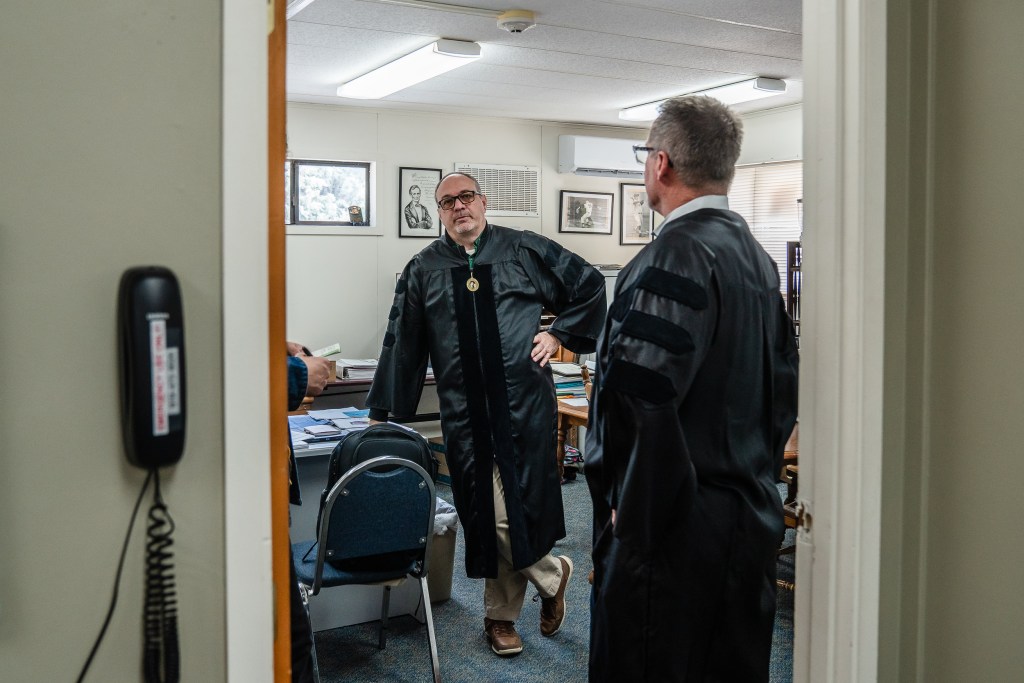
On a clear morning in early March, Patrick Keeley, Mountain Empire’s superintendent and Gary Brannon, the district’s director of student services stood in a small bungalow on the district’s Alternative Education campus. The pair were dressed in their academic regalia.
It was graduation day, after all. But at this ceremony, there were only two graduates.
When they arrived – a teen from the district’s alternative education program and another a mother from its adult education program – they donned scarlet red gowns and caps.
“I try to make a big deal when everyone graduates,” Brannon said.
The small crew, led by Brannon and accompanied by one student’s family, walked from one building to the next, adding teachers in matching regalia as they went. They visited a class of toddlers at the preschool collocated on the campus, an adult education classroom and the alternative education classroom, where the teen’s friends posed for pictures with their arms crossed.
After they’d made the rounds, they gathered in the school’s courtyard.
“I am incredibly proud of you guys,” Brannon said with a wide, toothy smile. “We all have different paths … This door is now open for both of you to really do whatever you want from this point forward.”

While Covid threw all schools into disarray, San Diego County’s most rural students were especially hard hit. Many of them have not only lost the most ground since the pandemic but are also now the furthest behind, according to data from the Education Recovery Scorecard Report, which mapped third-through eighth-grade students’ scores on state and national tests.
Four of the six districts with the largest drops in math performance and five of the six with the largest drops in reading were some of San Diego County’s most rural. There were several rural districts not included in the report, but of the eight that were, seven saw performance drops two to three times higher than the statewide average in reading. Four of the eight saw drops in math between two and four times higher than the state average.
As it stands, students at multiple of the districts are years behind where they should be.
The stark drops, and the halting recovery, highlight the slew of challenges facing San Diego County’s rural districts. While some of them are similar to those faced by more urban districts, like chronic absenteeism, others, like power shutoffs and weather closures are unique.
There are few easy solutions, but that hasn’t stopped district leaders from trying.
The Chronic Absenteeism Dilemma

Post-pandemic, chronic absenteeism has been one of the most intractable challenges schools have faced. Rates skyrocketed and have often been slow to return back to normal. That has been especially true at rural districts. Five of the eight rural districts included in the report had rates of chronic absenteeism higher than the county and statewide averages.
That’s bad news because solving the chronic absenteeism puzzle is likely a key in reversing the performance drops that have plagued schools. After all, schools can implement whatever sort of interventions they want, but they won’t make much of a difference if kids aren’t in class to experience them. That’s why it’s no great surprise that the three rural school districts with the lowest levels of chronic absenteeism were also the ones where students performed the best.
San Diego’s rural districts aren’t alone in those disproportionate rates. Across California, rural school districts saw particularly sharp jumps in chronic absenteeism. The high rates of chronic absenteeism were also true even before the pandemic. And while each student’s specific reason for being chronically absent is often slightly different, rural school districts face unique challenges.
Take transportation, one of the most oft-cited reasons for chronic absenteeism across districts. Students in urban areas may have multiple ways to get to school: if a parent can’t drive them, they may be able to walk there or even take public transportation.
That’s just not the case for Mountain Empire students. The district encompasses over 660 square miles in San Diego County’s mountainous southeast corner, Keeley said, as we pull out of the parking lot of the alternative education campus. Students can face a 30-to-45-minute drive to reach the district’s lone high school, which means many rely on district provided transportation to get to and from school. That transportation, however, can take even longer.
“We routinely ask a whole lot more from our rural students when it comes to getting to schools,” said Mara Tieken, an associate professor of education at Bates College, whose research focuses on rural schools. “If school doesn’t seem like it holds a lot of promise I don’t know if I’d take that 45-minute bus ride either.”
Keeley himself has experienced those roads, those bus stops. After all, he grew up in the area and even graduated from Mountain Empire High. After basketball practice, he would take the bus as far as it went, which was then the Pine Valley Store. There, he’d wait for his dad to pick him up on the way home from his job in Mission Valley. Sometimes he’d be there until six or seven at night.
“I’ve been out at our bus stops in the morning. It can be dark, and it’s 40 degrees, and misty. Some folks are just like, ‘I’m not going to have my kids sit out there in that. They’re just going to skip school,’” Keeley said. “There are all sorts of little factors like that that might not exist elsewhere.”
And for students in many of San Diego County’s rural areas, sometimes missing school isn’t up to them. It’s not rare for officials to cancel school because of inclement weather like snow or sleet that prevent buses or cars from driving on poorly maintained roads.

Sometimes whether schools stay open isn’t even up to district leaders. This school year alone, SDG&E has shut off power to the region a whopping 11 times out of fear of potential wildifire risk. Without power, the area’s schools close as well.
Such closures don’t surprise said Sara Hartman, associate dean of Ohio University’s College of Education and co-author of the “Why Rural Matters,” report, which examines issues facing rural schools.
“Rural children are more adversely impacted by extreme weather events, which is something that is happening in California at higher rates than in many other states across the United States,” Hartman said.
Mountain Empire is no stranger to such shutoffs. Each school year, the district banks a certain number of extra days, should they need it. This year, they’d banked six days. But so far, between weather closures and power shutoffs, Mountain Empire has been closed for 15 days.
Those school closures mean Mountain Empire students will miss at least nine school days this year – and there are still two months left.
Keeley has pushed back hard against SDG&E, demanding they provide more than just a couple of bottles of water and some chips to families without power. They’ve budged at times, but it often doesn’t feel like enough.
“That’s incredibly disruptive, but it’s not just disruptive to schools. Think about a restaurant having to close for nine days in a month,” Keeley said. “You’re talking about people that don’t have power for five straight days. It’s 20 degrees with 70 mile per hour winds howling through here. Many don’t even have their wells working, because those are on electricity. A whole community is impacted.”
‘We Need to Get these Schools Fixed’
For years, Keeley has been struggling with a math problem – how to raise the hundreds of millions of dollars needed to renovate or completely rebuild the Mountain Empire’s aging facilities.
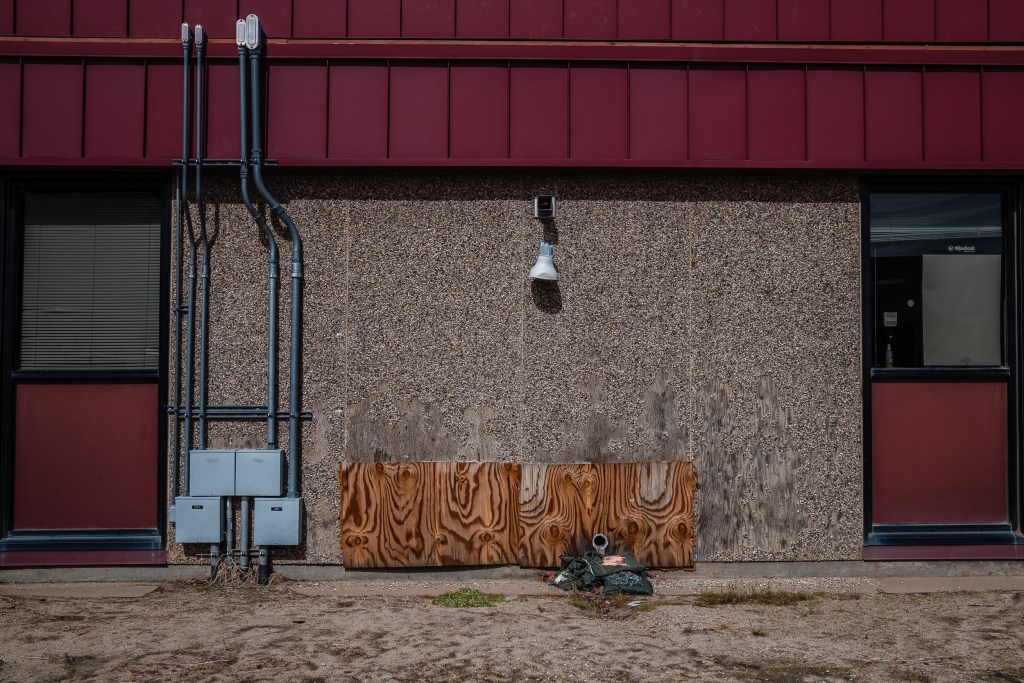
Walking around the district’s campuses makes that need clear. Officials at Potrero Elementary, which Keeley foresees needing a complete rebuild, closed off a building because of a sinkhole in the floor. The school also doesn’t have drinking water because EPA officials found PFAS, frequently called forever chemicals, in the facilities well. Keeley thinks they likely came from fire retardants frequently sprayed on the surrounding shrub-lined hills, one of which is still relatively barren because of a fire that burned through a year and a half earlier.
“Learning environments matter a lot,” Keeley said. As we walk through Mountain Empire High School, he runs his hand over the building’s outer walls, which are worn thin from wind and rain. The entire campus needs to be rebuilt because of serious structural deficiencies. Just next door, the district’s newly renovated middle school is gleaming.
“We need to get these schools fixed. The longer-term impact on a community when things like this continue on is a big deal,” Keeley said.
He often uses the example of a student who graduates and goes to a university like UC San Diego. When they enter, say, a science lab, Keeley says they begin to realize just how deficient the decades-old facilities in Mountain Empire are.
“When a kid comes back here, they’re going to think, ‘My school didn’t do anything for me. They didn’t prepare me.’ And whether we did or didn’t, that’s how they feel, and that’s their reality. I can’t live with that,” he said.
Voters recently rejected a bond measure that would have injected some – but not all – of the money leaders need. The district isn’t alone there. Voters in rural San Diego communities have rejected many of the bonds put on the ballot by their districts in recent years, often cite cost of living concerns.
They aren’t entirely wrong. Because the communities lack of abundant commercial properties, homeowners are hit much harder than those in urban areas hit by the tax burden needed to pay off bonds. And even if the bonds were approved, the assessed value of rural districts’ properties often isn’t high enough to raise nearly as much as is needed to cover the myriad fixes their facilities need.
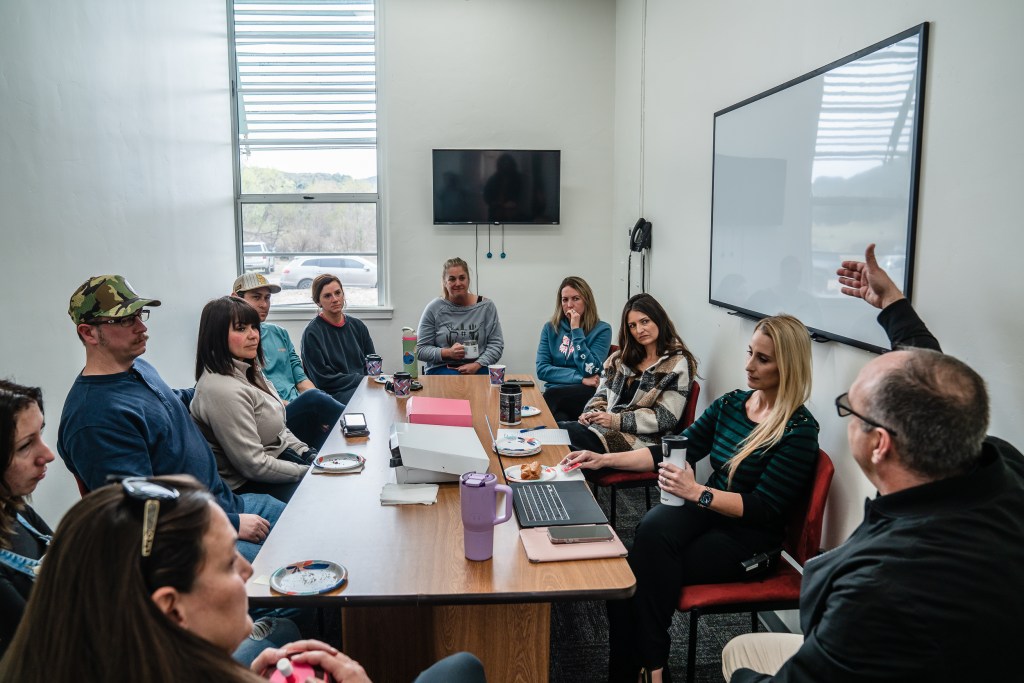
In Mountain Empire’s case, the state approved $4.6 million in aid to draw up designs to rebuild the district’s high school earlier this year. That will bring in desperately needed dollars, but actually rebuilding the high school will take years – and require district leaders to jump through several more hoops. Meanwhile, the facilities are just getting worse.
Needless to say, those don’t help student achievement. They also don’t necessarily encourage students to show up for class, said Tieken, the Bates College professor.
“When students see these things they may feel like, ‘Well, they can’t get a roof over my head. I don’t feel very valued in this building. And if I’m not valued, why should I go?” Tieken said.
But the infrastructure challenges rural school districts face aren’t limited to brick-and-mortar concerns. Students in rural areas have long been on the wrong side of the digital divide, a fancy term that refers to the fact that many marginalized communities, including rural ones, lack access to technology and internet.
That divide was crippling during the pandemic, when education went virtual and rural communities were hit by that lack of access. In fall of 2020, while many students in districts across San Diego were plugging away online, district leaders in some rural areas of the county were still trying to cobble together enough laptops or wireless hotspots to dole out to all their students.
Even given federal and statewide investments into closing digital gaps, the pandemic-era losses aren’t easily recovered.
‘Unique Funding Challenges’

School districts, rural or urban, are no stranger to budget cuts. In that sense, the pandemic, during which billions of federal relief dollars flowed into schools, was a welcome reprieve from yearly worries about fiscal gaps. But now that that money has dried up, districts are having to pull out the scissors again.
Rural districts face many of the same fiscal shortfalls, but often without as many options for reductions. One good example is, again, transportation. When faced with budget shortfalls, many leaders of urban districts have decided cutting bus drivers seemed like a better option than cutting, say, a teacher.
That’s led to the virtual disappearance of yellow school busses from urban districts like San Diego Unified, which now almost exclusively use busses to transport special education students. Statewide, only about 8 percent of students take school busses to school according to a nearly decade old survey.
But for districts like Mountain Empire, whose students rely on busses to get to and from school, cutting them would be unimaginable. That means the 7.5 percent of the district’s budget spent on transportation is two to three times higher than other districts.
“We bus kids, almost 5,000 miles a week. That’s necessary, but it’s a huge burden,” Keeley said as we drive down the winding, oak and manzanita lined roads between Descanso and Potrero Elementary.
Rural districts’ generally smaller size also mean they’re unable to absorb fiscal hits when they come. For example, schools are funded in part based on average daily attendance, so the high levels of chronic absenteeism rural districts face can be a huge fiscal stressor. Even small enrollment declines can also have an outsized impact on smaller districts, throwing budgets into disarray.
“Rural districts’ unique funding challenges mean that sometimes funds need to be diverted. You know, you can’t necessarily do the tutoring program if you need to fix the leaky roof,” Tieken said.
‘Rural Jobs Feel Like a Stepping Stone’
The pandemic created a whole new world of needs for kids. The chaos of Covid stirred up new emotional, psychological and academic needs in kids, meanwhile schools have faced nationwide staffing shortages.
That shortage has plagued even large, urban districts like San Diego Unified. But for small, rural districts, which often can’t pay as well, it’s magnified by high turnover rates.
“For some teachers, rural jobs feel like a stepping stone,” Tieken said. “They take a job out here until they can get a quote-unquote ‘better job.’”
When teachers leave, it can also be incredibly difficult to replace them. That’s especially true when districts don’t need a full-time teacher, or when the positions require specialized experience, like educators in career and technical programs, said Jewyl Alderson, a director of San Diego County Office of Education’s system of support.
“When somebody retires or moves, sometimes it can cause the entire program that that particular teacher was instrumental in to just dissolve. So, you have a hard time gaining momentum behind some of the more specialized programs that require expertise,” Alderson said.
That difficulty finding staff extends to school psychologists, who are often in short supply but badly needed. That’s especially true given the deep emotional distress many kids experienced in the Covid years in short supply.
“Kids’ need for social and emotional and mental health care has increased at every level,” Hartman said. “That is an area that has the potential for very adverse consequences.”
And it’s not just pay that’s a challenge when it comes to recruiting staff. There tend to be less amenities in rural districts, less supports and even long drives to work. Keeley himself commutes from Santee, an about 45-minute drive each way.
Even given those challenges, he feels like he has it pretty easy in some respects. For one, Keeley’s not a superintendent-principal, who’s forced to wear more than one hat. Multiple local school districts do fall into that category.
And while it can be difficult to fill positions, he has a couple big assets, one of which is the community. It’s tight knit. Some families have attended Mountain Empire schools for three or four generations. Many return to work in the schools. Those who stay, stay for a long time. The man who was Keeley’s high school principal just retired six years earlier after 37 years at the district.
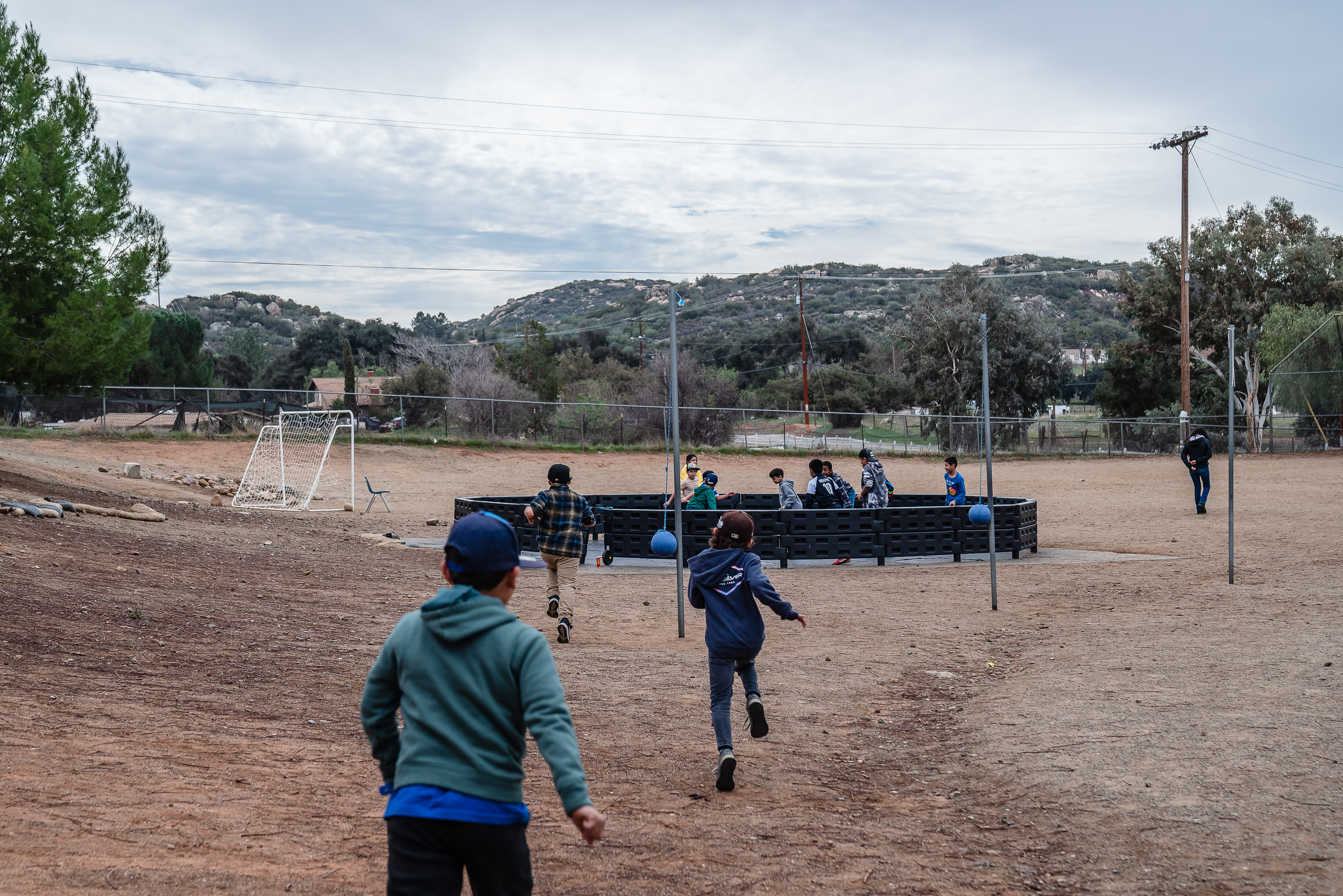
As we walk through Potrero, a group of kids skip around in a walled off area, smacking a ball across the floor and yelping with delight. They’re playing a game called gaga ball. A gray-haired teacher stands watching them with a smile, ensuring kids play by the rules. He’s retired but still comes in to sub nearly every day. All sorts of people go above and beyond and pitch in however they can, Keeley said.
Back in his work van, Keeley turns onto State Route 94 East toward Mountain Empire High.

“There are challenges in this area that I will never be able to fix. I can’t fix the weather. I can’t fix the roads. I can’t fix SDG&E,” he said.
But he has been trying to fix what he can. He has been focused on attacking the big structural challenges and reshaping the way Mountain Empire operates so they can better support a long-term vision for the future. That’s where stuff like the state facilities funding and his advocacy with SDG&E come in. These sorts of changes take time. They’re complex.
“This is the human business,” Keeley said as we pass the Campo Creek Vineyard. The burnt orange slats of the U.S.-Mexico border wall loom on a hill less than a quarter of a mile to the south. What’s often lost, he said, are the unique, community-powered victories.
Recently, a teacher designed a regional Mexican music program alongside students. And during five days of power outages, the district used five generators to stand up what they called a Power Up Camp for elementary schoolers that included a therapy pony, a ventriloquist show and live music. High schoolers even helped run some of the programs.
“Not everyone sees the positives, but there’s so many good things happening here that don’t show up in a test score.”