

Este artículo está disponible en español.
San Diego is a powerhouse for innovation. From technology to defense to clean energy, our region leads the nation in some of the most highly skilled jobs and industries. However, a climbing cost of living threatens San Diego’s ability to retain talent, making it even more important to ensure all local young people have access to economic opportunity. For those growing up in San Diego, some form of post-secondary education will be critical to future economic success; the good news is there are many valuable forms of post-secondary education.
A Parent’s Guide to San Diego Schools: Our guide to San Diego schools provides families with everything they need to know to make the best choice for their child.
San Diego’s labor market faces a challenging future. Demographic changes driven by immigration restrictions and lowering birth rates, combined with a growing economy, lead economists to predict a large gap between the number of jobs in our economy and people available to fill those jobs. While tech like AI will contribute to closing that gap, the remaining jobs will require advanced training and education at a scale not currently available. The chart below shows this trend—between 2016 and 2025, economic growth has been concentrated in jobs that require post-secondary education.

Fortunately for tomorrow’s talent, jobs requiring a post-secondary education tend to be the most resilient in economic downturns. Data from 2016 to 2025 shows roles requiring a high school diploma or no formal education experienced the largest decrease during the 2020 downturn.

As these economic trends persist, inclusion becomes both a business and household imperative—because the major barriers to these jobs, which promise socio-economic mobility and regional prosperity, are often rooted in barriers to post-secondary education. The region’s ability to produce the necessary talent to fuel the future economy relies on creating access for all job seekers and creating pathways to the advanced training needed to fill high-demand roles.
“San Diego’s future economy is incumbent on investing in those students currently in our K-12 schools, who we’ll rely on to drive every San Diego business, whether it’s at Qualcomm, a small biotech startup, or your local hospital. And these students need to come from every neighborhood in the County,” said Mark Cafferty, president and CEO of San Diego Regional Economic Development Corporation.
Where We Are and Where We’re Headed
Math and reading scores continue to correlate with household income levels. In 2023, 75 percent of children from low-income San Diego County households were not meeting California math standards, compared to only 42 percent of children not in a low-income household. In California, these academic outcomes tie directly to students’ eligibility for public four-year universities. Like the wider United States, poverty in San Diego disproportionately affects people of color, leading to barriers in educational attainment and disadvantages when competing for innovation jobs.

This becomes evident in the region’s workforce: Hispanic people in San Diego comprise 50 percent of the K-12 population, but only 20 percent of the high-paying roles in the innovation economy—many of which require a four-year degree, or more. In contrast, White and Asian workers in the region make up 73 percent of the innovation economy, but only 49 percent of K-12 students. As the innovation economy struggles to recruit talent from outside the region, top companies remaining in San Diego is contingent on the region improving pathways to four-year degrees.
San Diego is moving in a positive direction when it comes to degree completions. Students who completed a post-secondary degree by 2024 are generally reflective of regional demographics, and areas of study are evenly distributed, indicating that we are seeing improved access to education and a workforce that better reflects our region. Much of this success is thanks to higher education institutions’ efforts to improve access to education. There has been a notable increase in two-year degrees completed, which makes sense as community colleges are inherently inclusive. In addition, we continue to see higher education institutions partner on credit transfer agreements and stackable credentials that allow students to stop and start their education without having to repeat courses.
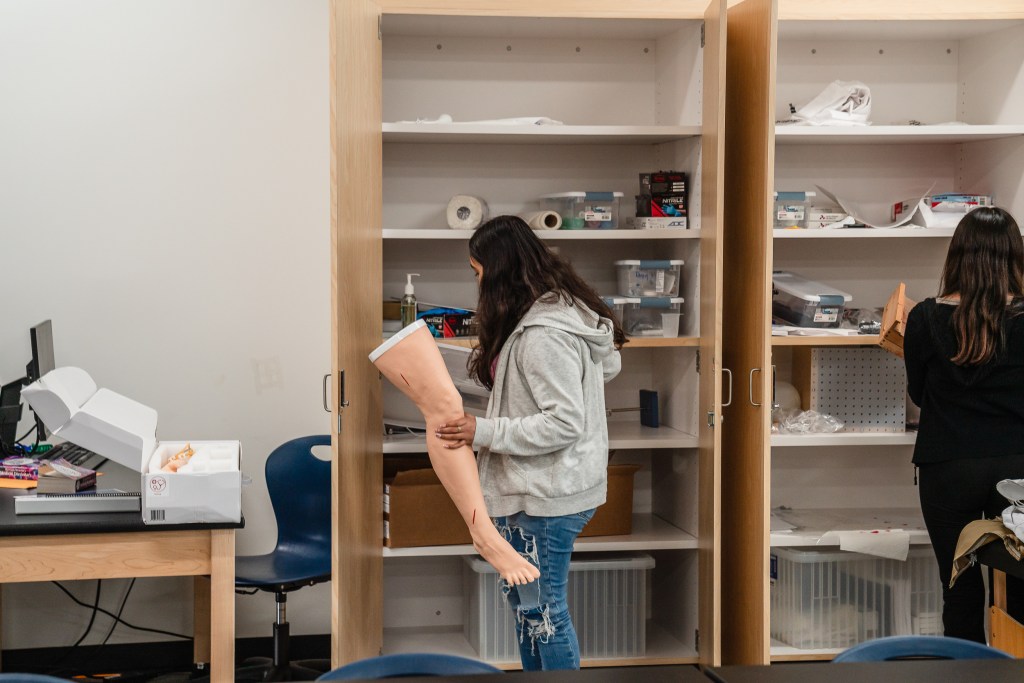
The ability to move between the education system and a career is a win for everyone involved. Employers have the option to invest in their existing workforce to ensure long-term job readiness, and students have the option to earn as they learn. The cost of getting an education can be a barrier to completion and programs that are broken up into bite-sized pieces allow for saving up between courses, or even leveraging tuition reimbursement programs from an employer.
A strong example of critical articulation agreements is California State University San Marco’s Scholars in Wellness and Innovation Fast Track program (SWIFT), developed with local K–12 partners to expand early access to college and workforce preparation. Through SWIFT, high school students are dual enrolled in university-level courses in fields such as health and human development, earning credits and certifications that count directly toward a bachelor’s degree and higher salaries upon graduation. This model also shortens the time to degree by a year, making the degree more affordable and building a diverse pipeline of students equipped for the region’s critical behavioral and mental health careers.
“Innovative pathways like SWIFT prepare students for the jobs our region needs while advancing their social mobility and contributing to our region’s economic prosperity,” said CSUSM President Ellen Neufeldt.
As San Diego’s young people look toward a career in one of the most advanced economies in the world, opportunity is abundant but education is key. Pursue education anywhere you can find it. Whether a trade school certificate, an associate degree, or dreams of a Ph.D., becoming a life-long learner will be what sets students up for success in the San Diego of the future.