
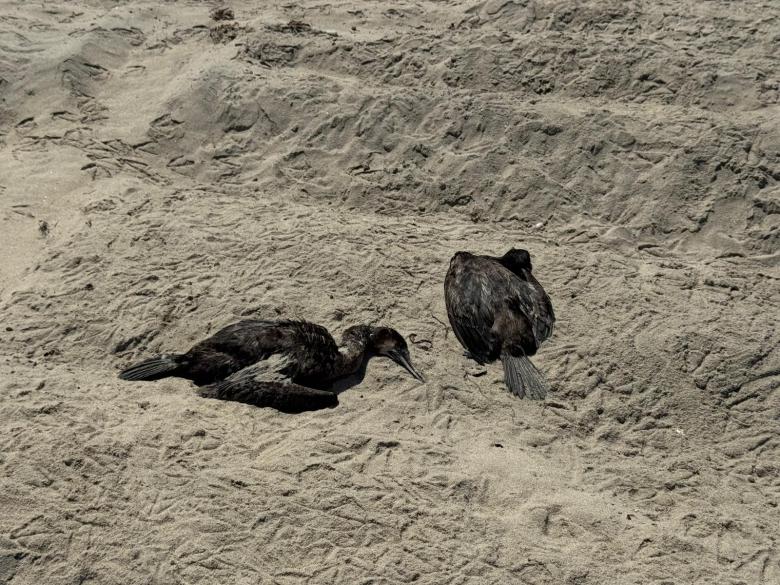
Maria Fernández was hiking out toward Friendship Park, a strip of land between San Diego and Tijuana near where the border line runs into the ocean that was supposed to be a binational garden, when she began to smell death.
She was used to smelling sewage in the contaminated water that floods the path through Border Field State Park when it rains, but this smell was different. As she reached the border wall and made her way down to the beach on that Sunday morning in early April, she saw a dozen or so dead birds scattered across the sand.
“I felt so sorry for them,” Fernández said in Spanish.
Fernández, who volunteers with Friends of Friendship Park, an organization dedicated to preserving and caring for the binational garden, makes frequent visits to the southwesternmost corner of the U.S.-Mexico border. Border Field State Park, the California park that includes the U.S.-side of Friendship Park, has been closed for months because of the contaminated water that pollutes the ocean and beaches along the San Diego and Tijuana coasts, Fernández said, but she goes anyway to monitor the area.
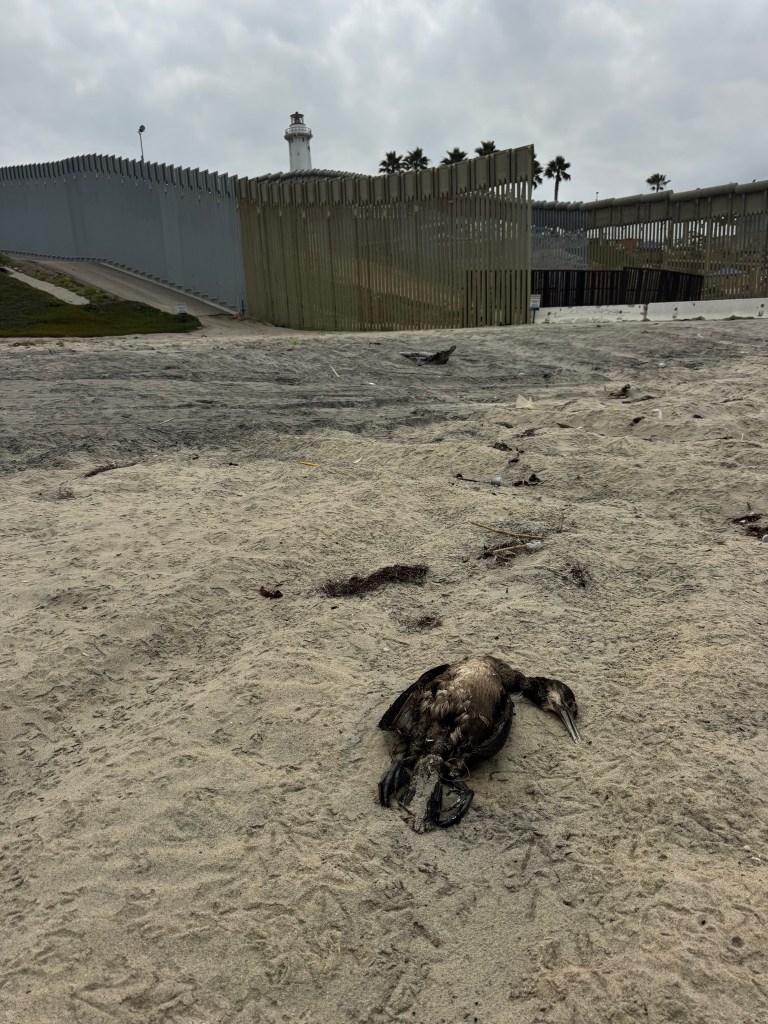
Friendship Park for years was a symbol of unity between the countries and a place where family members unable to cross the border could meet, touching fingers through the fences that, under the Biden administration, became 30-foot walls. When Border Field State Park is open, community members gather on both sides for a binational church on Sundays.
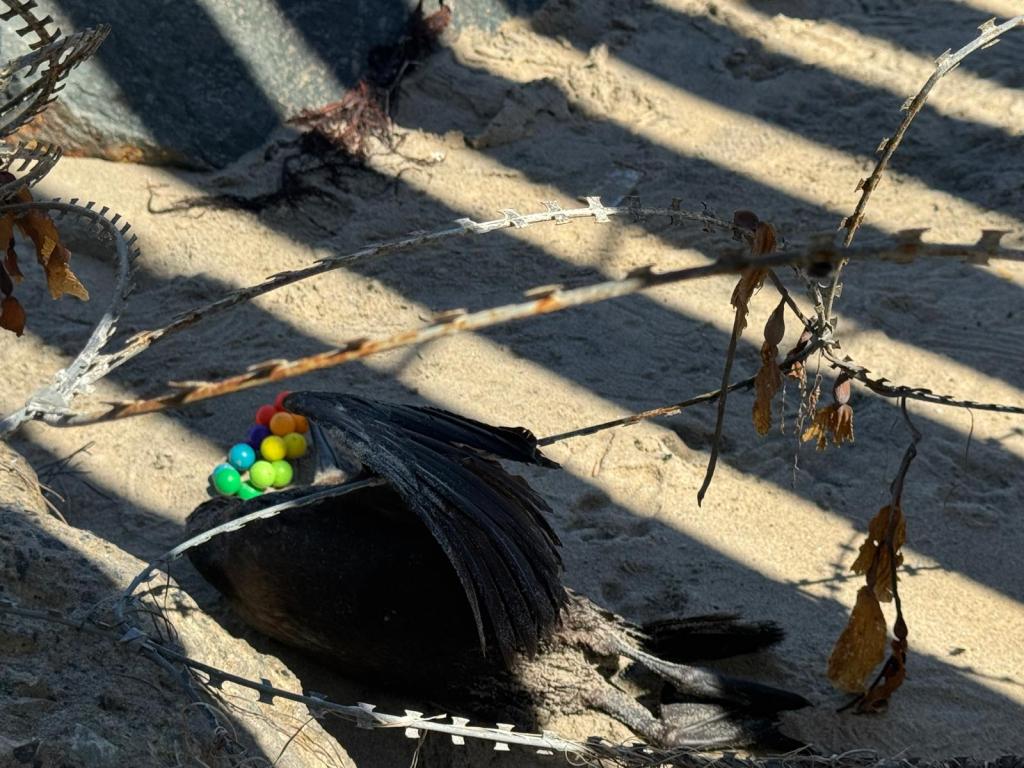
But in the past month and a half, the area has become a sort of graveyard for dead sea birds.
The California Department of Fish and Wildlife recently said that it had investigated increased deaths among sea birds and found that young birds had starved because higher water temperatures mean less fish for them to eat. It said the issue is affecting Brandt’s cormorants, common murres and brown pelicans from Mendocino County to San Diego County.
The department also said that last year was a particularly strong reproductive year for the birds and that it’s common to see more deaths among young birds after an increase in reproduction.
“Young seabirds are typically less experienced at catching prey and are less resilient to changes in food resource availability and adverse weather such as severe wind or winter storms,” the department said.
Still, Fernández said she wonders whether the contaminated water has also had an impact on the birds’ ability to find food.
The same day she saw the dead birds, Fernández also observed a truck from the company Veolia working near Friendship Park. With the park closure, a government entity would have had to give the truck access for it to be where she saw it.
From the company’s website, Veolia appears to specialize in water treatment and hazardous material disposal. The Massachusetts-based company did not respond to my questions about what it was doing in the region. It has an office in Escondido among its “hundreds of sites, plants and facilities” around the country.
The California Environmental Protection Agency directed me to contact California State Parks. California State Parks said that it monitors wildlife conditions at the beach there weekly.
“Wildlife mortality can occur for a variety of natural and environmental reasons and is not necessarily cause for concern,” it said in an emailed statement.
It directed me to contact the California Department of Fish and Wildlife for more information.
The California Department of Fish and Wildlife did not answer my questions about Veolia beyond sending a dashboard where it tracks oil and chemical spills. I did not see a spill listed in the area around the time that Fernández observed the truck.
The department did not respond to my follow up questions about whether the number of dead birds seen in one place by Fernández was similar to what it has observed elsewhere.
Fernández said she and friends have seen some dead birds in Playas, but they are fewer than the number north of the border wall and they do not linger.
Perhaps the birds chose to die near the border wall because the north side has less foot traffic and would be a more peaceful place to face their final moments than some of San Diego’s more popular beaches or the bustling activity just south in Playas. Or perhaps with fewer people around, there’s less possibility that the bodies will be cleaned up or sent back out to sea.
When Fernández went back a few weeks later to check on the birds, they were still there, decomposing, though it appeared scavenging animals had pulled apart their bodies.
Thank you for reading. I’m open for tips, suggestions and feedback on Instagram @katemorrisseyjournalist and on Bluesky @bgirledukate.
In Other News
Preparing for raids: Immigrant rights organizations are wondering why Mayor Todd Gloria has not met with them after he signed an executive order last year that included a plan to meet with stakeholders to prepare for the possibility of immigration operations like what happened in Minneapolis and Chicago, Gustavo Solis reported for KPBS.
Visiting Otay Mesa: Reps. Sara Jacobs and Mike Levin visited Otay Mesa Detention Center unannounced. Though they were allowed to tour the facility, Immigration and Customs Enforcement did not let them speak with people held there.
Losing funds: International agencies and foundations are ending their funding for Tijuana’s migrant shelters given the change in migration trends, Melina Flores González reported for El Sol de Tijuana. The shelters are hosting fewer people, and the migrants who stay there are generally stuck and unsure where to go instead of being on a path north.
Transporting plea: A pitching prospect for the Padres pleaded guilty to a misdemeanor related to transporting undocumented immigrants, Alex Riggins reported for The San Diego Union-Tribune. Humberto Cruz has now had his work visa revoked for 10 years, and he will likely be deported to Mexico.
Indigenous students: Adelina Dayebi Pazos reported for El Sol de Tijuana that in San Quintín, a town south of Ensenada in Baja California, the school system is needing to do a census of its students to assess their languages needs because many of them speak Indigenous languages.
she is concerned that Veolia is in the park because the park is technically closed. So why is she in the park?