
For voters in North Park who voted for Measure A on Tuesday, the choice was simple: property owners, whether they live in San Diego or not, are part of the community. And that comes with obligations.
The San Diego City Council placed Measure A, known as the Non-Primary Homes Tax, on the ballot primarily as a way to raise city revenue in the wake of a budget deficit. The measure was championed by Councilmember Sean Elo-Rivera. The tax would apply to residential properties left vacant for more than 182 days a year, starting at $8,000 annually per property in 2027, and rise to $10,000 in the following years.
Proponents say there are not enough affordable homes for San Diegans and this tax is a way to make owners of these empty homes pay their fair share.
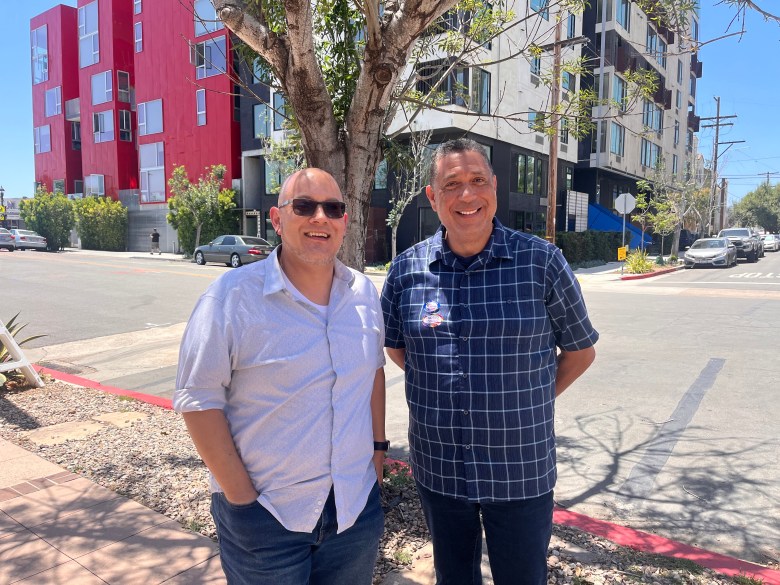
Anthony Johnson, 56, and Joseph Mora, 46, are social workers who believe the tax would push homeowners to sell or rent their properties instead of pay, and bring more housing supply back to the market.
“People who have multiple homes … when you put a tax on that, people start to think differently,” Johnson said.
John Bode, 59, a self-employed contractor also voted in favor of the tax.

While he acknowledged these property owners still pay property taxes in the community, the owners aren’t physically here to be a part of it.
San Diego “(doesn’t) need more people vacationing here. We need more people living and being able to live here,” Bode said.
Opponents of the tax, including City Councilmember Raul Campillo, have raised several counterpoints to the tax, namely that not all people who own multiple homes are wealthy enough to absorb the tax.
Stop Measure A, the leading campaign against the measure, argues that because the proposed tax’s revenue would not be legally required to go toward housing, Measure A would end up being a permanent tax without clear safeguards or guaranteed results.
Some supporters interviewed in North Park don’t think Measure A goes far enough.
“Frankly, I would go way more aggressive if I was writing it,” said Kylie Gomez, 34, who works in tech.
“It wouldn’t be a dollar number, it would be a percentage and I think I’d increase the percentage depending on the value of the home,” Gomez said. “But we have to start somewhere.”

What is “pay their fair share”? If a family with three kids lived there, those kids cost about $30/Yr. each for education. How about the rest of city services the family would consume that a visitor does not? When talking about making people pay I think you need to consider both sides of the balance sheet.
For the record I’m 100% opposed to commercial hotel operations in any neighborhood and think STR’s should be relegated to non-residental areas or banned completely
Agreed, I’m fed up with Elo’s “pay their fair share” garbage when he wants to pickpocket people to balance a budget while these elected miss work and can’t cut cost because of the MEA.
Excuse me. I’ve paid Property Taxes for 36 years on my Non-Primary Home. I pay roughly $100 a month for water and trash services I do not use. My fair share? How am I paying less than anyone else?
My family and I use my Non-Primary home throughout the week. It’s the best maintained on the block in contrast to the 2 rentals.
I’m just wondering what new method of fleecing the taxpayers Elo will come up with if this fails?
Opps, Sorry Chris. I hit the wrong reply button.
Vacant or not, property owners pay property taxes just like everyone else. I am puzzled by Sean’s logic, and the idea that more taxation is the solution to whatever crisis the city counsel dreams up to find new revenue streams.