
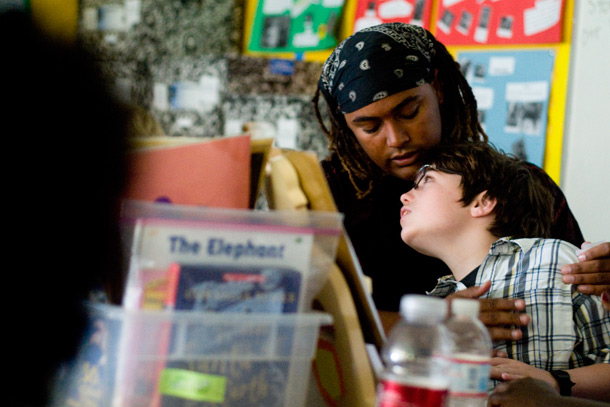
Over the past decade, the number of students with disabilities in American schools has exploded. In San Diego County, the trend has been particularly acute.
In 2015, La Mesa Spring Valley Schools, for example, served 1,424 students with disabilities. By 2025, that number had increased to 2,225. That striking increase came even as the number of overall students in the district dropped significantly.
Over just a few years, more than one in five students had become legally entitled to special education services in the district.
The same trend has played out countywide. Since 2015, local schools have lost tens of thousands of students. But over the same period, the number of students with disabilities has increased significantly. Special education students now make up almost 20 percent of students countywide – significantly more than a decade ago.
If the trends continue at the same pace as the last decade, students with disabilities would make up 25 percent of the student population by 2035.
The trend has been devastating to districts’ bottom lines. School districts are funded based on the number of children they educate. That means when they have fewer students, both the state and federal government send them less money.
What hasn’t changed is districts’ responsibility to students with disabilities. When the Individuals with Disabilities Education Act, or IDEA, was enacted in 1975, the law mandated school districts ensure all children, regardless of disability, had what services they needed to access a “free appropriate public education.” But because of the comparatively high price of special education services, districts have had to weather a sharp increase in per-pupil costs.
There are a slew of factors driving the increases in special ed enrollment.
One big reason: the definitions of some disabilities have expanded, meaning a whole new slate of kids now meet the criteria to be considered disabled. Other reasons are societal, like the lingering impacts of the pandemic on kids’ mental health and a broader destigmatization of disabilities. Educators also greatly worry that many children are being misidentified as having a disability.
In any case, for many districts, the situation has reached a crisis point.
“I don’t think any district is going to be able to sustain the pace of growth and the lack of funding,” said Deann Ragsdale, the assistant superintendent of education services at La Mesa-Spring Valley Schools. “We don’t make decisions based on pocketbooks, we make decisions based on what kids need, but somewhere, something has to give.”
The Special Education Boom
Those on the front lines of education say a swirl of issues has contributed to the new reality.
One reason is cultural. Being diagnosed with a disability has become much less stigmatized than in past years, said Tom Bevilacqua, the assistant Superintendent of South Bay Union School District. Over the past decade, the percentage of kids with disabilities at his district has nearly doubled, increasing to almost one in four students.
“There’s a lot more awareness that it’s okay that we learn differently, and it’s okay that a student may have a disability, it doesn’t identify who they are. It’s just a component of each of us,” Bevilacqua said.
Other reasons are more concrete and procedural. Schools have become much better at identifying kids with disabilities. That’s true across all of the 13 disabilities that qualify a student for special education services, from kids with visual impairments to those with an intellectual disability.
That’s partly because new laws, like early reading screeners, have forced educators to identify kids more proactively.
Beyond the procedural, definitional changes have also significantly increased the number of kids who qualify for services. Autism is the clearest example of these changes. While the diagnosis was once only used to describe cases of severe disability, it now includes a wide spectrum of neurological conditions.
That broadened definition has meant that in recent years, an entirely new group of youngsters have received a diagnosis, translating to a nearly 300 percent increase in the number of kids with autism over the past two decades. That rise in diagnoses is primarily due to an increase in mild cases.
While increasing rapidly, kids with autism only represent about 15 percent of total students receiving services under IDEA. Students with specific learning disabilities, other health impairments or speech or language impairments make up the largest percentage – accounting for about two thirds of total students receiving special education services nationwide. Growth in those three categories, though has been slow compared to autism and some other diagnoses.
Then, there’s Covid. The pandemic significantly sped up the growth of the number of students with disabilities. In the five years after Covid shut down schools, 50 percent more local students were identified as needing services than in the five years prior.
Rebecca Burton, the deputy superintendent of Lemon Grove Schools, said Covid’s impact on kids’ social, emotional and mental development was intense. For more than a year, developing children were isolated from much of the outside world, exacerbating existing developmental delays and giving rise to entirely new ones.
It’s worth noting, “developmental delays” is a qualifying disability for special education. And it is tied with autism as the second fastest growing category of IDEA-eligible disability.
But, she said, Covid is only part of the story.
“A massive reason for some of the ballooning numbers and needs are because of this really, really intense mental health pandemic for our young people,” Burton said. “It started before Covid and got worse afterwards.”
Essentially, Burton and other educators say they’ve seen students’ mental health has steadily deteriorated over the past decade plus. Exactly what’s behind that isn’t clear, though there’s been plenty of speculation that the proliferation of screens and similar technology is part of the picture. Those concerns have helped give rise to nationwide pushback to screens in classrooms. Mental health issues writ-large aren’t typically IDEA-qualifying disabilities, but things like depression and anxiety do have the potential to exacerbate learning disabilities. And thanks to a 2011 California law, the responsibility of treating mental health concerns shifted from county offices of education to local school districts – meaning districts must pony up for those services as well.
But to some educators, like Cajon Valley Union School District Superintendent David Miyashiro, an oft-whispered, but largely unproven, concern is also playing a role – the overidentification of kids with disabilities.
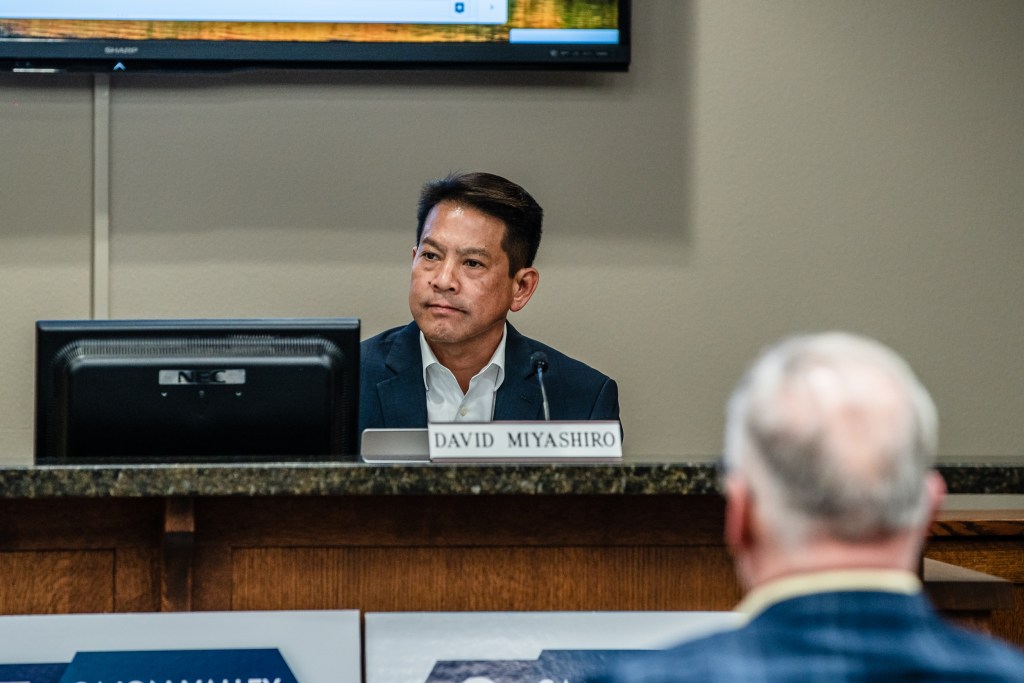
“I think that both parents and some school staff are utilizing special education as a catch-all for students that have needs,” Miyashiro said. “But IDEA is meant for students that are disabled. That’s what the law is for.”
For years, education officials primarily fretted about a disproportionate number of Black and brown students being identified as having special needs. That worry hasn’t gone away, but in recent years, as the stigma of disabilities has waned somewhat, officials have raised a new alarm: They say wealthier families are actively seeking accommodations for their children.
In the past decade, the number of kids with disabilities at Cajon Valley has exploded, increasing by about 87 percent, from 1,712 kids to 3,198.
Miyashiro thinks overidentification is especially common for a new addition to the public school system: 4-year-olds, who’ve flooded into public schools since the creation of transitional kindergarten. Those students have helped offset declines in enrollment, but they’ve also come with significant new challenges educators aren’t fully prepared to address or even identify.
“When we lower the start age to 4 years old, the number of students with significant behaviors increases because they’re still toddlers to some degree,” Miyashiro said. “They present significant needs and have learning gaps, but they’re not necessarily kids that are disabled. But because there’s such need, lots of districts are identifying them, I think, inappropriately.”
The Funding Squeeze
For many districts, the crisis is felt most acutely in their budgets. The fiscal crunch manifests in a couple of different ways.
For one, as the total number of students declines, districts are given less funding. Then, with less money coming in, the number of kids with disabilities they serve has increased. That’s a problem, because the cost of special education services is steep.
Cajon Valley, for example, spends nearly three times as much to educate a student with disabilities compared to a student who doesn’t receive special education services.
But districts also often point to another pair of culprits: state and federal officials, who they say have long underfunded special education. They have a point.
As part of the passage of the IDEA in 1975, the feds promised to fund 40 percent of the average per-pupil cost of educating kids with disabilities. But in the five decades since its passage, they’ve never gotten close.
The feds have chipped in an ever-diminishing amount to California school districts’ special ed costs, reaching a new low of 6.6 percent in the 2024-25 school year. The state chipped in about 18.1 percent of total costs that year, while districts received additional funds from other sources.
Statewide, school districts have had to pay for nearly two-thirds of the cost of special education services with money meant for more general uses. That’s a decade-long high.

Back in December, officials at San Diego Unified went on the offensive. As part of a larger effort to redesign the district’s special education program, Superintendent Fabiola Bagula announced the district was mobilizing a coalition of districts to pressure state and federal officials to pitch in more money.
Bagula said special education services cost the district about $400 million per year, but the district only received about $125 million from state and federal sources. That left them to fill in the $275 million gap with general fund dollars.
“If we received the 40 percent we were promised, our district wouldn’t even have a budget deficit. Our children would have early interventions and we would be able to meet the needs of our families and our students in a very different way,” Bagula said.
For administrators like Nicole De Witt, San Diego Unified’s deputy superintendent, the millions spent on back-end services means districts aren’t able to do the proactive work they feel could be more impactful.
“When you first see that a student’s struggling, what kind of academic interventions are we able to offer? What kind of social-emotional interventions are we able to offer? What kind of mental health interventions are we able to offer that don’t necessitate an IEP?” De Witt asked. “It’s challenging to do when the bulk of your funding is going towards special education services to then have enough funding to do these proactive measures.”
In the months since San Diego Unified’s December press conference, educators did get some good news – a huge $2.4 billion boost of funding for special education students included in Gov. Gavin Newsom’s latest proposed budget. The new money would increase per-pupil state funding $999 per pupil to $1,340.
The Employee Squeeze
For Ragsdale, the assistant superintendent of education services at La Mesa-Spring Valley Schools, the impact on staffing also can’t be overstated.
La Mesa-Spring Valley has had to add 10 more restrictive classrooms for students with more severe behaviors. Each new classroom requires a new teacher, paraprofessionals who support teachers, and administrators to oversee individualized education plan meetings and paperwork. IEP’s, as they are called, are federally-mandated, legally-binding documents that lay out a student’s needs, their goals and the services schools will provide to help them.
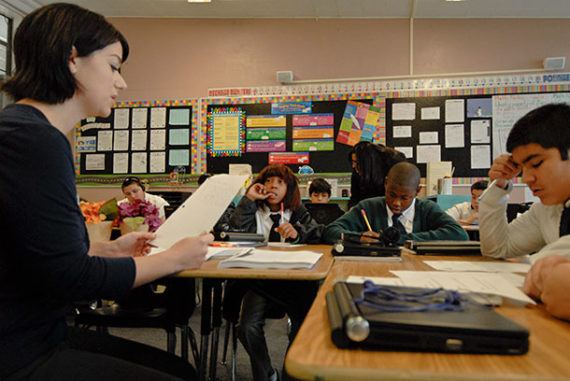
Even if districts do have enough money to pay for all these positions, it’s also difficult to keep them filled. Educators have been leaving some positions, like special education teachers’ assistants, so quickly that the district has taken to hosting recurring trainings for new hires every six weeks.
The sheer number of kids qualifying for services also means that general education teachers are routinely entering classrooms filled with students who have IEP’s. That’s required leaders to provide ongoing training to help teachers adapt.
“Teacher burnout’s a real thing. They need the support and the skills to really understand the needs of every child in their classroom. It’s not easy,” Ragsdale said.
The risk of burnout is especially high, educators say, because the number of kids with more serious behavioral issues – which may mean they try to escape from classrooms or are violent – is also rising. Similarly, the number of kids with more serious needs and complex diagnoses has increased. In fact, the single fastest growing category of IDEA-eligible disability is kids with multiple disabilities.
All these factors have made it very difficult to hire enough special education teachers. The drought is particularly bad when it comes to teachers who work with the most severely disabled students. That’s why San Diego Unified has begun to offer $4,000 stipends to new hires in the field, something they’ve been unwilling to do for hard-to-hire positions in the past.
Monique Barrett spent 23 years as a special education teacher, working with kids with emotional disturbances. Earlier this year, she was elected to lead San Diego Unified’s teachers union. She said that the striking increases are pressing down on teachers in all sorts of ways, exacerbating what was already a significant shortage in qualified teachers.
“Our ed specialists are getting unsustainable caseloads, unsustainable paperwork, and are then expected to co-teach, do IEPs, do all of this data, and then still come to work and like their job and have work-life balance,” Barrett said. “It’s unsustainable. It’s crushing teachers and making them leave the profession in droves.”
There is also a level of “filtering” that has been increasing…..parents will “homeschool” non-disabled children, but parents of significantly disabled kids want the respite of the school system.
Exactly. They are using our schools to babysit for them. Many of these kids are so disabled they cannot learn in the true sense of the word. We need to fund mental health facilities where parents have a place to take these children. It is not a public school.