
The first thing a visitor to National City Mayor Ron Morrison’s City Hall office notices is the taxidermy.
A shaggy buffalo head with horns greets newcomers from a wall facing the door. A deer’s head with antlers hangs nearby. Animal skins drape over a pair of matching red leather chairs.
The look is Wild West meets modern office. A pewter model of a stagecoach pokes up from Morrison’s ample, cluttered desk. A bronze statue of the gunslinging lawman Wyatt Earp perches atop a filing cabinet. There are cowboy figurines, a collection of tomahawks and a two-foot-long Mexican cannon.
And then there is the saggy, broken-down sofa near the door. That, Morrison said, is a strategic piece of furniture.
“National City is a small city,” he said of his scrappy, industrial, often disregarded hometown, where he has served in political leadership since first winning a seat on the City Council in 1992.
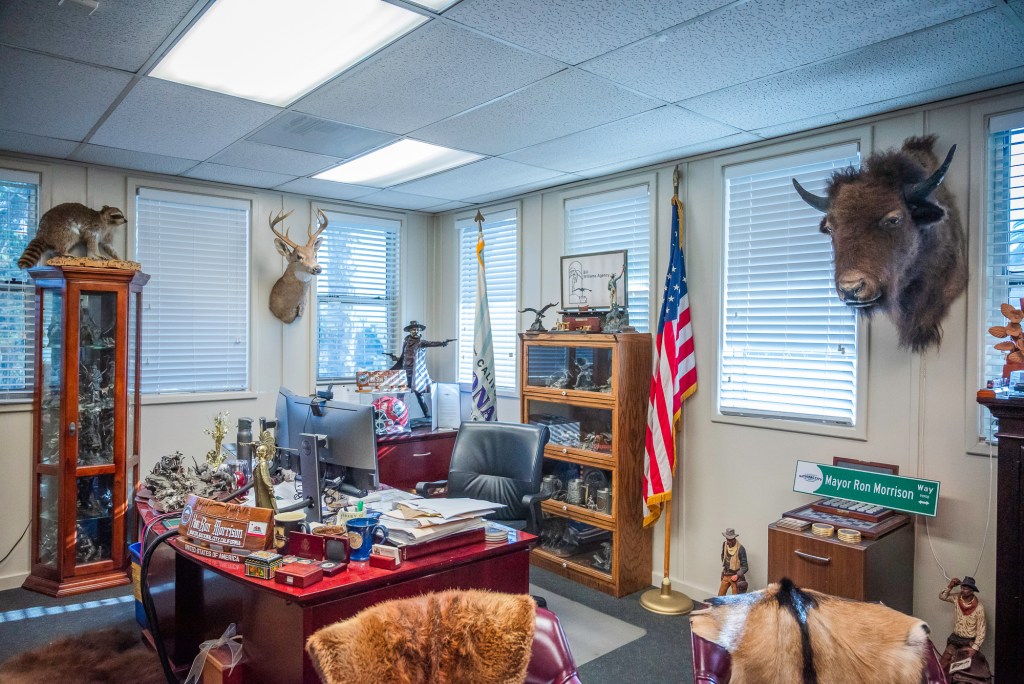
“People come in and try to take advantage of it,” he said. “I arranged it so when anyone comes in, [even if] they’re here to sell me something and control the situation, I have a soft couch, so they sink into it and relax and there are tons of distractions. And I’m in control.”
By his own telling, Morrison, 76, has been defending National City from the ramparts of City Hall for his entire political career.
Swept into power nearly four decades ago following a successful effort to thwart a controversial casino development, he has dominated city affairs ever since.
He has outlasted rivals, economic recessions and a worldwide pandemic.
A shrewd political operator with a plainspoken, folksy demeanor, he has guided his city with a blend of hometown pride, indefatigable retail politicking, bureaucratic jiujitsu and an ability to cultivate an image as his city’s chief guardian and caretaker.
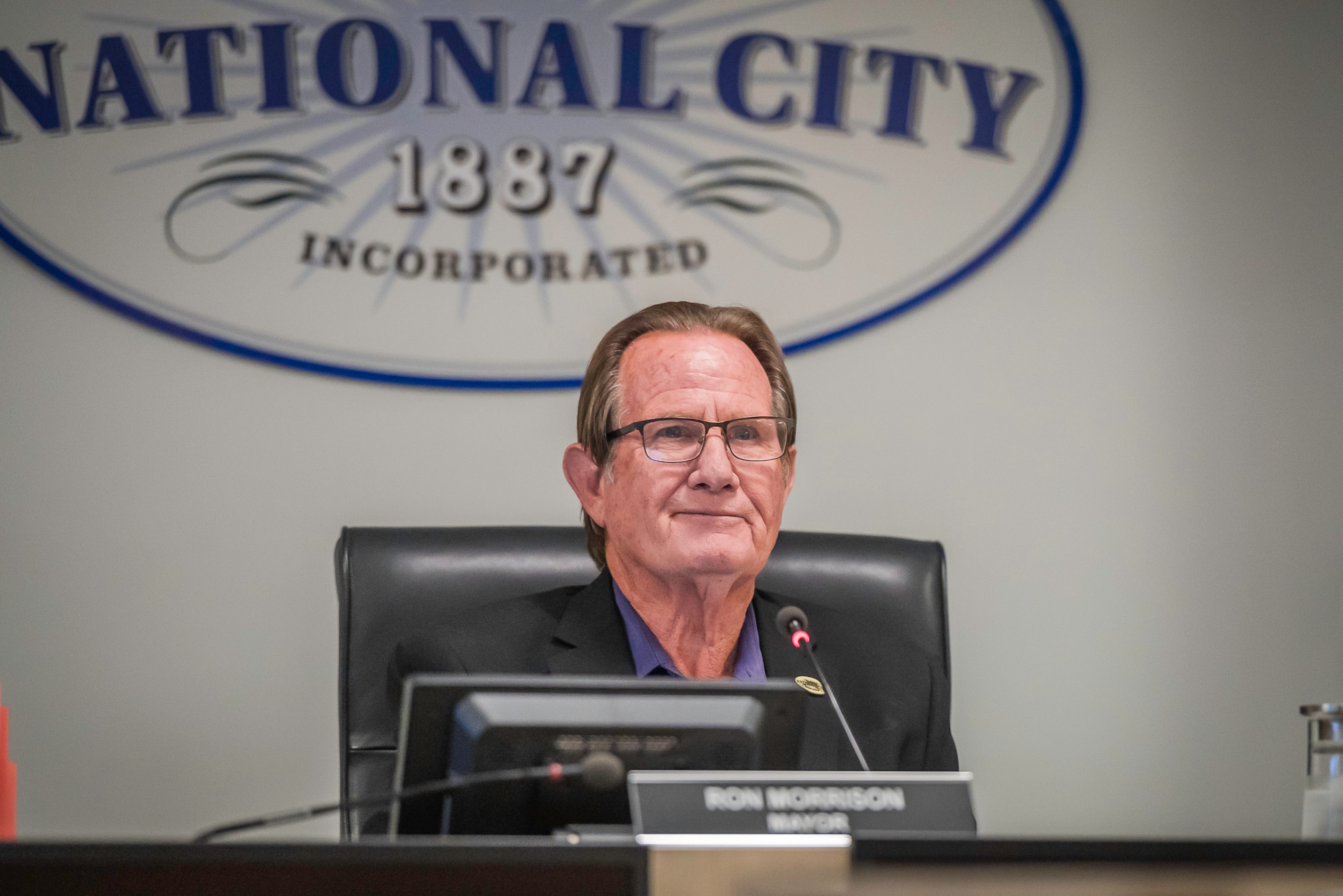
His surprise announcement last weekend that he would not seek re-election to a fifth term as mayor threw the contest for city leadership wide open and left residents wondering what the future holds in a post-Morrison era.
In an interview with Voice of San Diego shortly before his retirement announcement, Morrison cited a range of achievements during his time in office, most notably a rehabilitation of the city’s image following years of shady political dealings and urban decay.
But he also acknowledged that, despite his decades-long effort to lift up and defend his hometown, he is leaving National City at a moment of existential crisis.
“You prefer leaving when everything has a nice cherry on top,” he said. “That won’t be the situation for some time.”
Last week, recently appointed City Manager Doug Schulze delivered a blunt warning to city councilmembers that National City faces imminent insolvency absent drastic changes.
City expenses routinely outstrip revenues. And years of turnover and feuding among city leaders have paralyzed City Hall.
“We desperately need…new people and vision and ideas,” said Cynthia Quinoñez, a longtime resident who frequently attends City Council meetings and participates in local efforts to clean up National City’s polluted environment.
“It’s been steady as you go,” Quinoñez said of the city under Morrison’s leadership. “[But] comfortable is not what we need now…This is a critical moment and we need fresh perspective to respond to it.”
Morrison said National City’s current troubles don’t negate his fundamental belief that, over the long term, “we’re on the right track.”
“As bad as things are, it could have been a lot worse if I had not been here to keep some of this calmed down,” he said.
Morrison said he has been warning for years against his fellow city councilmembers’ free-spending ways, especially a series of recent raises for city employees (which Morrison ultimately voted for) that ballooned personnel expenditures from $41 million to $60 million in just two years.
Now, he said, “Everyone is realizing there’s a problem and starting to realize the severity of it. Until you get to that point, nothing can be done.”
“I want to be working right up to the last second and seeing how much of these things we can get back on the right page.”
An Accidental Politician
Morrison wasn’t born in National City but he might as well have been.
Born and raised in 1950 in the Shelltown neighborhood of San Diego, Morrison said he essentially grew up in nearby National City, where all his friends lived and where his parents ultimately moved when Morrison was 15.
He graduated from National City’s Sweetwater High School (a fact that fellow Sweetwater graduates make a point of mentioning during City Council meetings – South County residents love their high schools) and served in the Army National Guard after college.
“I was stateside,” Morrison said of his military service. He served six years overseeing diesel engine maintenance records in a desert tank battalion.
Following his military service, Morrison said he worked in construction as a licensed general contractor and became an AFL-CIO union member.
His entry into politics happened almost by accident.
“In 1989, some friends in Cathedral City said, ‘Why are the city councilmembers of your city up at the Bicycle Club?’” he recalled. “I said, ‘What’s the Bicycle Club?’”
Morrison’s friends were referring to a notorious card club in the Los Angeles County city of Bell Gardens, which over the years has been the target of multiple federal money laundering investigations.

Owners of the club, Morrison learned, had been working with National City councilmembers on a behind-the-scenes plan to legalize gambling in the city and build a multi-story casino.
“They wanted to turn National City into Bell Gardens,” Morrison said.
Outraged, Morrison said he began “going to all the City Council meetings.” He rallied opposition and got a boost when the San Diego County District Attorney weighed in with allegations that the Bicycle Club’s owners had ties to drug money.
The planned casino died and Morrison won a seat on the City Council in 1992 on a pledge to clean up City Hall and defend National City from outside interests.
“I’m not opposed to gambling,” he said. “But I am opposed to groups coming into small cities and trying to control them.”
Restoring Pride
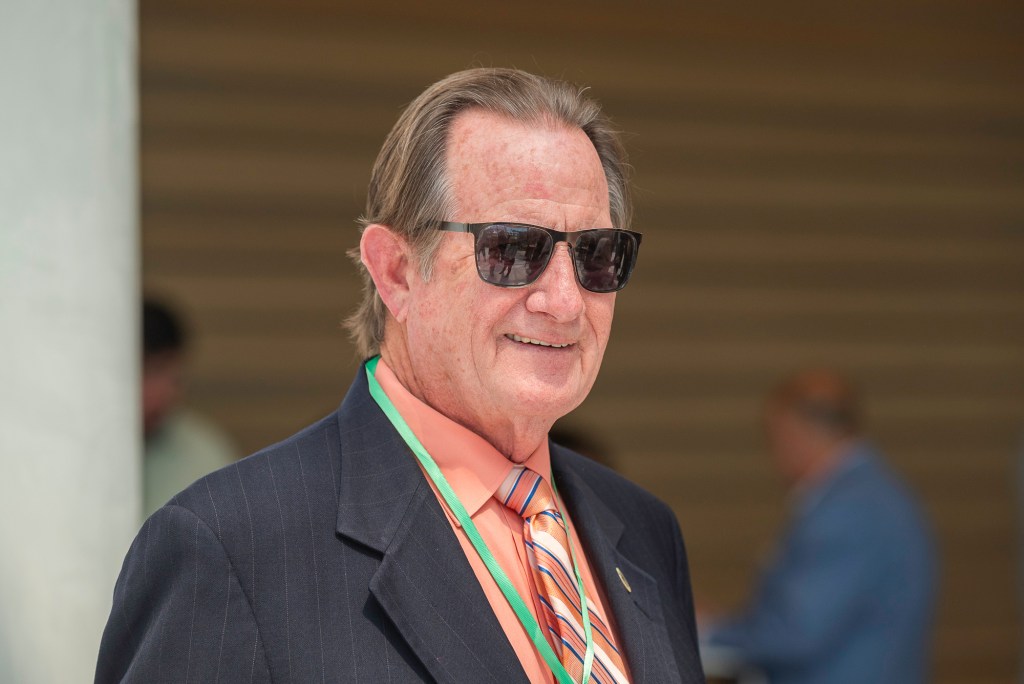
From the start, Morrison was demographically out of step with his constituents even as he won their votes year after year.
In 1990, White residents comprised just 26 percent of National City’s population, according to the U.S. Census. Today, that figure is even lower, with Latinos and Asians – including a large community of Filipino-Americans – comprising the majority of city residents.
Morrison also stands out as a conservative-leaning independent in a majority-Democratic city.
None of it matters, he said, because National City residents are discerning enough to evaluate candidates as individuals, regardless of political party or ethnic identity.
“People realize I’m on the job seven days a week, 24 hours a day,” he said. “People can contact me by cell phone, Facebook and we respond, no matter how minor the situation. I’m not looking to go to another job [higher up the political food chain]. I just serve the city. People appreciate that.”
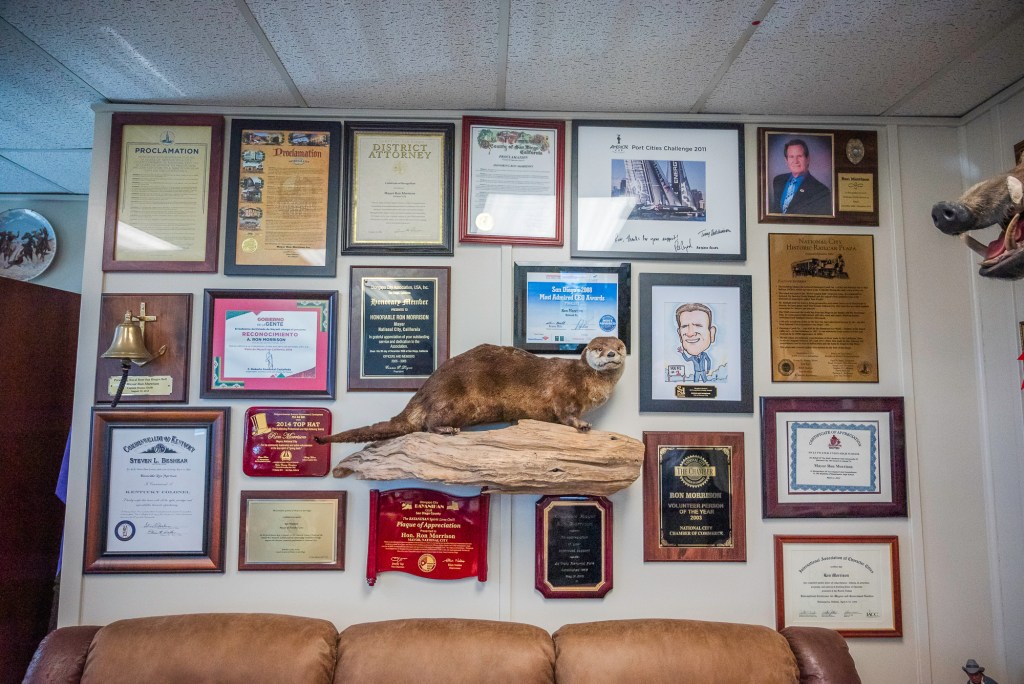
Morrison pointed to a range of achievements during his time in office, including a recently approved framework for modernizing and enhancing the city’s port area, a drop in crime, successful businesses ranging from Wal-Mart and a thriving shopping mall to family-owned ethnic restaurants.
His greatest success, he said, is more intangible.
“When I came in, the city was divided and there was no sense of pride,” he said. “People called us ‘Nasty City.’”
Morrison said he began a multi-pronged effort to rally community support and rebuild the city’s self-confidence.
“One thing I did was order buttons that said, ‘I [Heart] National City,'” Morrison said. “[City] staff said, ‘No one wants that.’ They made 500 to start. Now we’ve given away 40,000.”
Morrison brought trash dumpsters to city neighborhoods and led community cleanup days. He pushed for refurbishment of City Hall and insisted that National City be treated as an equal among its San Diego County peers.
“To me, that’s a bigger accomplishment,” he said. “People take pride in their neighborhoods.”
Scandals of His Own
Though both his 1992 entrance into politics and his first mayoral campaign in 2006 were predicated on anti-corruption pledges (Morrison’s mayoral predecessor was Nick Inzunza, who left office in disgrace after news reports documented slum-like conditions in rental properties he owned), Morrison has weathered scandals of his own.
In 2009, Morrison’s longtime mayoral assistant and confidante, Josie Flores-Clark, resigned from a second job she held at a towing company after the Union-Tribune reported the towing company had a contract with National City.
Both Flores-Clark and Morrison denied anything improper and said Flores-Clark’s resignation was simply due to a recent promotion to a civil service position that precluded outside work.
That same year, Morrison’s wife, Sherry Morrison, filed for separation, alleging what news reports described as a “history of domestic abuse.” The separation became news after Sherry Morrison’s lawyer served Morrison with legal papers during a City Council meeting.
Morrison denied the allegations and the couple later reconciled and are still married. They have two children, one of which they still care for because she is disabled. A third child, a son, committed suicide at age 23 in 2006.
Most recently, Morrison was at the center of a bizarre drama that began as a routine dispute over a controversial development proposal but soon spiraled into a months-long saga of personal feuds, corruption allegations, lawsuits and dramatic face-offs at public meetings.
The feud, which pitted Morrison and Flores-Clark against a married couple who own a local cemetery, centered on claims that Morrison used his City Hall position to benefit a local developer who had provided donations supporting Morrison’s longstanding tradition of giving away turkeys during the holidays.
Morrison denied the corruption allegations, which remain unproved (though lawyers for the cemetery owners insist that’s only because the city has stonewalled providing relevant public records, a claim city officials deny).
Nevertheless, the saga consumed city politics for much of last year, often distracting councilmembers from more pressing issues, such as the city’s dire financial situation.
Quinoñez and other residents said that, even as they credit Morrison for steering the city away from its bad old days, they hope new leadership in City Hall might calm some of the drama of recent months and enable councilmembers to set aside their personal grievances.
“They are such a dysfunctional family,” Quinoñez said of the City Council. “Whoever becomes mayor…they’re going to need to rise to this moment.”
Facing the Future
During his retirement announcement, Morrison endorsed City Councilmember Marcus Bush as his preferred successor.
Bush filed to run for mayor on Monday and will face City Councilmember Jose Rodriguez, who announced his candidacy months ago and has been racking up endorsements from influential labor groups and the Democratic Party.
Rodriguez has been Morrison’s chief antagonist on the Council for several years, often criticizing the mayor from the Council dais and maneuvering to block his initiatives or expose what Rodriguez said is Morrison’s overly privileged use of power.
“The mayor and his actions…is a major reason senior [city] staff has left,” Rodriguez said in an interview earlier this year with Voice of San Diego. “There are so many needs in our community and we are dealing with that b.s.”
Rodriguez, who has faced ethics allegations of his own, is staking his campaign on a pledge to take National City in a new direction, with greater public investment in housing and economic development and more support for immigrants and families struggling with housing costs.
“We have an individual with a 1960s vision of National City,” Rodrigeuz said of Morrison. “Those times are gone and are never coming back. We can either go forward or have a nostalgic vision…We need more of a spirit of service and getting things done.”
Said Bush: “I’m honored to receive the mayor’s endorsement. He’s served our city for decades. Even though he and I have had multiple disagreements on policy and our approach to city government, we both share our love for the city and our focus on local solutions to our problems, not dealmaking with outsiders and divisive politicking.”
“We have diverse residents and I listen to everyone, including Republicans,” Bush said. “Business owners and people I have traditionally disagreed with in the past have endorsed me because I compromise, I listen and I lead with integrity.”
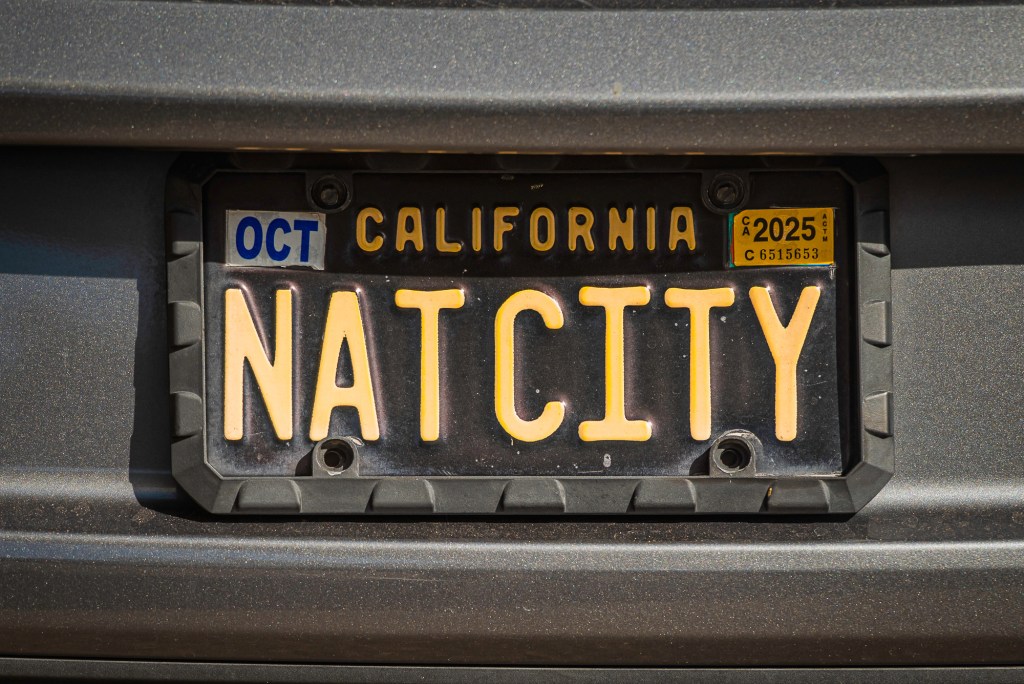
Residents said they will miss their mayor who drives around town in a black Ford Mustang with license plates reading, “NATCITY.” Following Morrison’s retirement announcement, tributes poured in on social media.
“End of an era,” wrote resident Enrique Nery-Camargo on Morrison’s Facebook page.
“Thank you for all the great years you’ve given our city,” wrote Monique Danielle. “Since I was a kid, I always remember you being at every event to support the people of our city. You will be greatly missed.”
“I doubt anyone will be able to fit his shoes,” wrote Laura Valverde.
Morrison said he has no concrete plans lined up for his life post-politics.
“It’s been eight days a week, [like] the old Beatles song,” he said. “I used to be active in a lot of different stuff. For the most part, I gave all that up for the last 34 years…I’m still committed every minute I’m here to being as involved as ever.”
“I love this city,” he said. “It’s a little bit of an urban Mayberry. You can have all those personal connections and a personal touch.”
“No one is irreplaceable and I’m replaceable…I can easily say, ‘Okay, it’s time to go out the door.'”