
What We Learned This Year is a reporting series about some of the biggest stories of 2023. Read more here.
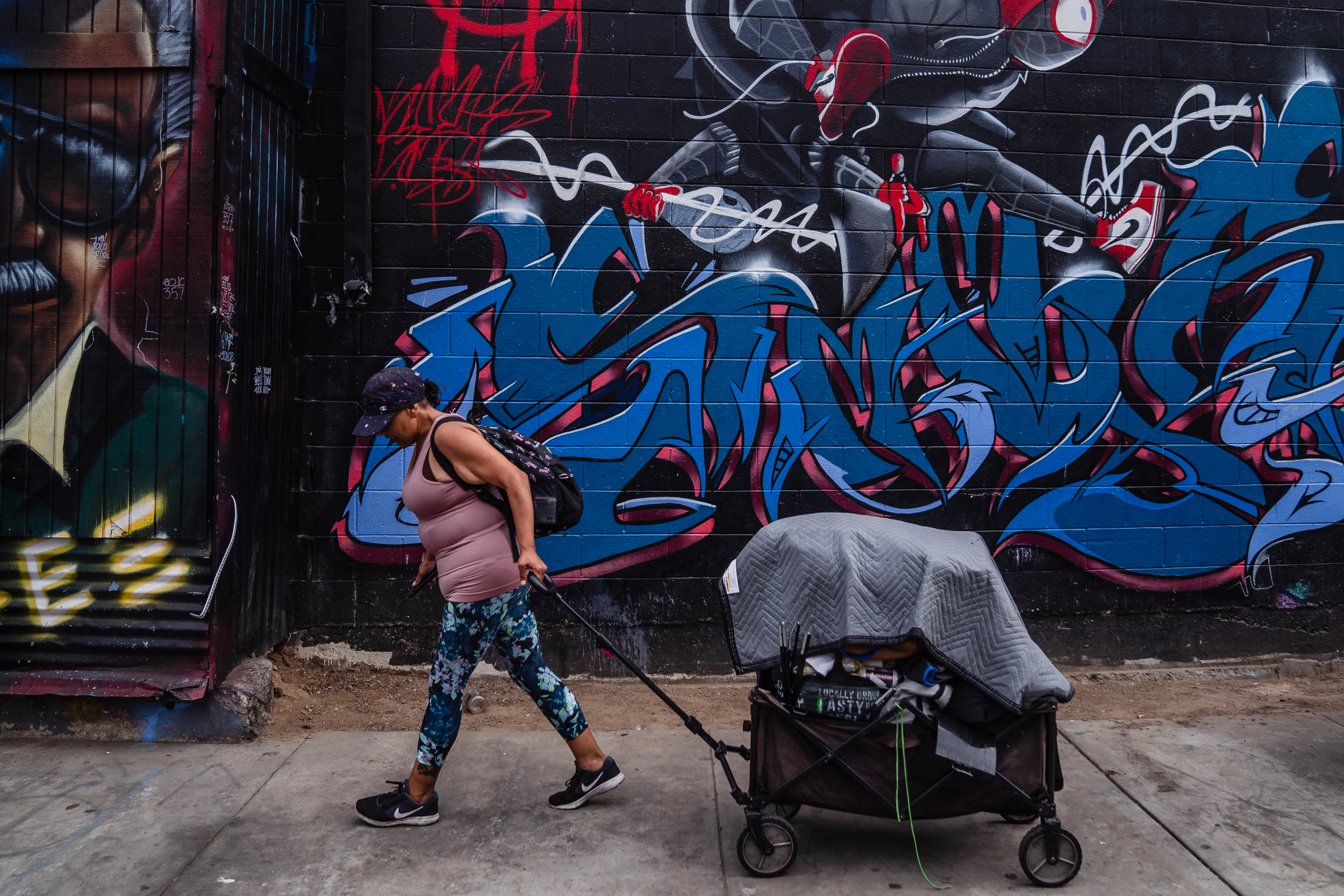
Debates over whether cities should force unsheltered residents to accept services have surged along with San Diego’s homeless population. In 2023, as public frustrations about the region’s homelessness crisis peaked, leaders presented more punitive answers to that question.
A divided San Diego City Council in June narrowly approved a homeless camping ban championed by Mayor Todd Gloria and downtown City Councilman Stephen Whitburn. This inspired similar proposals in other cities across the region.
A few months later, San Diego County became one of the first in the state to implement a new court system that compels people with psychotic illnesses into treatment. While the initiative isn’t focused on homeless Californians and proponents have stressed that the process is voluntary, it has been swaddled in rhetoric suggesting otherwise.
Then Gov. Gavin Newsom signed a conservatorship reform bill at the urging of Gloria and others who argued that the bar for forced treatment should be lowered to aid people who’d otherwise be “allowed to languish on the streets.” While the legislation expanding conservatorships to include people with severe substance use disorders will also affect housed Californians, homelessness has been central to the conversation.
The new policies arrived as despair and suffering on the streets appeared at an all-time high. Californians have been alarmed by an increasingly vulnerable unsheltered population that seems left behind and unaffected by state and local initiatives that politicians are touting – and they have been demanding action.

Homeless advocates, policy experts and civil liberties activists have attacked the more punitive policies and public sentiments surrounding them, arguing that increased access to affordable housing and services could do far more to reduce homelessness.
California Democrats pushing these reforms don’t disagree about the need for housing solutions.
Newsom and Gloria have argued more aggressive tacks are needed to respond to an avalanche of public frustration about deteriorating conditions on the street that demand more immediate solutions. They also cite taxpayers’ frustration about the lack of visible progress combating homelessness and aiding those who appear most vulnerable despite record spending.
“They hear me saying ‘$15.3 billion, that’s our homeless plan,’ and then they walk down street, they go to school, they walk over people on streets, sidewalks and they don’t believe it, or they get more angry, saying it’s just being wasted,” Newsom said earlier this month.
The two Democrats have also said that fights with some advocates have impeded their efforts. This fall, Newsom and the city of San Diego formally implored the nation’s high court to wade into a legal battle over sweeping homeless camps that pits the politicians against many activists.
Gloria told Politico this fall he believes Californians need to see cleaner streets and sidewalks in the short-term or they’ll be less likely to support longer-term investments in housing and shelter that are ultimately required to reduce homelessness.
‘No Is Not an Acceptable Answer’

Gloria has also said that homeless residents should do their part and take heed of the city’s record investments in homelessness solutions including new shelter options – and accept them.
“When we ask you to come off the street and we have a place for you to go, no is not an acceptable answer,” Gloria said at a March press conference announcing the camping ban proposal. “The sidewalk is not a home.”
As he pushed the camping ban, Gloria argued that the city needed another tool to address public health and safety concerns tied to homeless camps. The new law bars homeless residents from setting up camp on public property when shelter is available and in certain areas such as near schools and in parks even when it isn’t available.
For now, it’s too early to assess how the camping ban or state behavioral health reforms Gloria also rallied for will impact homelessness over the long haul.
San Diego County officials have emphasized that the CARE Court system – short for Community Assistance, Recovery and Empowerment – will serve a narrow group of people with serious mental illnesses and that the program is not focused on homeless residents.
As of Dec. 14, county spokesman Tim McClain said the Superior Court had received 53 CARE Court petitions including nine that were ultimately dismissed. McClain did not respond to my question about how many petitions were filed against homeless San Diegans. The county initially projected it will receive about 1,000 petitions a year and that a judge will determine about 250 of those patients qualify for treatment.
San Diego County is also for now one of 56 counties statewide postponing implementation of the conservatorship expansion law, drawing ire from Gloria and Newsom.
A county board majority made that call amid arguments that more preparation is needed to bolster a substance use treatment system now often unable to deliver care to people seeking it without coercion.

The county’s behavioral health director, hospital leaders and providers have argued expanding eligibility for short-term holds and conservatorships without increasing services for people with severe substance use disorders could lead more people to cycle through hospital emergency rooms without getting the care they need. Now that the county has agreed to hold off on immediately implementing the state reforms, county officials are pledging to work to deliver those additional resources. The exact implementation date remains TBD – and Gloria has made it clear he’ll be pushing the county to move as quickly as possible. Newsom has said he’s also looking at ways to push counties.
“Every day that passes without action is a day these folks are at risk on our streets,” Gloria wrote in a statement after the contentious county vote.
The camping ban Gloria also rallied behind has now been in place since this summer.
The new law’s bottom-line impact so far, according to many advocates and people sleeping outside: Everyday life is more difficult for homeless San Diegans.
While police reported just two arrests and nine citations for violations of the ordinance in its initial four months, homeless San Diegans and those trying to help them say changes have been more dramatic than those statistics suggest. Police have also continued to enforce other laws associated with homelessness.
A downtown business group’s latest monthly tally of unsheltered residents staying downtown and areas just outside it is the lowest it’s been since November 2021.
Whitburn and leaders of the Downtown San Diego Partnership, which conducts the monthly count, have said increased city investments in new shelter options and a state encampment resolution grant have contributed to this drop.
Meanwhile, residents and business owners’ takes on the effect of camping ban thus far have been mixed.
Indeed, what the downtown census doesn’t capture is where those who had been staying in those areas went. Some have moved into one of the city’s new safe sleeping sites, where officials reported 494 people were staying as of last Monday. Others seem to have simply moved to other areas.
Before the camping ban took effect, police cleared large, longstanding camps that spanned blocks at the edge of downtown using an existing city ordinance. The dozens who had been staying there haven’t returned and other nearby areas once packed with tents now house far fewer of them too.
In downtown and beyond, volunteers and outreach workers say homeless residents have dispersed and can be more difficult to find.

Bruce Higgins, who delivers meals to homeless residents twice a week, said he’s noticed more people staying in City Heights the past several weeks, and that those he’s serving are always on the move.
“They’re just scattered everywhere, and the cops keep moving them,” Higgins said.
Diashon Meadors, 39, who sleeps on the street in the downtown area, agreed. She said police have focused more recently on East Village sidewalks long lined with tents that are now home to far fewer camps.
“They’re telling people, ‘If you go back, you’re gonna go to jail,’” Meadors said.
Sixty-two-year-old David, who has stayed downtown for three years and declined to share his last name, said he has recently sought more hidden areas to stay and stopped using a tent to avoid police.
“I don’t want no police contact and if you pitch up a tent, they’re gonna hit,” David said.
David and Meadors each said they have tried to get into the city’s new safe sleeping sites. Both wished it were easier to access a safe place to stay.
Early last week, David said he finally secured a bed at one of the city’s longstanding shelters after two weeks regularly checking in at the city’s Homelessness Response Center and the nearby Neil Good Day Center.
David’s experience isn’t unusual. From early November through mid-December, Housing Commission data showed just 18 percent of shelter referrals through its coordinated intake system resulted in someone getting a bed. Those seeking a spot in one of the city’s safe campsites must follow a separate process to get on a waiting list.
Gloria has said the city is continuing to try to deliver more shelter options, which would allow for more enforcement. Like other city laws affecting homeless residents, the camping ban enforcement process requires offers of shelter before citations or arrests and the availability of those options can rein in police action.
The camping ban, however, draws a harder line that allows for more immediate consequences for people who refuse shelter than other city laws that police homelessness. The new law reduced the number of police encounters required before someone is given a misdemeanor citation or arrested.
John Brady, who once lived on the street and now runs an organization focused on amplifying the voices of homeless and formerly homeless people in policy debates, said he finds the turn toward more punitive strategies “gut-wrenching” and doesn’t believe those strategies will have a positive impact.
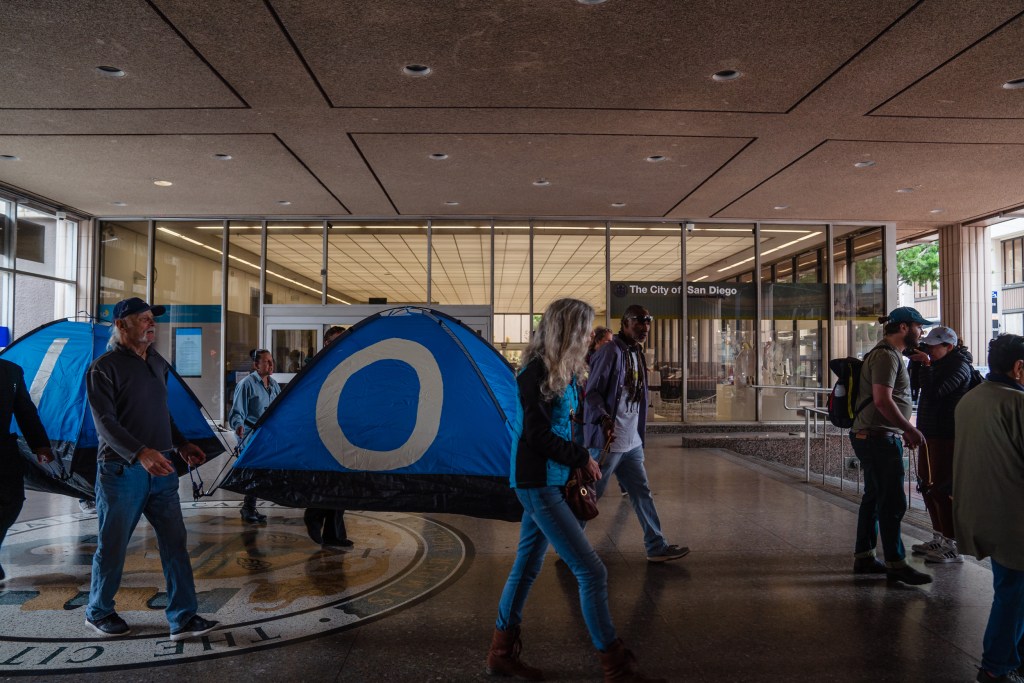
He wishes state and local leaders would focus more on highlighting and addressing insufficient service options and a brutal housing market that puts many San Diegans, including seniors, at risk of falling into homelessness.
“I just don’t think that our politicians have done a good job framing what the underlying issue is and instead have defaulted to blame the victims,” Brady said. “I get people are frustrated but what they should be is really, really concerned.”
Like Brady, the author of the city’s 2019 homelessness plan argued in an interview earlier this year that San Diego could find more success creating new amenities tailored to homeless residents’ needs than increasing coercion.
“The actual question needs to be turned around,” said Ann Oliva, who now leads the Washington D.C.-based National Alliance to End Homelessness. “It isn’t how can we force people? It should be what can we build that people want?”
This man has a plan @ http://www.dannytri.com
How about some articles on how the mayor and city council’s own actions have contributed to and continue to contribute to the homeless crisis. How many people currently living on the streets and in our parks and riverbeds were evicted by developers who demolished the older, affordable homes they were renting and replaced them with high-end, or “market rate” apartment blocks and condo towers?
Every time city hall politicians upzoned major areas of the city to allow more new housing to be build on existing land, developers are being rewarded by bulldozing older homes and building new, more expensive housing in their place. This housing replacement process is making developers richer, increasing developer contributions to downtown politicians and forcing more low-income renters out of their homes onto the street. Why hasn’t VOSD taken a serious look at this and its impact on the city’s homeless crisis yet?
So, what are you doing about all your tough talk?
How many homeless were evicted? Zero. To get evicted you must possess something, these creatures never have. Why don’t they write about it? Because this fantasy exists only in your minds.
Arrest all of them faster.
Pick up $88 per HR. Finding a work is troublesome. Either way, there are various resources open to help you in conjunction with your work design. on Get moved to encourage thousands of livelihoods utilizing yo work postings and career websites.
look at this….….. https://WorkUtilizing99.blogspot.com
We’re not racist
That’s why black people died in really cruel ways …. Because they were lazy and didn’t want to work and had SMI
We’re using digital shock collars with physical needles to help them…. It say push button if homeless …. Uhhh I mean mentally ill under schitsophrenic/schitsoaffective …..
We need more data Keep sending the money
They send **REPEAT** 5250’s back to families looking really safe and normal and sane …..
The 5250 part was already established and medication “DOES NOT” cure a mental illness ….
Don’t forget about the medication
Akathisia – framing mentally ill people
When it’s absolutely necessary
They oops goofed and got people killed and seriously injured …. INCLUDING CHILD VICTIMS!!!!!!!!!!!!!!!!!!!!!
come on!!!! tell us “normal” domestic
violence … OFF AN ATTACK FROM A LOONEY TOON WITH VISIBLE HAY-WIRE BRAIN FUNCTION ….
Then go “what 5250”
Oh we’re not going to use our 5150 tool
Because we want it the same for everyone …..
What 5250 rule? What 5250 rule?
Oh listen to the psychiatrist WHO SPENDS LESS THAN 5 MINUTES **** INSTEAD IF THE VICTIMS****
THEY’VE BEEN CUTTING ON THE SAFTEY NETS ****FOR DECADES****
They frame mentally ill people with **repeated 2 year waits in prison**
After 10-20yrs in prison they are supposed to just go “okay officer”
They subject them to sleep deprivation
They subject them to “cold” rooms because it hardly shows on camera ….
And the medication has VERY HARMFUL SIDE-EFFECTS
All this …. For violent 5250
And still dump them ignoring
Who and “severity”
The label says “SMI LABEL”
It’s the same for everybody
Not all SMI is 5250
Let’s make the spread sheets say
“homeless”
Oh 5250? That doesn’t even mean anything anymore …. It’s just used as “CAPITAL PUNISHMENT”
A DUNGEON TO TORTURE PEOPLE
INHUMANE AND DEGRADING
AND ITS MALPRACTICE
THAT VIOLATES CIVIL RIGHTS
Homeless people for sale
The mental facilities have been dumping **REAL** 5250’s for decades with 14 day ineffective treatment
You can ask most psychiatrist IF THE MEDS TAKE EFFECT IN THAT MUCH TIME …. THEY DON’T
BUT THEY DO GET AVERTISEMENT THROUGH THE NEWS
NOW THEY ARE BEING REWARDED
WITH DEAD-RAPED KID
AND MANY OTHER VICTIMS
QUIT FORCING TREATMENT ONTO NON-VIOLENT MENTAL PEOPLE WITH BLEMISHES THAT DON’T EVEN MATTER AND ACCEPT THEM AS THEY ARE …. AND LET THEM CHOOSE TO TAKE MEDICATION, IF THEY WANT TO
5250 severity DOES NOT get cure with one successful treatment
E.X.P.L.O.I.T.E.D.
OH THEY ATTACKED SOMEONE AGAIN WHILE HAY-WIRE DELUSIONAL
OH IT WAS WITH A WEAPON AFTER THE **SEVERITY** WAS ALREADY KNOWN
E X.P.L.O.I.T.E.D.
Oh it just domestic violence AFTER THEY ARE SENT HOME NORMAL-SANE AND COMPLETELY DIFFERENT …. **REMISSION** …. OH THAT’S JUST SMI HAVE THEM THINK RATIONAL AND GO TO THE MENTAL FACILITY AND WAIT FOR 2-14 days
*Anosognosia* everyone
On both sides? (Help-side)
What 5250?
Well 5250 is code for homeless people now …. So don’t pay to much attention to it ….
Once again …. What 5250
“Homeless advocates, policy experts and civil liberties activists have attacked the more punitive policies and public sentiments surrounding them, arguing that increased access to affordable housing and services could do far more to reduce homelessness. If it weren’t for these people homelessness would be solved by now. Solving it requires some punitive measures. Now in my mind requiring someone to accept a shelter bed isn’t punitive but these so-called advocates make it seem that way. You can solve the problem without some solutions that are authoritarian in nature. For instance, if you are going to give someone free or subsidized housing it is not unreasonable to require something in return such as seeing a mental health professional, if required, or going to rehab first. The government has cybersecurity education programs at low or no cost to the student, but it requires that you work for the government for some number of years after completing the program. Nobody has a “right” to receive charity or free stuff without any strings attached.
USELESS. THE ISSUE IS CITY ZONING. FIX IT.
300X3.COM – THIS PROPOSAL