

When state Senate Minority Leader Brian Jones, R-Santee, proposed limiting encampments near sensitive sites last spring, his bill never made it out of the Public Safety Committee.
Nearly a year later, he’s trying again, bolstered by support from several Senate Democrats and a similar San Diego ordinance that restricts public camping.
On Tuesday, Jones and other sponsors including state Sen. Catherine Blakespear, D-Encinitas, introduced SB1011, which would outlaw encampments near schools, open space or transit stops, and ban sleeping on sidewalks if shelter beds are available.
“Our proposed law is modeled after the city of San Diego’s unsafe camping ordinance,” Jones said. “We hope we can take this success across the state.”
The city ordinance, passed in June, forbids camping on a sidewalk if shelter is available, and bans encampments near schools, shelters, parks, waterways and transportation hubs under any circumstances. It sparked controversy for what was described as a more punitive approach to homeless policy last year.
Homeless advocates argued that the ban would simply redistribute encampments from downtown to other areas, and disrupt efforts to connect people to shelter and services.
“It’s just dispersing people, making them run and hide,” said activist Rachel Hayes, who was homeless for a decade, “It’s a Band-Aid.”
For Jones, the city ordinance was a commonsense public safety measure, and an opportunity to revisit a statewide camping ban. State homeless policy wasn’t working, he said, pointing out that homeless numbers were increasing even as spending climbed. His staff reviewed state budget data and concluded that the state spent $22 billion on homeless measures over the last six years – including big bumps during the pandemic – while California’s homeless population jumped from 130,000 in 2018 to 181,000 last year.
If the Democratic San Diego City Council could get behind tighter enforcement of homeless encampments, (albeit by a narrow 5-4 margin,) there could be support in the legislature as well.
To build backing for his measure, Jones tweaked the original bill, SB-31, in response to concerns from colleagues. He reduced the distance from sensitive sites from 1,000 to 500 feet, to avoid restricting large swaths of cities. And he swapped out “daycare center, park, or library” for “open space and transit centers,” after advocates for the homeless emphasized the importance of libraries to people without shelter.
He also recruited Democratic colleagues as co-sponsors including Blakespear and Senators Marie Alvarado-Gil, D-Jackson, and Bill Dodd, D-Napa.
“I support this bill because simply stated we cannot allow our public spaces to become living spaces,” Blakespear said.
One of the plan’s limiting factors is the availability of shelter space, and ultimately permanent housing, for people who are told to leave public encampments.
“You better have housing and shelter beds for all these people before you do it,” Hayes said. “You better have a solid plan where you put these people.”
Jones concedes that there isn’t enough shelter space statewide to house everyone living on the streets. But he said his bill isn’t just about whether encampments should be allowed, but where.
“The goal is to protect our sensitive areas, and our most vulnerable communities: the elderly, children and families,” he said
Something to watch: The Supreme Court agreed in January to consider whether people have a constitutional right to sleep on sidewalks. It comes after appeals from Gov. Gavin Newsom and city officials in San Diego, Los Angeles, Phoenix and San Francisco and other places, asking the court to confirm their authority to clear people from sidewalks and parks.
Green Energy Upgrades
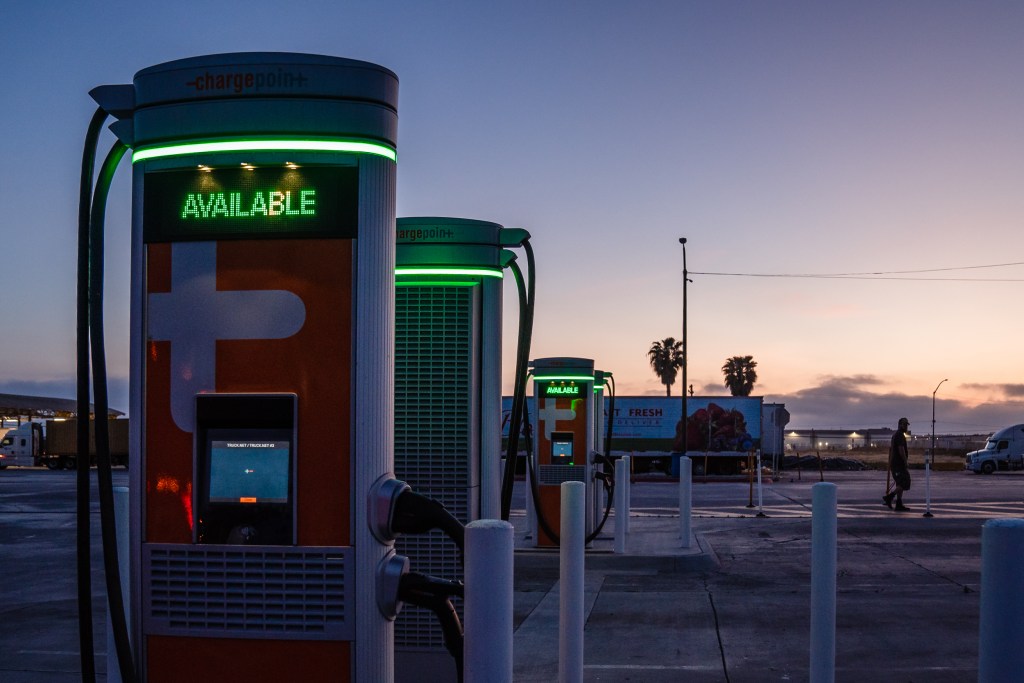
San Diego lawmakers are pushing bills to boost California’s energy systems, as the state strives to meet ambitious climate goals.
State Sen. Steve Padilla, D-San Diego, called for reforming what he called the state’s “antiquated grid” to meet increasing demands of electric vehicles and buildings.
Under his bill, SB 1006 the California Public Utilities Commission would have to ensure that California is on track to triple its capacity from about 46 gigawatts now to 165 gigawatts by 2045. The bill also directs the commission to consider new technology that could increase capacity on existing lines, or redirect power from overloaded lines to underused ones.
Those upgrades are needed to meet the state target of 100 percent renewable energy by 2045, Padilla said.
“As we set important climate goals, it is vital we have the infrastructure in place to support them,” he said.
Assemblymember Laurie Davies, R-Laguna Niguel, introduced two bills to build California’s green energy workforce and help businesses switch to renewable power.
AB1922 would create a “Green Collar Certification” within the California Conservation Corps, which trains young people to work on natural resources and emergency response. Davies is calling for the new certification to prepare corps members for jobs cutting carbon emissions, restoring wetlands and preventing environmental disaster. Corps members who earn it could work in fields such as solar panel engineering, pipefitting for clean water systems, coastal erosion control or artificial reef construction, Davies’ Deputy Chief of Staff Melody Taylor said.
In a separate bill, AB1923, Davies proposes a “Green Assistance Program” within the California Environmental Protection Agency to help small businesses and nonprofits apply for funds to cut greenhouse gas emissions.
Assemblywoman Akilah Weber Weighs in on Slavery Reparations
Celebrating the start of Black History Month, Assemblywoman Akilah Weber contributed two bills to the slavery reparations package that the California Black Caucus introduced last week to address the legacy of slavery on issues ranging from redlining to property takings to education.
Weber’s bills include a resolution calling for the state to formally accept responsibility for the “harms and atrocities” committed by state representatives to promote or enforce chattel slavery. And AB1815 would prohibit discrimination based on natural or protective hairstyles, within amateur sports.
The Sacramento Report runs every Friday. Do you have tips, ideas or questions? Send them to me at deborah@voiceofsandiego.org.
Living in a country where you have to put up signs to prevent people from making the public right of way their home/toilet means you live in a pretty stupid place.
San Diego spent $30 million paying for migrants and drug addicts to live in hotels.
300X3.COM
HERE’S YOUR ANSWER. NOW PUBLISH IT AS AN ARTICLE – OR NEVER WRITE ANOTHER ONE ON RELATED TOPICS WITHOUT A DETAILED ENGINEERING PROPOSAL.
YOUR USELESS EITHER WAY.
Even Democrats are starting to come to their senses to a degree but this doesn’t go anywhere near far enough. Punishing children for bad behavior works. It works for adults too. I’ve said many times that if it weren’t for these so called homelessness advocates we would’ve solved the problem by now. These people are obstructionists who are a major part of the problem. Punitive measures are absolutely required and so are lower cost shelters. We need simpler, barracks style shelters with services on site, and the ability to require people to enter rehab if they are homeless due to drug addiction. Stop building overpriced condos for the homeless. Moreover, government needs to stop subsidizing scarce resources such as housing and allowing investors to buy up so much property. Shouldn’t be able to deduct any interest or expenses for more than 1 property. If you can afford to buy more than 1 property than you can afford to maintain it without other taxpayers subsidizing it for you. You might have a right to property, but you have no right to impose obligations on taxpayers so that you can buy investment properties.