
If you’ve spent hours comparing hotel prices only to see them fluctuate by the minute or popped an item in your Amazon cart to find a higher price tag later, you might have wondered how those markets could be so volatile.
I’m sorry to say but it’s not necessarily a glitch in the markets. It might be you.
By that, I mean that retail companies may be monitoring your shopping habits, finances, family status, place of residence and even your immediate location to hike prices in real-time.
The practice, called surveillance pricing, is as Orwellian as it sounds, except it’s not Big Brother monitoring you. It’s big tech.
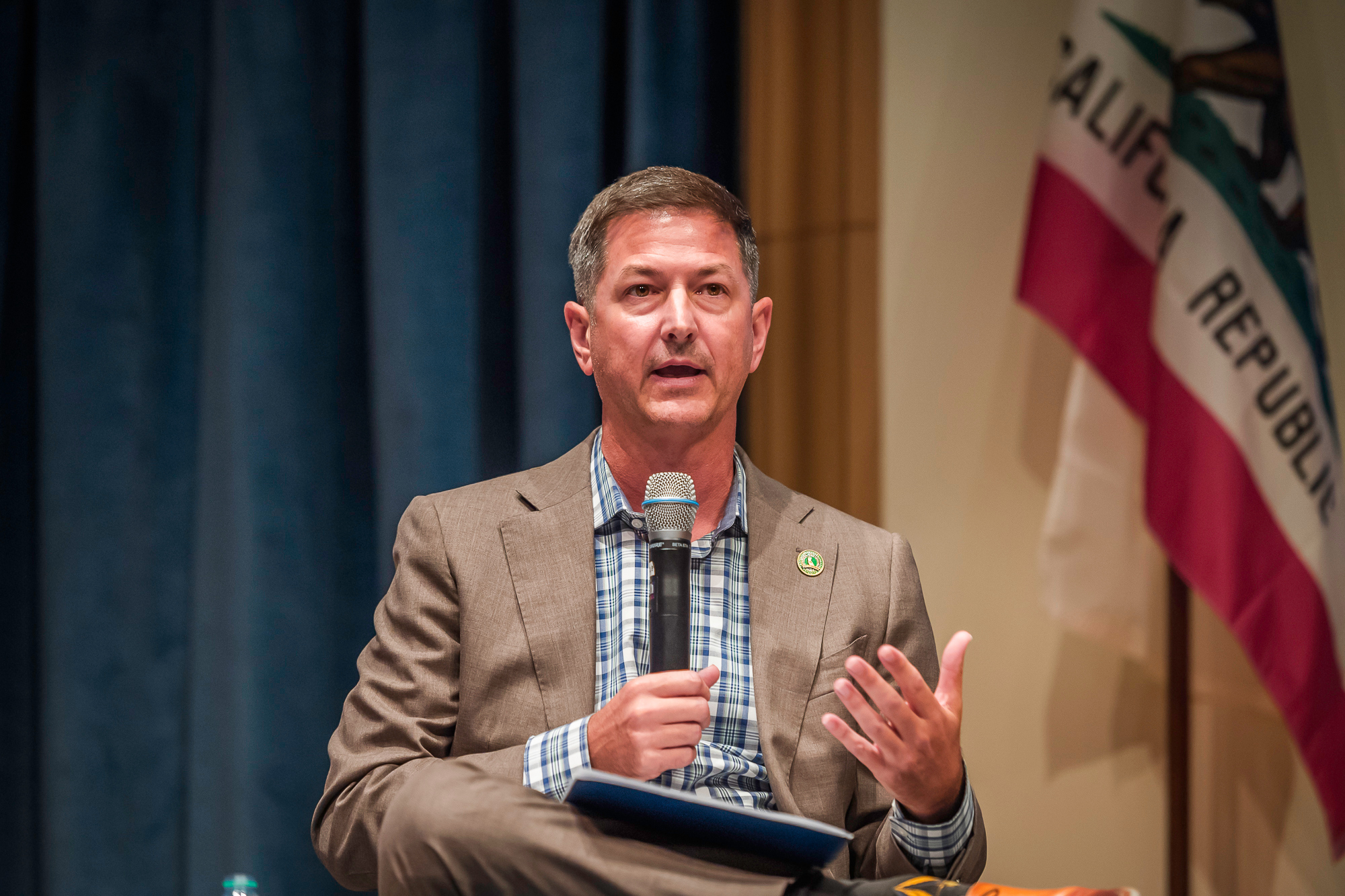
A recent bill by Assemblymember Chris Ward would rein in that practice by prohibiting companies from setting prices based on “personally identifiable information or gathered through electronic surveillance technology.”
“With this integration of technology – whether there is information about who you are or your geolocation data – that is starting to be incorporated by companies and phones,” Ward told me. “We believe that runs afoul of consumer interest, so we introduced AB 446 to put some guardrails around this.”
What is surveillance pricing? If you have recently booked an airline ticket you’ve probably felt frustration seeing the cost of flights shift before your eyes. That dynamic pricing model depends on seat availability, demand and other factors.
In some cases, companies also collect individual data to calculate the highest price a particular customer will pay.
Ward’s bill cites examples from a December report by Consumer Watchdog. For instance, Staples charged people more for a stapler if they lived in an area with fewer retailers, the report stated, and a test prep company set higher rates in areas with more Asian residents. Hotel booking sites charged different prices for accommodations depending on where the customers lived and the kind of laptop they used.
In 2022 Target reached a $5 million settlement with San Diego County over a digital algorithm that raised the price of a television advertised on the Target app when a customer entered the store’s parking lot.
The Federal Trade Commission also produced a report on surveillance pricing last month. It uncovered a “shadowy market” that uses personal data to set individualized prices for products and services.
For instance, the commission stated, consumers profiled as new parents could see higher prices for baby thermometers or infant formula, particularly if they select fast shipping, which suggests they’re making rushed purchases and paying less attention to price. First-time car buyers could be targets of hard-sells for unnecessary options or unfavorable finance rates.
The commission called for comments from consumers, and a number of people described their experiences with inexplicable price fluctuations on Amazon items, airline tickets and online grocery orders.
“I have often experienced changes, increases in prices and could never understand why,” one person wrote. “We all need to purchase the things we need, and need the best prices (not $15 dozen eggs!!) so help us please and get your arms around this.”
What Ward wants to do: The use of individualized data to maximize spending is “predatory, discriminatory, and violates public trust,” Ward said, arguing that it disproportionately affects lower-income shoppers already struggling with inflation.
His bill would define and prohibit surveillance pricing, but he hasn’t established the enforcement mechanism yet. That may be tricky, since it’s hard to spot when surveillance technology is being used.
“You don’t know until you’re running a test on something whether the price you’re paying is running an algorithm,” he told me. “It runs afoul of our understanding of price transparency.”
Ward said he’s working out details of the bill, including the penalties it would impose for violations. Consumer Watchdog and the United Food and Commercial Workers are partners on the bill, but he expects pushback from retailers and technology firms.
He’s also planning other consumer legislation, including an upcoming bill to prevent companies from buying geolocation data from people’s cell phones.
Setting Energy Rates for Data Centers
In another effort to limit big technology’s effects on consumers, state Sen. Steve Padilla introduced a bill to set energy rates for data centers.
His bill, the Ratepayer and Technological Innovation Protection Act, calls for a special rate structure on data centers. Padilla aims to protect residential ratepayers and small businesses from excess costs created by electrical grid investments that serve technology operations.
Artificial intelligence and other sophisticated programs require enormous energy to run. Lawrence Berkeley National Laboratory found that data center energy use has tripled over the past decade and will double or triple by 2028, the Department of Energy reported in December.
There’s even talk of reviving shuttered nuclear power plants, CalMatters reported in a recent article entitled “Artificial intelligence is bringing nuclear power back from the dead.”
FAIR Plan to Assess $1 Billion for LA Fire Claims; All Californians Will Feel the Burn

We all knew this was coming; the California FAIR Plan will impose a $1 billion charge on insurance companies to cover claims from the Los Angeles fires last month, California Insurance Commissioner Ricardo Lara announced Tuesday. Commercial insurers will in turn pass the costs along to homeowners, raising costs for ratepayers throughout California.
The FAIR Plan is an insurance pool that covers homeowners in high fire risk areas of California. Its policies have increased dramatically in just a few years, as commercial insurers have canceled policies or pulled out of the state.
Between 2020 and 2024 the number of FAIR Plan policies in California more than doubled, from 210,007 to 463,158, according to data from the organization’s website. In San Diego County, FAIR Plan policies nearly quadrupled from 9,670 to 37,375.
It’s the first time the state has approved assessments in more than three decades, Lara wrote. The last times were in 1993, after fires in Altadena, Malibu and Topanga damaged the same communities that burned this year, and after the Northridge Earthquake in 1994. He said the need to assess money from commercial insurers shows the FAIR Plan isn’t working.
“The fact that we are once again facing this issue 30 years after wildfires devastated these same communities highlights the need for change,” Lara said in a statement. “Thirty years of stagnant regulations have placed more people at risk.”
The Sacramento Report runs every Friday. Do you have tips, ideas or questions? Send them to me at deborah@voiceofsandiego.org.
Leave a comment