
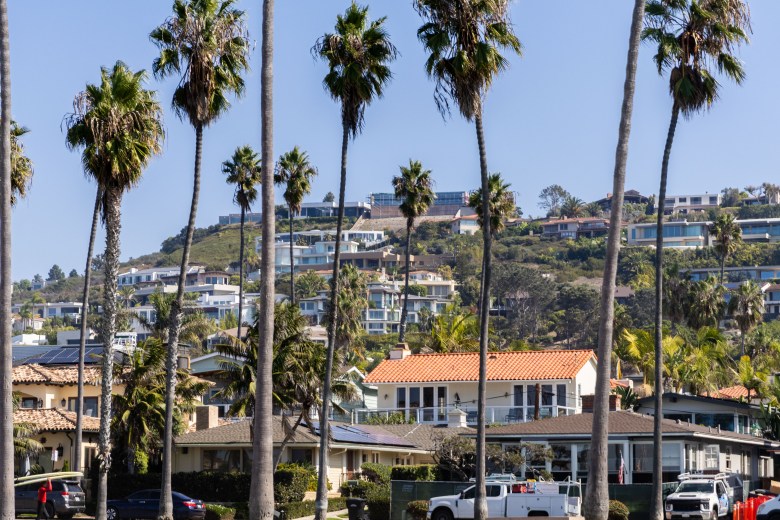
The availability of housing is a major problem in the city of San Diego — and it affects working families who are struggling to build a future in the city that raised them and where they call home. For us, this is personal. Like many San Diegans, the cost of renting is a big chunk of each paycheck. It is difficult to think about growing a family, cultivating a career, and one day retiring in the city we love.
Part of the reason there are not enough affordable homes for San Diegans is that big corporations and wealthy investors are snatching up properties and leaving them vacant to avoid landlord-tenant regulations or to turn a profit on them later.
When property owners who can afford to, buy up second, third, fourth, fifth, and sixth homes and keep them vacant, they tighten the housing market and make it more expensive to rent or buy. They also negatively affect the sense of community and quality of life in San Diego neighborhoods.
The trend of holding homes vacant is not just happening in San Diego. Across the country, according to the U.S. Census Bureau, the number of vacant homes is greater than the number of homes available for sale or rent.
Councilmember Sean Elo-Rivera has proposed a common sense ballot measure that would increase access to housing by taxing big corporations and wealthy investors who are hoarding homes and keeping them off the market. It’s an easy win for the city of San Diego.
In the city, there are over 5,100 empty homes, according to city data. That number is far greater than the 2,800 available homes for sale and close to the 5,600 homes available for rent on local realtor listings. If the 5000-plus vacant homes in the city went up for sale, that would nearly triple the chances for San Diegans to own a home. If they were instead put on the market for rent, it would nearly double the availability of homes for hard working San Diegans to live in. Incentivizing owners of empty homes to sell or rent them would significantly increase supply and potentially drive down costs.

Elo-Rivera’s “Homes for San Diegans” proposal would help to correct this imbalance now.
The annual tax would start at $8,000 per empty extra home that is not occupied by the owner as their primary residence, is not an ADU on the property where they live and is not a rental. Corporations would be charged an additional $4,000 per vacant home. The measure would also include exemptions for disasters, military service, death of the owner, financial hardship, and owners who are in long-term care.
This is a sensible and narrowly tailored tax that will affect less than one percent of property owners — those that can afford to buy extra homes and keep them vacant. The purpose of the tax is to encourage vacant homeowners to either put homes on the market for San Diegans like you and me to rent or buy, increasing the supply and lowering the costs, or pay a tax to generate revenue that offsets the impact of keeping homes vacant. The choice is theirs. Either way, San Diegans win.
The proposal puts more housing in reach for San Diegans and generates tens of millions of dollars that could be used to pay for more affordable housing and infrastructure as well as emergency response, neighborhood parks, and community libraries that help all San Diegans thrive. San Diegans will be able to decide how revenue is spent through public input, transparent oversight, and an independent audits.
The independent audit provision ensures transparency and accountability. If voters approve the empty homes tax, the city would be required to conduct regular independent financial audits to verify how much revenue is collected and how it is spent. Those findings would be made public so residents can see exactly where the money is going. If we are asking voters to approve a new revenue measure, they deserve full transparency and independent oversight.
For these reasons, the proposal is supported by our organizations — Alliance San Diego and the San Diego Housing Federation — as well as community-based organizations, fair housing organizations, labor unions, civil rights groups, and everyday San Diegans who are struggling to get ahead and keep a roof over their heads.
We urge the full City Council to advance the proposal to the voters in the upcoming election. Every San Diego family deserves a chance to keep calling San Diego home.
Itzel Maganda Chavez is civic engagement director of Alliance San Diego. Stephen Russell is president and CEO of the San Diego Housing Federation.
STOP PROPOSING MORE TAXES! WE ARE ALREADY TAXED TO DEATH!!!
No more bad pocket picking ideas by Elo. The article uses a census (at the time of covid) from 6 yrs ago that says half the empty homes are seasonal. The properties that should be looked into are owners who have multiple numbers of 1031’s. People worked hard for their homes and this is double taxation penalizing success cause Elo got beat by AirBnB. The city needs to cut their staff to make ends meet and stop looking for loose change in the sofa.
How does Elo-Rivera’s law circumvent all of the problems with the San Francisco Empty Homes Tax (their Prop M), that courts have already struck down, and still be viable? Even if the City Council thinks they have it covered, it will be immediately taken to court, with a stay until the issue is decided. More money down the drain for all the lawyers!
Yes and the joke is this is somehow tied to available housing explains Todd’s housing policies are a failure or the city is desperate in balancing their budget without middle management staff cuts.
The city hall politicians have given away the store to developers who are filling the city with new apartment complexes and condo towers. It is allowing them to destroy existing naturally occurring affordable housing and replace it with far more expensive “market rate” housing projects. City hall is happy to sacrifice existing historic housing, destroying neighborhood character, to make room for more apartment blocks. It is using the city’s alleged “housing crisis” to justify razing existing housing everywhere, and now is going after wealthy homeowners vacation homes here. The only interest group they are afraid to go after is our tourism industry. They know that Airbnb and other short term vacation platforms will go after them individually if they rock that particular vote.
We already pay the highest taxes in the country. The city has record income from property taxes. Enough is enough! This will not make a meaningful impact on housing inventory. It’s a cash grab.
No we are far from paying the highest taxes in the country. For example, NYC has a city income tax.
Andrew, it’s more than just a cash grab. Much more.
Sadly, it appears that the real purpose of the (Measure A) Empty Home Tax is to grow city government, increasing its size, scope and power, fueled by tax dollars from a “soft target” that, by and large, cannot defend itself through the ballot box.
So it’s Move In, Sell Off, Rent Out or Pay Up.
Or just Vote No.
The San Diego “Empty Homes Tax” Is Set To Charge A 70-Year-Old Disabled Army Veteran $8000 A Year To Continue Using His Family Home Of 36 Years Or Take The Use Of It From Him.
I have owned and paid property taxes on my Second Home for 36 years. I have been a continual resident of San Diego County for 50 years.
My Second Home is fully furnished. i.e. Living Room, Dining Room, Kitchen, Bedrooms, pots, pans, food and clothes. It is not “Empty”. It has everything I need to reside there part time.
My Second Home was initially my Primary Home. Subsequently it was my grown Son’s Primary Home when he started his family and I would like my Grandson to be able to start his family in my Second Home when he comes of age in 2-3 years.
By forcing me to rent my Second Home, the Empty Homes Tax will unduly financially burden me to reclaim it for my Grandson’s use when he is ready. (If this is even possible under San Diego’s Severe Anti-Landlord regulations).
I do not want to sell my Second Home that has been in my family for 36 years. The cost of doing so is prohibitive. My long-term goal is to leave my Second Home to my Grandson as inheritance.
Over the 36 years I have owned my Second Home, when not being used by my family, I have rented it to various tenants. The last tenant left me with damages of $50,000 to restore my Second Home. This restoration was a complete loss I will not be able to afford again.
I am 70 years old, disabled and in poor health. I suffered a traumatic brain injury that left me in intensive care for 4 days. A judge granted me 100% disability due to this brain injury. I do not want to navigate the severe anti-landlord regulations in San Diego at my age and health.