

After decades of county managers and bureaucrats holding outsized power in county government, Board Chair Terra Lawson-Remer is proposing reforms that would rebalance the power, giving supervisors and the constituents who support them more influence on day-to-day operations and the budget.
Next week, Lawson-Remer will ask fellow supervisors to place on the ballot a series of proposals that would give supervisors a third potential term in office and give them power to approve the hiring of top county officials. The measure would also create two positions that report to the supervisors: an auditor and budget analyst.
The measure also calls for proposed changes to longstanding county policies that bar supervisors from trying to give orders to county staff – and one prominent supporter has reservations about changes to language surrounding board interactions with the county contracting officials and appointment votes. If supervisors approve Lawson-Remer’s proposals, voters countywide will see them on the November ballot.
Lawson-Remer has emphasized the broad coalition backing the reforms – from labor groups to former San Diego city manager, Jack McGrory – and her belief that they will make county government more accountable and transparent without increasing costs.
But the reforms would be a historic shift for the county arming supervisors with more power over county government – and potentially give Lawson-Remer herself a chance to run for a third term. That term limit extension and a move to allow supervisors to vote to confirm and fire top county officials have emerged as the most contentious pitches. A proposal to create an ethics commission and changes to rules meant to keep supervisors from inappropriately interfering with staff or contracting decisions are also drawing scrutiny.
Here’s a breakdown of the charter reform proposals.
Board Approval for Top County Staff Appointments
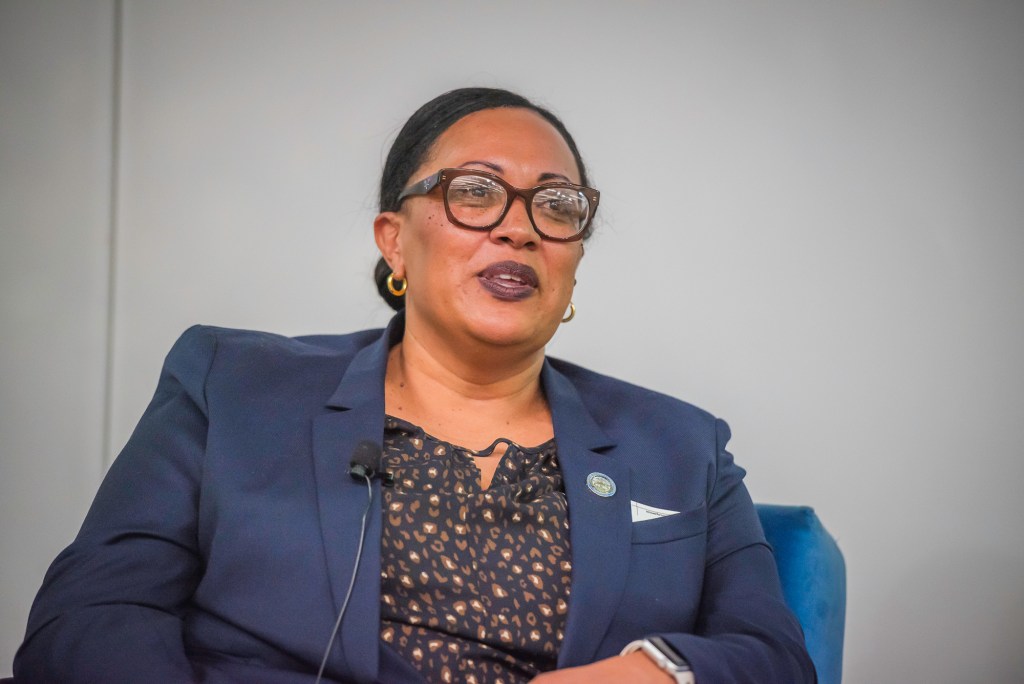
For now, Chief Administrative Officer Ebony Shelton has the power to hire and fire most county officials, including her top deputy and the leader of the county’s massive Health and Human Services Agency.
Going forward, Lawson-Remer wants supervisors to review selections for the CAO’s top deputy, the public defender, emergency services director, public health officer and deputy chief administrative officers who lead agencies like HHSA. Three supervisors must approve those appointments – and a four-fifths vote could oust officials in these positions, if voters approve her proposal.
Kyra Greene of the Center on Policy Initiatives, a key partner on Lawson-Remer’s charter reform effort, said a controversial selection process for the county CAO post a few years ago helped fuel this proposal. Greene and others argued the process wasn’t conducted transparently and that the county didn’t offer stakeholders enough opportunities to weigh in.
Greene said board approval will directly and indirectly increase public input on the hiring of key county decision makers who oversee significant operations.
“I see it as the same process that we currently have for federal cabinet level appointments,” Greene said, “and it’s been working pretty well.”
Lawson-Remer’s office struck a similar tone.
“By requiring board confirmation for key department leadership — with a simple majority to confirm and a supermajority to fire — we are ensuring that top officials are answerable to the public, not just a single, unaccountable administrator,” Lawson-Remer’s office wrote in a statement. “This structure actually strengthens the CAO by creating a professional team that is accountable, rather than politicized.”
McGrory, another key coalition member, has a different take. He thinks board oversight should only extend to the public defender, public health officer and director of emergency services.
“I think it’s constraining management and tying their hands, and I think it becomes a real political issue to hire and fire deputy chief administrative officers and that should not be the case,” McGrory said.
Another Term for Supervisors

In 2010, labor groups and Democrats successfully fought to pass a ballot measure that secured two four-year terms for county supervisors, which has helped to usher in more Democrats.
Now Lawson-Remer and other coalition members argue a third term for supervisors would help deliver more informed, effective county leadership.
If approved by voters, this shift could allow nearly all sitting supervisors – including Lawson-Remer – to run for an additional term.
Proponents of the charter reforms note that the change would put San Diego County in line with the state legislature and other large counties, including Los Angeles.
Lawson-Remer, Greene and McGrory argue that giving supervisors a third term will translate into more effective supervisors who can shepherd and work through complex projects and initiatives that take years to implement.
Greene also defended the decision to have the reform apply to sitting supervisors.
“I am not seeking to punish the people currently in office,” Greene said. “It should apply to them as much as anybody moving forward.”
Lawson-Remer’s office told Voice she hasn’t yet decided whether she’d run for a third term.
The proposal could also set matching term limits for the sheriff, district attorney and other county elected posts that now don’t have any. But changes to state law would be required to enact those.
Changes to the Non-Inference Clause

In the 1980s, county government was in disarray. The Union-Tribune published a series highlighting chaotic county operations. The series described supervisors sometimes giving conflicting orders to county staff and helping to usher in bad morale and an exodus of high-level officials.
In 1984, county voters approved Proposition A, which added a so-called non-interference clause to the county charter barring supervisors from giving orders, instructions or “interfer(ing), publicly or privately” with any county staffer that reports under the CAO other than through the CAO. County policies also require board votes on any supervisor-initiated projects that require more than eight hours of staff work.
Lawson-Remer’s proposal includes updates to these policies that her office says were proposed by the county counsel’s office, rather than the supervisor, to “strengthen and clarify the existing non-interference clauses in the charter.”
After Lawson-Remer’s office referred Voice to the county counsel’s office for more details, a county spokesperson would only say that the county counsel’s office “assists individual supervisors in preparing legal documents for the board’s review” per county policies but “does not comment on any specific advice given.”
The changes would clarify that board members can get information on county policies and activities, get help preparing initiatives if requests are made to the CAO and give input on hiring and dismissal of certain county managers.
Greene said the changes are meant to explain what board members are allowed to do versus simply what they can’t. It would still prohibit supervisors from giving orders to county staff.
Greene said the previous language put all the power in the CAO’s hands to decide what was appropriate.
The reforms also tweak a section now plainly barring supervisors from attempting “directly or indirectly, to influence or coerce” the county official overseeing purchasing and contracting.
The updated version: “An officer shall not attempt, directly or indirectly, to influence or coerce the director of the Department of Purchasing and Contracting for illegal personal gain or in a manner that contravenes the prohibition on interference set forth in section 501.9.”
McGrory said he was not aware of the proposed changes to the contracting interference language until Voice flagged them and was concerned about the potential changes. He said local government contracting presents lots of opportunities for undue influence and the earlier language laid out clearer, broader guardrails.
“I would stay with the old language,” McGrory said. “The old language is much more direct and clear.”
A County Ethics Commission
Lawson-Remer proposes creating an appointed seven-member ethics commission to investigate ethics allegations against elected county officials and issue public reports. The proposal allows supervisors to give the commission subpoena power to order witnesses to participate and provide evidence. It also calls for members to be appointed by supervisors and the county counsel.
Multiple experts raised concerns in the Union-Tribune earlier this month that Lawson-Remer’s proposal didn’t include key elements – such as dedicated staff or details on fines that could be issues – that would clarify the effectiveness of the commission.
In a statement, Lawson-Remer wrote that she expects a charter implementation task force to set specific rules for the commission but that the measure was drafted to make the commission effective.
“I absolutely support equipping this commission with every tool, including subpoena power, to investigate and address complaints against elected officials,” Lawson-Remer wrote.
In an interview this week, County Supervisor Joel Anderson suggested the county should instead seek a contract with the state’s Fair Practices Political Commission to handle ethics complaints against elected officials instead.
Lawson-Remer’s office argued the commission wouldn’t have jurisdiction over local laws, the state’s open meeting laws or non-campaign issues.
A County Independent Budget Analyst
County supervisors and activists have long been frustrated with the lack of transparency on county spending and details in the county’s $8.6 billion annual budget. The budget process kicks off in May with a proposed budget mostly baked by the CAO that can be difficult for even seasoned advocates to decipher.
Lawson-Remer seeks to address those concerns by requiring public postings on county spending and operations and hiring an independent budget analyst that reports to supervisors to dig into budgets and plans.
The San Diego City Council and the state legislature have for years relied on nonpartisan budget analysts.
Lawson-Remer envisions the potential county analyst producing revenue projections, evaluating assumptions county staff have made in budget documents and advising supervisors on the fiscal implications and tradeoffs of priorities and budget proposals.
“An independent budget analyst allows the board and the public to move from reacting to a finished budget proposal toward actively shaping fiscal priorities in an ongoing way, both in preparation for the annual budget and over the course of the year as budget adjustments must be made,” Lawson-Remer’s office wrote in a statement.
Evaluations of County Programs
County supervisors have long had questions about the effectiveness of some county programs – and have often struggled to get clarity from county officials on how things are working, especially when they aren’t.
Lawson-Remer herself pushed for the creation of the county Office of Evaluation and Performance Analytics, which was supposed to deliver such reviews. She now acknowledges the office hasn’t lived up to her vision – and believes that’s because it’s embedded inside the county government it’s trying to evaluate.
“It’s too hard to be objective and move quickly when you’re stuck navigating approvals and buy-in from the very programs you’re supposed to be evaluating,” Lawson-Remer’s office wrote in a statement. “That’s why we want to move this independent program auditor function out of the bureaucracy it is evaluating and into a more independent role, where it can operate objectively with more direct accountability to the board and the public.”
Lawson-Remer envisions the office conducting independent and publicly published evaluations of county programs, services, pilot initiatives and more.
“Without an independent auditor flagging those issues early, we continue to dump money into ineffective programs,” her office said.
Anderson, who has often spoken out about perceived shortcomings of the Office of Evaluation and Performance Analytics, was critical of the current plan for the role but said he would support making it an elected position to ensure its independence. Under Lawson-Remer’s proposal, the role would be hired and potentially fired by the county board.
“There’s nothing independent when three votes can remove you from office and three votes can control your budget,” Anderson said.
Making It Happen
If voters approve the charter reforms, Lawson-Remer promises they’ll be implemented with “no additional cost to taxpayers.”
Her plan is to propose that Greene and McGrory co-chair a two-year implementation task force that will advise the county as it enacts the charter reforms.
Lawson-Remer’s proposal also calls for the task force to create a county bill of rights that translates the updated charter into “clear, plain-language commitments the public can expect from county government, covering transparency, accountability, access to information, and public engagement.”
Labor groups and McGrory want to run over the citizens, taxing them for more money, and taking away the power to say no. TLR’s quest for a third term is a no. She doesn’t know how to balance a budget. She only knows to raid the rainy day fund to finance it. If you want the county as bad as the city, then go along with these wrong ideas.
Kelly Richards did it, and so can you! Don’t miss out on this life-changing opportunity.
Teb my name
Feels like County came out from behind closed doors with a government “transparency” initiative. Might be worthy ideas but it needs daylighting in public forums. At least a meeting in each BOS district (multiple in huge districts 5 and 2) outside normal work hours.