
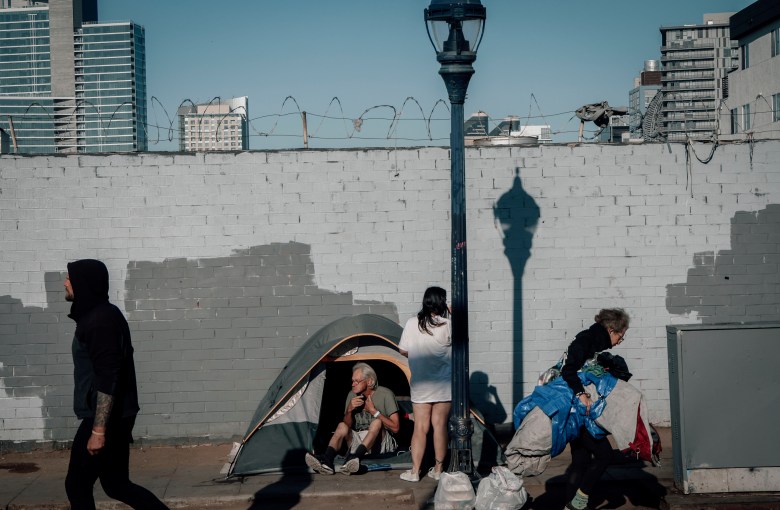
A new report reveals seniors across San Diego County are staying homeless for longer periods compared to other younger, homeless people.
The Regional Task Force on Homelessness reports that homeless people 55 and up spent about seven months and a half homeless – the longest of any group tracked – in fiscal year 2025. That’s about a month longer on the streets compared to younger adults that same year.
The latest data indicates ongoing challenges for San Diego’s senior population to connect quickly with affordable housing while living on fixed incomes. As we reported earlier this year, some seniors are staying longer at homeless shelters because they have few housing options and work prospects.
“The canary in the coal mine was already there,” said Sofia Cardenas, data and compliance manager for homeless-serving nonprofit Alpha Project, about the increasing number of homeless seniors.
“Now we’re really seeing it play out in the data across the state of California, across the country, but especially in high cost of living areas.”
According to the report, San Diego’s homeless crisis response system served nearly 50,000 people in fiscal year 2025. About one-fourth of those people were seniors.
Compared to youth and veterans, seniors spent more days homeless on average. Over the past three fiscal years, seniors were spending more time overall on the streets than those groups, too.
Tamera Kohler, CEO of the Regional Task Force on Homelessness, said that in the last 10 years they’ve seen an influx of older people who can’t afford the cost of living. Oftentimes they are dealing with big life changes like the loss of a spouse, divorce or health issues.
“We’re seeing people in their 60s, 70s, early 80s experiencing homelessness… there’s no additional income. Our entire system of support wasn’t designed for an aging population,” she said.
Cardenas said about a third of the people they served at Alpha Project shelters this last fiscal year were seniors. She said one of the biggest reasons seniors fall into homelessness is because they live on fixed incomes.
She said many of them live on a social security income that gives them about $1,200 a month. A room for rent could be about the same price.
“That math is just never adding up,” said Cardenas.
Jonathan Herrera, a senior official from the San Diego Housing Commission, said many seniors also live on social security disability insurance and agreed with Cardenas these income sources aren’t enough to cover rent.
While the Union-Tribune reported apartment vacancy rates hit a new record high of 6.2 percent, the average asking rate for rent in San Diego County continues to be more than $2,500.
With little money to pay for groceries, bills and other amenities, seniors look to cheap housing options. But as we reported earlier this year, those options aren’t always affordable.
Kohler told me there’s also challenges in meeting eligibility requirements for some affordable housing. For example, options like permanent supportive housing are dedicated to people who have been homeless for a year and have a serious disability diagnosed by county clinicians.
“That’s part of the challenge – is our seniors aren’t significantly suffering from serious mental illness,” she said.
Instead, some seniors experience physical disabilities like heart disease, liver disease or chronic arthritis. These disabilities can hinder job prospects and access to shelter.
Melinda Forstey, president and CEO of Serving Seniors, a nonprofit that helps low-income seniors, told me many of them can’t work because of these health issues.
“Reentering the workforce is not really feasible for them,” she said.
Shelters are also hard for seniors to navigate. Some of them need bottom bunks to sleep or additional access to care. Everyone I talked to agreed that preventative measures are key to keeping seniors from falling into homelessness.
Both the city of San Diego and county offer shallow subsidy programs, which are rental assistance programs that provide some financial support to cover rent. Herrera said these programs help bring an individual’s income spent on housing down to a more manageable level.
“We try to bridge that gap,” he said. “So they can have some money to buy groceries, keep their lights on, things like that.”
Leave a comment