

Calls of “Xóchitl presidenta, Xóchitl presidenta,” rose as night fell Saturday over Tijuana’s Rio Zone. Hundreds of supporters awaited the candidate’s arrival, some dressed in pink, others waving political party flags.
They’ve become known as Xochilovers – men and women rallying behind Xóchitl Gálvez’s 2024 presidential campaign.
As the rally ended, the candidate gathered with a largely middle-class crowd of supporters at the Real Inn Hotel, sharing details of her early struggles to support her family and study. “I never concede defeat, never,” she said.
Her supporters say her story inspires them. She is a woman with indigenous roots who rose from poverty in the state of Hidalgo, earned an engineering degree and started her own tech company before entering politics, eventually joining the Mexican senate.
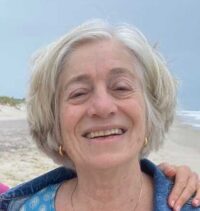
Gálvez’s ability to overcome challenges “has made her more sensitive and empathetic, and better prepared to support the challenges that our country faces,” Elizabeth Ojeda told me. The retired finance professor from the Autonomous University of Baja California is prepared to spend the next few months getting out the vote for her candidate. “Esto apenas empieza,” Ojeda said. “This is barely the beginning.”

Gálvez’s unexpected announcement earlier this year that she would run energized the country’s presidential race, the first significant challenge to President Andrés Manuel López Obrador’s Morena Party. Last August, Gálvez was named candidate for a coalition of three opposition parties, the formerly ruling Institutional Revolutionary Party and National Action Party, together with the left-of-center Party of the Democratic Revolution.
All the while, she has been unafraid to challenge the president, who has maintained high approval ratings in his final year in office. Yet the excitement generated by her candidacy has died down. Polls show her trailing far behind Claudia Sheinbaum, former mayor of Mexico City, and member of Morena who has the president’s support.
“Since she (Gálvez) was named candidate, she hasn’t had a single good week,” wrote political analyst Jesús Silva-Herzog Márquez last week in the Mexico City newspaper, Reforma. “She may be the candidate of the opposition front, but she has not become their leader.”
The Xochilovers I spoke with put little faith in polls. Several supporters reminded me that Baja California is a state that beat the odds more than three decades ago when Ernesto Ruffo Appel became the first opposition governor in modern Mexican history – triumphing over the long-ruling PRI.
Helping organize Gálvez’s visit to Tijuana was Hernando Durán, who campaigned for Ruffo in 1989. “They’d tell me, ‘He’s not going to win, why are you supporting him?’ Others would say, ‘I support him, but I can’t say so publicly,’” Durán told me. “I think we’re seeing similar circumstances.”
Gálvez’s two-day swing through Baja California included several stops in Tijuana, where she called for a broad range of measures – including greater government support for migrants, less bureaucratic paperwork to open a business, improved infrastructure, and low-cost energy. Maquiladora salaries are too low, she said, and called for expanding workers’ opportunities and wages through industries related to robotics, aerospace, artificial intelligence, pharmaceuticals and entertainment.
During a stop in Rosarito Beach, she criticized the Morena Party, saying it “has not lived up to the opportunity given by the people of Baja California.” Baja California is a small border state, with around 3 million voters – not one likely to tip the scale in a presidential election. In recent years, it has had some of the lowest voter turnouts across Mexico – and winning support here depends on persuading disaffected voters to show up.
“So the challenge for a candidate like Xóchitl here, is to awaken those who are apathetic and disenchanted by politics, otherwise I don’t see many possibilities,” said Vicente Sánchez, a researcher at the Colegio de la Frontera Norte.
Ojeda, the retired finance professor, says she is undaunted by any difficulties that may lie ahead. “We’ve got to work really hard, because if we don’t go out and vote, it’s not going to happen.”
In Other News
- Migration: Asylum seekers from all over the world are suffering cold temperatures in open-air camps by the border as they await processing by U.S. officials in San Diego’s East County and other locations, the San Diego Union-Tribune reports. Residents of Jacumba Hot Springs have seen their community’s population double, the Los Angeles Times reports. A report by CNN focuses on Jacumba residents who complain of migrants encroaching on their property. Meanwhile, in San Diego, anywhere from 100 to 200 migrants at a time have been camping out at San Diego International Airport every night as they await flights to their destinations, report Telemundo and the San Diego Union-Tribune.
- U.S. border figures: The head of the U.S. Border Patrol in San Diego told the San Diego Union-Tribune that the numbers of migrant encounters in the region during the past fiscal year marked “a level of activity not seen in over two decades.” U.S. border authorities registered a 72 percent rise in encounters in FY 2023 according to the latest border numbers for the San Diego sector released by Customs and Border Protection.
- Border wall falls: Doctors at UC San Diego Health and other hospitals along the border report a surge in deaths and in injuries resulting in falls from the border wall, the New York Times reports. According to KPBS, UC San Diego Health expects to set a new record for border wall injuries for the fourth year in a row, a trend that started in 2019 when the Trump administration increased the height of the wall from 17 feet to 30 feet.
- Struggle in San Diego: CalMatters reports on the challenges facing San Diego-area nonprofits and faith organizations struggling to support tens of thousands of migrants released by U.S. border agents on San Diego streets.
- Cross-border students: Tijuana Mayor Montserrat Caballero wants students who cross from Tijuana to attend school in San Diego to have access to a fast lane normally reserved for business travelers and those with medical appointments. Her proposal, approved last month by the Tijuana City Council, must also win support from the Baja California legislature.
- Parque Esperanto: The first phase of a 320-acre public park near A.L. Rodriguez Dam in southeastern Tijuana was launched this month by Baja California Gov. Marina del Pilar Avila. Known as Parque Esperanto, the park is envisioned as the largest in Baja California, with amenities that include a skate park, an area for pets, a cultural center, a mountain bike course, a suspended bridge and a zipline. Tijuana has less than 1 meter of green space per resident, far less than the 15 meters per resident recommended by the United Nations. The park’s first phase–out of a total of three– is scheduled to be completed early next year, while the entire park is set for completion in 2025.
- Valle de Guadalupe: Baja California’s wine region is increasingly threatened by tourist development, the Los Angeles Times reports.
- Top restaurants: Two Baja California restaurants made a list of 50 top Latin American restaurants released last week. Fauna in Valle de Guadalupe was ranked number 5–higher than any other restaurant in Mexico. Another Baja California restaurant, Villa Torél in Ensenada, was ranked 19.
- Pilgrimages honoring Virgen de Guadalupe: Mexico’s Patron Saint is being celebrated across Mexico this month through processions leading up to the Virgin’s Dec. 12 feast day. Here is a list of upcoming local processions from the Tijuana Archdiocese.
- Christmas music: A Tijuana children’s choir created by the nonprofit arts organization Promotora Bellas Artes was the only Mexican vocal group invited to participate in a special Christmas concert airing this month on KPBS-TV and organized by the Choral Consortium of San Diego. The hour-long production premiered on Nov. 25 with repeats on Dec. 18, 21, 24 and 25. The Tijuana choir, called Estorninos (Starlings), is directed by Daria Abreu, and accompanied by pianist Aiko Yamada.
Are there topics you’d like to hear about in the Border Report? I’d love to hear from you. Contact me at this email.
No news about the sewage?