
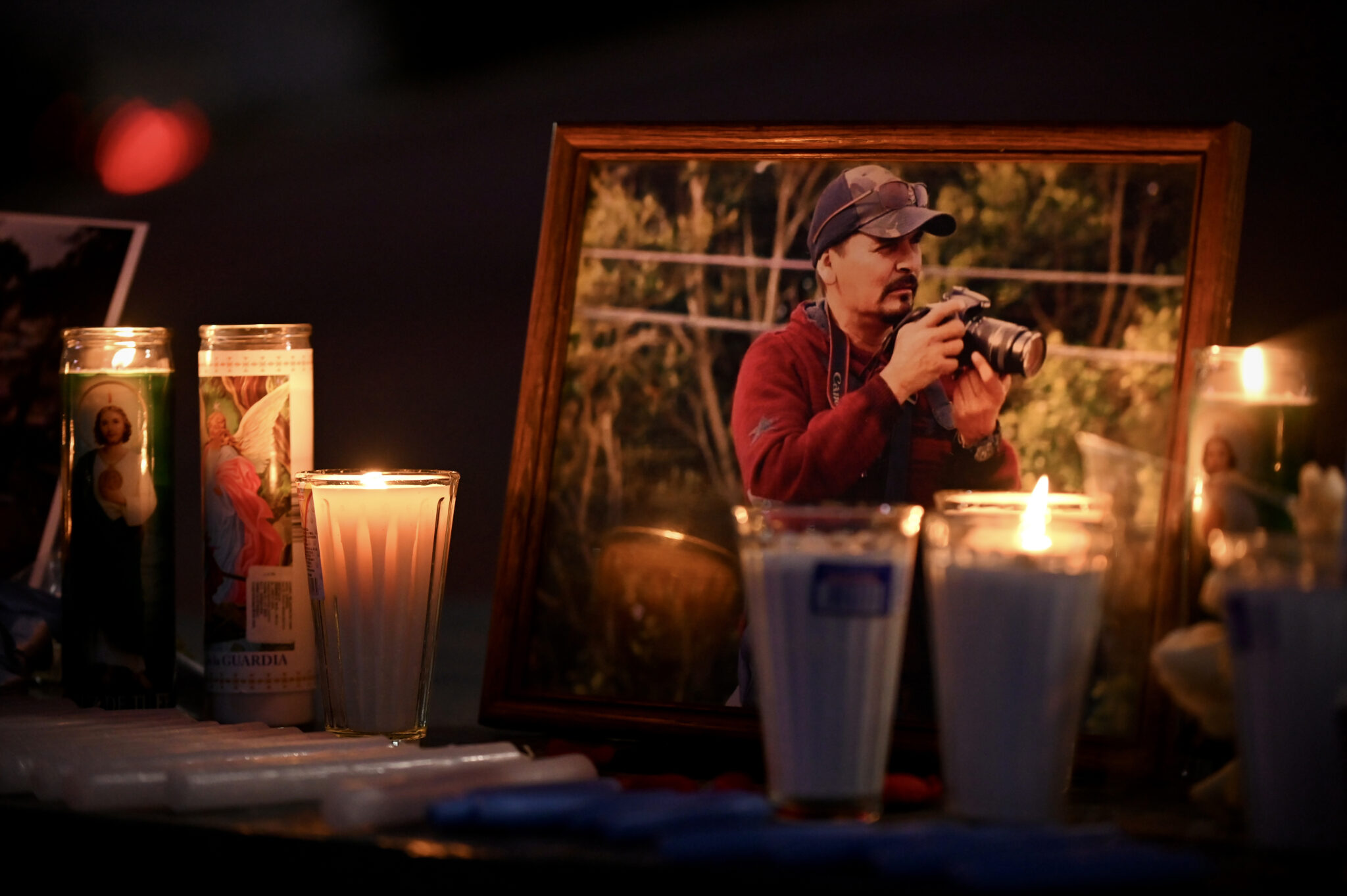
As I watched a cluster of photojournalists moving around the chapel of Tijuana’s Metropolitan Cathedral, I was struck by this thought: Margarito Martínez should be here, aiming his lens at grieving friends and family members as they embraced and and knelt in prayer.
But Martínez was murdered two years ago. So, it fell to his former companions to cover this Mass in his memory.
On Wednesday, Jan. 17, Martínez’s colleagues used the anniversary of his death to put a spotlight on his case – and that of Lourdes Maldonado, another Tijuana journalist shot dead a week later. There was a morning service, a photo exhibit and a protest before state authorities.
Though six hitmen have been arrested in the two cases – and five of them convicted – Tijuana’s journalists are angry that those who ordered the killings have yet to be charged.
“That invites anyone with 20,000 pesos to order a bullet to your head because they didn’t like what you did or said,” said Sonia de Anda, who runs the news site Esquina32 and leads the journalist collective, #YoSíSoyPeriodista.
Jan-Albert Hootsen, Mexico representative for the New York-based Committee to Protect Journalists, said many crimes against journalists in Mexico have gone unpunished, and Martínez’s case is far from unique.
“It’s already been two years, and that’s just way too long, especially given the severity of the case and the impact that it had on public opinion in Tijuana and the impact that it had on journalism in the region,” he told me.
The year 2022 was an especially violent year for Mexican journalists. According to the Committee to Protect Journalists, 13 journalists were killed in 2022. The next year was less deadly, with two killings. But threats and violence have continued. “In terms of just the sheer non-lethal violence against reporters, the situation is pretty much the same,” Hootsen said,
Where Things Stand
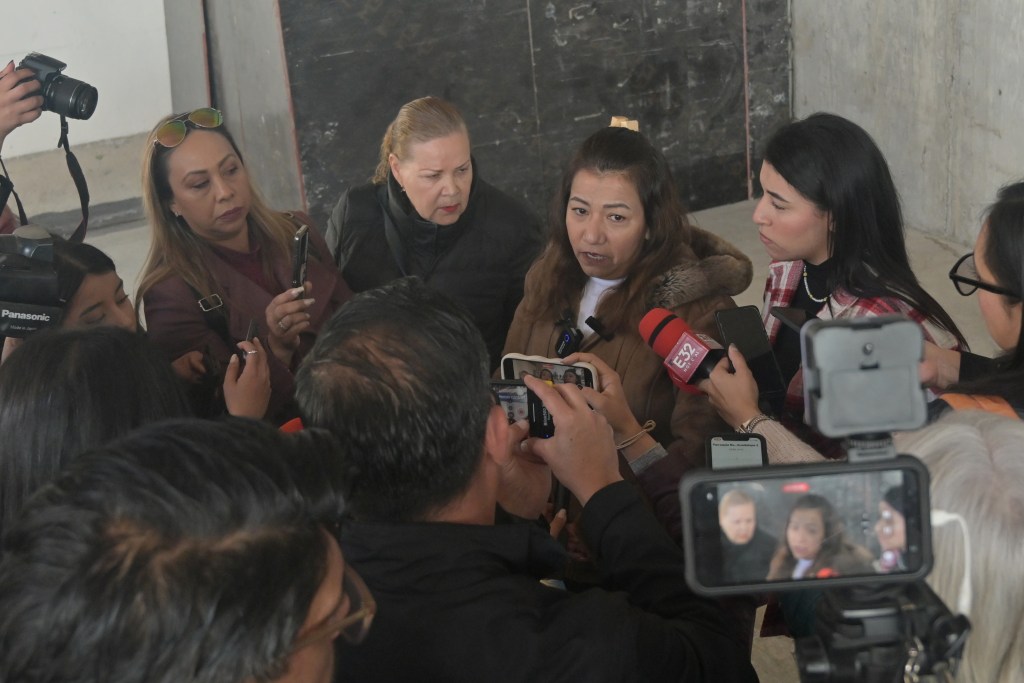
In Tijuana, journalists have been clashing with law enforcement authorities over access to crime scenes. The new year got off to a rough start for a Tijuana photojournalist. Jesús Aguilar was covering a homicide scene earlier this month when he was detained by members of Mexico’s National Guard. His equipment was damaged in the scuffle.
“Everything seems to indicate that… (law enforcement authorities) continue to create obstacles and prevent the taking of photographs,” de Anda said.
Like Aguilar, Martínez was a freelance photographer who specialized in documenting crime scenes. On Jan. 17, 2022, he was heading to work when he was shot to death outside his house in the city’s Camino Verde neighborhood. His 16-year-old daughter found his body outside.
Authorities said Martínez was killed because alleged crime boss David López Jiménez or “Cabo-20” had wrongly believed Martínez was responsible for publishing information about him. Authorities have identified López Jiménez as an Arellano Felix Cartel member.
Two other suspects in the case – the triggerman and a second man who filmed the assault – pleaded guilty and were sentenced in December 2022 to serve 25 years behind bars.
State officials identified López Jiménez as the person who ordered the assault, erroneously believing that Martínez had provided photos of him, associates and family members that were published in the newsweekly Zeta.
Arrested in the state of Nuevo Leon August 2022, López Jiménez was charged with a separate homicide, but has yet to face charges in connection with the photojournalist’s killing.
“We are working on this,” Baja California attorney general María Elena Andrade, responded last week under questioning from Tijuana journalists, acknowledging they still need to link the “autores intelectuales” — those who ordered the killings of Martínez and Maldonado – to the crimes.
For members of Tijuana’s press corps, the prosecutor’s response has fallen short. Investigators “had the opportunity to solve this case, but they haven’t done so due to a lack of capability and commitment,” said Zeta co-editor Adela Navarro Bello, one of several journalists attending the Mass for Martínez.
Navarro and her colleagues at Zeta are still waiting for authorities to make any arrests at all in the November 1997 attack on Zeta founder Jesús Blancornelas that left him badly injured and took the life of his bodyguard. Similarly, there have been no arrests in the case of Zeta editor Francisco Ortiz Franco, shot to death in June 2003 in front of his son and daughter. “There has been total impunity,” Navarro told me.
On Tuesday, Tijuana journalists are planning to mark the second anniversary of the killing of Maldonado with a 7 p.m. candlelight vigil in the city’s Rio Zone. She was shot to death on Jan. 23, 2022, outside her house in Tijuana’s Santa Fe neighborhood. Three hitmen have been convicted, but no mastermind has been arrested or named and authorities have not revealed a motive for the crime.
In Other News
- Rain wreaks havoc: Monday’s heavy rainfall has led to flooded roads, overturned vehicles and school closures in Tijuana. Two schools near the Alamar River that held a morning session had to be evacuated due to flooding. Firefighters and civil protection workers were busy responding to calls for help due to fallen electric lines, landslides, and trapped vehicles. Tijuana’s municipal government opened an emergency shelter. (Zeta, Agencia Fronteriza de Noticias, Punto Norte, Esquina 32, El Imparcial, El Sol de Tijuana)
- Migrants at Boulevard and Jacumba: A team of journalists from inewsource – three reporters and a photographer – spent 48 hours at open-air migrant encampments in Jacumba and Boulevard. They chronicled migrants from China, Egypt, Brazil and other countries crossing through gaps in the border fence, shivering in the cold and rain, cooking over open fires, huddling inside tents and being taken into U.S. custody.
- Asylum seekers at the Tijuana-San Diego border: San Diego Magazine interviewed U.S. asylum seekers from Venezuela and Turkey and discusses why they turn themselves in to U.S. authorities at the border rather than seek appointments through the CBP1 application.
- From fieldworker to neurosurgeon: A Mexicali-born neurosurgeon is the subject of a lengthy interview aired on KQED-FM (San Francisco). Dr. Alfredo Quiñones-Hinojosa talks about how he made his way from Baja California to California to medical school at Harvard and now to the Mayo Clinic in Jacksonville Florida, where he chairs the department of neurological surgery.
- Baja California at World Economic Summit: Baja California Gov. Marina del Pilar Avila joined the governors of Sonora and Yucatan at the World Economic Forum in Davos, Switzerland last week on a panel where she promoted nearshoring investment opportunities in the state.
- Sewage plant groundbreaking: U.S. and Mexican authorities celebrated the launching of the reconstruction of a sewage plant in Tijuana to replace the failing San Antonio de los Buenos plant six miles south of the U.S. border. Mexico’s military has committed to completing the new plant by September.
- Los Monstruos: Baja California authorities say two recent homicides near the San Ysidro Port of Entry are the result of a dispute for control of drug sales in the area. The victims were identified as members of a group called Los Monstruos. El Sol, Zeta, Uniradio, El Mexicano.
Being unemployed is no fun. Google pays $167 in Hr USD. To help keep the money flowing while you look for a new job, ju governments offer unemployment protection to unemployed workers.
Go here…….. https://GooglePayMoney76.blogspot.com