

The City Council is set to vote Monday on a proposed 1,000-bed homeless shelter and we wanted to know: What do current and formerly homeless San Diegans think about it?
Unsurprisingly, about two dozen current and formerly homeless residents had lots to say about Mayor Todd Gloria’s proposed homeless shelter campus in Middletown.
The hard truth is that though life on the street can be dangerous and miserable, many who spoke with us would rather deal with the unforgiving nature of life outdoors than move into a 1,000-bed shelter.
A few told us they’re excited about the plan but almost all had apprehensions about the concept of a 1,000-bed shelter, even with the services and amenities the mayor is pledging to deliver.
City officials pushing the homeless shelter campus have often noted an October survey showing that nearly half of downtown homeless residents interviewed were interested in so-called congregate shelters where numerous people stay. But the survey was done before the city debuted the 1,000-bed shelter concept and our conversations with homeless San Diegans revealed that data point is crucial.
Officials have said they will assemble a working group that includes homeless San Diegans to provide input if the shelter gets approved.

One recurring concern among the several homeless San Diegans that Voice of San Diego intern Emily Ito met last Wednesday morning was concern about the size of the shelter, including that illnesses could easily spread there.
Ito tagged along with an Alpha Project outreach team to speak with the unhoused community. They stopped by a few different makeshift homes.
David Buckner, 67, stays at a secluded park near the Old Town Transit Center. Early last Wednesday, the park was quiet and almost empty besides his partner, a sleeping man and a woman asking for cigarettes. Buckner is a self-proclaimed country boy who said he likes the outdoors and the animal friends he cares for. He doesn’t like the idea of the proposed mega-shelter and he says he wouldn’t go.
“You’re packed in a room with all of the world’s worst illnesses,” Buckner said.
Next Ito and the outreach team made their way toward Old Town, where they met Heidi and some of her friends staying beneath the freeway along Pacific Coast Highway. Heidi, who declined to give her full name, said she has no interest in going to the new shelter and believes it’s a bad idea. Heidi thinks that shelters feel unsafe and prison-like, preferring to stay beneath the busy freeway. She also thinks the new shelter will be “a cesspool for disaster and disease.”
She’s also concerned how well people would get along in such a large shelter.
“When you get a lot of people together like that, it’s not good,” Heidi said. “It’s a lot of personalities. It’s going to turn into a little inner-city of its own.”
Rachel Hayes, who once stayed at a shelter with more than 120 beds and has since moved into housing, agreed during a recent conversation with reporter Lisa Halverstadt.
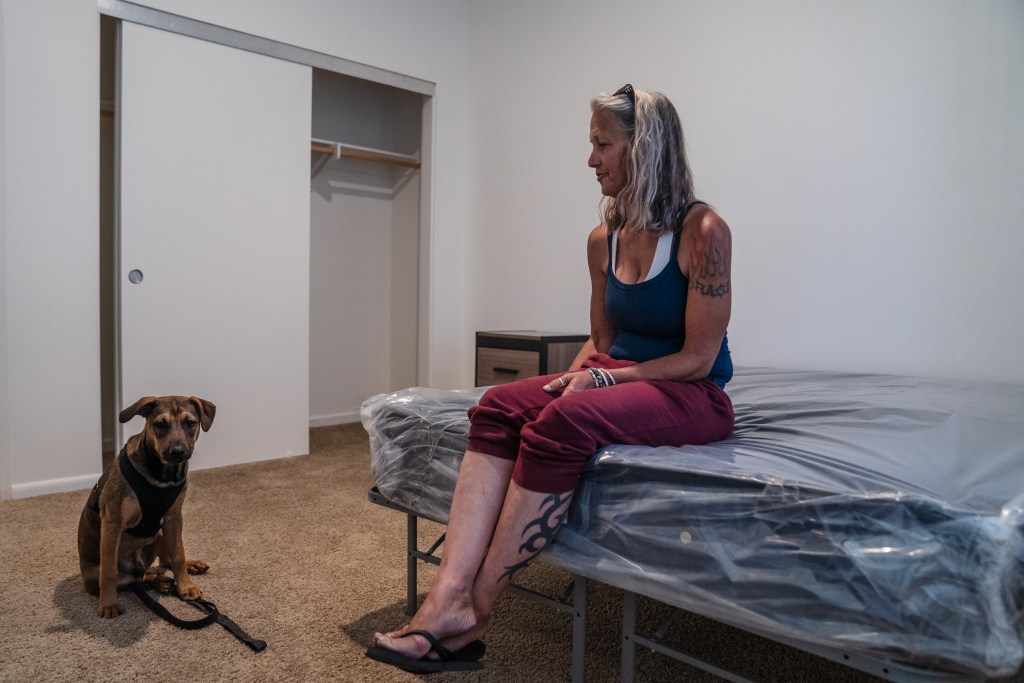
“I could not fathom staying in a shelter with 1,000 people,” said Hayes, who said she finds the possibility triggering and acknowledged she only stayed calm in the smaller shelter with the support of workers there.
Anthony Pleva, who lives in a vehicle in East Village and volunteers at an inclement weather shelter at his church, sees the 1,000-bed shelter plan as a mission to move a large number of people off the street so they won’t be seen. He doesn’t think it’s a responsible plan given the effort that goes into managing the 28-bed shelter that serves people during cold, rainy weather at his church.
“It seems like they’re saying what they think people want to hear but I don’t think it’s feasible to have 1,000 people in one space,” Pleva recently told Halverstadt.
Gloria and other city officials have said they intend to design the shelter so it’s a safe, supportive environment rather than a “bunk bed village” and to separate different portions of the homeless population into at least three separate spaces to make the volume of clients less overwhelming. Officials have also described the potential for innovative approaches such as sleeping pods or roommate-style configurations.
“We can make it a very inviting location,” Gloria said. “It does us no good to have shelters that people don’t want to be a part of.”
But many homeless residents we spoke with also raised logistical questions related to shelter rules and who might run the shelter. The city has said it could hire multiple service providers to operate the shelter and that it would be low barrier, meaning residents could come and go freely and bring pets with them.
Amber McCoy, who now stays at the O Lot safe sleeping site, thinks shelter management, rules and policies will drive the success of the new shelter. She emphasized how staff needs to be “on it,” in securing the area as she said people often “fall through the cracks” at other homeless-serving projects.

Levi Giafaglione, who once lived on the street and has worked at multiple shelters including a city-funded one, said the shelter needs to be properly staffed to allow shelter workers to regularly monitor how shelter residents are doing and help them find homes. Giafaglione fears the city won’t properly staff the mega-shelter or pay workers there adequately. He and others argue proper staffing is necessary to ensure the shelter can efficiently move people who stay there into housing.
“A lot of the times even the people running these nonprofits are low income themselves and there’s so much burnout,” Giafaglione said.
Gloria and Sarah Jarman, the city’s homelessness point person, have said they expect to successfully ramp up staffing to meet needs at the hoped-for facility and have been focused on increasing pay for those workers to ensure they have more livable wages.
Many homeless and formerly homeless residents we spoke with were also concerned about whether the new shelter can deliver options and better pathways to permanent housing.
Michelle Erece has been homeless for nearly three years and has stayed at an Alpha Project shelter in the Midway District for the past two years. She thinks the city should prioritize more permanent solutions over shelter.
“Whatever they’re going to build there for the shelter, they should [instead] build permanent housing for the homeless,” Erece said.
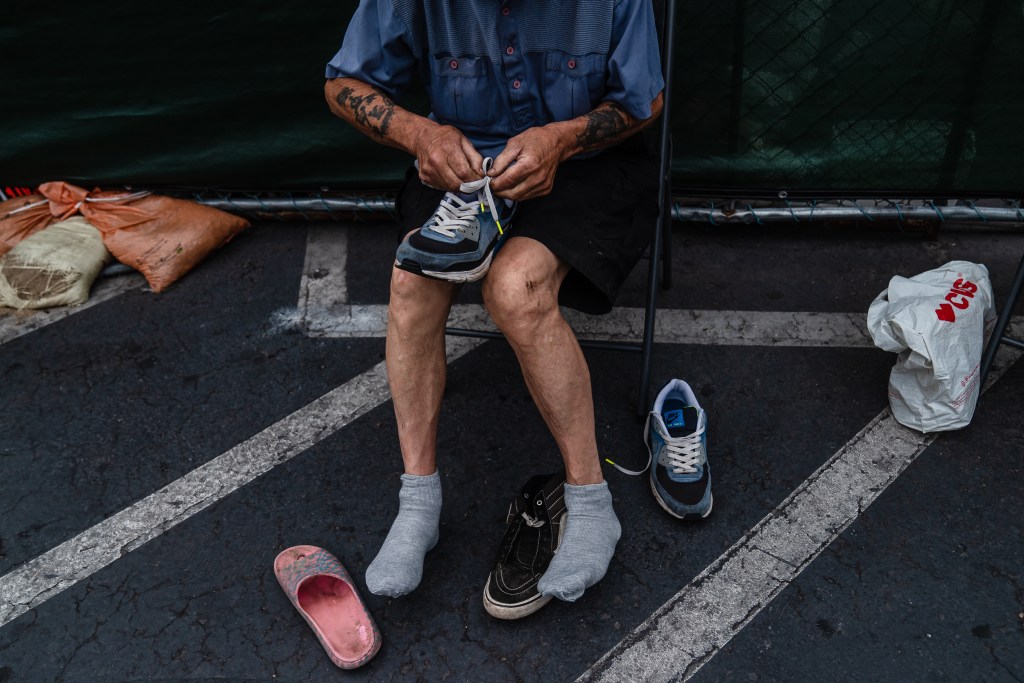
Natalie Raschke, who once lived with her family of six in a van, made a similar point. She’s concerned people could get stuck in the mega-shelter waiting for housing.
“What we are they gonna do with these 1,000 beds or these 1,000 people in there?” Raschke said. “There’s still no housing.”
Despite concerns, residents at an Alpha Project shelter in Midway that Ito visited were enthusiastic about the plan to deliver more shelter.
Michael Evans, who stays at the shelter, thinks more shelter beds are needed and approves of the mega-shelter concept.
So does McCoy, who is staying at one of the city’s safe sleeping sites.
“The more shelters we have, the more opportunity to get people off the street,” McCoy said.
Lisa your article was so well written and informative about the homeless crisis and the pros and cons of a 1,000 bed facility. I think it’s a great idea and I wonder if they separate teens and young children or these who are disabled mentally or physically into a higher protection location? I would hope it’s safe for vulnerable people and day care staff to help people who work but can’t afford housing. It’s very prevalent in San Francisco they are working people who live in the streets. They simply can’t afford rent or rent a room. Thank you for the article! Keep up the great work!
You’re Biggest concern about the shelter “is going to be the drugs and alcohol addiction.” And to mention “the pills that go along with it.” And intern “there going to be a lot of fights. And that’s not talking about the race issues that everyone is seeing right now. ” I was homeless” and I lived in a number of shelters here in San Diego ” and in my opinion ( it’s not a good idea” it’s going to be too much tension with people if you house 1,000 people together
Homeless people would prefer to live outdoors in San Diego, or in smaller places with more room and privacy than a mega shelter with 1000 other often troubled, addicted, or mentally ill people. And our city leaders are negotiating a back room deal. What could go wrong? The ifly scandal, the 101 Ash street “free brokerage” fiasco, the insane prices paid by the city for any construction and now a way overpriced lease for 30 years! $1.95 per sf Plus NNN! Annual increases of 3.5% escalates the base lease rate to be $5.38 Per SF per month Net of maintenance for an obsolete building. Maybe a 10 year lease with options to extend should this turn out to be the first successful real estate investment the city does. I would love to see how many market rate homes we could have bought with all the “Homeless” spending.
Besides all the problems of putting 1000 people, many with drug or mental issues, in one place, there is another blatant problem. The $30 million base annual operating cost comes to $2500 per month per person. That is enough to give each and every one of them a market rate apartment. It’s true, and it makes the Mayor’s latest proposal just another foolish boondoggle, simple as that.
The City is setting itself up for a huge disaster. The communicable diseases that could or will be present at the mega-shelter aren’t easily controlled because they can’t force people to be inoculated. From a logistics point of view starting small and working up makes more sense. And this may very well be the plan. Hopefully, they will use the K.I.S.S. standard and not try to over think everything.