
When San Diegans caught wind of proposed budget cuts to arts programs and libraries this spring, they fought back with a fervor, filling courtyards and bombarding social media comment sections.
But a line item to defund the Neil Good Day Center, a homeless services hub in East Village, mostly fell under the radar.
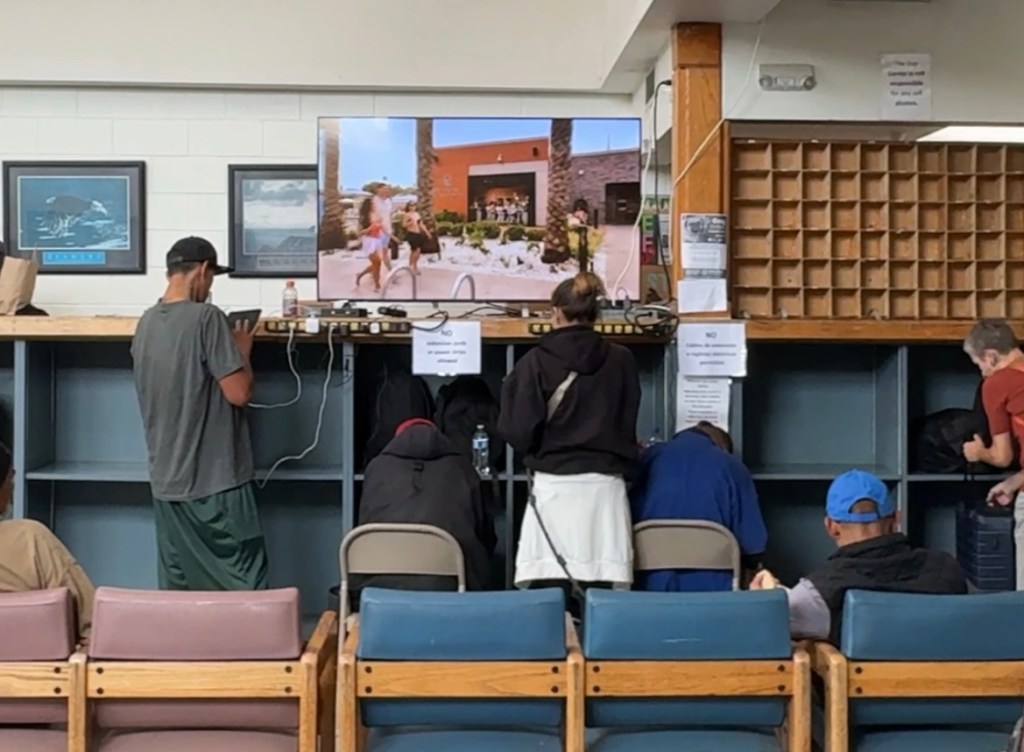
The facility, named after gay political activist Neil Good, opened in 1991 to provide basic services to unhoused San Diegans. The center is a 5,624 sq. ft. building that includes restrooms, showers, laundry, device charging, mail services and computers. It also features a faux grass lawn where unhoused people can rest under the watchful eye of the center’s security staff.
“You can come here and sleep in the day. That’s about the only place,” said 56-year-old Sean Davis, who’s been unhoused for 8 years. “You can’t sleep in the library. And if you sleep in public parks, there’s no camping.”
More than the specific services it provides, the Neil Good Day Center also essentially serves as the front door to the city’s homeless services. For the past 35 years, it has been the place people came to get a shelter bed placement or navigate the city’s daunting tangle of homelessness bureaucracy.
Many fear what will be lost with the closing of the day center. Father Joe’s Villages plans to open a new, smaller center with fewer services just two blocks from the current site. But service providers say the current site on 17th Street has been a pillar of the community for decades and can’t be easily replaced.
“We can’t build a site like the Neil Good Day Center,” said Josh Bohannan, chief strategy officer at Father Joe’s Villages. “It’s the perfect location. It’s the perfect size. People know where to go, and we have that community trust here at the Neil Good Day Center. I’m hoping it all transfers and translates over to whatever we build next.”
Downsizing Commences
Father Joe’s leaders plan to retain many of the center’s core services, such as showers and laundry, at the new day center, which they aim to open before the rainy season begins in November.
But the new facility probably won’t have the capacity for services such as short-term personal storage, outdoor respite spaces and package delivery, according to an Independent Budget Analyst report. Overall, service capacity is expected to decrease by at least 25 percent.
“It’s not gonna be able to serve the same number of people,” Bohannan said, “and there will be less services and probably less hours of operation and days of the week.”
The city is giving Father Joe’s until Dec. 31 to vacate the property, and will pay only about half of the center’s operating costs until then. After that, the facility will be funded entirely by Father Joe’s.
To fully support the transition, Father Joe’s will need to fundraise another $237,000 to maintain its current service levels through the end of the year, and between $100,000 and $150,000 to build the new facility within the nonprofit’s campus on Imperial Avenue. Father Joe’s leaders anticipate the new space, which will likely replace part of an existing cafeteria, will be about a third of the size of the Neil Good Day Center.
It’s a huge undertaking. But the center’s manager Paul Sheck said it’s well worth the cost.
The center has historically served 7,000 people a year, about 2,000 of whom were newly homeless. Sheck said the operation was extremely cost effective. The city provided $948,000 of the center’s $1.7 million budget – but that city portion of funding will now be gone.
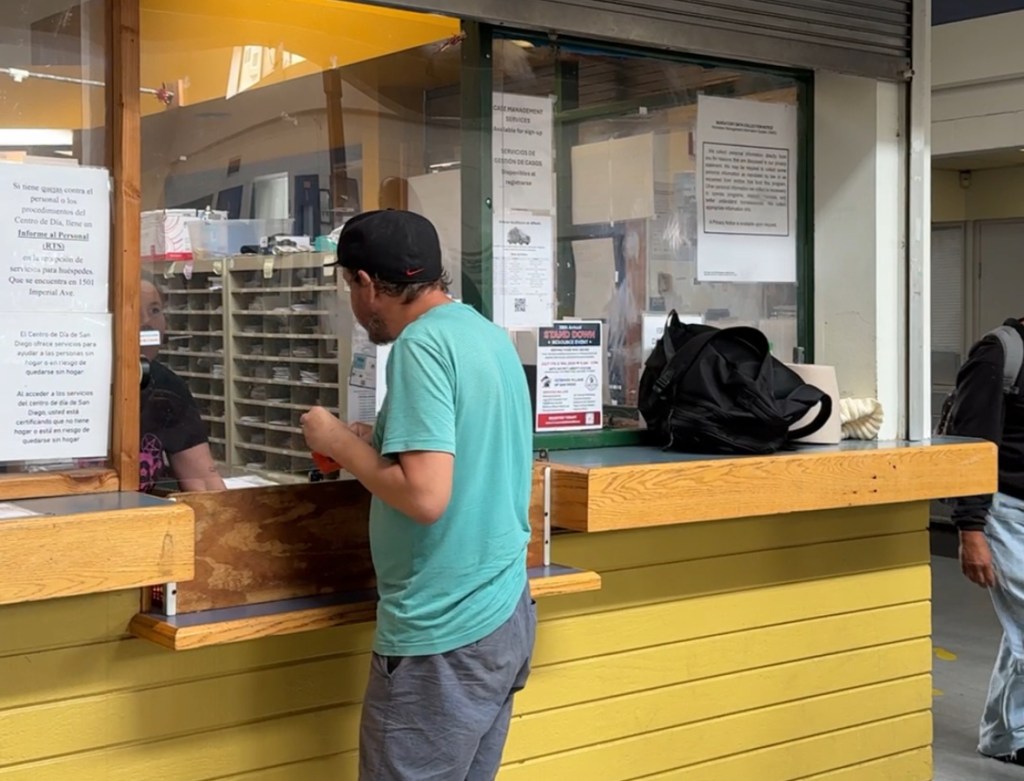
“They come here scared, they’re uncertain, they don’t know what the next move is for them or how to navigate the system,” Sheck said of the center’s newly homeless clients. “We take the time out of our day to do that and help them get where they need to be.”
This includes assisting people with direct shelter bed referrals. Aside from The Hub in the Downtown Central Library – open two hours a day, six days a week, by appointment – the center is the only city-funded, walk-up counter in town where people can directly access resources.
Service providers say the ability to connect with people over time and in-person can be a game changer.
“So many people are shelter resistant or provider resistant because they’ve been burned,” said Bob McElroy, president and chief executive officer of the Alpha Project, which previously operated the center, before Father Joe’s. “They might have a bad taste in their mouth, and it takes the personal relationship of talking to somebody who’s been there, done that.”
State of Services
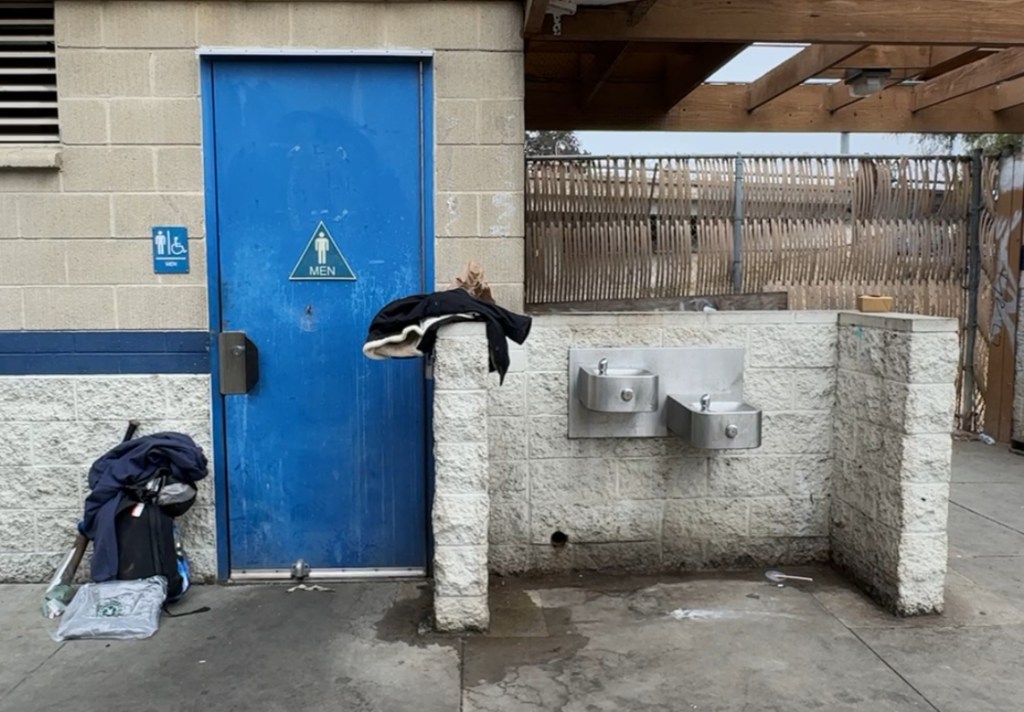
The center’s downsizing is part of a broader reshuffling of homeless services, largely in response to budget cuts. This includes the shuttering of more than 30 public restrooms, including portable restrooms that served unhoused people downtown.
Among this year’s cuts were 37 beds at the Lighthouse shelter in National City, 50 beds on 16th and Newton Avenue and two safe parking sites in City Heights and Serra Mesa. The city also plans to add 292 beds in various locations, according to Matt Hoffman, a spokesperson for the city’s homeless services department, creating a net increase of 205 shelter beds compared to last fiscal year.
Hoffman said the city is prioritizing shelter offerings and housing over the day center.
“The Day Center was opened decades ago when the city did not offer robust homeless services,” Hoffman wrote in a statement. “With now approximately 2,600 sheltering options across nearly two dozen programs – our service ecosystem has evolved and the focus remains on prioritizing limited resources toward programs that maximize shelter capacity and connect people to housing.”
Even with all the options Hoffman cited, data shows only about 8 percent of shelter bed requests are fulfilled. In other words, 92 percent of the time when a person requests shelter, no bed is available.
The Uncertain Future of San Diego’s Skid Row
When the center opened its doors 35 years ago, East Village was still known as the Warehouse District.
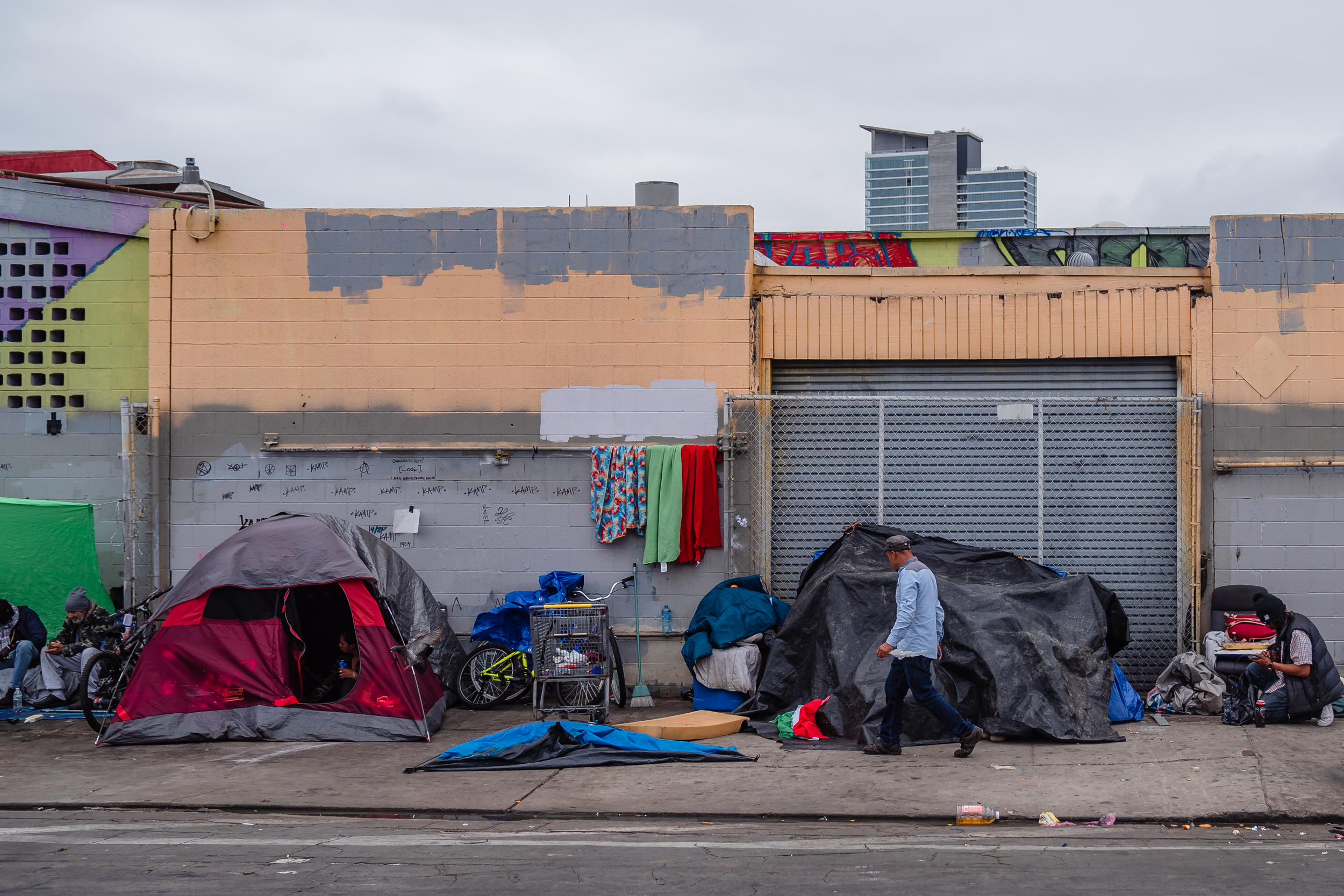
In an effort to revitalize the Gaslamp Quarter, city leaders looked to downtown’s eastern edge as an ideal spot to relocate the area’s homeless people. Service providers such as Father Joe’s Villages and the San Diego Rescue Mission planted roots there – long before the tent-lined streets would fall under the shadows of today’s high-rise apartment complexes.
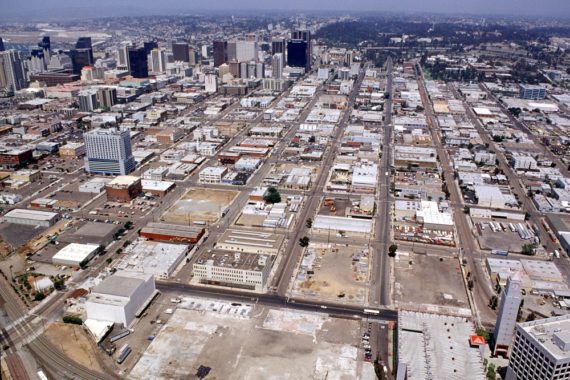
This effort to centralize the city’s homeless population effectively created San Diego’s own skid row: a stretch of 17th street adjacent to the Neil Good Day Center.
Service providers say the area’s gentrification played no small role in the day center’s demise.
“Now East Village is built out, and it’s outrun the Neil Good Day Center, and that’s who suffers,” McElroy said.
City officials say the center has spurred complaints for years about surrounding encampments, trash and open-air drug use. But it’s unclear how putting a smaller center with less services two blocks away will fix all that.
For one, there will be fewer public restrooms.
“The feces, the urine, the bodily fluids can be a concern for the whole community, not just in the homeless realm,” said Davis, the unhoused man I spoke with at the center. “Other than the Neil Good Day Center and Father Joe’s, the toilets are next to none,” he added.
Father Joe’s current toilets are already “overwhelmed,” he said.
Davis also worries that a reduction in daytime respite spaces will create trouble for people with nowhere else to sleep. In San Diego, it is illegal to camp on most public property under the city’s Unsafe Campaign Ordinance, and officials have recently ramped up enforcement against people sleeping in vehicles and alongside freeways despite the limited availability of shelter beds.
The center’s operators worry that changes to the space and its offerings may chip away at the community trust they’ve worked so hard to cultivate. But it’s better than nothing.
“We can’t not have a day center in San Diego,” Bohannan said.
Ironically (predictably?) the same people who are complaining about the homeless in East Village are likely living in the high-rise buildings that went up in the 80’s, 90’s, and early 2000’s, replacing the SROs d/t, and displacing 10,000 people whose next best option was sleeping on the streets with support like what the Neil Good Day Center provided.
In the SROs, they had their own rooms and hotplates, showers and toilets down the hall. Evening curfews or they were locked out.
They could afford this on their SSI checks with just enough leftover for food and/or incidentals, or they could go to the Rescue Mission or Father Joe’s for a free meal.
With the City closing additional public toilets and their intent to push the homeless out of d/t, are we headed for another hepatitis/public health epidemic?
The Neil Good Day Center serving 7,000 people/yr is a bargain at $948,000 cost to the City!
People should read this: https://truthonthestreets.substack.com/p/this-is-why-i-call-it-the-homeless-3b6