

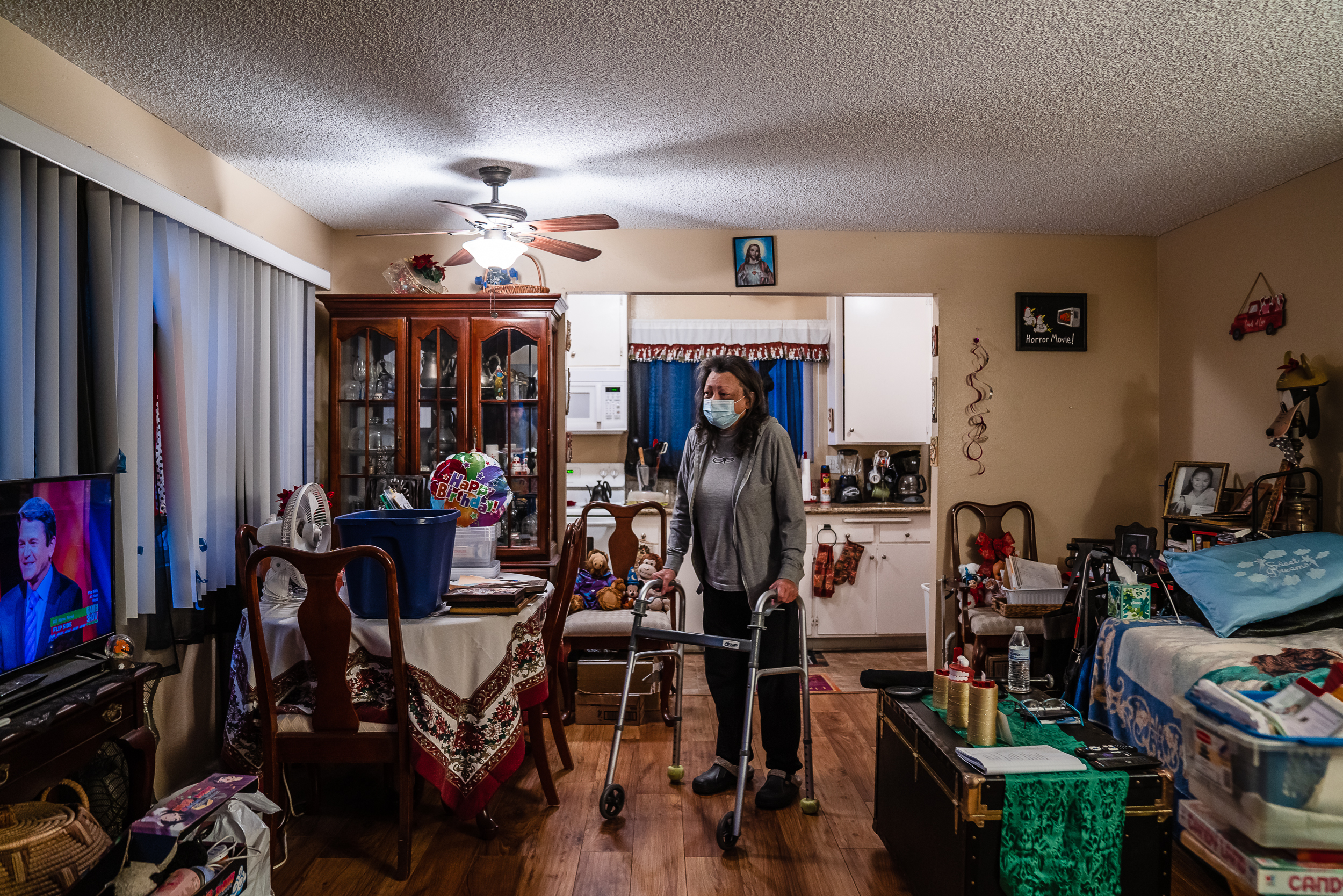
Anxious residents packed last week’s meeting of the Imperial Beach City Council and begged city leaders for help.
“We are facing eviction and we can’t afford a new place to live,” one resident said.
“I’ll be living in my car,” said another. “I don’t know what to do.”
The residents were there because the new corporate owner of their 64-unit apartment complex recently informed them they would be evicted on Feb. 1 to make way for a comprehensive remodel of the aging building. The complex, built in 1973, was “nearly uninhabitable” due to years of deferred maintenance, the owner said in a statement sent to city officials.
Once known as an affordable, working class beach town, Imperial Beach now has become the latest San Diego County city caught up in the region’s ongoing housing crisis. With fixer-uppers selling for close to $1 million and institutional investors swooping in to snap up deals, the city finds itself caught between property owners, priced-out tenants and economic forces no city can fully control.
On Wednesday, city leaders took a first step toward joining a small but growing number of cities seeking to protect tenants by tightening rules governing evictions and requiring landlords to help relocate tenants when they evict them for remodeling projects.
San Diego and Chula Vista recently passed such tenant protection ordinances, as have several cities in Los Angeles County and elsewhere in California. On Wednesday, Imperial Beach leaders formed a committee to gather community input about a possible similar ordinance in their city.
“It’s our priority to protect the safety and well-being of our community, and I think we can do that,” said Mayor Paloma Aguirre.
Sacramento Report: Lawmakers Brace for Trump Transition

California lawmakers are racing to prepare themselves–and the state–for the return of Donald Trump to the White House. With his repeated vows of “retribution” on the campaign trail, Trump made it clear he’ll use his time in office to strike back at perceived enemies. California, which filed more than 120 lawsuits to block the incoming president’s policies during his first term in office, could be a target.
Last week Gov. Gavin Newsom called a special legislative session to “safeguard Californians from potential federal overreach.” As our Deborah Sullivan reports, the calculus for San Diego lawmakers is more complicated. County voters range across the ideological spectrum. And the county faces problems–including border security, homelessness and combating climate change–that often require cooperation with the federal government.
State Sen. Catherine Blakespear, a Democrat, said she’s concerned the “entire state would be disadvantaged” because of Trump’s conflicts with California leaders. But State Senate Majority Leader Brian Jones dismissed Newsom’s special legislative session as a publicity stunt and said he hopes to cooperate with the incoming administration to secure San Diego County’s border with Mexico and shore up aging dams.
Also in Sullivan’s report: A legislative effort to boost construction of mid-sized housing projects and new guidelines for responding to electric battery storage fires.
Read the full Sacramento Report here.
Politics Report: ‘Era of Austerity’
San Diego Mayor Todd Gloria joined our hosts last week for a recording of the VOSD Podcast.
The mayor successfully won his re-election bid, but he won’t be getting a honeymoon period.
San Diego voters rejected a sales tax increase that would have helped the city address a huge budget deficit, so now, he’ll have to make some cuts.
Listen to what the mayor had to say here.
On of the many things Gloria plans to cut is the plan to revitalize the city’s civic core. In the latest Politics Report, Scott Lewis unpacks what it all means for the grand vision the mayor had once presented.
The Politics Report is available exclusively to Voice of San Diego members. To get access, become a member here and subscribe to the weekly politics newsletter. Read the Politics Report here.
In Other News
- The Sweetwater Authority on Friday informed member cities of the South County water agency that recent testing found elevated levels of PFAS, also known as “forever chemicals,” in the agency’s Sweetwater Reservoir. The two chemicals, possibly originating from shuttered landfills upstream from the reservoir, have been found in laboratory testing to interfere with thyroid function and cause cancer in animals, according to an agency report. Agency officials did not respond to a request for comment by press time. The agency plans to hold a public workshop about the test results at 5 p.m. Thursday at the agency’s headquarters, 505 Garrett Ave. in Chula Vista.
- Authorities in National City plan to review the city’s cannabis dispensary licenses after a local hairdresser told City Councilmembers on Tuesday that she had been duped into signing papers that enabled the dispensary’s out-of-town owners to portray her as a majority owner of the business. City law requires dispensaries to be owned by local residents. “My impression is this kind of fraud is widespread in the industry,” said Mayor Ron Morrison.
- County Supervisor Monica Montgomery Steppe on Thursday introduced a plan to strengthen civilian oversight of San Diego County’s seven jail facilities following a state audit that uncovered numerous safety lapses and deaths in the jails, which are run by the Sheriff’s Office. Montgomery Steppe’s plan also would speed up investigations and give overseers the ability to reopen closed cases of staff misconduct. (Union-Tribune)
- Balboa Park’s landmark 109-year-old Botanical Building reopened last week following a three-year, $26.5-million restoration of the beloved redwood plant conservatory. Workers reconstructed the building according to its original plans and added fountains, new lighting and a new irrigation system. The reopening was timed to coincide with the park’s annual December Nights holiday celebration on Dec. 6 and 7. (Union-Tribune)
The Morning Report was written by Jim Hinch and Andrea Lopez-Villafaña.
“California, which filed more than 120 lawsuits to block the incoming president’s policies during his first term in office, *could be* a target.”
are you not sure California will *most definitely be* a target?