

Experts warned that a piece of border wall started during President Donald Trump’s first term violates treaties between the United States and Mexico and could eventually cause massive flooding on both sides of the border. But the federal government moved ahead anyway — and it’s almost finished.
The wall, which runs straight through the contaminated Tijuana River, is a series of 30-foot-high steel gates that block migrants from crossing into the United States through the river channel. Border officials are supposed to raise the gates before it rains, but if the gates malfunction, Tijuana and San Ysidro on the U.S. side could suffer catastrophic flooding.
Through documents obtained via a Freedom of Information Act lawsuit, our MacKenzie Elmer reports that Mexican officials let U.S. officials know years ago that the river wall broke international agreements that required Mexico’s approval to build barriers in the Tijuana River.
The International Boundary and Water Commission or IBWC – a federal agency that owns and manages border lands on behalf of the United States – was the lone agency with any real power to stop the project. But there was mounting pressure from the Trump and Biden administrations to finish it in the name of national security.
Scientists and engineers raised alarm, publishing studies that warned both countries could be severely damaged by even modest flooding if the wall’s gates fail to open. U.S. Customs and Border Protection built it anyway.
The Latest on the City’s Shelter Plans
The San Diego City Council voted 7-0 Monday to direct city officials to explore whether a privately owned downtown site on Second Avenue could become a permanent homeless shelter – and how the budget-strapped city might pay for it.
The city hasn’t publicly shared the address of the Second Avenue building, citing the “pending initiation of negotiations,” but the Union-Tribune noted a building near Little Italy that seems to match the description.
Monday’s vote followed Mayor Todd Gloria’s acknowledgement last week that the city would no longer pursue a 1,000-bed shelter in Middletown.
That’s not all: Councilmembers also directed city staff to follow the state’s Surplus Land Act process and eventually request proposals from developers for the old Central Library site rather than look at a shelter project initially projected to cost nearly $87 million for rehabilitation alone. The City Council also asked city and housing agency staff to try to open more shelter beds at Veterans Village of San Diego, which recently added dozens of new city shelter beds.
What they decided against: Councilmembers weren’t interested in exploring a potential shelter at the City Operations Building near City Hall. The city had projected that site preparations could total $45.2 million.
A more certain plan: City housing commissioners are set to vote Friday on a contract with Catholic Charities Diocese of San Diego to open a 210-bed shelter for women and families downtown later this year. If approved, the new shelter will open this spring – ahead of the June closure of a 40-bed Catholic Charities women’s shelter – and begin serving families in July.
Border Report: One Woman’s Visit From Immigration Officials
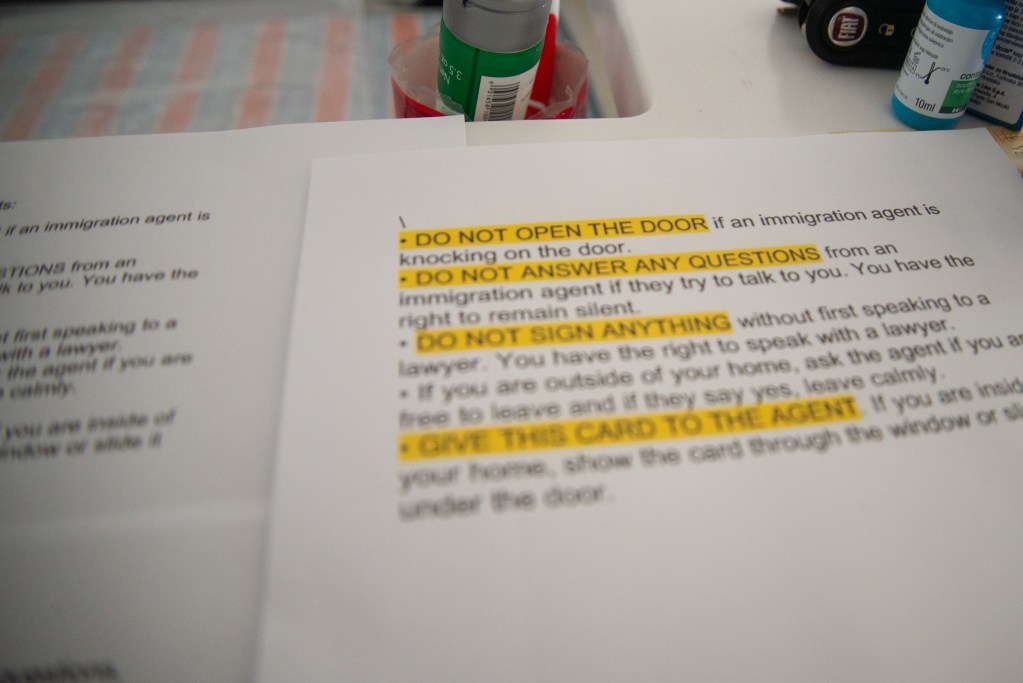
Arrests by Immigration and Customs Enforcement, or ICE, have ramped up since President Donald Trump began his second term in office.
Ana, a mother from Croatia who has been living in the United States for nearly 20 years, has been paying close attention to the Trump administration’s latest immigration policies. She has a pending asylum case, but she’s always been cooperative with her ICE contractor, so she was sure she was safe.
But on Jan. 30, Ana received a visit from ICE officials. Officers in plain clothes tried to yank Ana from her home, leaving her bruised and shaken up.
After explaining her situation, the officers left, warning her that sooner or later, she would be arrested. Now, Ana is too afraid to leave her house unless she absolutely has to. And she can’t help but constantly wonder when they’ll come back.
Sexual Assaults Likely Costing California School Districts Billions
For many years, Californians who were survivors of child sexual assault had until they were 26 years old to file a lawsuit before the statute of limitations expired. But in 2019, California lawmakers unanimously passed AB 218, a law authored by former San Diego Assemblymember Lorena Gonzales that extended the statute of limitations until victims were 40 years old. In 2023, lawmakers eliminated the statute of limitations altogether.
Now, sexual assault cases brought by survivors abused by school employees have opened districts up to billions in liability. Some may not survive, warns California’s Fiscal Crisis and Management Assistance Team, an agency charged with helping districts tackle financial crises in an alarming report.
The agency estimated that lawsuits filed against districts since the change could amount to somewhere between $2 and $3 billion. The exact numbers are hard to come by since there’s no central repository of cases.
San Diego Unified is no stranger to such cases. In one high-profile incident, four former La Jolla High School students sued the district and retired physics teacher Martin Teachworth. The students alleged Teachworth assaulted them and that the district had failed to provide a safe school environment.
The lawsuit came after a Voice investigation that revealed one district official concluded Teachworth’s behavior “rose to level of criminal prosecution.” The district left him in the class anyway. In 2023, San Diego Unified officials announced the students had settled their claims for an undisclosed amount.
In Other News
- The County Board of Supervisors will consider exploring a tax increase at today’s meeting amid the county’s budget deficit and the uncertainty of federal funding under the Trump administration. (Axios San Diego)
- A U.S. appeals court has reversed an earlier ruling by a San Diego federal judge ordering San Diego County Sheriff Kelly Martinez to release internal records in the case of a man who was gravely injured in county jail. (Union-Tribune)
- California is joining 21 other states in suing the Trump administration to stop it from slashing funding universities rely on to conduct scientific research. (CalMatters)
- San Diego is expected to get the most rain of the season this week. (NBC 7)
The Morning Report was written by Tigist Layne, MacKenzie Elmer, Lisa Halverstadt and Jakob McWhinney. It was edited by Andrea Lopez-Villafaña.