

As Immigration and Customs Enforcement arrests ramped up around the country in President Donald Trump’s second week in office, Ana tried to tell herself that she was safe.
The mother from Croatia who has been in the United States for almost 20 years reminded herself that she already wore a GPS watch that told the federal government her location at all times, that she went to all of her check ins with the ICE contractor, that she had paid a bond to be released from immigration detention in 2018 and that her asylum case was still pending appeal.
But in the morning of Jan. 30, Ana heard a knock at her door inside the gated complex where she lives and knew that immigration officials had come for her. It was around the same time they had shown up at her door in 2018, she said. Voice of San Diego is only using her first name because of ongoing safety concerns.
That day, ICE arrested more than 900 people across the country, according to a social media post from the agency. The agency hasn’t consistently posted arrest statistics, but as officers try to meet new quotas, reporting from NBC News suggests that roughly half of those arrested have no criminal history despite administration officials’ claims that they would target people with criminal convictions.
Though Ana managed to avoid arrest, her encounter with officers left her bruised and terrified. ICE did not respond to a request for comment.
One big question: I’ve been trying to find out how many arrests are happening in San Diego, and how that compares to previous years, but ICE has not responded to my questions.
‘Why Did You Hurt Me?’
Ana came to the United States with her husband and young son nearly two decades ago on artist visas, she said. Her husband was a concert pianist. Then, a situation developed that left her targeted by the Croatian government, she said.
No longer able to return, she and her family requested asylum in the United States. A judge administratively closed the case more than 10 years ago, but under Trump, ICE arrested Ana and put her back in court proceedings. She’s been fighting to stay in the United States since then.
Barefoot and still in her pajamas, Ana went to the door when she heard the knock last month and looked out the peephole. She said she saw a woman standing alone in the hallway. She opened the door, and then men appeared on either side of the woman, stepping from where they had been waiting out of view. None were wearing uniforms, but she saw badges, Ana said.
One of the men told her they were with immigration and asked if she had a GPS watch, she said. She responded that she did, and he asked to see it, saying something about the watch sending weird signals, she said.
Standing in the doorway, she held out her wrist. She said the man grabbed her arm with both hands and started trying to pull her into the hallway. Ana said she screamed.
“He was pulling savagely,” Ana said.
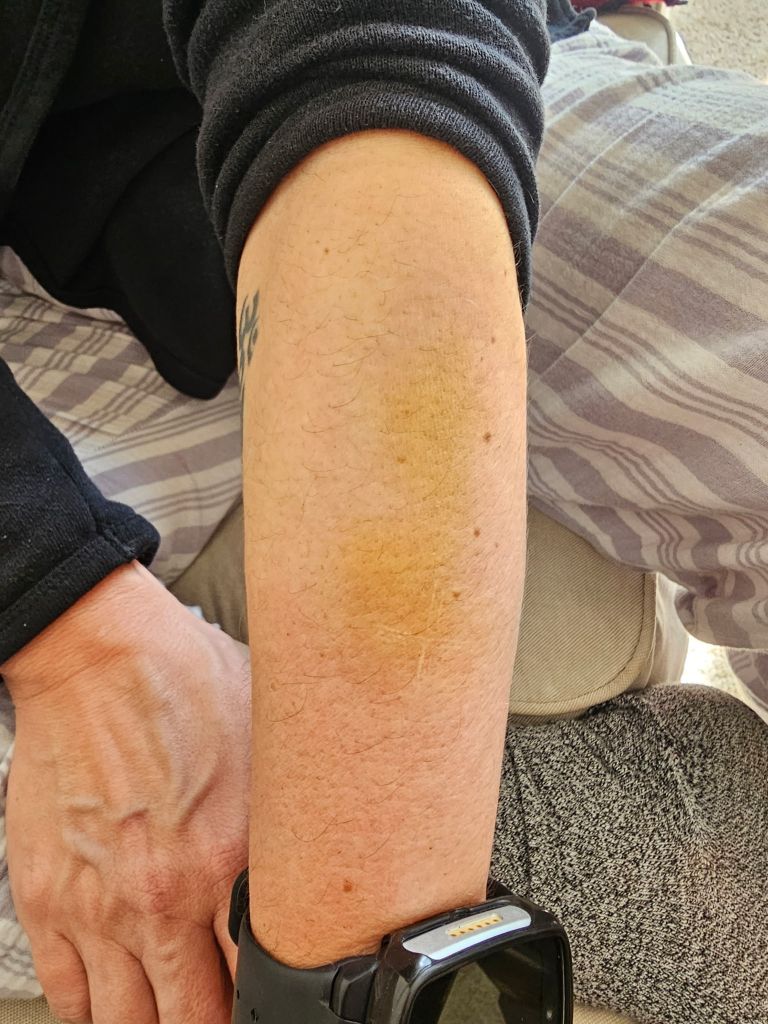
Ana has photographs showing the bruise marks the plainclothes official left on her arm. About a week later, a large area of her forearm was still tinged green from the injury.
Her mother, who was visiting from Croatia, came to the door and hugged Ana around the waist, Ana said, pulling her inside out of the man’s grip. At that point, her husband came out of their bedroom as well, she said.
“I started crying, asking, ‘Why did you hurt me?’” Ana said.
“He didn’t grab her because she resisted,” her husband added. “He tried to trick her. It was basically an attempt of kidnapping and assault.”
Her mother invited the officials inside to talk after Ana asked the man to promise not to hurt her again.
The family told the officials about Ana’s mental health conditions — a difficult combination of bipolar disorder, PTSD, anxiety and depression — and showed them the amount of medications she has to take throughout the day. The man who had yanked her arm said her diagnoses were in her file, she said.
“Oh my God, this guy knows I have all of these conditions and still tried to pull me out of the house,” Ana recalled thinking at the time.
Her husband told the officials that taking her would be a liability because of her medical condition. If she skips her medications, she can end up with seizures or other severe complications, Ana said.
The man told the family he didn’t want to escalate the situation. He said he would call in an hour or two for her to come downtown to the ICE building. He warned the family that sooner or later, Ana would have to leave the home and then she’d be arrested, the family said.
Meanwhile, Ana felt relief that she would at least be able to shower and dress before turning herself in. She packed her medications carefully in a Ziplock bag, she said. She debated wearing a jacket, remembering how cold she’d been in the cells the first time she’d been arrested and taken to the ICE offices downtown.
But the official never called, she said.
Instead, the contractor that monitors the GPS watch called soon after to say the watch appeared to be broken. Ana said she thinks the force of the man pulling on her arm broke it.
Ana stayed inside her home for nearly a week, she said, until she had to go to an appointment with the contractor to fix the watch. She was too afraid to walk her dog inside the gated community or go downstairs to do laundry.
She told her work she had an emergency and could not come in. She works in the medical field, doing tissue analysis for certain types of surgeries, she said, and she worried the office would cancel some of the surgeries if it couldn’t find someone a replacement.
“I’m scared when I start going to work they’ll show up at the medical office while I’m working and make a big scene and drag me out in my scrubs in front of all those people who have known me for 15 or 16 years,” Ana said.
At her appointment with the contractor, she and her attorney told a supervisor about the early morning visit from immigration officials. The supervisor was shocked, Ana said, and told her that shouldn’t have happened.
“As an immigrant, you really try to be better than any citizen because you’re aware that you can always get in trouble. We’re respectful of the law and police,” Ana said. “There’s no need to treat us like we’re criminals.”
Her son got married in December. Her husband said that he was grateful that she at least got to dance at her son’s wedding before the immigration situation escalated. As he spoke, Ana began to cry.
She said she recently told her son he’s too young to have children and that he should wait a bit.
“Now that I’m thinking something might happen to me, ugh,” Ana said, “I want to be a grandma damnit.”
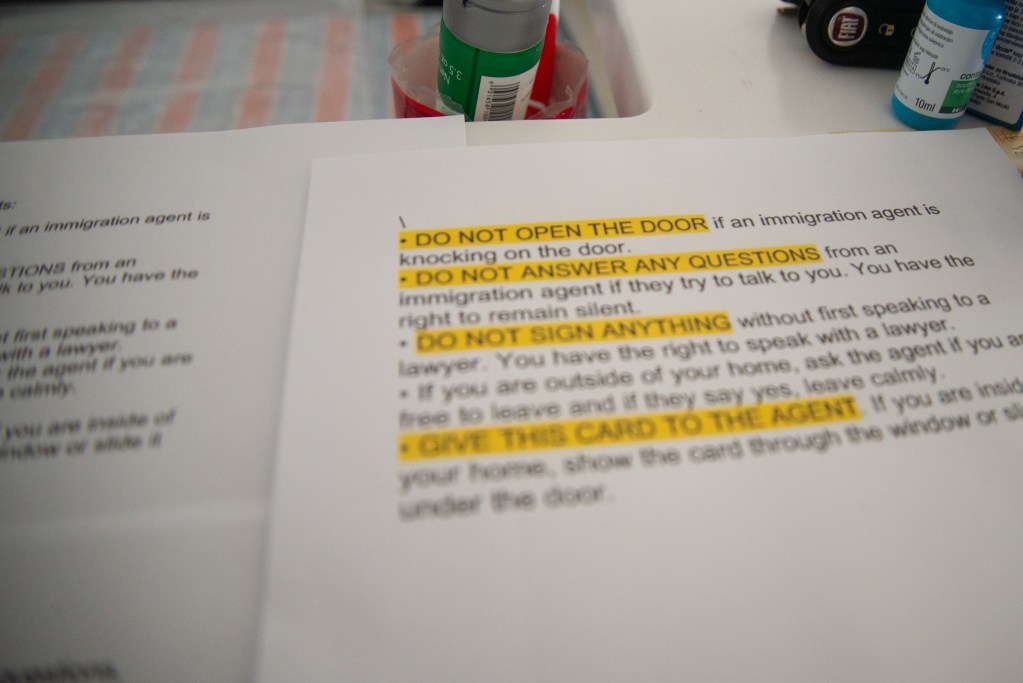
Now she keeps a set of documents by the door that she can slide under without opening it. They are meant to tell officials that they can’t come in without a judicial warrant. At night, she said, she puts a chair against the door in case they try to break in.
Thank you for reading. I’m open for tips, suggestions and feedback on Instagram and Threads @katemorrisseyjournalist and on X/Twitter and Bluesky @bgirledukate.
In Other News

A Day Without Immigrants: Many San Diegans joined people across the country in a day of protest as part of a series of demonstrations against the Trump administration’s immigration policies. Some businesses closed in solidarity, including North Park’s Cocina De Barrio, which posted signs in advance. That night, someone threw a rock through its window.
More razor wire: Marines are installing even more razor wire along the San Diego-Tijuana border. The wall already had razor wire in many places, so it’s been difficult to tell which coils are new and which have been there.
A quiet ride-along: San Diego-based Associated Press reporter Elliot Spagat recently accompanied Border Patrol for about six hours and saw almost no arrests. He also reported that the San Diego Rapid Response Network Migrant Shelter, run by Jewish Family Service, hasn’t received anyone since the Trump administration shut down CBP One appointments.
A racist history: I wrote for Capital & Main about the history of mass deportations and what Trump’s plans could mean in that context. I talked with descendants of the people who were affected by these moments in U.S. history about the generational trauma in their families as well as their motivation to resist what’s happening now.
A funding freeze and threats of tariffs: For inewsource, Sofía Mejías-Pascoe looked at the ways that the Trump administration’s foreign aid funding freeze is affecting Tijuana. At KPBS, Gustavo Solis covered the impact that Trump’s threat of tariffs are having on the cross-border economy even though they’re not in effect for now.
ICE in churches: Alexandra Mendoza wrote for The San Diego Union-Tribune about the fears that San Diego churchgoers are feeling now that ICE is allowing officers to make arrests at places of worship.
More transfers away from attorneys: I followed up on a piece I did last year for Capital & Main about ICE transferring people in its custody out of San Diego and away from their attorneys. ICE initially told attorneys it was to make space because of the number of border crossings in the San Diego area, but the agency kept transferring people and complicating their cases even as crossings decreased.
Leave a comment