

California’s economy is the fourth largest in the world, surpassing most countries with a state gross domestic product of $4.1 trillion, which measures the total value of goods and services produced.
That growth has been driven by sectors including technology, manufacturing and agriculture, and supercharged by international trade in regions including San Diego. But the state’s high cost of living limits how much Californians benefit from the distinction.
Nevertheless, the ranking illustrates California’s role as an economic powerhouse. Only Germany, China and the United States as a whole surpassed the state, Gov. Gavin Newsom announced last month.
“California isn’t just keeping pace with the world—we’re setting the pace,” Newsom said in an April 23 statement.
That pace is picking up. Last year, California grew faster than those economies, with 6 percent growth in 2024, compared to 5.3 percent growth for the U.S., 2.6 percent in China and 2.9 percent in Germany.
There are caveats, however. Measuring California’s GDP is always a conceptual exercise, since the state isn’t an independent nation, but part of the United States. The U.S. economy is by far the largest in the world, with a GDP of $29.18 trillion last year.
California’s economy is tightly linked with other countries, particularly Mexico. That’s crucial in San Diego, with our intricate cross-border industries.
“We have a strategic geographic location that helps attract foreign investment, including multinationals that see an opportunity here in Southern California,” said Kenia Zamarripa, vice president of international and public affairs for the San Diego Regional Chamber of Commerce. “Our strategic location gives them access to the port and Mexico.”
Together, San Diego County, Imperial County and Baja California create $24.3 billion in foreign exports, including $2.5 billion produced through a binational supply chain within the region, the chamber reported.
Key industries that depend on cross-border cooperation include aerospace, electronic instruments and medical equipment.
“There’s emerging industries that will continue to bring trade and drive innovation in the economy, including artificial intelligence, blue tech (marine, ocean and water technology,) battery technology and specialized medical device manufacturing,” Zamarripa said.
San Diego and Baja aren’t just trading partners, but also manufacturing partners, she said, adding that some products cross the border five to six times before they’re finished.
But California’s bustling economy is at risk as the state struggles with soaring prices for housing, energy and other expenses, along with effects of tariffs.
“While California enjoys a high GDP, it dissipates the effective purchasing power through high and increasing costs of living,” a report by the California Center for Jobs and the Economy noted.
If you measure the GDP against purchasing power, California falls to 11th place, just ahead of Italy and Türkiye, the center stated.
“This shift in rank is a stark illustration of the extent to which the costs of living sap the economic reach of the state’s households,” the report stated.
Economists note there are other issues with the ranking. For instance, the same thing doesn’t cost the same in different places.
Marc Muendler, a professor of economics at UC San Diego, said inflation distorts the value added figures – meaning the difference between the sale price of goods and services and the cost of producing them – that are used to calculate gross domestic product.
“But higher prices do not mean that a country is doing better,” he said. Exchange rates can also skew GDP figures because the local currency, when exchanged between countries, “does not buy the same bundles of goods.”
Potential tariffs could put a dent in future growth and aggravate affordability issues, Zamarripa said.
She’s concerned that tariffs on lumber, steel and aluminum could drive up construction costs.
“Tariffs would have an immediate impact on the cost of housing, which would increase the cost of living for Americans and Californians,” she said.
Chamber officials traveled to Washington, D.C. last month to make the case for free trade, she said. They plan to go to Mexico City in October with the same pitch.
“Part of that is to make sure that both capitals understand the power of the border, and how much we contribute to the national economy,” Zamarripa said
Senate Vote Kills California’s Electric Car Plans
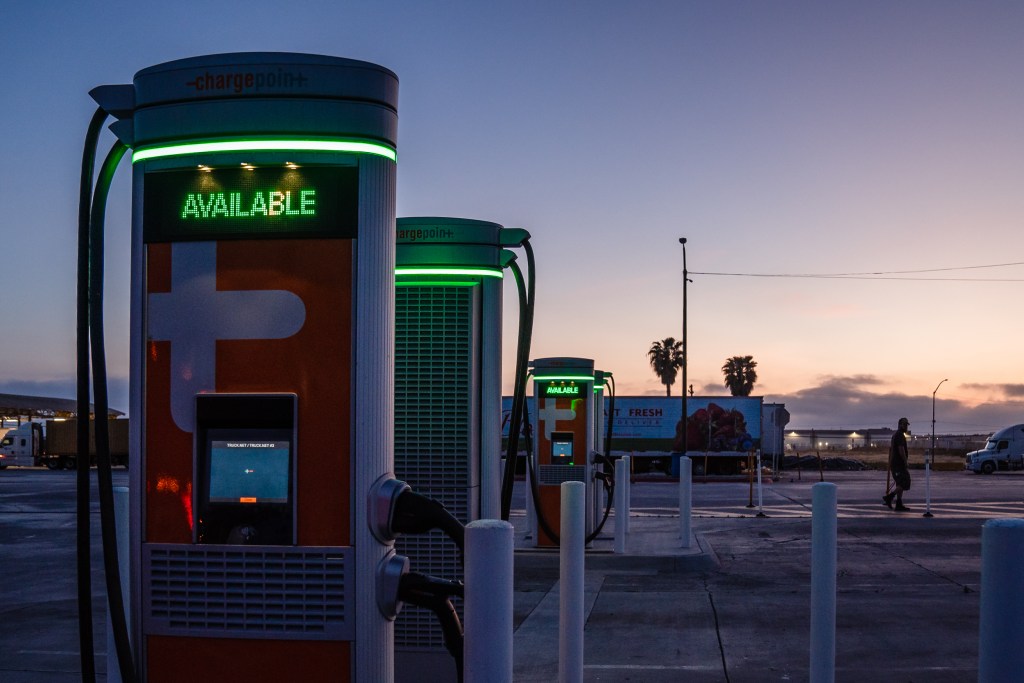
California’s plan to convert entirely to electric cars over the next decade got a blow Thursday, when the U.S. Senate voted to block that mandate.
The decision revoked three Biden-era waivers that allowed California to adopt stricter climate regulations than the national standards. Those aimed to slow the pace of climate change and clean up California’s air quality, which is among the worst in the nation.
Because California’s population and economy is the biggest in the nation, it sets the stage for other parts of the country. The waivers allowed other states to follow California’s stricter rules.
But Senate Republicans and some Democrats who voted to block the electric car mandate said the rules were impractical and reduced consumers’ ability to choose which vehicles to buy.
Newsom and California Attorney General Rob Bonta said they would sue to overturn what they called the illegal decision to “Make America Smoggy Again.”
They wrote in a joint statement that cleaning up California’s air pollution has historically been a bipartisan endeavor: “The state’s efforts to clean its air ramped up under then-Gov. Ronald Reagan when he established the California Air Resources Board. California’s Clean Air Act waivers date back to the Nixon Administration – allowing the state to set standards necessary for cleaning up some of the worst air pollution in the country.”
The Sacramento Report runs every Friday. Do you have tips, ideas or questions? Send them to me at deborah@voiceofsandiego.org.

Take the first step in your career with us, where you can work from home and thrive! No skills needed—just a strong will and a desire to grow. With weekly or monthly payments, you have the freedom to choose what works best for you.
Start now and Get Started Today!….. https://post4boost42.blogspot.com/