
This post has been updated.
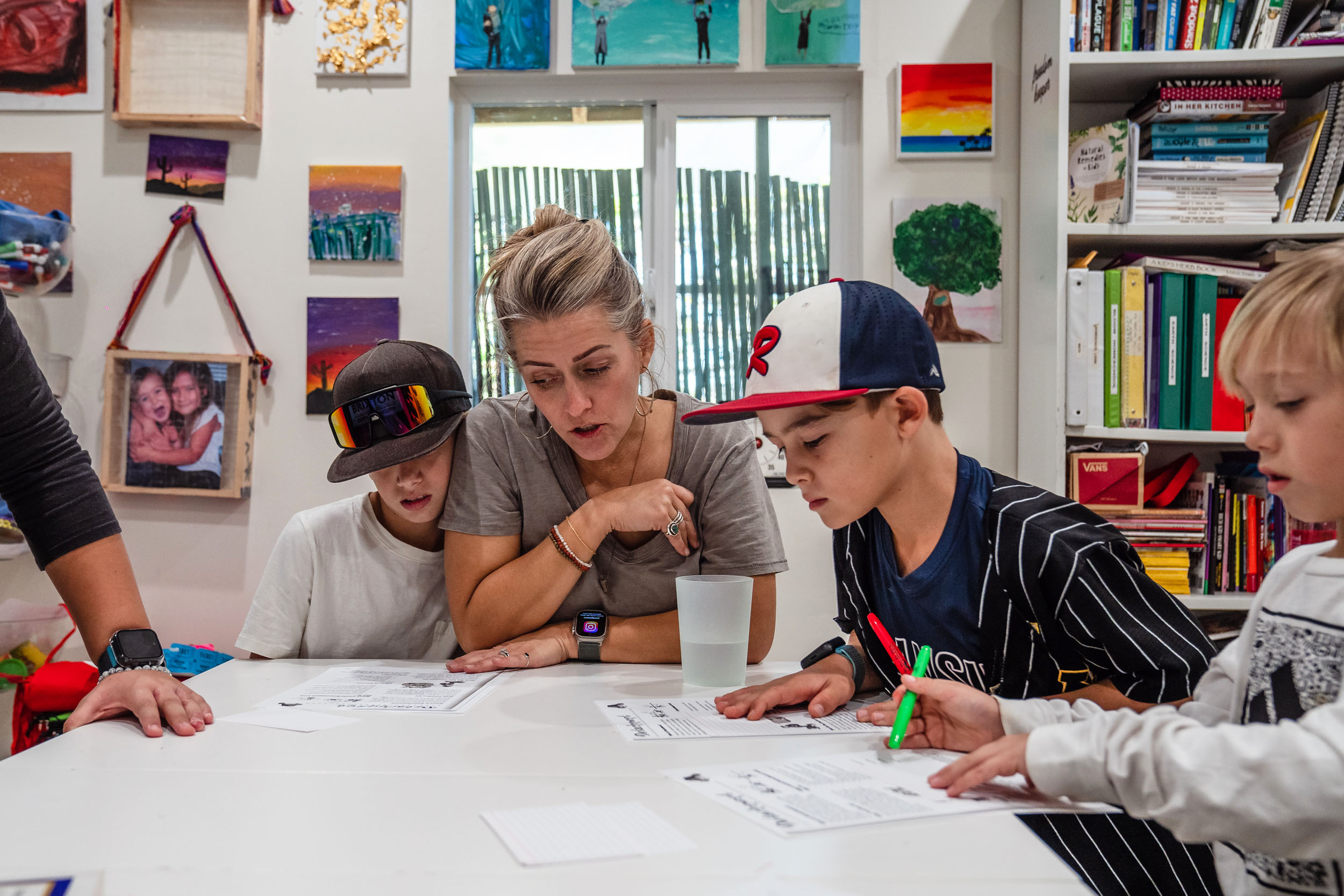
During the pandemic, the number of San Diego County kids enrolled in private homeschools rocketed up in just a few short years. The number has fallen slightly from its pandemic-era peak but remains well above where it was a decade ago.
Even so, children enrolled at private homeschools account for less than one percent of school enrollment countywide.
California doesn’t publish data on how many kids are homeschooled and parents’ diverging options make it difficult to tell exactly how many kids are homeschooled.
For example, parents can enroll kids in an independent-study style virtual charter school, a private school, or privately homeschool their children. Not confusing at all.
Families who choose to privately homeschool their kids must file a private school affidavit each year, and the state considers private schools with five or fewer children homeschools.
While the number of kids at regular private schools has remained relatively flat over the past decade, the number of local homeschools has fluctuated wildly.
In 2014, about 2,228 children in San Diego County were privately homeschooled. By 2020, when schools shut their doors during the pandemic, that number had more than doubled to 5,525. Over the intervening years, the number of children attending private homeschool has slumped down to 4,251.
That number is certainly an undercount, and likely a significant one. That’s because there are a handful of locally based charter schools that offer homeschool style independent study curriculum and their enrollment has been increasing rapidly.
These homeschooling charters can actually offer parents thousands of dollars to spend on school supplies and enrichment activities. Those funds have been spent on things like textbooks or even sports lessons. But historically, they’ve also resulted in some pretty unorthodox buys, like tickets to Disneyland or Medieval Times.
Some families have used the funding to sign up for private religious programs that are often unaccredited, a practice that may violate the spirit, if not the letter, of a law prohibiting students from enrolling in both private and charter schools.
Those sorts of expenses have fallen out of favor in recent years as scrutiny has forced charters to more closely regulate what families spend funds on, but they’re not explicitly outlawed. Critics of these practices earlier this year introduced a new bill, AB 84, that would reduce funding for non-classroom based charters and bring stricter oversight to the space. It would, in part, forbid families from spending funding on religious vendors and require all employees of vendors be credentialed. The proposed law has inspired a wave of pushback from non-classroom based charter supporters, who argue it would negatively impact the flexibility they so value about the model.
Non-classroom based schools lare a big reason why over the past decade, enrollment at charter schools has increased by about 26,000 students, a 41 percent jump, even as enrollment at public district-run schools has dropped by about 53,000 students.
That 26,000 student increase is largely driven by just two virtual schools that offer an independent-study style homeschool experience and now enroll about 12,500 students. Those schools’ websites say they require expenses to be approved and that they do not allow funds provided to parents to be spent on religious vendors.
Clarification: This story has been updated to include more context around expenses for non-classroom based families and vendor regulations.
San Diego Unified was teaching out children via Zoom for ovdr a year during the pandemic. This forced parents to make other options. The teachers unions decided for parents. Parents chose other and better options. Not missing SDUSD at all.
San Diego Unified was teaching out children via Zoom for ovdr a year during the pandemic. This forced parents to make other options. The teachers unions decided for parents. Parents chose other and better options. Not missing SDUSD at all.