
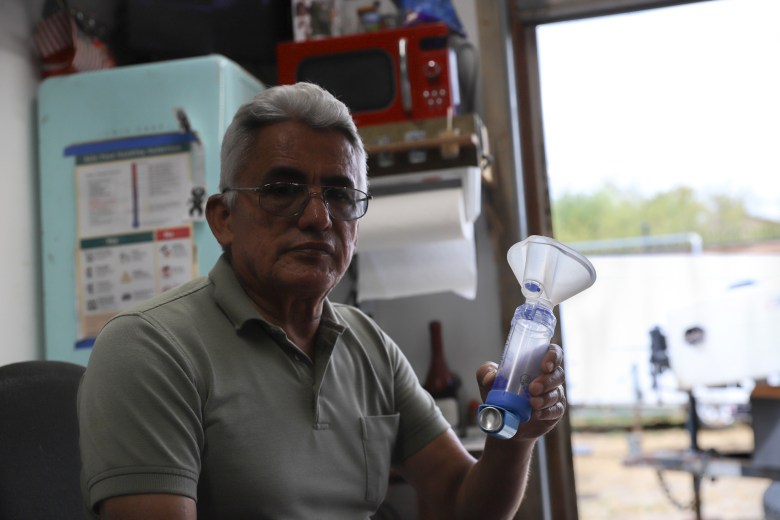
Breathing problems. Skin infections. Bone pain. Swelling. And the lingering fear that every time it rains, the floodwater could rise again.
These are some of health issues reported by residents of Shelltown more than two years after a flash flood consumed much of the southeastern San Diego neighborhood.
In the weeks and months immediately after the flood, local governments and nonprofits focused heavily on getting survivors temporarily housed in hotels, fed and clothed. Eventually, insurance companies or the Federal Emergency Management Agency helped some people remodel their houses and apartments.
Many survivors returned home, but they are still grappling with the flood’s long-lasting toll on their bodies and minds.
“Medical care often falls by the wayside in the chaos of disaster recovery, leaving survivors vulnerable to worsening health conditions over time,” Alexandra Holland, who studies population health at the University of Texas Medical Center in Galveston, wrote in an article on the long-term health impacts of disasters for the Federation of American Scientists.
Emerging research suggests disasters cause a vast number of health complications and deaths years after the initial emergency which go largely uncounted. Holland said communication from local leaders is the key to properly combatting long-term health impacts of floods.
“Ideally for whoever is representing that neighborhood, they should be involved as long as (residents) are having health issues,” Holland said.
But Shelltown residents still feel abandoned by their government. A group of about 25 survivors marched through their neighborhood on May 16 holding signs that read “prioritize survivors,” and “people died, communities are still suffering.”
“Families are still dealing with emotional, financial and physical impact of floods from two years ago,” said Marisa Aguayo, a flood survivor representing a group called Shelltown Resilience. “People are still trying to rebuild their lives. And it’s like they’ve forgotten us.”
Lingering Mold and Bacteria Cause Infection
In Shelltown, mold is beginning to regrow and creep through some remodeled bathroom ceilings and garages.
That’s true in the home of Edgardo Menjivar who lives a block from the channelized creek that overtopped two years ago following intense rains.
The former U.S. Army Special Forces paratrooper swam his wife and children to safety through the flood waters from the roof of his flooded home. He transported them one by one to higher ground up the street in a plastic tote.
“God sent it in a moment of desperation,” he said.
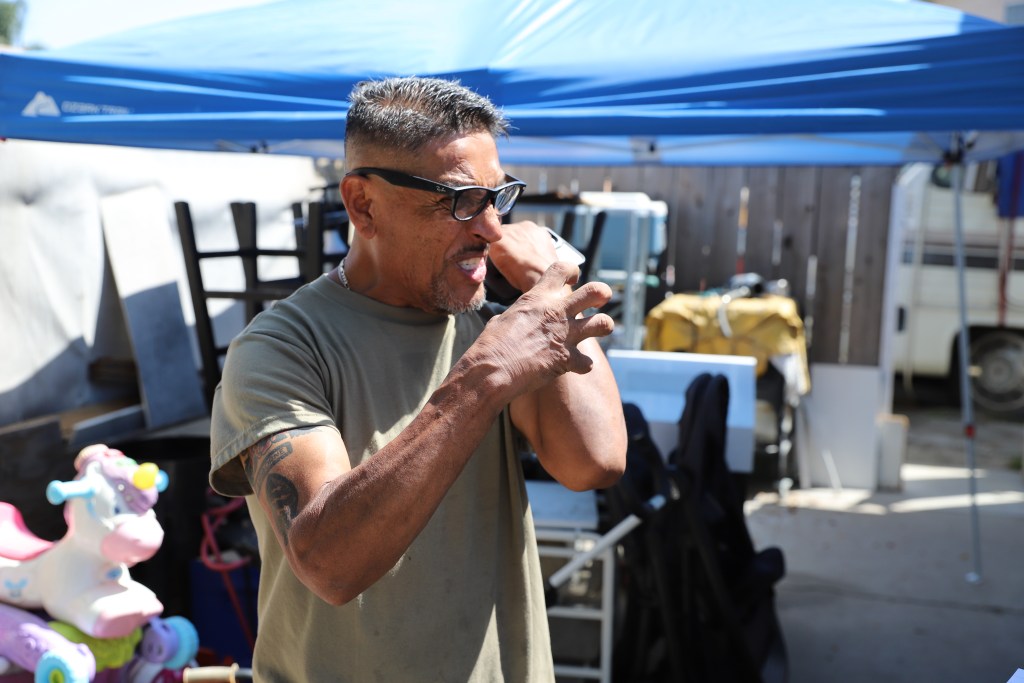
Menjivar is an auto mechanic and restores vehicles on his property with the help of his son. He and his son returned to work after the flood, but infections started sprouting on his arms and his son’s leg.
“I washed everything but I think the bacteria is still there” Menjivar said.
Floodwaters often contain hazardous waste from runoff and sewage system overflow, which can increase the risk of illness after a flood. Homes and businesses are at risk of growing toxic mold which can be difficult to detect so families live in a toxic environment without ever knowing it, wrote Holland.
Menjivar said he and his son both had to be hospitalized for their infections. His son had to go through rounds of antibiotics that didn’t seem to be working, Menjivar said.
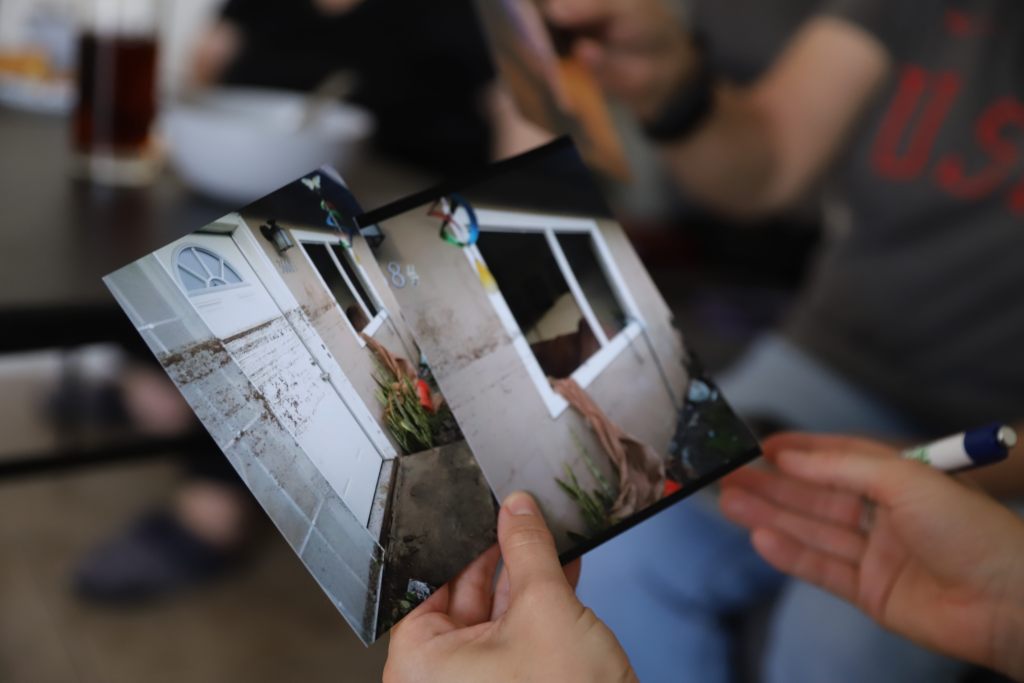
Menjivar showed reporters a photo of a huge boil-like infection on his forearm.
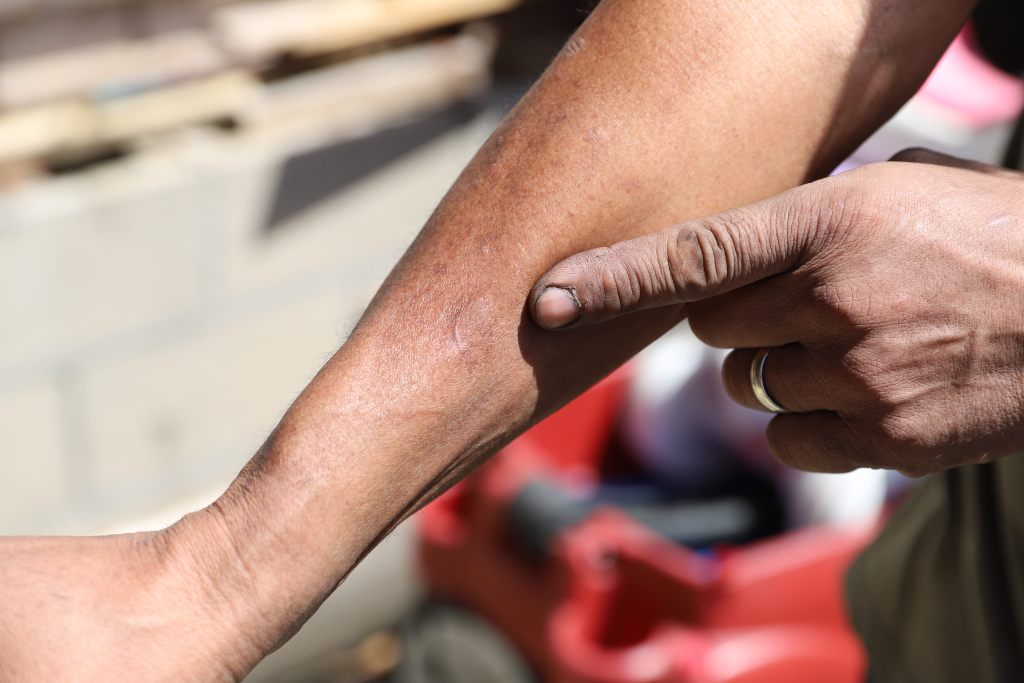
“I’m working on cars right now so I have to be on the ground. But I never had a cut like that and I started itching it and later on it got big,” he said.
Menjivar said he treated the wound by squeezing and cutting out the infection himself. But doctors kept him in the hospital for four days to treat a second infection that consumed his elbow area, he said.
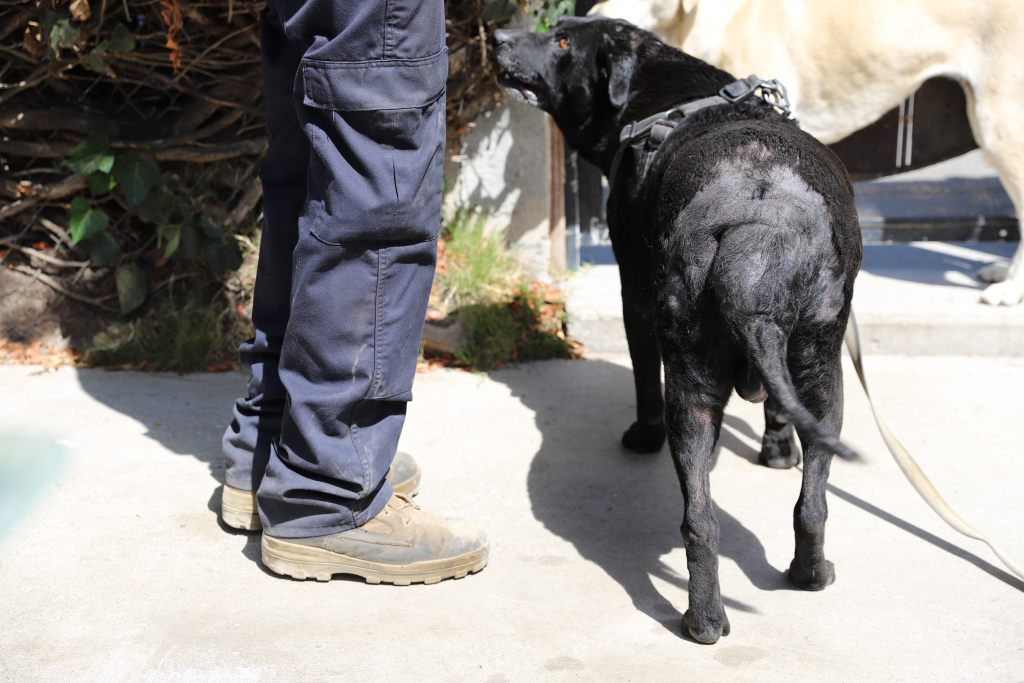
One of Menjivar’s dogs, both of which swam to safety during the flood, has open wounds all over its body that won’t seem to heal. The dog is losing hair and has developed swelling on his tail and legs. But he can’t afford to take him to the vet.
Survivors Grapple with Mental Trauma
A few blocks away on Beta Street, Silvia Valdivia Zubi lives with her mother Elva Rodriguez in an apartment that abuts the channelized creek. The day of the flood, they said water and debris trapped them within their home until neighbors broke the window to save them. Rodriguez said the floodwaters actually lifted her body and slammed her legs into the kitchen counter.
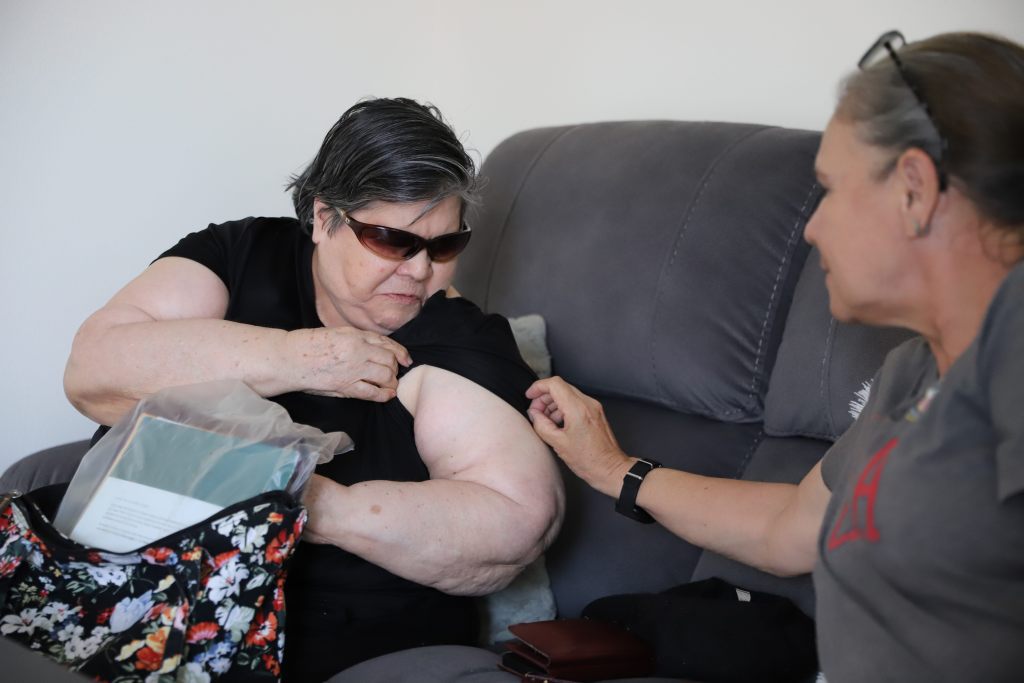
Rodriguez had hypothermia after her rescue and showed reporters a copy of her medical records from that day. She uses a walker and has swelling around the areas she injured, she says.
Zubi, Rodriguez’ daughter, has epilepsy which she treats with multiple rounds of daily prescriptions. She suffered four seizures the day she was rescued. Immediately after the flood, she said she had to scramble to obtain replacement medications.
The two also reported what they described as “bone pain” since the flood, which they say no doctor has been able to diagnose.
What can’t be easily observed is the mental toll of surviving such a catastrophe. Rodriguez says she still sees a therapist and stores an emergency bag with her medications and medical records inside her closet, just in case the floodwaters return.
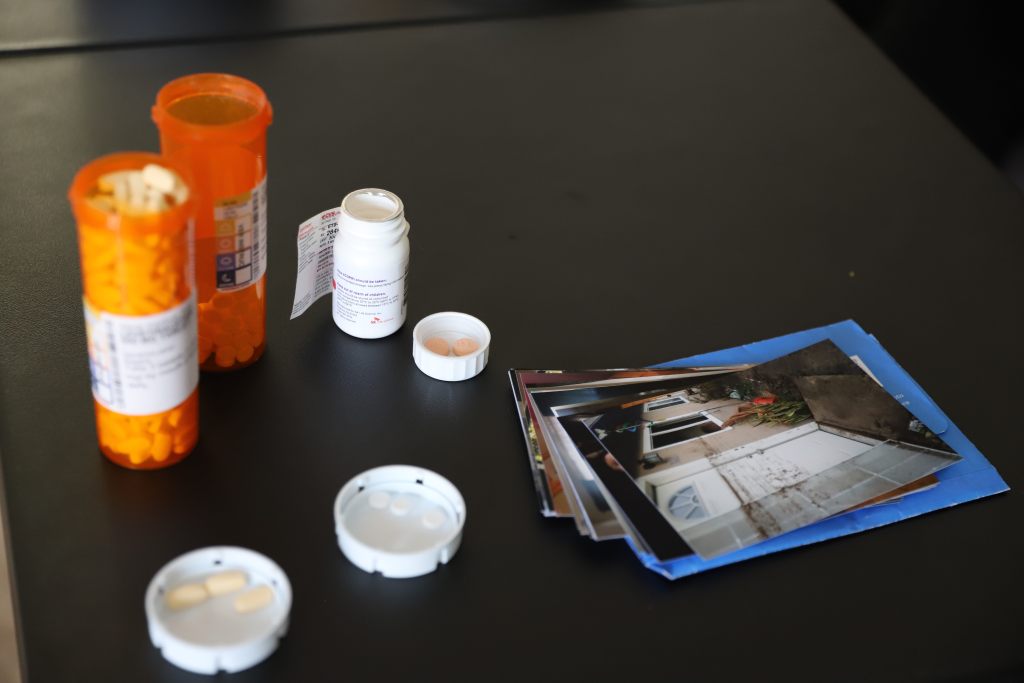
Zubi becomes physically shaken when recounting the memories.
“It has been a tremendous trauma,” Zubi said.
Their apartment’s interior damage was restored and they were able to return to live in their home.
“I don’t really want to live here anymore though,” Rodriguez said.
Preventing the Invisible Toll of Disasters
Researchers studying how disasters impact public health say government communication with residents is key to preventing maladies from persisting for months afterward.
But much of the communication from the city and county of San Diego, at least immediately after floodwaters dissipated, focused on temporary shelter in hotels, food and clothing distribution and getting financial assistance for property repairs.
“If you’re focused on trying to put a roof over your head, you will ignore (a) cough,” said Holland in an interview.
The city of San Diego distributed guides for post-disaster mold clean up from the U.S. Environmental Protection Agency and the U.S. Centers for Disease Control, among other federal agencies, on Feb. 2, about a week after the disaster, according to spokesperson Nicole Darling.
Darling said the city helped residents get rid of household hazardous waste and “amplified information from many different local, state and federal agencies.” But she stressed that the city doesn’t have a health department. She pointed to the county of San Diego as the region’s public health agency.
The county keeps track of certain illnesses as part of a public health surveillance program. Tim McClain, a spokesman for the county, said the program didn’t detect any trends or worsening health problems from the storm.
“After the storm in 2024, the County shared health guidance for individuals who came in contact with flood water. (The) Public Health (Department) also alerted hospitals to watch for cases of individuals with symptoms traceable to flood water contact. Nothing was found at that time,” McClain wrote.
Health Impacts Hard to Prove
The city of San Diego faces multiple lawsuits alleging the government is at fault for the flooding at Chollas Creek, a channelized waterway north of the Shelltown neighborhood. All of the survivors Voice of San Diego interviewed were parties to the suits. Except the lawsuits, representing hundreds of residents and business owners that survived the flood, focus primarily on damage to property instead of human health.
Why? It’s easier to prove damage to property over health in economic terms, said Evan Walker, who represents about 250 property owners. In other words, lawsuits like these are about seeking damages or money from the city, in this case, to repay victims for their losses.
“When you get into the realm of personal injury or mental anguish, there’s no market for that,” Walker said. “In other words, what’s a broken leg worth? What does that translate to in dollars and cents? If I suffer trauma or mental anguish, what is that worth?”
Walker is still seeking to recover damages for his clients’ personal injuries as well.
“At the heart of this litigation, though, it’s a property damage claim,” he said.
This is the second time Walker has represented flood victims in Shelltown. The neighborhood flooded once before in 2018, but several survivors dropped out of that lawsuit when the city’s attorneys asked for detailed medical records to prove the disaster was the source of their injuries.
Greg Montoya, a vocal Shelltown resident and part of both lawsuits, said the city subpoenaed all of his medical information including bills, prescriptions and test results. He was willing to turn that over, but others involved in the suit were hesitant, he said.
“Some of them did (give up records). But they said they weren’t going to go through the trouble of going to down to Mexico and getting information from their doctors down there,” Montoya said.
The case was dismissed in 2023.
Montoya said he suffers from chronic bronchitis which he manages with nasal spray and an inhaler. He said his symptoms have gotten worse since his home was consumed by the creek two years ago.
“It’s not good to be in a house that’s always got moisture in it,” Montoya said.
Montoya and the other survivors’ case has a hearing May 22 under a new judge.
Chris Olsen, chief of staff for the San Diego City Attorney’s Office, said that the office is unable to comment on ongoing litigation.
Correction: A previous version of this story misspelled Alexandra Holland’s name and incorrectly named the Federation of American Scientists.
Leave a comment