
This post has been updated.
South County’s two state legislators notched notable wins in Sacramento this year that will bring meaningful change to the region.
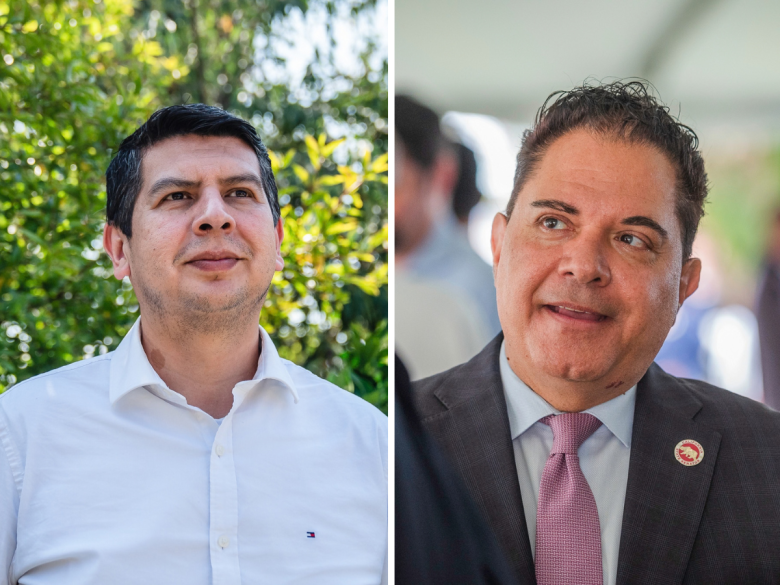
State Assemblymember David Alvarez and state Sen. Steve Padilla took a victory lap after Gov. Gavin Newsom signed several of their high-profile bills into law.
Here’s a rundown:
New bachelor’s degrees: A landmark law authored by Alvarez will enable community colleges to offer low-cost bachelor’s degrees.
The law, AB 2694, allows community colleges, which cost a fraction of most four-year universities, to begin offering bachelor’s degrees in certain high-demand fields starting in 2028.
Colleges must demonstrate that the degrees meet unfulfilled workforce needs in the local economy.
The law will find ready acceptance at local Southwestern College, which already has entered into partnerships with regional four-year universities to offer a small number of joint bachelor’s degree programs on the Southwestern campus.
Southwestern also is a key player in Alvarez-backed efforts to bring a four-year university to land designated for that purpose in Chula Vista.
The bottom line for South County residents is an expansion of low-cost college options in a region underserved by higher education.
Protections for Immigrants: Also signed into law was an Alvarez bill that requires law enforcement agencies to inform immigrants who are victims of crime of their legal rights and immigrant relief options available to them.
The law, which Alvarez called the Defending Immigrant Victims Act, is intended to ensure immigrants feel safe reporting crimes to law enforcement.
“AB 1994…reflects California’s commitment to public safety and victim support that help build trust between law enforcement and the neighborhoods they serve,” Alvarez said in a statement.
Limits on ICE detention facilities: A new law authored by Padilla seeks to limit what Padilla called “profiteering” at federal immigration detention facilities, including a controversial detention center in Otay Mesa.
The law places a 35 percent cap on price markups at privately run detention center commissaries, which, according to immigrant advocates, often raise prices on basic goods, such as soap, food and toothpaste, by up to 300 percent.
“SB 941 prioritizes people over profits to ensure this type of corporate greed does not continue in California,” Padilla said in a statement.
Another Padilla bill signed into law, SB 420, closes a loophole that allowed privately run immigrant detention facilities to avoid paying millions in property taxes by claiming to be charities.
Padilla said he authored the bill in response to a KPBS investigation that found a detention facility in Imperial County had avoided paying $6 million in property taxes by funneling its income to a non–profit organization that appeared to have no other purpose but to help the detention center lower its tax bill.
The tax exemption, Padilla said, “is meant for charitable nonprofits. But in this case [it] provided a taxpayer subsidy to a for-profit corporation engaged in mass deportation.”
Other wins for the legislators:
- New insurance protections for wildfire victims authored by Padilla.
- $5 million in cleanup funds for the Tijuana River secured by Alvarez.
- $4.5 million for a greenbelt on freeway-adjacent land in National City also secured by Alvarez.
- Updated hydrogen sulfide air quality standards authored by Padilla – a response to documented harm caused by toxic gases emitted by the Tijuana River.
- Stricter data center regulations authored by Padilla.
- And $1 million for a new fire engine in Bonita secured by Alvarez.
Wait, you ask: Fire engines cost $1 million? They do, thanks to consolidation in the fire engine-making business spurred by private equity investors. A few companies’ near-monopoly on the business has caused prices to spiral in recent years.
Earlier this year, the county and city of San Diego sued engine-makers, accusing them of price-gouging at taxpayers’ expense.
Maybe next on Alvarez’s and Padilla’s agendas can be lowering the cost of those shiny red engines.
Battle Lines Sharpen in National City Mayor’s Race
National City mayoral candidate Marcus Bush’s announcement this week that he plans to seek a repeal of controversial city councilmember discretionary funds brings into focus the emerging contours of his city’s pivotal mayor’s race.
I’m in the middle of reporting a story on how National City, one of San Diego County’s smallest and lowest income cities, suddenly has become a high electoral priority for some of the county’s most influential business, labor and political leaders.
The election pits Bush, a Democrat on the City Council, against fellow Democratic Councilmember Jose Rodriguez. Two other candidates, activist Jacobb Castrejon and former City Treasurer Mitchel Beauchamp, also are running, though they have garnered less support.
The contest between Bush and Rodriguez, Democratic friends-turned-opponents, has emerged as a classic battle over fundamental political values.
Bush’s discretionary fund announcement, he told me, is part of an effort to position himself as a fiscally prudent problem solver who is willing to cross ideological lines to fix National City’s dire budget problems.
That’s a sharp contrast with City Councilmember Jose Rodriguez, Bush’s opponent, who announced last week he will seek to reinstate a business tax increase the City Council recently shot down in the face of opposition from city businesses.
Rodriguez pins blame for the city’s budget woes on a lack of revenue, especially from businesses, who Rodriguez says are unwilling to pay what he calls their “fair share.”
According to a conversation I had with Rodriguez’s campaign manager, Rodriguez will seek to present himself as a champion of workers and immigrants willing to stand up to big corporations to fund a robust city government.
He will seek to tie Bush to business interests and, via that connection, might even seek to tar Bush with the MAGA label that has become political kryptonite in San Diego County.
For his part, Bush argues National City can only solve its problems by enlisting everyone in the community instead of demonizing or alienating key constituencies.
It’s a battle between different wings of the Democratic Party that is playing out all over San Diego County (I’m looking at you, San Diego City Council District 8) and indeed the nation.
I’ll be moderating a forum featuring National City mayoral candidates (and candidates in the Chula Vista mayor’s race) at 6 p.m. this Friday at the Martin Luther King, Jr. Community Center in National City. The event is part of Voice of San Diego’s annual Politifest public affairs gathering.
More information and tickets here.
In Other News
The San Diego Foundation this week announced nearly $1 million in grants to bi-national environmental organizations seeking to clean up the Tijuana River. Funded projects include efforts to improve stormwater management, new communication tools for water quality data and restoration of damaged habitat.
A group of golf enthusiasts is urging the city of Chula Vista to make improvements to its municipal golf course near Bonita. (inewsource)
More than 1,000 people attended Chula Vista’s fourth annual ArtFest Saturday at City Hall. The event featured exhibits by more than 90 local artists and vendors, along with live music and cultural performances. A special exhibit displayed works by Chula Vista-born acrylic painter Melissa “Melicha” Salgado and San Diego-based mixed media artist German Rojas.
Correction: This post has ben updated to correct that community colleges have offered bachelor’s degrees before AB 2694.