

Across America this Nov. 3, Democrats came together and achieved an historic nationwide electoral victory.
Then there was South San Diego County.
Thanks to the region’s well-earned reputation for political tribalism and infighting, numerically dominant Democrats came away from this year’s local elections bruised, nursing grudges – and unable to count a single victory against a prominent Republican.
Despite the stated intentions of party leaders at the start of this year to put all three of the region’s cities in the hands of Democratic mayors, only one of those cities – National City — ended up breaking Democrats’ way.
And that outcome was only guaranteed because Ron Morrison, the city’s long-serving conservative mayor, retired, leaving two Democratic city councilmembers (who, by the way, are former friends turned rivals) to battle for city leadership.
Beef Week is a Voice of San Diego reporting series. This week our newsroom will bringing you stories about all the beef and battles in San Diego. Read more Beef Week stories here.
In Chula Vista, the region’s largest city, Democratic infighting hobbled party efforts to wrest the mayor’s office from long-serving Republican John McCann.
It was a similar story in Imperial Beach, where rival Democrats split the mayoral vote and handed the race to conservative independent Mitch McKay.
Astoundingly, the race to represent the city of San Diego’s border-adjacent City Council District 8 came close to being the city’s most expensive – even though the race was between two Democrats.
Donors poured $2.4 million into the contest between San Ysidro School District Trustee Antonio Martinez and District 8 Chief of Staff Gerardo Ramirez.
The two candidates differed little on major policies. But they hailed from different South County political tribes, and their major backers were rival labor unions.
And so, the battle between them cost just $400,000 less than the amount spent in the marquee City Council District 2 race between former Republican Coronado Mayor Richard Bailey and Democratic Deputy City Attorney Nicole Crosby.
When the dust settled on this year’s elections, Democrats found they had spent millions of dollars, waged bitter battles, alienated former friends – and wound up mostly where they started.
Chula Vista mayoral candidate Francisco Tamayo, who over the course of his decade-plus career in local politics has been both a cause and a victim of Democratic disunion, summed up the problem.
“It’s internal gripes and people who are disgruntled that other people [won],” he said. “We win or lose elections and then we move on and support the next candidate…But that doesn’t translate to everybody. That was part of the division we saw in South Bay. You had Democrats fighting over Democrats.”
“We need to bury the hatchet and work together because otherwise we’ll have the same results in 2028,” he said.
South County politics have always been, to use a polite term, rough around the edges. Less polite terms locals use to describe the region’s political culture include “knife fight,” “brawl,” “dirty” and “shitshow.”
This year, however, the intra-party battles seemed especially intense.
Many observers pointed to two factors upping the stakes in contests between Democrats.
One is the increasingly dominant role labor unions play in local Democratic campaigns.
Several candidates, both Democrats and not, said businesses are becoming more choosy about political donations, in part because business-friendly Republicans are scarce in the region. At a time of rising costs, many local business owners feel too strapped to spend money on politics.
At the same time, traditional campaign methods, such as going door to door to talk to voters and sending mailers, have become more expensive and less effective.
Residents with home security cameras often don’t open the door for strangers, candidates said. Depending on the size of the electorate, sending a single piece of mail can cost thousands of dollars.
That leaves candidates in search of deep pockets to pay for political consultants, fund get-out-the-vote efforts and, perhaps most importantly, ensure candidates make it onto the make-or-break list of Democratic Party endorsements.
Voters often follow political party endorsement lists right down the ballot.
Labor unions, with their reliable streams of income from member dues, have taken the lead in funding South County Democratic campaigns.
In the expensive District 8 race, almost all spending in the race came from local labor unions.
Between them, the two candidates raised just $250,000 in small-dollar direct campaign contributions.
Labor unions funded just about everything else – with the exception of one statewide political action committee that pooled contributions from corporations and owners of large local businesses with a stake in city politics.
The rising importance of labor unions, combined with the longstanding tribalism of South County politics, has turned a growing number of races into District 8-style face-offs between labor-funded factions vying for dominance.
Many South County candidates trace their political roots through a small number of local political dynasties helmed by elder statesmen or multi-generational families. The resemblance to mafia stereotypes is not lost on local politicos.
In the District 8 race, Ramirez served as chief of staff to former District 8 Councilmember Vivian Moreno, who herself was mentored by former District 8 councilmember –and now State Assemblymember – David Alvarez.
Martinez worked for U.S. Rep. Juan Vargas, whose office has birthed the careers of numerous South County leaders.
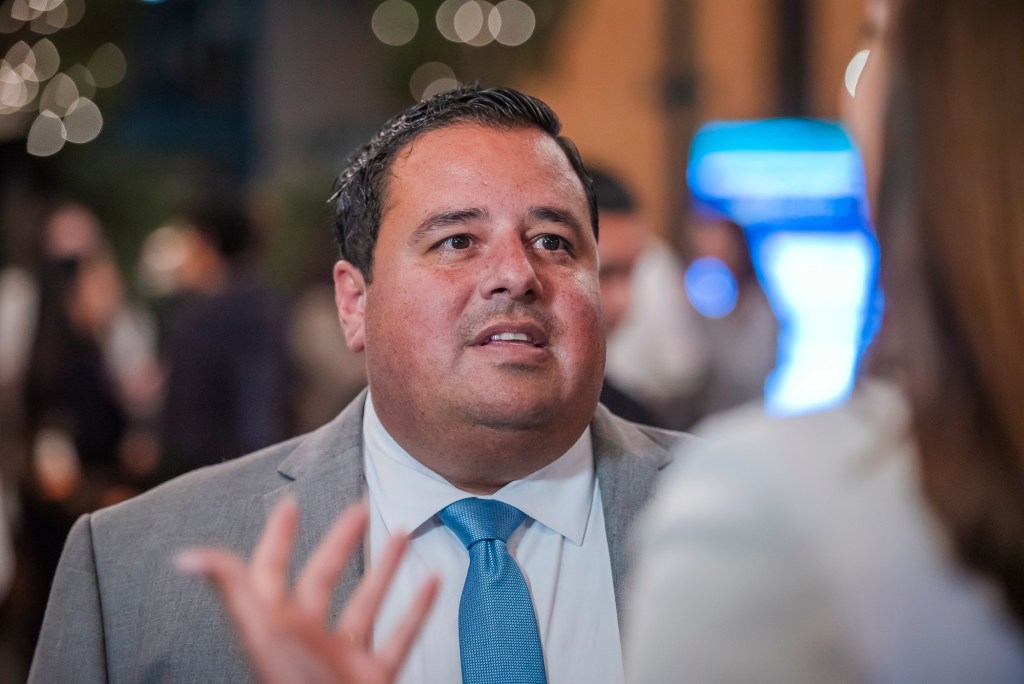
Alvarez is more moderate, often siding with business interests. Vargas claims a more progressive mantle and is a close ally of the San Diego and Imperial Counties Labor Council.
In this year’s District 8 race, the two sides, and their labor union allies, squared off. Martinez emerged victorious.
One last factor also upped the stakes in South County Democratic races this year: The increasingly assertive presence of Local 89 of the Laborers International Union of North America, or LIUNA.
The union, which represents lower-skilled construction workers, has spent millions of dollars in recent years gaining a commanding presence in Democratic politics.
This year, the union inserted itself into races across South County.
Independent expenditure committees controlled by LIUNA poured close to $200,000 into Ramirez’s campaign, spent $160,000 to power Tamayo through Chula Vista’s Democratic primary election and dumped tens of thousands of dollars into the Imperial Beach mayor’s race and several school board races in the Chula Vista Elementary School District.
The union also in recent years has strengthened its grip on the Democratic Party’s endorsement process. Intrigue over this year’s endorsements caused months of internal controversy, with candidates accusing one another of dirty tricks and behind-the-scenes deals.
The bad feelings seem certain to linger after the election.
Tamayo said he hopes party members can get over what he called “petty feelings” and move on.
Citing infighting over the candidacy of Democratic Chula Vista Elementary School District Trustee Jessica Tolston, who won a three-way race to keep her seat on the school board, Tamayo said Democrats should consider larger goals and unite behind party candidates.
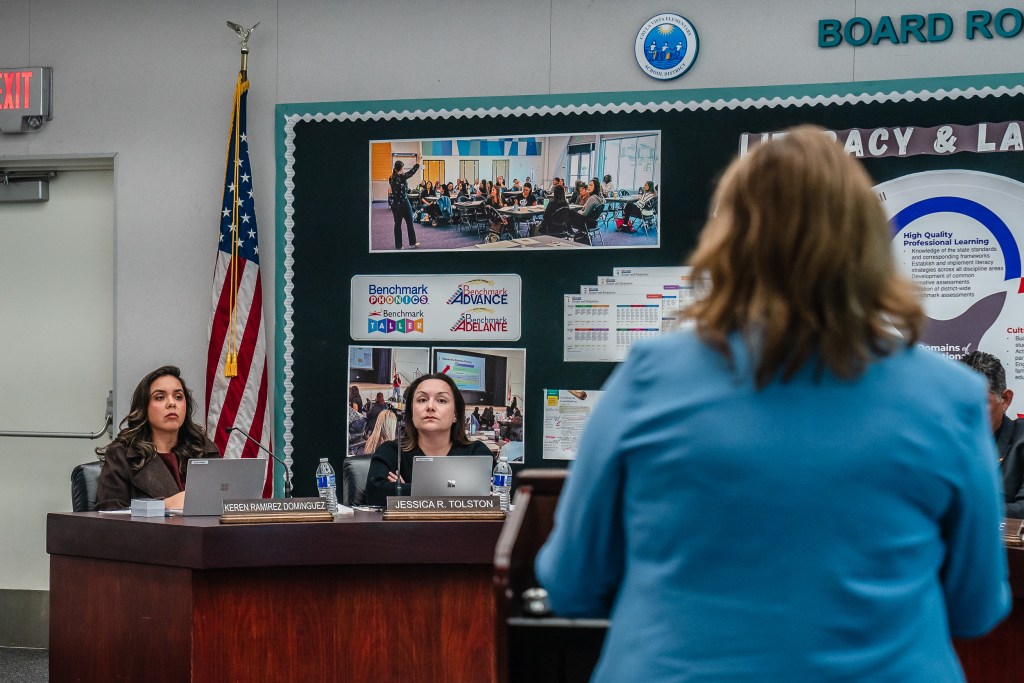
Tamayo himself endorsed Tolston, along with the district’s teachers union and two fellow Democrats on the school board.
Other Democrats objected and accused the union of favoring Tolston because she is a reliable vote, despite her past work in an office of the United States Department of Homeland Security that handled some immigration issues.
“At the end of the day, they were arguing about a good Democrat on the board,” Tamayo said.
“We might disagree on policy with different people in our party,” Tamayo said. “Some are progressive, I’m more conservative. I may disagree with some policy stands. But we support Democrats.”