

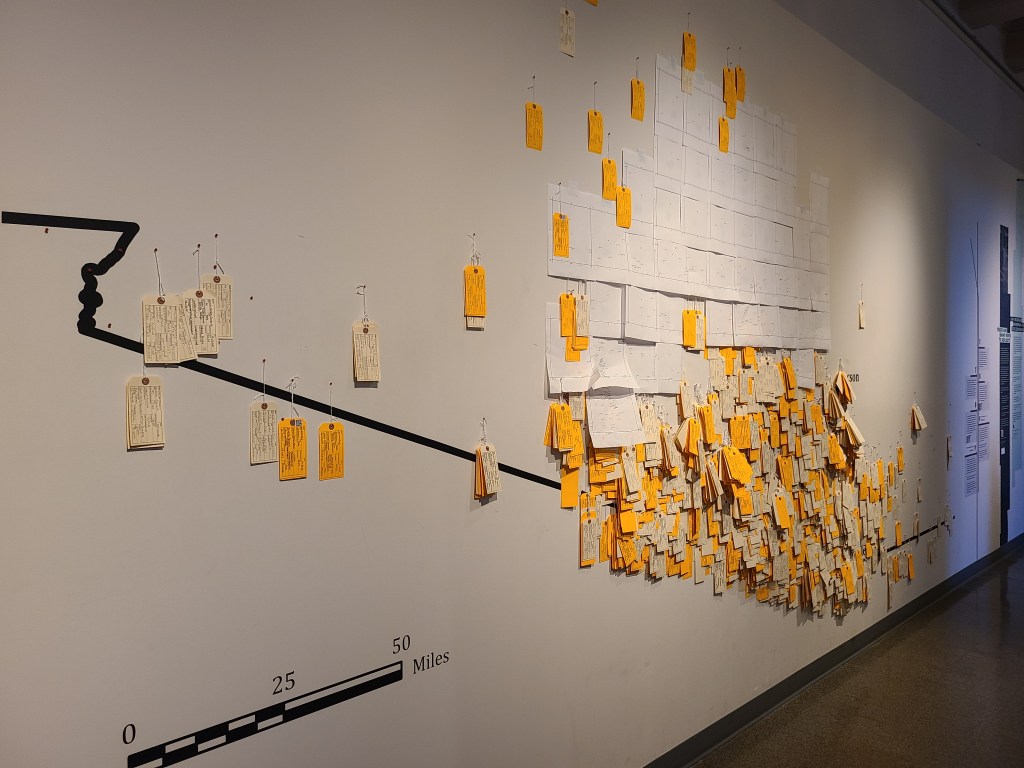
Inside Balboa Park’s Museum of Us, a map of the Arizona-Sonora border stretches across a wall on the ground floor.
Toe tags like those used in morgues hang from screws carefully geolocated on the map to indicate where people have died trying to cross the desert from Mexico to the United States. In some places, dozens of tags hang from the same screw.
The “Hostile Terrain 94” exhibit opened in November 2021 and is one of the museum’s long-term exhibits. I visited the museum for the first time last month thanks to a reader’s recommendation (and to the park’s Resident Free Tuesdays, which open the museum to San Diego residents for free on the fourth Tuesday of the month.)
In addition to the map, the museum displays belongings that people left behind in the desert — shoes, hats and even toothbrushes. A Dora the Explorer toothbrush lies apart from the rest.
It reminded me of items that I’ve seen in our own borderlands here in San Diego, particularly on Otay Mountain, where I went on a six-hour guided hike north from the end of the border wall with Border Patrol several years ago.
Fewer people die crossing from Baja to California than those crossing through the Sonoran desert, but it’s still an issue here that many groups are trying to address through efforts including water drops and search and rescue teams.
According to Customs and Border Protection, 44 migrants died crossing into the San Diego Sector in fiscal 2024, which ended in September. Agents from the Border Patrol Search, Trauma and Rescue team known as BORSTAR rescued roughly 2,248 people in the sector that same year, the agency said.
Depending on where and how people cross the border in the San Diego area, they may face different perils.
In the summer, temperatures in the Otay Mountain Wilderness make the area particularly dangerous, and in winter, extreme cold in the eastern part of the county can also prove fatal. People also die trying to cross by ocean, either in a boat or swimming, as many San Diegans witnessed firsthand when a boat capsized in sight of the Cabrillo National Monument tide pools in 2021.
Migrant deaths from falling off the border wall have gone up since the Trump administration increased the barrier’s height to 30 feet, as have injuries treated by local trauma centers, according to data from UC San Diego Health and Scripps Health.
The latest data released by the two organizations show the two trauma centers have treated 1,040 people for injuries related to falling off the wall this year through September. That’s up from 629 for all of last year and 126 in 2020.
In September, when San Diego experienced an intense heat wave, at least nine people died crossing in the Otay Mountain area, according to David Greenblatt, a volunteer with Borderlands Relief Collective who hikes around the mountain to leave water, food and medical supplies and who participates in search and rescue efforts.
On Saturday, he and other volunteers from the group, along with members of Border Angels and Border Kindness, hiked to the place where a 19-year-old named Jesús died during the heat wave, he said. They left wooden crosses and memorialized the young man’s life, Greenblatt said.
“Part of it is just wanting to pay respects in memory of somebody who died, died in an awful way alone in the mountains,” Greenblatt said. “Another part of it is just trying to do what we can to prevent other people from dying.”
He said the volunteers look for migrant paths in the areas where people have died and organize water drops to leave supplies there.
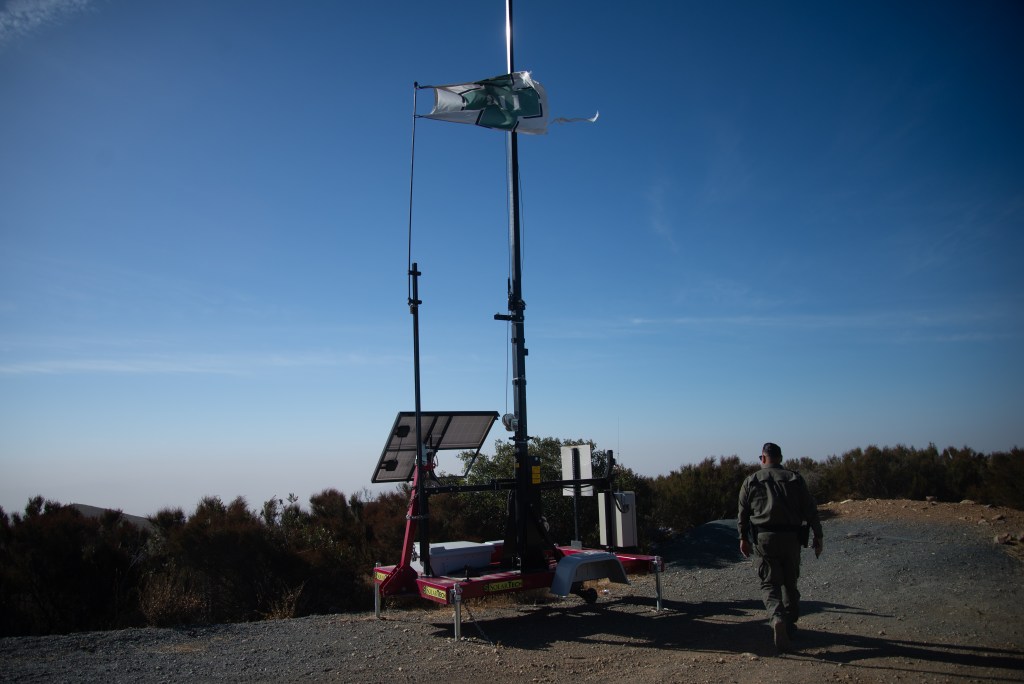
Last week, the day after the election, I went with Border Patrol agents to see the Otay Mountain Wilderness again. We visited one of the sector’s nine rescue beacons that instruct people in distress to push a button, talk with a dispatcher and wait for help to arrive.
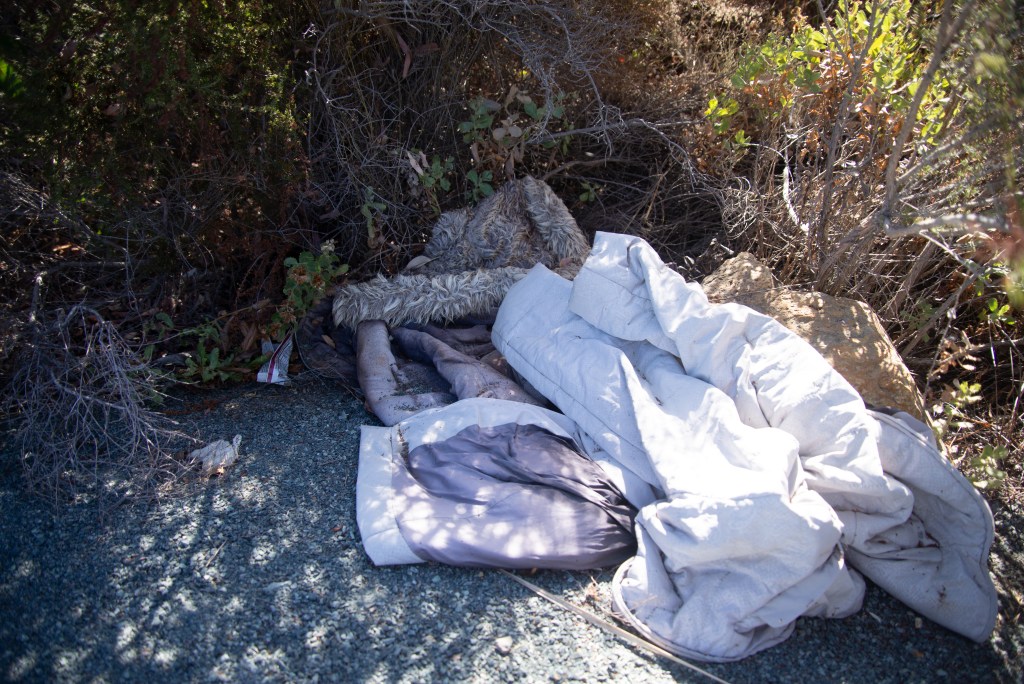
In the bushes next to the rescue beacon at Doghouse Junction, I found two winter jackets, a cereal bar wrapper and the remains of a tampon. It’s hard to imagine dealing with a period while making this journey, but I once interviewed a woman who made the journey through the mountains while she was pregnant.
As we moved around the mountain, we saw abandoned, cracked cell phones as well as shoes, sandals, jackets, water bottles and a toothbrush — much like the belongings in the museum exhibit.
As the Museum of Us exhibit explains in a timeline of U.S. border policy, the issue of people dying while trying to reach the United States has grown through the federal government’s implementation of “prevention through deterrence.”
Under former President Bill Clinton, in 1994, the United States worked to block migrant paths in urban areas, particularly in San Diego. That same year, Border Patrol launched “Operation Gatekeeper” in San Diego to push migrants east into the mountains and desert crossings. Officials believed that crossing conditions in those areas and the risk of death would deter people from coming.
In 1998, the agency created BORSTAR in San Diego to respond to the increase in deaths, according to CBP.
Activists have argued for years that as long as deterrence policies are in place, people will continue to die trying to reach the United States.
Every administration since Clinton has implemented its own variations. Incoming President Donald Trump has promised to continue that trend.
Alejandro Ortegoza, who said he co-founded Armadillos Ni Un Migrante Menos with his brother nine years ago, searches for missing migrants in both the Arizona desert and the San Diego area on behalf of family members who contact the organization.
“Now that Trump is elected, we see that it will be more difficult and more dangerous, and we don’t know what will happen to groups like ours who do humanitarian work,” Ortegoza said in Spanish. “They don’t want people helping migrants so that they don’t die in the desert. We have to stay strong and keep making the effort.”
Ortegoza is currently fundraising for a trip to Texas to assist a family in checking on the status of a case of a woman who died crossing there. He said the family is still waiting to receive her remains.
Thank you for reading. I’m open for tips, suggestions and feedback on Instagram @katemorrisseyjournalist and on X/Twitter @bgirledukate.
In Other News
- An ofrenda for migrants: Gustavo Solis reported for KPBS on artist Nanzi Muro creating a Día de Muertos ofrenda dedicated to migrants who died crossing the border.
- Deportation fears: Alexandra Mendoza of The San Diego Union-Tribune spoke with migrant families in Tijuana and immigrants in San Diego about their feelings following the election.
- By appointment only: Sofía Mejías-Pascoe reported for inewsource on the limbo that migrants now face just to get into the U.S. asylum system.
- Mobilizing resistance: Immigrant and human rights organizations are preparing for what may come in the next Trump administration, Solis reported in the days after the election.