

A string of recent antisemitic and other politically motivated vandalism has Imperial Beach residents on edge as elections heat up that will determine the city’s balance of political power.
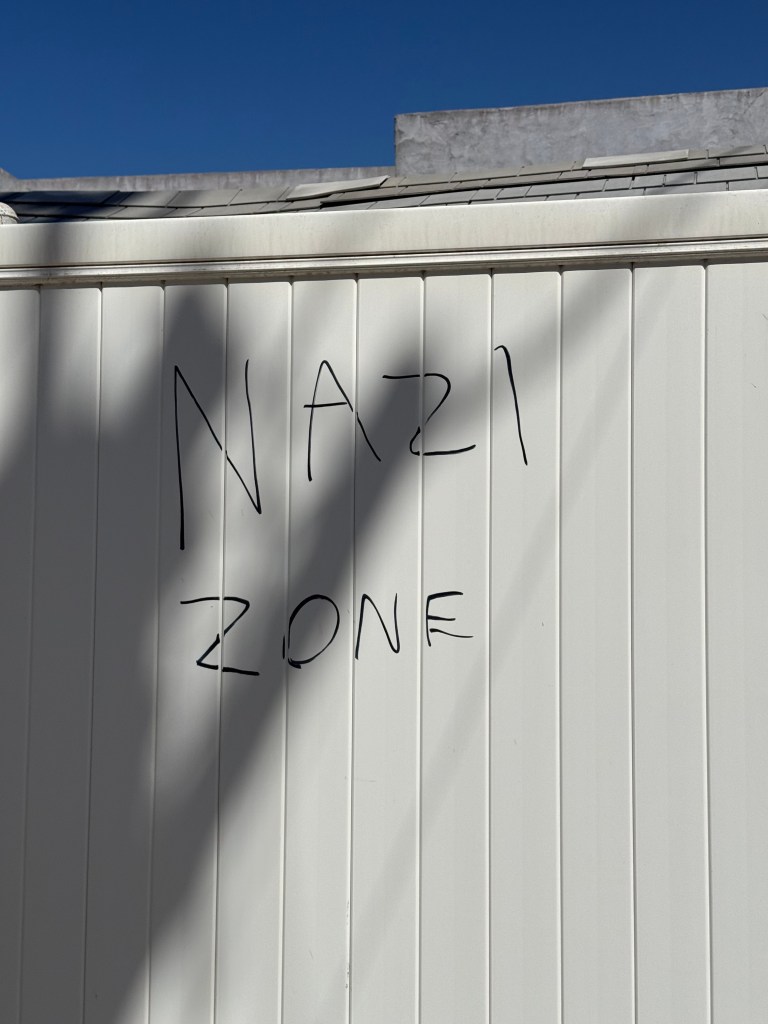
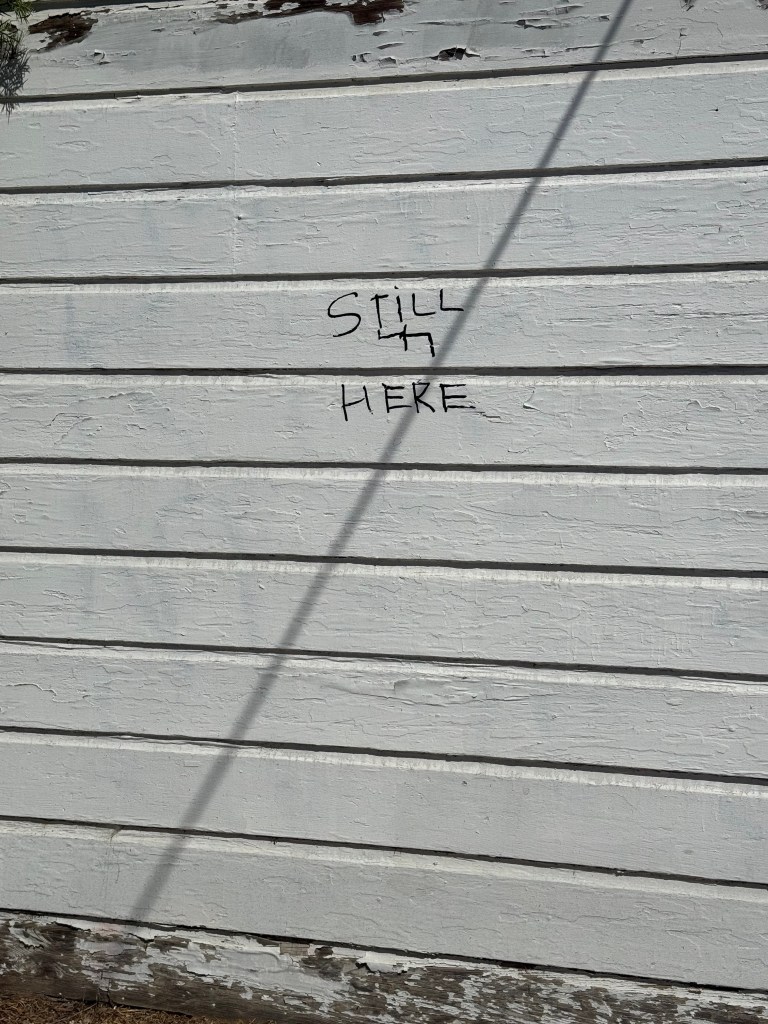
Last week, one or more vandals scrawled Nazi, white power and other antisemitic messages onto the home of a prominent Jewish Democratic activist and another property closer to the beach.
In a separate incident, vandals last month slashed a tire, damaged political signs and poured a foreign substance into a pickup truck gas tank at the home of a Democratic mayoral candidate.
And earlier this month, another Democratic candidate, O’mar Diallo, who was running for City Council, announced he was withdrawing from the race, citing unspecified “personal and professional considerations, as well as my assessment of the present and anticipated leadership environment within the city.”
Earlier this year, Diallo had called out repeated incidents of vandalism against his campaign materials. He could not be reached for comment.
The spate of vandalism, including the arrest Tuesday of a suspect in last week’s incidents, has rattled residents amid a contentious election season.
“We are upset and outraged,” said mayoral candidate Karl Bradley, whose house – including his wife’s tire, yard signs and his pickup truck – was vandalized last month.
“Is this white supremacy, political intimidation or a bit of both?” he said.
Democratic activist Sandy Brillhart, whose house was struck twice last week with antisemitic messages scrawled on her front porch and rear garage, said the incidents frightened her and also galvanized neighbors and other community members to rally to her defense.
Brillhart, 74, said the vandalism incidents harked back to previous periods in the city’s history when elections featured racist attacks against candidates or, longer ago, the city was known as a haven for bikers, surf punks and other groups who sometimes engaged in racist behavior.
“There’s a layer of intolerance in Imperial Beach,” she said. “I have experienced in the past a lot of negative political activity.”
Competition in this year’s mayoral race is especially heated because the three candidates in the race – Bradley, current Mayor Mitch McKay and City Councilmember Matthew Leyba-Gonzalez – represent different facets of the community.
McKay, a conservative-leaning independent, has helped lead the Council’s current conservative-leaning majority.
Leyba-Gonzalez, a union employee, has garnered support from labor interests and labor-aligned leaders of the San Diego County Democratic Party.
Bradley, a local Democratic activist and retired school construction manager, has garnered grass-roots support from attendees at local candidate forums and other campaign events.
Bradley said some Democrats tried to pressure him to exit the race to clear a path for Leyba-Gonzalez as the establishment-backed candidate. Other local politicians regretfully told him they couldn’t endorse him because, Bradley said, they feared an organized labor backlash.
The combustible crosscurrents, he said, have tested Imperial Beach’s prevailing identity as a laid-back beach town with an overriding existential problem – the Tijuana River sewage crisis.
“I don’t know to what extent politics is part of the intimidation tactics,” Bradley said. “Correlation is not causation, but I find it interesting that this is cropping up in an election season.”
McKay and Leyba-Gonzalez did not immediately respond to requests for comment.
Brillhart said the recent spate of vandalism had one positive effect.
“One thing this showed me is that people of Imperial Beach responded as a community,” she said. “A lot of people reached out to me and expressed support.”
The vandalism “was really troubling,” she said. But the days when Imperial Beach was rife with such incidents are “pretty much gone as far as I can tell.”
Chula Vista Aims for Big Leagues with New Economic Plan
Chula Vista Mayor John McCann proclaims everywhere he goes, “This is Chula Vista’s decade.”
On Tuesday, city leaders took a big step toward making that boast come true.
The City Council unanimously approved a new five-year economic plan that, if enacted in full, would transform the city into a hub of biotech and drone manufacturing with two new retail districts, a comprehensive job training initiative, more aggressive tourism marketing and even a new city brand identity.
“We’re growing up,” Deputy Mayor Cesar Fernandez said of the plan.
Economic Development Director David Graham pledged the plan would not sit on a shelf.
“The first thing to note about this plan is that it is real, realistic and it will have a tremendous impact,” Graham told me.
The plan calls for drawing on Chula Vista’s aerospace heritage to catapult the city to the front ranks of San Diego’s advanced manufacturing economy. The plan envisions drone manufacturers, advanced defense technology, medical device makers and other in-demand businesses relocating or starting up in the city.
Chula Vista’s key advantage, Graham said, is proximity to Mexico, where companies can cheaply manufacture products designed in the United States.
The city is a “hub of the cross-border mega-region of San Diego and Tijuana,” he said. “[That] is a strategic asset.”
The plan also includes steps toward transforming Main Street and Broadway into walkable small-business districts. The plan builds on both streets’ array of international restaurants and businesses serving western Chula Vista’s mostly Latino residents.
Fernandez, whose district includes both streets, expressed strong support for that part of the plan, as well as for another legislative priority: Developing career-training programs in partnership with local schools, including the city’s recent expansion of local higher education opportunities.
To capitalize on the recently opened Gaylord Pacific Resort, the plan calls for the creation of a new tourism authority that would market Chula Vista internationally.
And the city could get a new brand identity to replace “This Is Chula,” a former effort that the plan said drew “mixed reactions” and “was not able to address widely held negative perceptions.”
That’s bureaucratic speak for, “A lot of people still think Chula Vista is a mostly lower-income suburb of San Diego with some good taco places, a fancy new hotel and not much else.”
That image, Graham said (though he didn’t use those words), is false and out of date. One of the economic plan’s main goals, he said, is to help people outside the city understand Chula Vista’s true economic potential.
“People forget what’s here,” he said. “Underlying [the city’s plan] is…how to position our assets in a way that is attractive to businesses and investors and people who want to start their businesses here.”
Come to Politifest’s South County Edition!
Want to hear South County mayoral candidates discuss actual policies, not the platitudes candidates often dish out? Come to Voice of San Diego’s South County Edition of our annual Politifest public affairs forum. This is not your typical debate. I’ll be moderating the discussion and making sure mayoral candidates from National City and Chula Vista explain in detail how they plan to address some of South County’s top issues.
The event takes place Friday, Oct. 2, at the Martin Luther King, Jr. Community Center in National City. Everything you need to know, including how to get tickets, is here.
See you there!
In Other News
- Federal air quality researchers this week published a new study that adds to the growing body of evidence that the Tijuana River sewage crisis is impacting residents’ health, damaging the South County economy and lowering the region’s overall quality of life. (Union-Tribune)
- inewsource reporter Andrea Figueroa Briseño profiled South Bay Union School District Superintendent Jose Espinoza, whose aggressive efforts (including closing schools) to keep the district in good financial shape have drawn both support and opposition.