
Sacramento Report Countdown
4 days until the November election
Down ballot, amid the cross-hairs of a fierce U.S. House fight is another political battle in San Diego where Democrats are wagering nearly $1 million to flip a California Senate seat. As one of the more expensive statehouse races in the state this November, Democrats are hoping to boost their 30-10 advantage in the chambers.
With just four days to Election Day, here’s what to know about the other electoral battle brewing in San Diego.
The Big Picture
North County voters have a meaningful decision to make. Longtime incumbent state Sen. Brian Jones, a Republican who represents Senate District 40, terms out at the end of the year after serving the Escondido area for 12 years in Sacramento.
Party registration among Democrats has risen in the district since Jones began his Senate term in 2018 and throughout his ascent as Senate Minority Leader. Thirty-five percent of voters are now registered as Democrats, up from 29 percent in 2018. Republican voter registration dipped from 36 percent to 34 percent over the same period.
Who’s On the Ballot
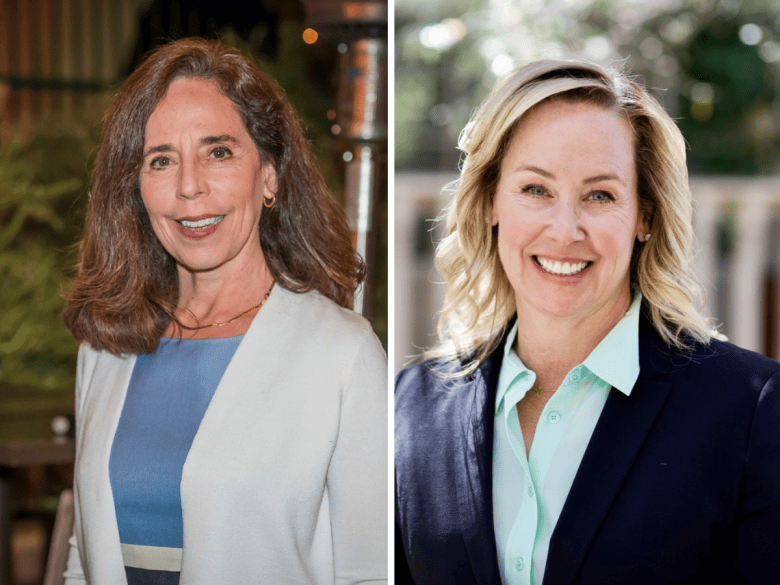
Former San Diego City Attorney Mara Elliott, a Democrat, is jockeying to replace Jones in her first legislative race against Republican challenger and former Assembly candidate Kristie Bruce-Lane.
Elliot’s prosecutorial career spans two decades in San Diego, where she served as deputy counsel for the county before spending 15 years with the city making her way up from chief deputy to city attorney, the first woman and Latina to do so in the city’s history.
After she termed out in 2024, she threw her hat in the ring to run for office about 14 months ago, when congressional candidate Marni von Wilpert withdrew her candidacy and set her sights on California’s 48th House District.
Bruce-Lane currently sits on San Diego’s water board and twice ran for the Assembly district that overlaps with the state Senate one, which Assemblymember Darshana Patel, a Democrat, now represents.
With no other Democratic primary challenger, Elliott advanced first in June with 44 percent of the vote. Meanwhile, the Republican ticket was split between Bruce-Lane and San Marcos City Councilmember Ed Musgrove, who was backed by Jones and Rep. Darrell Issa. He lost by about four percentage points to Bruce-Lane, who captured 28% of the vote in California’s top-two primary.
Where the Candidates Stand
Elliot has leaned into her experience as a longtime prosecutor to make her case as a moderate Democrat who is concerned about wasteful spending and public safety. Her biggest priorities in the state Legislature would be to support stricter auditing of state programs to remediate federal funding cuts. She also wants to allocate more funding for counties to implement tougher penalties for theft and drug charges under the 2024 voter-approved Proposition 36.
In an interview, she said she’d also support policies that’d help people with severe mental illnesses enter conservatorships, similar to bills (some successful, others not) introduced by Encinitas state Sen. Catherine Blakespear to reform California’s CARE Court mental health program.
Blakespear faced stiff pushback from disability rights opponents earlier this year against her failed proposal, Senate Bill 1016, which would have created a path for people who are too sick for CARE Court to be referred to conservatorships. Critics said forcing people into involuntary treatment was a harmful and coercive approach.
As far as how she’d overcome similar political winds, Elliott said she’d plan to continue having conversations with special interests groups and provide anecdotal evidence from her time as a city prosecutor to make the case for why more people need to be entered into involuntary programs.
“There’s no good feeling in prosecuting someone who needs an elevated level of care,” she said. “I don’t understand why there’s so much resistance,” to placing those with a severe mental illness in involuntary treatment programs instead.
We also talked about where she falls on the billionaire tax, which she appeared to support in May in an interview with the San Diego-Union Tribune. She said then she’d back the one-time, five percent wealth tax on California’s billionaires, but later back-tracked during an August NBC 7 interview where she said she’s against Prop. 40, the billionaire tax ballot measure.
“I’m against it,” Elliott said. She said she changed her mind upon learning more about its potential downsides, such as lost income taxes from wealthy residents and businesses potentially leaving the state and its specific use for healthcare services.
As far as the measures to counteract the billionaire tax, Propositions 41 and 42, Elliot said she’s a ‘no’ on those, too.
Bruce-Lane did not respond to an email, phone call and voice message seeking an interview. Her campaign messaging, though, has highlighted her support for lower taxes by maintaining property tax limits under Prop. 13, stripping Senate Bill 54, California’s sanctuary state law, and tighter voter restrictions with Prop. 39, the measure to require voter ID at the polls.
Money and Endorsements
Elliott is overwhelmingly favored by Democratic power brokers and labor groups, who have all endorsed her. She benefits from plentiful spending from teachers, health care, public employees and other labor unions who have spent more than $1 million to support her.
Bruce-Lane, who’s affiliated with right-wing group Reform California, has received more than $300,000 in support from a state GOP-affiliated PAC. The district’s purple bent and Jones’ departure has made it a Democratic target and one of California’s more expensive statehouse races this cycle, pulling in $2.5 million total from outside groups.
What’s at Stake
With Republicans expecting to face headwinds nationally next week, Democrats are betting on flipping back two of the three statehouse seats they lost in 2024, as well as picking up others, such as in San Diego, to widen their already hefty command over the state Legislature when it’s time to reconvene in January.
And: A Controversial Tactic Proliferates in Legislative Races
Earlier this month, a reader emailed me, confused about why her California assemblymember, Darshana Patel, was appearing in campaign ads funded by Google and Meta, despite rules limiting how corporate donors can coordinate with candidates.
That sent my colleague Kate Wolffe and me down a rabbit hole of campaign websites.
We found more than a dozen legislative candidates’ pages chock-full of B-roll footage, high-resolution photos, and even explicit instructions seemingly meant for special interest groups to use on their behalf.
Experts and watchdog organizations we spoke to say this appears to flout the state’s campaign finance laws, which prohibit coordination between big spenders and candidates.
Michael Soneff, Patel’s campaign manager, did not return calls, voice messages and texts seeking comment for this story.
Read our latest CalMatters story on how some campaigns are testing the limits of California’s campaign finance rules before Election Day.
In Other News: Campaign Stumping
Gubernatorial favorite Xavier Becerra and Blakespear are expected to stump for von Wilpert in San Diego at the Oceanside Democratic Party headquarters two days before Election Day.
What I’m Reading Now
What’s going on with Prop. 45 and critics’ concerns that it’s all about data centers? CalMatters breaks down what’s true, what’s not and what we don’t know about the controversial ballot measure to streamline housing and other infrastructure projects.
There’s also a lot going on with the U.S. Justice Department aiming to throw out thousands of California ballots days before Election Day. Some of the information federal authorities are using appears outdated, though, CalMatters explains.
Democratic candidate for governor Xavier Becerra widens his leads as voters focus on Trump, new polling from UC Berkeley’s Institute of Governmental Studies shows, from the Los Angeles Times.