
Friday, a committee of the San Diego City Council advanced the project that Midway Rising leaders have been working on for five years.
It was a moment that had been building for years. Union members who have advocated for it every step of the way cheered loudly in the City Council Chambers. But the Midway Rising hurried out and issued a simple written statement attributed to Brad Termini, from Zephyr Partners.
“We’re honored to receive a unanimous 4-0 vote in support of Midway Rising from the City’s Land Use and Housing Committee and look forward to presenting this transformational project to the full City Council in the weeks ahead,” Termini wrote.
They may be “honored” but, by several accounts, they were not pleased at all.
The committee advanced their deal with one significant amendment: It would require the Midway Rising team to ensure the affordable housing units built at the site are “net-new” – a reference to what we wrote about Friday. We revealed that city staff had preferred the deal prohibit the property from becoming a so-called “receiver site” for the affordable housing other developers in San Diego were going to have to deliver anyway.
But when the proposed deal, a product of four years of negotiations, went public this week, it did not include anything like that. Midway Rising could be a receiver site for affordable housing.
This has become intensely controversial.
Midway Rising had won the chance to exclusively negotiate with the city precisely because it had pledged the most affordable housing among the three teams bidding for the site. Now, it will be the largest affordable housing development in the state.
As a receiver site, though, developers of other projects in the city – who didn’t want affordable housing on their land – could pay Midway Rising to build them and that could count toward the 2,000 affordable housing units Midway Rising was pledging.
“What might be allowed, what gives me pause, is allowing a developer building a project in another part of the city to put the rent restricted units that they are required to build at Midway Rising, as a part of Midway Rising’s 2,000 affordable units. That could present a risk that we don’t actually get 2,000 units of affordable housing that we wouldn’t have otherwise gotten,” said Councilmember Stephen Whitburn at the meeting Friday.
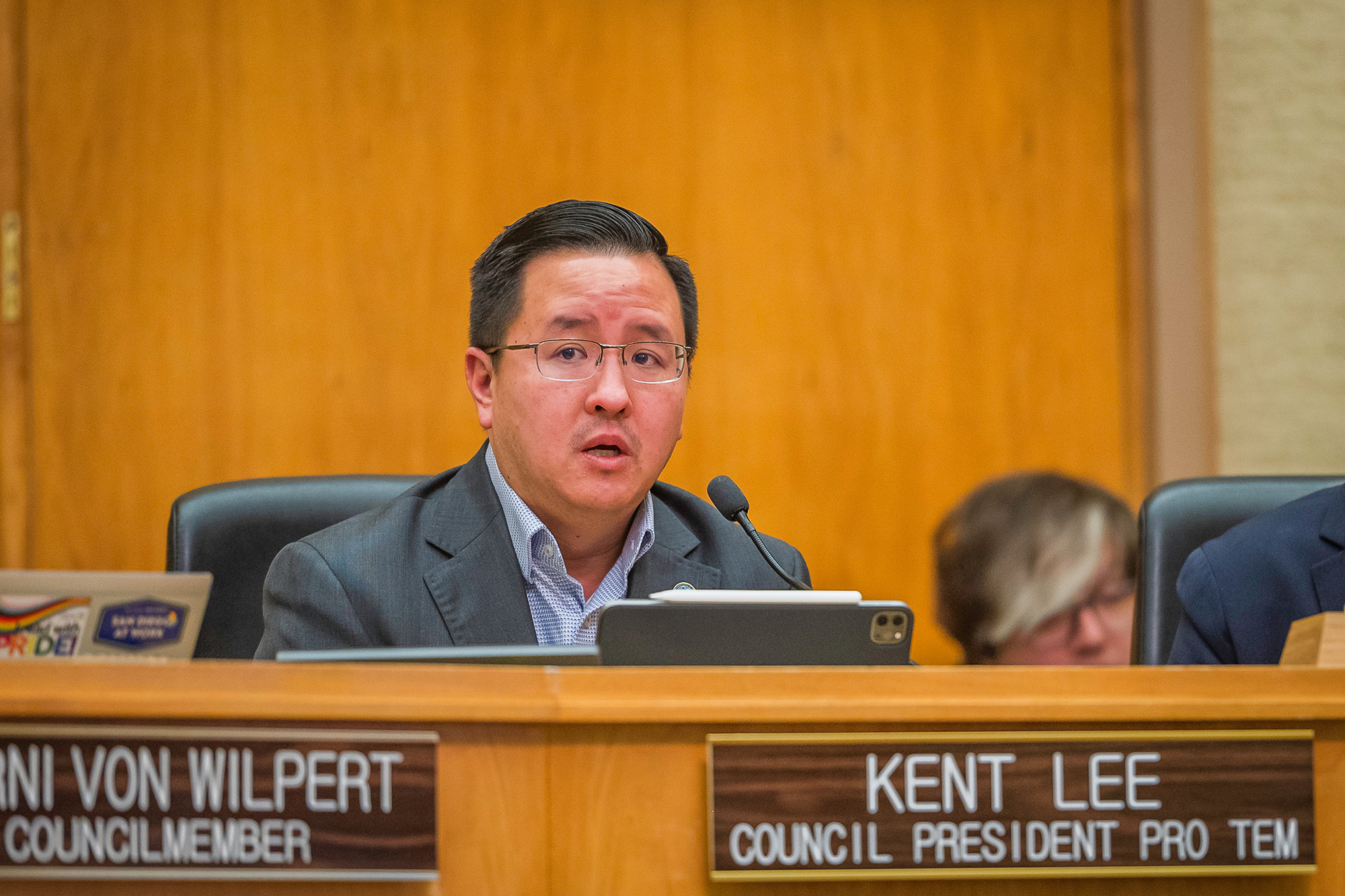
The chair of the committee, Councilmember Kent Lee, had put forward an amendment “… to revise the Disposition and Development Agreement to prohibit any of Midway Rising’s 2,000 affordable housing units from serving as receiver sites to satisfy another project’s affordable housing requirements unless all other available funding options for gap financing have been pursued and exhausted …”
The developers had maintained it was important for them to have this option, though. The Midway Rising partner tapped to build the affordable housing, Chelsea Investment Corp., called it a “tool” in their effort.
“Midway Rising is unequivocally committed and bound to deliver all 2,000 affordable housing units on-site, and it’s important to explore all available tools to expedite their construction,” Charles Schmid from Chelsea said in a written statement.
If the motion to remove that tool was unwelcome, they probably did not like the discussion even more.
Councilmember Sean Elo-Rivera went further and asked city staff to prepare a new law that would prohibit public land, like the city’s in Midway, from becoming receiver sites for affordable housing builders somewhere else were going to have to construct anyway.
By late Friday, City Hall was abuzz that the Midway Rising team considered all this a potential deal killer. That would indicate the tool was a significant part of their plan for affordable housing.
Yet nobody was clear on how many units could even be eligible for such an option. Whitburn said he had heard two takes: One, that very few if any developers could pay Midway Rising to take on their affordable housing burdens. And another that developers not only within a three mile radius but, in fact, the whole city, could put the units they were going to have to build there.
He asked the independent budget analyst to look into it.
He imagined a scenario where Midway Rising was pledging 2,000 units of housing and other developers were required to build 2,000 units of affordable housing because of the laws in the city that generally require housing developments to set aside 10 percent or more of their homes for people with lower incomes. The city would be expecting 4,000 new units but if they all sent them to Midway Rising, there would only be 2,000 “net-new” units.
City operations staff have been unusually insistent that this was important to them as well, which indicates they are not on the same page as their boss, Mayor Todd Gloria, and that he pushed it forward without the provision.
In a press release celebrating the vote, Gloria made no mention of the amendment.
“Today’s action brings us one step closer to delivering thousands of homes, including 2,000 affordable homes, a new entertainment center and public spaces that will serve San Diegans for generations. I’m proud of the work we’ve done to get this project to this point, and we’re committed to seeing it through,” Gloria said in the written statement.
The only mention of the requirement his committee added came from Lee.
“I thank my Committee colleagues for affirming the importance of maximizing new affordable housing units. This will allow us to achieve the units that we have asked for and prevent this project from simply being an affordable housing receiver site,” he said.
It will be impossible to pass a new city law before Dec. 9 the deadline the city and Midway Rising set to complete the deal. But they could easily agree to the new provision in the lease and development deal they’re closer now to signing.
Unless it truly would kill the project.
If you have any ideas or feedback for the Politics Report, send them to scott.lewis@voiceofsandiego.org.
This is good to hear! Now they won’t be sneaking around us putting poor people in a specific area and then rich people in another area we need diversity in San Diego is not going to be a segregated city!!!