
One might assume, after decades of Tijuana leaking sewage tainted water into the United States, San Diegans know what’s making their South Bay neighborhoods smell.
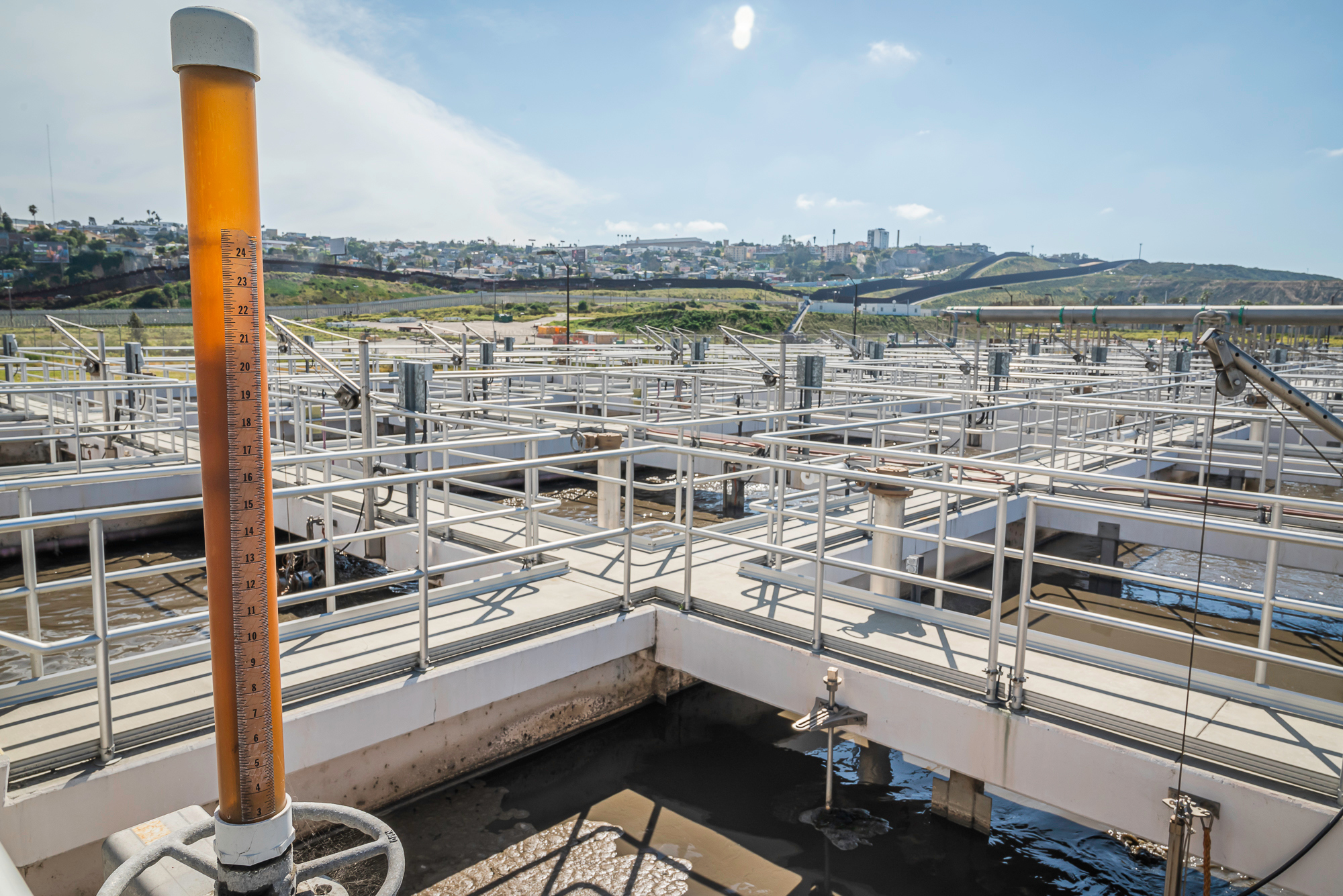
Desperate for some form of justice, locals and pollution cops continue to instead point fingers at the federal government via the border water agency that tries to clean some of that sewage before it hits the ocean: the International Boundary and Water Commission. And the IBWC continues to say, you’ve got the wrong guy.
In the latest example, San Diego’s air pollution regulators tried to pin over 100 complaints about foul sewage smells in South Bay on some of the IBWC’s broken equipment. The IBWC rejected those accusations, pointing back to the Tijuana River, the culprit’s conduit that happens to flow north into the United States from Mexico.
In this latest story on our continuing coverage of San Diego’s cross-border sewage crisis, an analysis of the infighting among U.S. political powers while they all ignore the actual source of the problem, a city that needs lifting up: Tijuana
More sewage news: The Union-Tribune reports that the IBWC is going to miss a deadline to make its treatment plant meet federal water quality standards. The leader of the IBWC said several issues stood in the way such as faulty equipment and political challenges.
San Diego Forgoes More Colorado River Water in New Deal

The Colorado River’s biggest single user – farmers in Imperial Valley – made another agreement with the federal government to cut their take of the overused, threatened river for the next two years, with help from San Diego.
The Imperial Irrigation District’s board announced this week it’d pay farmers to skip some harvests in the coming two years in order to keep around 700,000 acre feet of water (an acre-foot is two California households’ annual water use) in the river’s biggest reservoir, Lake Mead.
Here’s the deal: San Diego is in discussions with Imperial Valley to help farmers reach that goal by selling back some of the water it purchases from the valley. The San Diego County Water Authority has more water than it can use right now after recent rainy years broke multiple years of drought. It’s in a budget pinch, facing a $2 million cut to its budget along with a 14 percent rate increase on the cost of water for its 22 customer water districts.
We’ve been here before: San Diego will likely replicate the three-way water swap it made last year to save money with Imperial Valley and the Metropolitan Water District of Southern California, and buy cheaper California water from Metropolitan instead of pricier Colorado River water.
Water Authority General Manager Dan Denham told Voice of San Diego last year’s deal generated $20 million in savings, which equates to a 3 percent reduction in water rates for San Diegans.
In exchange, the federal government would pay the Imperial Valley a hefty price for its water, somewhere around $800 an acre foot, officials said. For comparison, the district pays about $20 an acre foot for that water now. But the $800-a-pop cost would be a higher price tag than what the feds were agreeing to pay Imperial Valley last year in exchange for conservation.
Tina Shields, the water department manager for the district, said Thursday they’re still firming up the price and how much water farmers can actually conserve by 2026 as the deal is coming together deep into 2024. But the district is targeting crops of Alfalfa, Bermuda and Klein grass (crops used to feed livestock and some of the most water-intensive) to generate the water savings.
The federal government had said at the height of the drought a few years ago that the Colorado River’s seven U.S. state users and Mexico need to cut demand by 4 million acre feet, about as much as California uses.
In Other News
- A San Diego doctor was one of five people charged Thursday in connection with the death of former “Friends” star Matthew Perry. The actor died last year from a ketamine overdose. According to a U.S. Attorney, the San Diego doctor and another took advantage of the actor’s addiction to “enrich themselves.” (Fox5)
- Have you paid your property taxes? A big deadline is coming up, and those who are behind could face a penalty for unpaid bills. The San Diego County tax collector says property owners owe the government more than $189,000,000. (KPBS)
- Jewish Family Services has distributed thousands of dollars to hundreds of low-income families. This is part of a guaranteed income program, which hands out money to families without strings attached. The families have used the money to buy basic needs items and expenses: food, housing and transportation. (NBC7)
Correction: We updated the Border Report from Aug. 12, “Border Report: Trans Women Seeking Asylum Capture Their Stories in Tijuana,” to correct that proceeds from the exhibit go to each photographer. Some have chosen to donate that money to Casita de U.T.
The Morning Report was written by MacKenzie Elmer and Andrea Lopez-Villafaña. It was edited by Andrea Lopez-Villafaña.
Tujuana,sewage.& q
uimical contaminacion.i.leave of saturn st.& i olso have animols .drinking water from a well.
Erin Conn